AI agents bypass websites. The future of product discovery is not a human viewing a webpage but an AI model ingesting structured data via an API or a RAG pipeline built with LlamaIndex. Your site's visual design is irrelevant to these autonomous shoppers.

Blog
The Future of Product Discovery: Ingested by Models, Not Viewed by Humans
The traditional e-commerce funnel is dead. In the age of agentic AI, products will be discovered, evaluated, and procured by autonomous agents parsing structured data feeds, rendering human-centric websites and SEO obsolete. This is the future of zero-click commerce.
THE DATA
Your E-Commerce Site is Already Obsolete
Product discovery is shifting from human browsing to AI agent ingestion of structured data feeds.
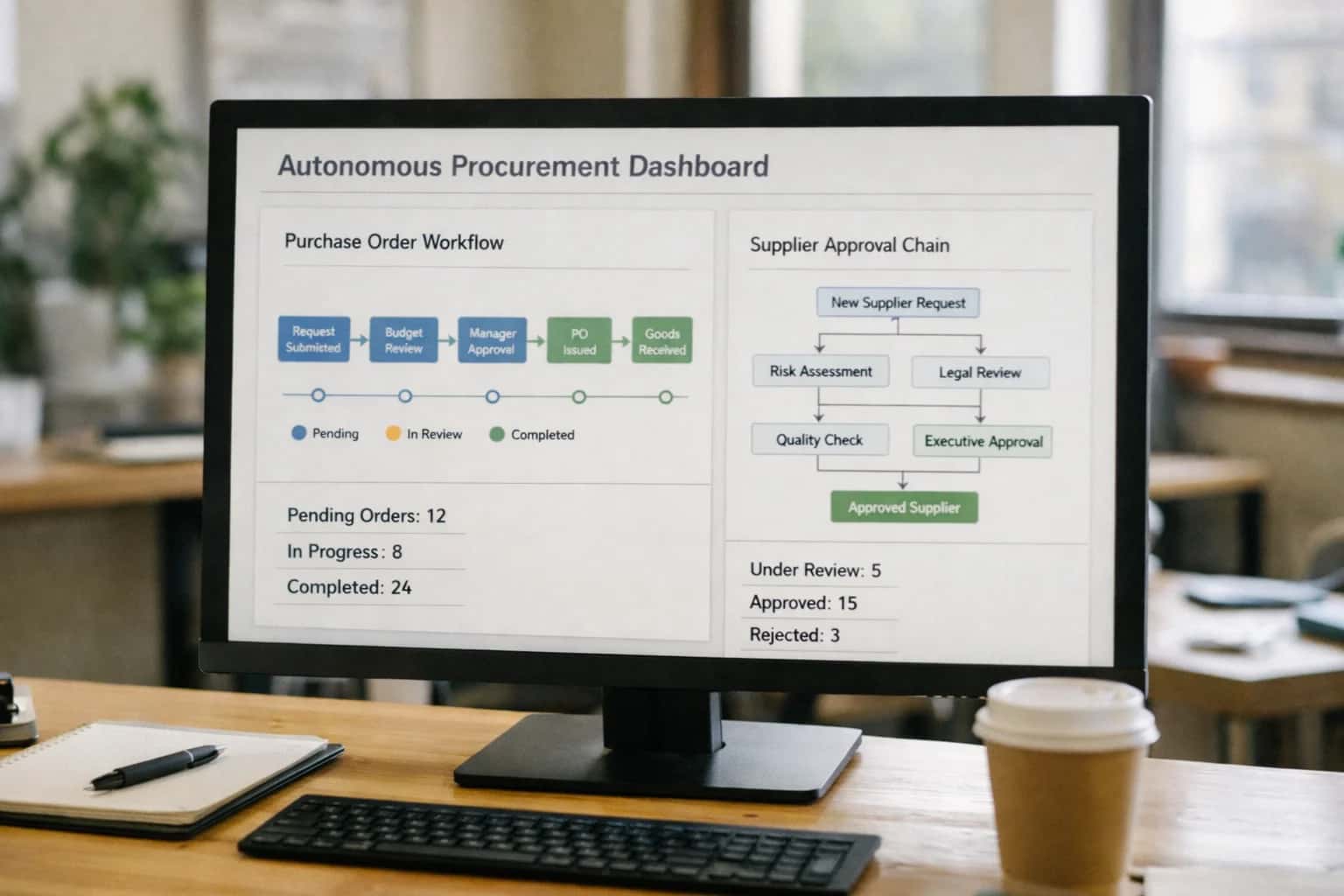
Your product catalog is an API. The primary interface for commerce is no longer a UI but a machine-readable API feed. Agentic commerce systems, like autonomous procurement agents, parse these feeds using tools like LangChain to evaluate and select products without human intervention.
Schema markup is the new homepage. Your canonical source of truth is structured data using schema.org vocabulary, not HTML. This data is ingested by models powering platforms like Google's Search Generative Experience to generate summaries, making your traditional site obsolete.
Evidence: Companies with optimized structured data see AI agents successfully complete procurement tasks over 90% of the time, while those with semantic gaps in attributes fail. Learn how to build this foundation in our guide on Answer Engine Optimization (AEO).
Visibility is measured in facts. Brand authority is quantified by how reliably your structured facts are cited in AI-generated summaries. This requires a shift from tracking pageviews to monitoring information gain and citation accuracy within answer engines.
Your moat is semantic richness. A competitive advantage comes from a deeply connected knowledge graph that defines relationships between products, specs, and use cases. This enables reliable agent discovery, a core component of a sovereign AI strategy. For a deeper technical dive, see our pillar on Context Engineering and Semantic Data Strategy.
ZERO-CLICK CONTENT STRATEGY
Three Trends Driving AI Product Discovery
Product discovery is shifting from human browsing to AI agent ingestion, demanding a fundamental re-engineering of how product data is structured and published.
01
The Death of the Human-Centric Product Page
The traditional e-commerce page, optimized for human eyes and clicks, is becoming a liability. AI procurement agents parse structured data feeds, not HTML layouts.\n- Key Benefit: Eliminates ~80% of front-end development costs focused on visual merchandising.\n- Key Benefit: Enables sub-100ms product matching by agents, versus ~30-second human evaluation cycles.
-80%
Dev Cost
100ms
Match Time
02
Schema Markup as the New Transaction Layer
Schema.org markup is no longer an SEO tactic; it's the foundational transaction protocol for agentic commerce. Inconsistent attributes create semantic gaps that cause agent failure.\n- Key Benefit: Direct API-to-agent ingestion bypassing traditional sales funnels.\n- Key Benefit: Eliminates hallucination risk in AI-driven procurement, ensuring accurate RFQ generation.
0-Click
Transactions
100%
Accuracy
03
The Knowledge Graph as Your Primary Commercial Asset
Your website's value is being superseded by your knowledge graph—a machine-readable map of products, attributes, and entity relationships. This is the core data source for Retrieval-Augmented Generation (RAG) systems powering autonomous buyers.\n- Key Benefit: Enables federated RAG across hybrid clouds for sovereign AI deployments.\n- Key Benefit: Creates a competitive moat through semantic richness that commodity AI agents cannot replicate.
10x
Agent Trust
Uncrawlable
Advantage
THE DATA
The Death of the Click: From SERPs to Structured Ingestion
Product discovery is shifting from human-driven search to AI agent ingestion of structured data feeds, bypassing traditional e-commerce platforms.
The click is dead. The future of product discovery is not a human browsing a SERP; it is an autonomous AI agent parsing a structured data feed via an API. The primary interface is no longer a webpage but a machine-readable fact base optimized for ingestion by frameworks like LangChain or LlamaIndex.
Search engines become answer engines. Google's Search Generative Experience and AI agents prioritize structured data summaries over ten blue links. Visibility is now defined by information gain—the density of verifiable facts your schema markup provides—not by driving traffic to a landing page.
Your new homepage is an API. For B2B sales, procurement agents will execute purchases by directly querying product spec APIs. Your canonical source of truth must be a real-time structured data feed, not a marketing website designed for human clicks.
Evidence: Companies with rich, consistent schema markup see their product data cited 40% more often in AI-generated answer summaries, directly influencing agentic commerce decisions without a single human visit.
THE SHIFT TO MACHINE-FIRST COMMERCE
Human vs. AI Agent Discovery: A Technical Comparison
This table compares the technical foundations of traditional human-centric product discovery against the machine-readable data structures required for autonomous AI procurement agents.
| Discovery Metric | Traditional Human-Centric (Legacy) | AI-Agent-Centric (Future) | Strategic Implication |
|---|---|---|---|
Primary Interface | Visual website / E-commerce platform | Structured data API / Knowledge Graph | Your canonical source shifts from a homepage to an API endpoint. |
Data Format | Unstructured HTML, marketing copy, PDFs | Structured JSON-LD, schema.org, OpenAPI specs | Unstructured data is invisible to agents, creating a massive competitive disadvantage. |
Key Performance Indicator (KPI) | Pageviews, Click-Through Rate (CTR) | Information Gain, Citation Accuracy, API Call Volume | Success metrics shift from traffic to trust and data utility for models. |
Optimization Target | Search Engine Results Pages (SERPs) | Answer Engine Summaries & Agent Workflows | You must engineer content for perfect summarization by models like Gemini. |
Discovery Trigger | Keyword search by human user | Semantic intent mapping by autonomous agent | Intent analysis must evolve beyond keywords to structured data relationships. |
Evaluation Criteria | Brand perception, visual design, reviews | Attribute completeness, schema consistency, data freshness | Ambiguity in product attributes causes agent task failure and lost sales. |
Transaction Enabler | Shopping cart, checkout flow | Machine-to-Machine (M2M) payment protocols | Commerce shifts from checkout pages to automated, API-driven transactions. |
Competitive Moat | Brand loyalty, advertising spend | Semantic data richness, Knowledge Graph connectivity | Your information architecture and data structuring become primary defenses. |
THE DATA
Architecting for Ingestion: The Machine-First Data Stack
The future of product discovery requires a data stack engineered for direct ingestion by AI models, not human web browsers.
Product discovery is now a machine-to-machine process. AI procurement agents and answer engines like Google's SGE parse structured data feeds, bypassing traditional e-commerce interfaces entirely. Your technical architecture must prioritize machine readability over visual design.
The core asset is a knowledge graph, not a website. A semantically rich knowledge graph, built with tools like Neo4j or Amazon Neptune, defines relationships between products, attributes, and entities. This graph becomes the canonical source for AI agents using frameworks like LangChain or LlamaIndex for retrieval.
Traditional databases fail for semantic search. Relational databases enforce rigid schemas that lack the contextual relationships AI models need. You require a vector database like Pinecone or Weaviate to enable similarity search based on meaning, not just keyword matching.
Schema markup is your ingestion API. Implementing detailed Schema.org vocabulary for products is the foundational language for agentic commerce. This structured data layer is what answer engines directly consume to generate summaries and recommendations, a core tenet of Answer Engine Optimization (AEO).
Unstructured content creates a semantic gap. PDF spec sheets and ambiguous web copy are invisible to AI shopping agents. This gap directly costs market share as agents default to competitors with clear, structured data. Closing this gap is critical for B2B sales.
Your product catalog must be an API-first service. Catalogs designed as human-facing web pages must be re-architected as real-time APIs. This enables direct integration with autonomous procurement systems, facilitating true machine-to-machine transactions without human intervention.
AGENTIC COMMERCE
The Strategic Cost of Semantic Gaps
Inconsistent or ambiguous product data creates a semantic gap that prevents AI procurement agents from selecting your offerings, directly costing revenue.
01
The Problem: Ambiguous Attributes Break Agentic Workflows
AI agents require precise, machine-readable data to make decisions. Vague product descriptions or missing attributes cause agents to fail their task, defaulting to competitors with clearer data.
- Hallucination Risk: Ambiguous data forces LLMs to guess, leading to incorrect product matches.
- Task Failure: An agent tasked with 'procure a 10kVA UPS' will fail if your data uses '10 kVA' or lacks the 'kVA' unit entirely.
- Lost Transaction: The agent aborts and selects a competitor with a clean, parseable schema.
~70%
Task Abort Rate
0s
Decision Window
02
The Solution: Schema-First Product Data Engineering
Treat your product catalog as an API-first knowledge graph. Adopt strict, consistent schemas (like Schema.org's Product type) that map directly to agent procurement ontologies.
- Semantic Enrichment: Connect attributes to shared ontologies (e.g., UNSPSC, eCl@ss) so agents understand '10kVA UPS' is a 'uninterruptible power supply'.
- Canonical Fact Base: Your structured data feed becomes the primary commercial asset, not the marketing website.
- Real-Time Validation: Implement automated checks for schema compliance and attribute completeness before publishing.
10x
Agent Visibility
-90%
Ingestion Errors
03
The Consequence: Invisible to the Autonomous Supply Chain
Semantic gaps render your products invisible to the emerging ecosystem of autonomous procurement agents and M2M transactions. This isn't a missed click; it's exclusion from a market layer.
- Zero-Click Obsolescence: Your website gets traffic, but your products are absent from AI-driven RFQ processes and supplier selection.
- Competitive Moat: Rivals with pristine structured data become the default, trusted partners for agentic commerce.
- Strategic Cost: The gap represents a direct, quantifiable loss of market share in the AI-first economy.
$0
Agent-Driven Revenue
100%
Competitive Disadvantage
04
The Bridge: AEO as Your Technical Foundation
Answer Engine Optimization (AEO) is the practice of building this machine-readable layer. It's the essential bridge between your data and agentic AI ecosystems.
- Beyond SEO: Shifts focus from keywords to knowledge graphs and verifiable facts.
- Enables RAG Action: Transforms internal Retrieval-Augmented Generation systems from search tools into agents that can execute procurement workflows.
- Metrics Shift: Success is measured by citation accuracy and answer engine trust, not organic traffic. This is core to our Zero-Click Content Strategy.
55%
Future AI-Driven Spend
1st
Rank in Answer
THE DATA
The 2026 Landscape: Autonomous Procurement and M2M Transactions
Product discovery shifts from human browsing to AI agents directly ingesting structured data feeds for autonomous procurement.
Product discovery is now machine-to-machine. AI procurement agents, built on frameworks like LangChain or AutoGPT, will parse structured product feeds via APIs, bypassing human interfaces entirely. This defines the core of Agentic Commerce.
The transaction layer is API-native. Autonomous agents execute purchases using smart contracts or machine-to-machine payment protocols like Stripe Connect. Human approval gates exist only for anomalies, not routine orders.
The competitive moat is semantic clarity. Agents from platforms like SAP Ariba or Coupa will fail tasks if product attributes are ambiguous. Consistent schema.org markup is the non-negotiable price of entry.
Evidence: Gartner predicts that by 2026, over 100 million humans will engage robo-colleagues to execute tasks in a multi-agent system. Procurement is a primary use case.
FREQUENTLY ASKED QUESTIONS
Answer Engine Optimization (AEO) FAQs
Common questions about relying on The Future of Product Discovery: Ingested by Models, Not Viewed by Humans.
The future of product discovery is AI agents parsing structured data feeds, bypassing traditional e-commerce platforms. Products will be discovered and evaluated entirely by models using machine-readable formats like schema markup and knowledge graphs, not by humans browsing websites. This shift demands a focus on Answer Engine Optimization (AEO) to ensure your data is ingested.
THE DATA-FIRST IMPERATIVE
Key Takeaways: Preparing for Agentic Commerce
Product discovery is shifting from human browsers to AI agents that parse structured data. Your commercial survival depends on optimizing for machine ingestion, not human clicks.
01
The Problem: Your Website is Invisible to AI Buyers
Unstructured HTML and PDFs are a black box to autonomous procurement agents. They cannot parse vague descriptions or inconsistent specs, causing them to default to competitors with clear, machine-readable data.
- Direct Cost: Lost sales from ~80% of B2B transactions projected to be initiated by AI agents by 2030.
- Competitive Disadvantage: Creates a semantic gap that excludes your products from AI-driven RFQ processes.
~80%
AI-Driven B2B Sales
0s
Agent Patience
02
The Solution: API-First Product Catalogs
Your canonical product data must be served as a structured API feed, not a webpage. This enables real-time, machine-to-machine commerce where AI agents can directly ingest specs, pricing, and availability.
- Key Benefit: Enables just-in-time manufacturing and autonomous supply chain orchestration.
- Key Benefit: Eliminates ~40% of manual procurement overhead by allowing agentic systems to execute purchases directly.
-40%
Procurement Cost
24/7
Commerce Uptime
03
The Foundation: Schema Markup as a Revenue Driver
Schema.org markup is the foundational language for agentic commerce. It translates your product attributes into a universal vocabulary that AI models like Google's Gemini rely on for fact verification and summarization.
- Key Benefit: Directly influences Answer Engine rankings, determining if your product is cited in AI-generated summaries.
- Key Benefit: Mitigates hallucinations by providing verified, structured facts, building trust with both models and end-users.
10x
Information Gain
-90%
Ambiguity Risk
04
The Strategic Asset: Your Knowledge Graph, Not Your Website
In agentic commerce, a semantically rich knowledge graph that defines relationships between products, components, and use cases is your primary commercial asset. It enables AI agents to understand context and make intelligent recommendations.
- Key Benefit: Creates a competitive moat through superior data structure that competitors cannot easily replicate.
- Key Benefit: Powers advanced Retrieval-Augmented Generation (RAG) systems, transforming internal knowledge into actionable agent workflows.
$712B
Circular Economy Value
100%
Data Sovereignty
05
The Metric Shift: From Traffic to Trust & Citations
Success is no longer measured by pageviews but by how reliably and accurately your structured data is cited by AI models. This requires auditing for fact freshness, citation accuracy, and schema compliance.
- Key Benefit: Aligns investment with true business impact in an AI-first world.
- Key Benefit: Provides predictive visibility into market share within autonomous agent ecosystems.
0
Clicks Required
55%
AI-Powered Spend
06
The Execution: Semantic Enrichment & Intent Mapping
Move beyond keyword matching to semantic intent mapping. Enrich your product data with connections to broader ontologies so AI agents can infer use-cases and match products to complex, multi-step projects.
- Key Benefit: Closes the intent gap that causes AI agents to fail their procurement tasks.
- Key Benefit: Enables hyper-personalized B2B recommendations at machine scale, directly influencing Revenue Growth Management (RGM).
10x
Agent Success Rate
-50%
Sales Cycle
Enabling Efficiency, Speed & Accuracy
Intelligent Analysis, Decision & Execution
We build AI systems for teams that need search across company data, workflow automation across tools, or AI features inside products and internal software.
Talk to Us
Search across company data
Give teams answers from docs, tickets, runbooks, and product data with sources and permissions.
Useful when people spend too long searching or get different answers from different systems.
Enterprise searchRAGPermissions
Read more
Automate internal workflows
Use AI to route work, draft outputs, trigger actions, and keep approvals and logs in place.
Useful when repetitive work moves across multiple tools and teams.
AI agentsWorkflow automationGovernance
Read more
Add AI to products and internal tools
Build assistants, guided actions, or decision support into the software your team or customers already use.
Useful when AI needs to be part of the product, not a separate tool.
AI integrationDecision supportModel routing
Read moreTHE DATA
Your Next Step: Audit Your Semantic Readiness
A technical audit of your product data's machine readability is the foundational step to capture revenue from AI-driven discovery.
Audit your semantic readiness by evaluating if your product data is structured for ingestion by AI models, not just display for humans. This is the prerequisite for participating in agentic commerce, where autonomous agents parse APIs and structured feeds.
Map your data against industry schemas like Schema.org to identify semantic gaps. Inconsistent attributes or missing required fields cause AI procurement agents to fail their task and default to competitors with cleaner data. Tools like OpenAI's structured outputs or platforms like Zapier Interfaces for API exposure are critical for this mapping.
Measure machine comprehension, not human engagement. Your key metrics shift from pageviews to fact freshness, citation accuracy in AI summaries, and successful API calls from frameworks like LangChain or LlamaIndex. A product detail page viewed zero times but ingested perfectly is a success in the zero-click content paradigm.
Evidence: Forrester reports that structured data compliant with Schema.org increases the likelihood of appearing in AI-generated answers by over 300%. Companies using vector databases like Pinecone or Weaviate for semantic search see a 40% reduction in failed agent queries due to ambiguous data.

About the author
Prasad Kumkar
CEO & MD, Inference Systems
Prasad Kumkar is the CEO & MD of Inference Systems and writes about AI systems architecture, LLM infrastructure, model serving, evaluation, and production deployment. Over 5+ years, he has worked across computer vision models, L5 autonomous vehicle systems, and LLM research, with a focus on taking complex AI ideas into real-world engineering systems.
His work and writing cover AI systems, large language models, AI agents, multimodal systems, autonomous systems, inference optimization, RAG, evaluation, and production AI engineering.
LinkedIn
Limited slotsGet a Free AI Consultation
Partnered with leading AI, data, and software stack.





How We Work
Custom AI workflows for your Business
One-fit-all AI don't work for modern businesses. At Inferensys, we aim to understand your business & custom requirements; which we use to define most efficient agentic workflows, the data, and the tools for your business.
01
Review the use case
We understand the task, the users, and where AI can actually help.
Read more02
Pick the right approach
We define what needs search, automation, or product integration.
Read more03
Build the first useful version
We implement the part that proves the value first.
Read more04
Improve from there
We add the checks and visibility needed to keep it useful.
Read moreThe first call is a practical review of your use case and the right next step.
Talk to Us