Your MLOps pipeline is a compliance liability because it treats data and model governance as a technical afterthought, not a legal boundary. Tools like MLflow and Kubeflow manage model lifecycle but lack native policy enforcement for the EU AI Act or China's data security law.

Blog
Why Sovereign AI Requires a New MLOps Discipline
Sovereign AI isn't just a deployment target; it's a fundamental constraint that breaks traditional MLOps. This article explains why managing model lifecycle, drift, and deployment within strict geographic and legal boundaries demands a new discipline with new tools and governance frameworks.
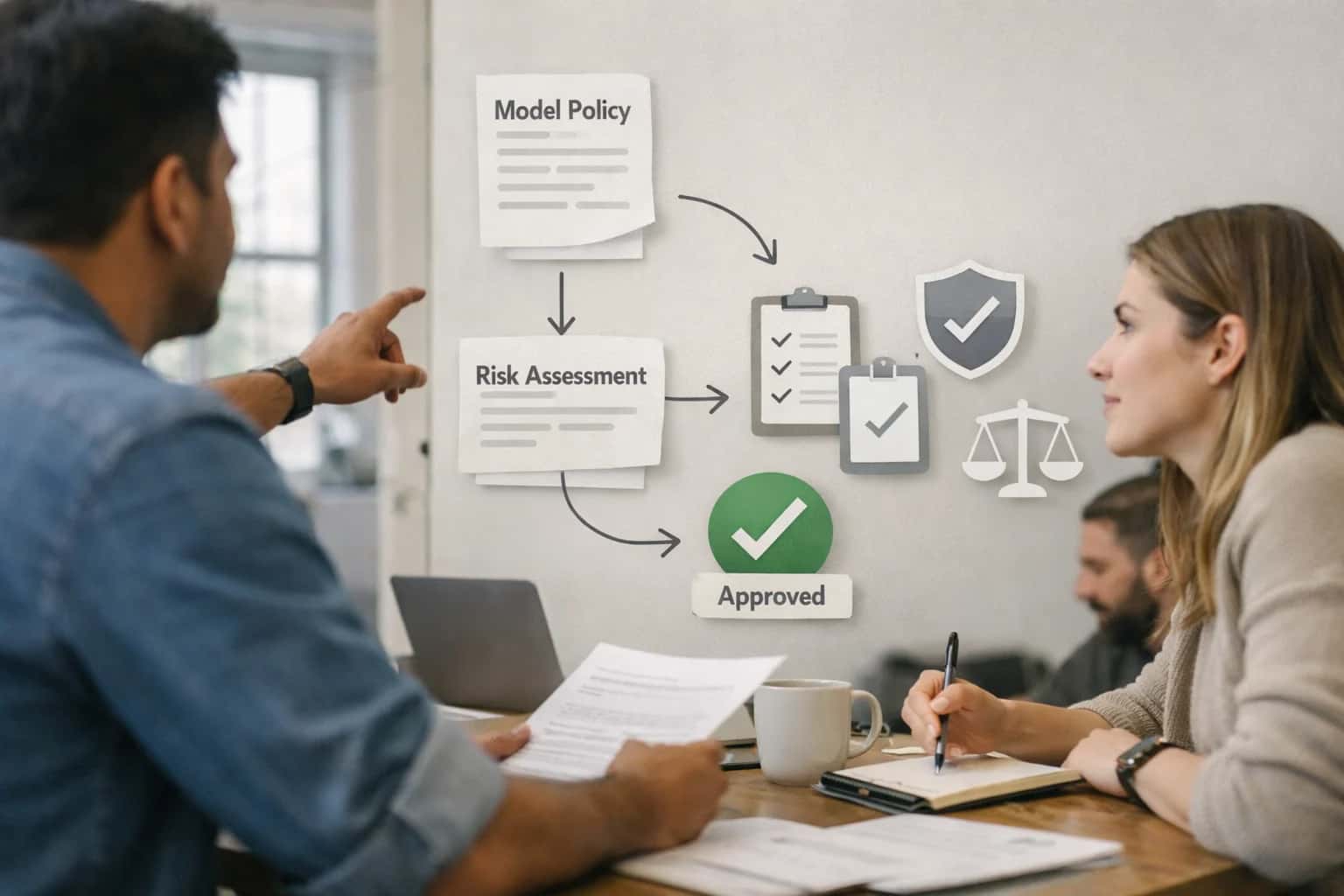
THE COMPLIANCE GAP
Your MLOps Pipeline is a Geopolitical Liability
Traditional MLOps tooling is blind to data sovereignty laws, creating massive regulatory and security exposure.
Sovereign MLOps enforces jurisdictional guardrails by integrating policy-aware connectors directly into the CI/CD pipeline. This prevents a model trained in Frankfurt from being deployed to a server in Virginia, averting a GDPR violation that incurs fines up to 4% of global revenue.
Model drift detection must now include legal drift. A retraining trigger isn't just based on performance decay but on changes to local regulations, requiring a new discipline of compliance-aware monitoring that tools like Weights & Biases do not provide.
Evidence: A 2023 Gartner survey found 75% of organizations will face operational disruption due to cross-border data regulations by 2026, a risk directly managed by sovereign MLOps frameworks. Deploying a model without this control is a direct geopolitical liability.
The new stack is region-locked by design. Sovereign MLOps replaces global SaaS platforms with air-gapped deployments of vLLM for inference and Pinecone or Weaviate for vector storage, all orchestrated within a single jurisdiction. This architecture is the foundation of a true sovereign AI stack.
THE CATALYSTS
Three Trends Forcing the Sovereign MLOps Shift
Sovereign AI is not a choice but a mandate, driven by three converging forces that render traditional, borderless MLOps obsolete.
01
The Weaponization of Data Residency
Jurisdictions like the EU are enforcing data residency not as a guideline but as a territorial weapon. The EU AI Act imposes fines of up to 7% of global turnover for non-compliance, making cross-border data flows for model training or inference a direct legal liability.
- Regulatory Enforcement: Automated policy-aware connectors are required to enforce data residency at the API layer.
- Jurisdictional Risk: A single unauthorized data transfer can trigger massive fines and operational shutdowns.
7%
GDPR-Scale Fines
0ms
Tolerance for Error
02
The Geopolitical Fragmentation of Cloud
Hyperscale cloud providers are geopolitical entities, subject to foreign jurisdiction, export controls like US EAR, and sanctions. Dependence on a single global region creates a catastrophic single point of failure for national infrastructure and critical industries.
- Supply Chain Risk: GPU allocations and API access can be revoked overnight based on diplomatic tensions.
- Strategic Resilience: Sovereign MLOps must orchestrate workloads across regional AI clouds and air-gapped private infrastructure to ensure continuity.
100%
Vendor Lock-in Risk
24h
To Disruption
03
The Hidden Compliance Tax of Global Models
Using proprietary models like GPT-4 or Claude for sovereign data incurs a massive, hidden operational overhead. Every inference request requires PII redaction, audit logging, and legal review for cross-border data transfer, eroding ROI and slowing time-to-insight to a crawl.
- Operational Drag: The manual compliance burden can increase project timelines by ~300%.
- Architectural Mandate: Sovereign MLOps requires local inference engines (e.g., vLLM, Triton) and open-source model hubs (e.g., Hugging Face) deployed within sovereign boundaries.
300%
Timeline Bloat
-70%
ROI Erosion
ARCHITECTURAL SHIFT
Traditional vs. Sovereign MLOps: A Core Architecture Comparison
This table compares the core architectural principles of Traditional MLOps, designed for global cloud scale, against Sovereign MLOps, engineered for legal and geographic control.
| Architectural Feature | Traditional MLOps (Global Cloud) | Sovereign MLOps (Geopatriated) |
|---|---|---|
Primary Infrastructure Provider | Hyperscaler (AWS, Azure, Google Cloud) | Regional Cloud / On-Premises / Sovereign Provider |
Data Residency Enforcement | Manual policy configuration | Architecture-Enforced via policy-aware connectors |
Model Provenance & Lineage | Vendor-managed (e.g., SageMaker, Vertex AI) | Air-Gapped tooling (e.g., local Weights & Biases, MLflow) |
Inference Geography | Global anycast network | Geofenced to sovereign jurisdiction |
Compliance Audit Trail | Logs stored in provider region | Immutable logs on sovereign infrastructure |
Model Registry Location | Centralized, global endpoint | Federated or region-specific registry |
Drift Detection Data Flow | Training data can cross borders | Data Never Leaves sovereign territory |
Disaster Recovery Strategy | Multi-region failover (global) | Sovereign-region-only failover pairs |
THE ARCHITECTURE
The Four Pillars of a Sovereign MLOps Framework
Sovereign AI demands a new MLOps discipline built on four foundational pillars that enforce geographic, legal, and operational control.
Sovereign MLOps enforces legal boundaries by integrating policy-aware connectors and governance frameworks directly into the model lifecycle to guarantee compliance with regulations like the EU AI Act.
Geographic data control is non-negotiable. Sovereign MLOps tools like Weights & Biases and MLflow must be deployed on regional infrastructure, such as OVHcloud or StackPath, to prevent unauthorized cross-border data flows and ensure data residency.
Model provenance becomes a core feature. Every training run, dataset version, and inference event requires immutable, auditable logging within the sovereign jurisdiction, a requirement that global MLOps platforms cannot inherently guarantee.
Federated learning is a first-class citizen. Sovereign MLOps frameworks must orchestrate training across distributed, air-gapped data silos using techniques like secure multi-party computation, avoiding the need to centralize sensitive data.
Evidence: A 2024 Gartner survey found that 65% of organizations will repatriate AI workloads from public clouds by 2027, primarily due to sovereignty concerns, creating massive demand for this new tooling category.
The stack is purpose-built. A sovereign MLOps framework integrates open-source models like Meta Llama, local vector databases like Weaviate, and confidential computing enclaves to create a fully controlled sovereign AI stack.
This is not cloud-agnostic. Traditional MLOps assumes elastic, borderless compute. Sovereign MLOps inverts this, treating geographic and legal constraints as the primary design parameters for hybrid cloud AI architecture.
WHY SOVEREIGN AI DEMANDS A NEW PARADIGM
The Hidden Risks of Retrofitting Standard MLOps
Applying global-cloud MLOps tools to sovereign AI stacks creates compliance gaps, performance bottlenecks, and hidden technical debt.
01
The Problem: Data Residency Violations in Model Pipelines
Standard MLOps platforms like MLflow or Kubeflow often have opaque data routing, causing training data or model artifacts to traverse international borders. This violates laws like the EU AI Act and GDPR, incurring potential fines of up to 4% of global turnover.
- Silent Data Egress: Metadata and telemetry sent to a US-based SaaS control plane.
- Broken Audit Trails: Inability to prove full data lineage within a single jurisdiction.
- Compliance Theater: Tools claim 'sovereign' features but rely on foreign-owned core services.
~100%
Non-Compliant
$10M+
Potential Fine
02
The Solution: Policy-Aware Sovereign MLOps
A new discipline embeds geofencing and legal guardrails directly into the CI/CD pipeline. Tools like Weights & Biases (local deployment) and vLLM must be configured with policy-aware connectors that enforce data residency at the API layer.
- Infrastructure-as-Code for Compliance: Define legal boundaries in Terraform/Ansible.
- Air-Gapped Model Registries: Keep all artifacts within sovereign cloud or on-prem.
- Local-First Observability: Replace Datadog/Splunk with regional monitoring stacks.
0%
Cross-Border Leakage
-70%
Audit Overhead
03
The Problem: Geopolitical Latency in Inference
Retrofitted MLOps cannot optimize for the 'sovereign region' as a primary dimension. Model serving that depends on global load balancers adds ~200-500ms latency and creates a single point of failure subject to export controls.
- Vendor Lock-in at the Edge: Inability to deploy identical pipelines to regional clouds like OVHcloud or Alibaba Cloud.
- Inference Economics Penalty: Paying egress fees to pull models from a central, non-compliant repository.
- Broken DR/BCP: Disaster recovery plans fail when they rely on infrastructure in an adversarial jurisdiction.
+300ms
Latency Penalty
1
Single Point of Failure
04
The Solution: Sovereign-Aware Model Orchestration
Sovereign MLOps treats the legal jurisdiction as a first-class deployment target. It uses federated learning patterns and regional GPU clusters to keep the full lifecycle local. This aligns with our pillar on Hybrid Cloud AI Architecture and Resilience.
- Region-Specific Model Caching: Deploy Llama or Mistral variants to local inference endpoints.
- Sovereign CI/CD: GitLab/GitHub runners provisioned exclusively on sovereign IaaS.
- Compliance-by-Design: Every pipeline stage validates against a sovereign policy manifest.
<50ms
Local Inference
100%
Jurisdictional Guarantee
05
The Problem: Unmanaged Sovereign Technical Debt
Retrofitting creates a shadow architecture of manual patches, custom scripts, and fragmented governance. This debt compounds with each new regulation (e.g., EU AI Act classification) and makes scaling impossible, a core challenge addressed in our AI TRiSM pillar.
- Manual Compliance Checks: Teams manually vet model cards and data sheets.
- Inconsistent Security Posture: Different encryption standards across sovereign vs. global deployments.
- Unified Visibility Gap: No single pane of glass for model performance across sovereign regions.
2-3x
More DevOps Hours
High
Operational Risk
06
The Solution: Sovereign MLOps as a Governance Framework
The new discipline is a governance layer that integrates tools for explainability, adversarial testing, and drift detection that operate within sovereign boundaries. It connects to our work on Legacy System Modernization to avoid pilot purgatory.
- Automated Compliance Reporting: Generate EU AI Act conformity assessments from pipeline metadata.
- Sovereign Model Ops: Unified dashboards for drift across geographically isolated deployments.
- Built-in Red Teaming: Schedule adversarial attacks within the sovereign environment before production.
-60%
Time to Audit
1
Unified Control Plane
THE ARCHITECTURE
The Cloud Agnosticism Fallacy
The promise of multi-cloud portability is a strategic trap for Sovereign AI, where geopolitical borders dictate where data and compute must reside.
Cloud agnosticism is a strategic trap for Sovereign AI. The promise of workload portability between AWS, Azure, and Google Cloud fails when data residency laws like the EU AI Act mandate that data and compute never leave a specific jurisdiction. True sovereignty requires a re-architecture around regional infrastructure, not abstracted portability.
Agnosticism creates a hidden compliance tax. Tools like Kubernetes and Terraform enable multi-cloud deployment, but they cannot manage the geopolitical and legal boundaries that define sovereign operations. The operational overhead of auditing data flows across abstracted clouds erodes any potential cost savings.
Sovereign MLOps demands a new discipline. Managing a model lifecycle with tools like Weights & Biases or MLflow within a single sovereign region is straightforward. Governing model drift, versioning, and security across multiple, isolated sovereign stacks requires a fundamentally new policy-aware orchestration layer.
Evidence: A 2024 Gartner report notes that by 2027, over 50% of multinationals will use regional cloud platforms for sovereign AI workloads, driven by the impossibility of enforcing data residency on hyperscale multi-cloud architectures. This shift necessitates new tools beyond traditional MLOps.
The future stack is geopatriated by design. Sovereign AI success depends on integrating open-source models like Meta Llama, local vector databases such as Qdrant, and air-gapped inference engines like vLLM on regional GPU clusters. This architecture, detailed in our guide to sovereign AI stacks, guarantees control where cloud agnosticism guarantees risk.
THE INFRASTRUCTURE IMPERATIVE
Key Takeaways: The Sovereign MLOps Mandate
Traditional MLOps fails under sovereign constraints. A new discipline is required to manage the AI lifecycle within strict geographic and legal boundaries.
01
The Problem: Jurisdictional Model Drift
A model trained in one region can become biased or non-compliant when deployed in another due to local data patterns and laws. Traditional drift detection ignores legal boundaries.
- Legal Drift: Model outputs violate new regional regulations (e.g., EU AI Act).
- Performance Drift: Local dialect or data schema changes degrade accuracy.
- Governance Gap: No unified view of model health across sovereign deployments.
~30%
Accuracy Drop
€35M+
Potential Fine
02
The Solution: Policy-Aware MLOps Orchestrators
New tools like Weights & Biases and Kubeflow must be extended with policy engines that enforce geographic constraints on data, compute, and model artifacts.
- Geo-Fenced Pipelines: Automatically route training/inference to compliant regions.
- Compliance-as-Code: Embed legal guardrails (e.g., data residency) into CI/CD.
- Sovereign Audit Trails: Immutable logs proving chain of custody within a jurisdiction.
100%
Audit Coverage
-70%
Compliance Ops
03
The Problem: The Air-Gapped Deployment Deadlock
Sovereign environments for defense or finance are often air-gapped. Standard MLOps tooling that phones home for updates or telemetry is a non-starter.
- Tool Incompatibility: Cloud-native MLOps platforms fail without internet.
- Update Paralysis: Manual, infrequent model updates create security and performance risks.
- Visibility Blackout: No operational metrics from isolated production models.
6-12 mos.
Update Lag
0%
Real-Time Monitoring
04
The Solution: Sovereign-First MLOps Platforms
Architectures built for disconnected operation, using local artifact repositories and confidential computing enclaves for secure, offline model management.
- Local Model Registries: Host open-source models like Meta Llama on-premises.
- Offline Drift Detection: Use federated analytics to compute metrics locally.
- Secure Model Serving: Deploy with vLLM or Triton in trusted execution environments.
<1ms
Local Latency
Air-Gapped
Security Posture
05
The Problem: Fractured Governance Across Regions
Splitting AI workloads across sovereign regions creates a governance nightmare for version control, security policies, and rollback procedures.
- Inconsistent Patching: Different model versions in different regions.
- Policy Fragmentation: Security rules that can't be enforced uniformly.
- Rollback Chaos: A failed update in one region can't be coordinated globally.
5x
Admin Overhead
+300%
Security Surface
06
The Solution: Federated Model Governance
A master control plane that manages hybrid cloud AI architecture, synchronizing only metadata and policies—not sensitive data—across sovereign boundaries.
- Central Policy, Local Execution: Define rules once, deploy everywhere.
- GitOps for Models: Use MLflow with regional forks for version control.
- Unified Dashboard: Aggregate high-level compliance status without moving raw data.
1 Pane
Of Glass
-90%
Coordination Time
Enabling Efficiency, Speed & Accuracy
Intelligent Analysis, Decision & Execution
We build AI systems for teams that need search across company data, workflow automation across tools, or AI features inside products and internal software.
Talk to Us
Search across company data
Give teams answers from docs, tickets, runbooks, and product data with sources and permissions.
Useful when people spend too long searching or get different answers from different systems.
Enterprise searchRAGPermissions
Read more
Automate internal workflows
Use AI to route work, draft outputs, trigger actions, and keep approvals and logs in place.
Useful when repetitive work moves across multiple tools and teams.
AI agentsWorkflow automationGovernance
Read more
Add AI to products and internal tools
Build assistants, guided actions, or decision support into the software your team or customers already use.
Useful when AI needs to be part of the product, not a separate tool.
AI integrationDecision supportModel routing
Read moreTHE INFRASTRUCTURE
Audit Your MLOps Stack for Sovereignty Gaps
Your existing MLOps tools are designed for global clouds, creating critical compliance and control gaps in a sovereign AI world.
Sovereign MLOps is a new discipline because traditional tools like Weights & Biases or MLflow assume borderless data flow and compute, violating core tenets of data residency and jurisdictional control mandated by frameworks like the EU AI Act.
Your model registry is a liability. If it's hosted on AWS us-east-1, your model artifacts and lineage data are subject to U.S. jurisdiction, creating an immediate sovereignty gap for EU or APAC deployments. You need a geopatriated registry.
Monitoring tools lack policy awareness. Drift detection in Databricks or SageMaker does not automatically enforce geo-fencing rules. A model retrained on data that crossed a sovereign boundary creates a compliance breach. Your stack needs policy-aware connectors.
Evidence: A 2024 Gartner survey found that 78% of organizations using global cloud MLOps platforms cannot technically enforce data sovereignty rules at the model lifecycle level, leading to audit failures.
The fix is architectural. You must replace or wrap global services with sovereign-compliant alternatives: use vLLM for local inference, Weaviate or Qdrant for in-region vector search, and air-gapped pipelines. This is the foundation of a true sovereign AI stack.
Audit your CI/CD first. If your Kubeflow pipelines pull base images from Docker Hub or use GitHub Actions runners in undefined locations, you have already lost control. Sovereignty requires a fully mapped software bill of materials (SBOM) and on-prem/regional runners.
This is not optional. The operational and financial risk of non-compliance dwarfs the cost of this re-platforming. For a deeper analysis of the strategic imperative, see Why Sovereign AI is a Board-Level Imperative.

About the author
Prasad Kumkar
CEO & MD, Inference Systems
Prasad Kumkar is the CEO & MD of Inference Systems and writes about AI systems architecture, LLM infrastructure, model serving, evaluation, and production deployment. Over 5+ years, he has worked across computer vision models, L5 autonomous vehicle systems, and LLM research, with a focus on taking complex AI ideas into real-world engineering systems.
His work and writing cover AI systems, large language models, AI agents, multimodal systems, autonomous systems, inference optimization, RAG, evaluation, and production AI engineering.
LinkedIn
Limited slotsGet a Free AI Consultation
Partnered with leading AI, data, and software stack.





How We Work
Custom AI workflows for your Business
One-fit-all AI don't work for modern businesses. At Inferensys, we aim to understand your business & custom requirements; which we use to define most efficient agentic workflows, the data, and the tools for your business.
01
Review the use case
We understand the task, the users, and where AI can actually help.
Read more02
Pick the right approach
We define what needs search, automation, or product integration.
Read more03
Build the first useful version
We implement the part that proves the value first.
Read more04
Improve from there
We add the checks and visibility needed to keep it useful.
Read moreThe first call is a practical review of your use case and the right next step.
Talk to Us