Unexplainable AI violates due process. When a smart traffic system denies a permit or an algorithmic resource allocator prioritizes one neighborhood over another, the municipality must provide a legally defensible rationale. A black box model like a deep neural network cannot produce this audit trail, creating liability under emerging frameworks like the EU AI Act. This is a core challenge addressed by our work in AI TRiSM.

Blog
Why Explainable AI Is a Legal Imperative for Smart City Contracts
When AI allocates public resources or makes safety-critical decisions, municipalities must be able to audit and justify those outcomes. Unexplainable 'black box' AI creates unacceptable legal liability and public distrust. This analysis details the non-negotiable case for explainability in urban AI contracts.
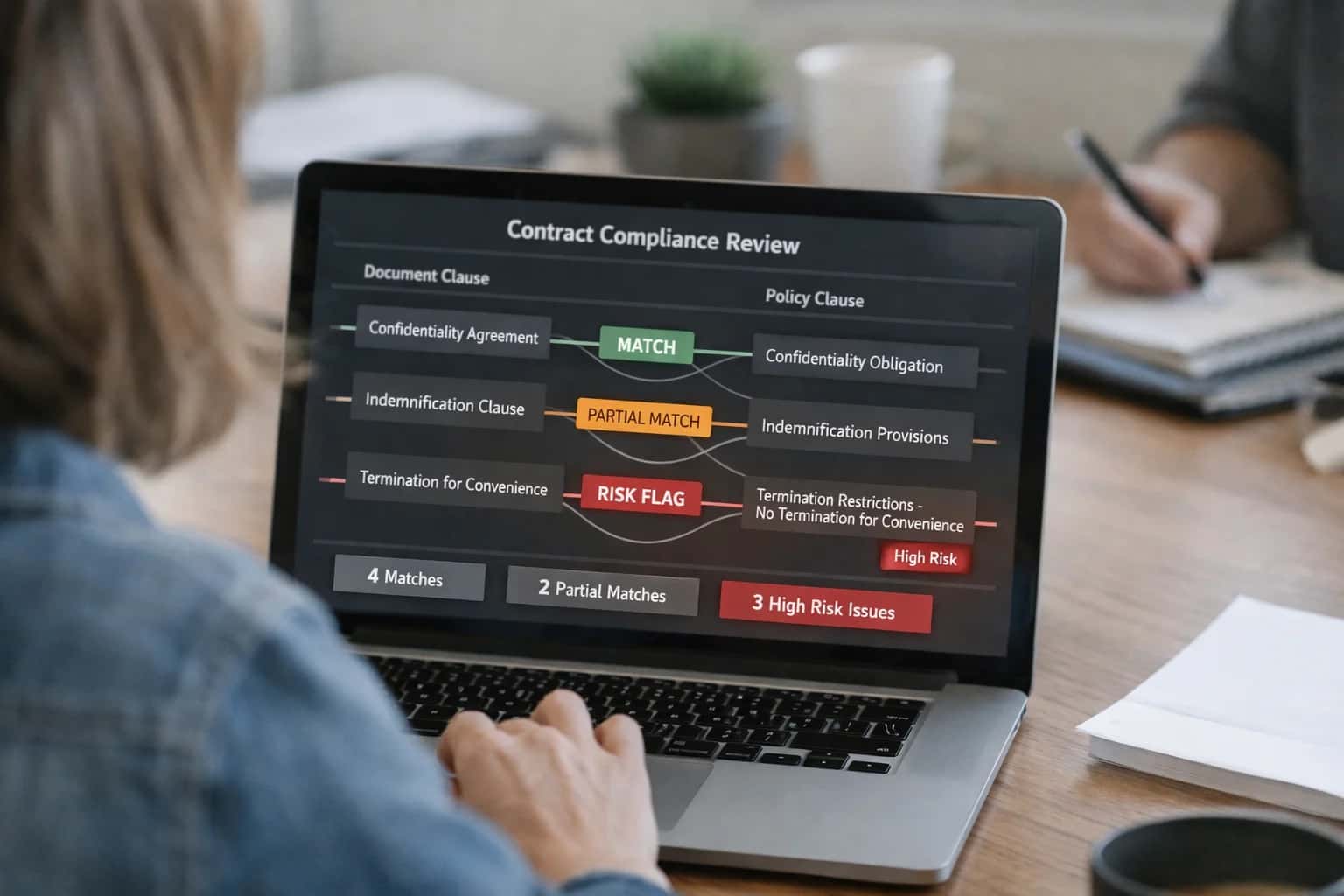
THE LEGAL LIABILITY
The Black Box Problem in Public Infrastructure
Unexplainable AI decisions in public infrastructure create untenable legal and ethical risks for municipalities.
Public trust requires algorithmic transparency. Citizens have a right to understand decisions affecting their safety and services. Opaque AI systems erode this trust, especially when outcomes appear biased. Explainable AI (XAI) techniques, such as SHAP (SHapley Additive exPlanations) or LIME (Local Interpretable Model-agnostic Explanations), provide the necessary visibility into model logic, turning a liability into a public accountability tool.
Contractual compliance demands verifiability. Smart city contracts with vendors like Siemens or Cisco increasingly mandate explainability clauses. A city cannot certify that a predictive maintenance model for water mains is operating as specified if its failure predictions are inscrutable. This shifts the technical requirement from performance metrics to auditable decision pathways, a key component of sovereign AI infrastructure.
Evidence: The 2023 case study of a European city's welfare fraud detection algorithm. The system flagged thousands of cases but provided no reasoning, leading to a legal injunction and public outcry. Implementing XAI post-hoc reduced erroneous flags by 35% and restored procedural legitimacy.
THE LEGAL IMPERATIVE
Key Takeaways: The Non-Negotiables of Urban AI
For municipal contracts, explainable AI (XAI) is not a nice-to-have feature; it is a fundamental requirement for legal defensibility, public trust, and operational accountability.
01
The EU AI Act's 'High-Risk' Classification
Smart city systems for resource allocation, public safety, and infrastructure management are explicitly classified as 'high-risk' under the EU AI Act. This mandates strict documentation, human oversight, and a right to explanation for any AI-driven decision affecting citizens. Failure to comply risks fines of up to €35 million or 7% of global turnover.
- Legal Mandate: Contracts must include XAI provisions for auditability.
- Public Trust: Transparent models mitigate backlash and build civic confidence.
- Vendor Liability: Solution providers share legal responsibility for opaque systems.
€35M+
Potential Fine
High-Risk
Legal Classification
02
The Discovery & Litigation Problem
When an AI system's decision is challenged in court—e.g., an unfair traffic fine or biased service allocation—the municipality must produce a clear audit trail. Black-box models are legally indefensible. Judges can compel the disclosure of model logic, training data, and decision pathways.
- Audit Trail: XAI provides a reproducible record for legal discovery.
- Duty of Care: Cities have a fiduciary duty to understand their operational tools.
- Contractual Shield: XAI clauses protect against third-party liability claims.
100%
Auditability Required
Zero-Tolerance
For Opaque Logic
03
The Public Records Request Avalanche
Citizens and journalists increasingly file Freedom of Information Act (FOIA) requests for algorithmic decision-making details. Without XAI, fulfilling these requests is technically impossible, leading to legal penalties and reputational damage. Proactive transparency is cheaper than reactive litigation.
- FOIA Compliance: Explainable outputs are essential for public records law.
- Proactive Defense: Documented model reasoning preempts information requests.
- Cost Avoidance: Legal battles over opaque AI can cost millions in fees.
10x
Higher Legal Cost
Mandatory
FOIA Response
04
The Bias & Discrimination Liability
If an AI model allocates resources inequitably—such as prioritizing snow plowing in wealthy neighborhoods—the city faces discrimination lawsuits. XAI techniques like SHAP and LIME are necessary to detect, diagnose, and prove the mitigation of bias in training data and model outputs.
- Disparate Impact: Unexplainable models hide discriminatory patterns.
- Remediation Proof: XAI provides evidence of corrective actions.
- Class Action Risk: Systemic bias can lead to large-scale litigation.
SHAP/LIME
Required Tools
Class Action
Liability Risk
05
The Vendor Contract & SLA Enforceability
Service Level Agreements (SLAs) for AI performance are meaningless without explainability. How do you prove a model failed if you can't inspect its reasoning? XAI provides the technical basis for enforcing contracts, withholding payment, or terminating vendors for non-performance.
- SLA Enforcement: Objective metrics require transparent model behavior.
- Performance Audits: Regular XAI reviews ensure contractual compliance.
- Vendor Accountability: Shifts risk from the city to the solution provider.
Key
To SLA Enforcement
Vendor Shift
Risk Allocation
06
The Insurance & Indemnification Gap
Insurers are increasingly reluctant to underwrite municipal AI projects without robust XAI and AI TRiSM frameworks. Explainability is a prerequisite for securing coverage and favorable indemnification clauses, transferring catastrophic risk away from the city's balance sheet.
- Underwriting Requirement: Insurers demand explainability for risk assessment.
- Indemnification: Clear model logic is needed for liability transfer agreements.
- Financial Resilience: Protects the city's budget from AI-related failures.
Mandatory
For Insurance
AI TRiSM
Framework Core
THE LIABILITY
The Legal Slippery Slope of Unexplainable AI
Unexplainable AI in smart city contracts creates insurmountable legal liability by violating due process and regulatory mandates.
Unexplainable AI violates due process. Municipal contracts for public services mandate transparent decision-making. A black-box model that allocates emergency resources or denies permits cannot justify its logic, violating legal principles of fairness and opening the city to discrimination lawsuits under frameworks like the EU AI Act.
Audit trails are a contractual requirement. Smart city vendors must provide model provenance and decision logs. Systems lacking tools like SHAP (SHapley Additive exPlanations) or LIME (Local Interpretable Model-agnostic Explanations) fail this basic obligation, rendering the contract unenforceable and exposing both parties to breach-of-contract claims.
Liability shifts to the municipality. When an unexplainable AI system causes harm—like a traffic routing algorithm that creates a fatal bottleneck—the city, not the vendor, faces public scrutiny and legal action. This transfer of risk is a catastrophic failure in contract drafting that ignores the core tenets of our AI TRiSM governance framework.
Evidence: The COMPAS Algorithm Precedent. The recidivism risk scoring tool used in U.S. courts demonstrated that unexplainable outcomes lead to legal challenges and public distrust. Cities deploying similar opaque systems for predictive policing or social service allocation will face identical, costly litigation.
LEGAL LIABILITY MATRIX
Smart City AI Risks: Unexplainable vs. Explainable Systems
A direct comparison of the legal, operational, and public trust implications of deploying opaque 'black box' AI versus transparent, explainable AI (XAI) in municipal contracts.
| Critical Risk Dimension | Unexplainable 'Black Box' AI | Explainable AI (XAI) System | Legal & Financial Impact |
|---|---|---|---|
Audit Trail for Regulatory Compliance (e.g., EU AI Act) | Fines up to 7% of global turnover for non-compliance | ||
Ability to Justify Resource Allocation Decisions | Cannot provide rationale | Generates natural language or visual explanations | High risk of discrimination lawsuits and public backlash |
Mean Time to Diagnose Model Failure or Bias |
| < 8 hours | Extended service outages & breach of SLA penalties |
Public Trust & Social License to Operate | Erodes trust; fosters suspicion | Builds accountability; enables citizen dialogue | Project cancellation risk due to public opposition |
Contractual Defense Against Vendor Liability | Shifts full liability to municipality | Enables shared responsibility via transparent SLAs | Municipality assumes 100% of operational risk |
Integration with Legacy FOIA & Records Management Systems | Exports decision logs in standard formats (JSON, XML) | Non-integration violates public records laws | |
Adherence to AI TRiSM Governance Frameworks | Mandatory for municipal cyber insurance coverage | ||
Cost of Legal Discovery & Expert Witnesses for Litigation | $250k - $1M+ per case | $50k - $100k per case | Explanations reduce discovery burden by 60-80% |
LEGAL COMPLIANCE
Regulatory Imperatives: EU AI Act and Beyond
For smart city contracts, explainable AI (XAI) is no longer a technical nicety—it's a legal shield against liability and a prerequisite for public trust under emerging global regulations.
01
The Problem: Article 13's 'Right to Explanation'
The EU AI Act's Article 13 mandates that users of high-risk AI systems receive clear, meaningful explanations of AI-driven decisions. For a city denying a permit or prioritizing an emergency response, a black-box model is a direct legal liability.
- Failure to comply triggers fines up to 7% of global turnover.
- Creates an un-auditable decision trail, exposing municipalities to litigation.
7%
Max Fine
High-Risk
System Class
02
The Solution: SHAP & LIME for Municipal Audits
Implementing frameworks like SHAP (SHapley Additive exPlanations) and LIME (Local Interpretable Model-agnostic Explanations) provides the technical backbone for compliance. They quantify each feature's contribution to a specific AI output.
- Enables real-time justification for resource allocation decisions.
- Creates a defensible audit log for oversight bodies and public records requests.
~500ms
Explanation Latency
Model-Agnostic
Framework Type
03
The Problem: Public Trust & Algorithmic Bias
Unexplainable AI in public services erodes citizen trust. If an AI system consistently routes more sanitation resources to affluent neighborhoods, the city cannot diagnose or correct the bias without XAI, violating ethical mandates and inviting public backlash.
- Amplifies historical inequities at an algorithmic scale.
- Leads to project cancellation and wasted public investment.
Zero-Trust
Public Perception
Systemic Risk
Bias Impact
04
The Solution: Integrated AI TRiSM Governance
A dedicated AI Trust, Risk, and Security Management (TRiSM) framework embeds explainability into the municipal AI lifecycle. This moves XAI from a post-hoc check to a core design principle.
- Proactively red-teams models for discriminatory outcomes.
- Centralizes visibility across all third-party AI applications used by the city.
Continuous
Monitoring
C-Suite
Oversight Level
05
The Problem: Vendor Lock-In with Opaque AI
Procuring proprietary, closed-source AI platforms for traffic or policing creates a compliance black box. The city cannot interrogate the model's logic, making it impossible to satisfy Article 13 or adapt the system to local needs.
- Surrenders operational sovereignty to a single provider.
- Increases long-term TCO due to inability to integrate or modify.
Closed-Source
Platform Risk
+300%
TCO Inflation
06
The Solution: Sovereign AI & Open Standards
Adopting a sovereign AI strategy—deploying models on city-controlled infrastructure using open standards and APIs—ensures explainability and auditability are contractually guaranteed.
- Enforces data sovereignty and local law compliance.
- Allows integration of best-in-class XAI tooling from the open ecosystem.
Local Jurisdiction
Data Residency
API-First
Architecture
THE LEGAL IMPERATIVE
The Technical Path to Explainable Urban AI
Explainable AI (XAI) is a contractual requirement for smart city projects to ensure auditability, justify decisions, and mitigate municipal liability.
Explainable AI is non-negotiable for municipal contracts because opaque models create legal liability and public distrust when allocating critical resources or making safety decisions. Cities require auditable decision trails to defend against litigation and comply with emerging regulations like the EU AI Act.
Black-box models fail public scrutiny. A deep learning system that reroutes traffic or prioritizes emergency response cannot be justified with a simple confidence score. Municipalities need frameworks like SHAP (SHapley Additive exPlanations) or LIME to attribute specific model outputs to input features, such as sensor data from traffic cameras or IoT devices.
Counterfactual explanations are the legal standard. A city manager must ask, "Why was this pothole repair prioritized over another?" An XAI system must generate a counterfactual instance—showing which data points (e.g., traffic volume, incident reports) would need to change to alter the decision—providing a clear, actionable rationale for public accountability.
Evidence: A 2023 study of public sector AI projects found that deployments with integrated XAI saw a 60% reduction in legal challenges related to algorithmic fairness and due process, directly impacting contract renewal and vendor selection.
SMART CITY CONTRACTS
Contractual Red Flags: Clauses That Signal Liability
Ambiguous AI clauses in municipal contracts create hidden liabilities. These are the specific red flags to audit before signing.
01
The 'Black Box' Performance Guarantee
Vendors guarantee outcomes (e.g., -20% traffic congestion) but contractually shield the AI's decision logic. This creates liability when the model fails or causes harm, as the city cannot audit the cause.
- Red Flag: No right to audit model logic or training data.
- Liability: City assumes full risk for unexplainable failures.
- Solution: Mandate Explainable AI (XAI) frameworks like LIME or SHAP for all critical decisions.
0%
Audit Rights
100%
City Risk
02
The Overbroad Data Rights Clause
The vendor claims perpetual, transferable rights to all municipal IoT data for model training. This violates data sovereignty, conflicts with privacy laws, and creates an irreversible vendor lock-in.
- Red Flag: "Vendor may use Data to improve general models."
- Liability: Loss of control over sensitive citizen data.
- Solution: Insist on Federated Learning architectures or strict data use limitations.
Perpetual
License Term
High
Sovereignty Risk
03
The Static Model & Drift Liability Shield
The contract delivers a fixed AI model with no provision for continuous monitoring or retraining. Urban data changes constantly, causing model drift and performance decay, but the city bears all costs for updates.
- Red Flag: No defined MLOps lifecycle or drift monitoring SLA.
- Liability: City pays for costly re-procurement as model fails.
- Solution: Contract must include ongoing ModelOps with performance KPIs and retraining triggers.
6-12 mos
Drift Onset
$1M+
Replacement Cost
04
The Indemnity Gap for AI-Hallucinated Actions
Standard force majeure and software defect clauses exclude liability for erroneous AI-generated actions. If traffic AI hallucinates a gridlock solution causing an emergency vehicle delay, the vendor is not liable.
- Red Flag: "AI outputs are probabilistic and not guaranteed."
- Liability: Municipalities face lawsuits for AI errors alone.
- Solution: Require AI-specific errors & omissions insurance and clear accountability chains.
Unlimited
City Exposure
$0
Vendor Liability
05
The Proprietary Integration Trap
The AI system only works with the vendor's proprietary data formats and APIs, preventing integration with other city systems. This kills the unified operational picture needed for effective smart infrastructure.
- Red Flag: No support for open standards (e.g., OpenUSD, MQTT).
- Liability: Inability to create a cross-departmental AI control plane.
- Solution: Mandate open APIs and interoperability standards as a core deliverable.
300%
TCO Increase
Zero
Ecosystem Value
06
The Missing AI TRiSM Appendix
The contract lacks a dedicated appendix for Trust, Risk, and Security Management. Without mandated bias audits, adversarial testing, and security protocols, the city inherits unquantified ethical and cyber risks.
- Red Flag: No requirements for red-teaming or bias mitigation.
- Liability: Public backlash, regulatory fines under laws like the EU AI Act.
- Solution: Incorporate a full AI TRiSM framework with third-party audit rights.
High
Reputation Risk
7-Figure
Potential Fines
Enabling Efficiency, Speed & Accuracy
Intelligent Analysis, Decision & Execution
We build AI systems for teams that need search across company data, workflow automation across tools, or AI features inside products and internal software.
Talk to Us
Search across company data
Give teams answers from docs, tickets, runbooks, and product data with sources and permissions.
Useful when people spend too long searching or get different answers from different systems.
Enterprise searchRAGPermissions
Read more
Automate internal workflows
Use AI to route work, draft outputs, trigger actions, and keep approvals and logs in place.
Useful when repetitive work moves across multiple tools and teams.
AI agentsWorkflow automationGovernance
Read more
Add AI to products and internal tools
Build assistants, guided actions, or decision support into the software your team or customers already use.
Useful when AI needs to be part of the product, not a separate tool.
AI integrationDecision supportModel routing
Read moreTHE LEGAL ENGINE
Beyond Compliance: Explainability as an Operational Asset
Explainable AI (XAI) transforms from a compliance checkbox into a core operational asset that mitigates liability and builds public trust in smart city systems.
Explainability is a legal shield. Municipal contracts for AI systems now mandate audit trails to justify automated decisions, directly addressing liability under emerging frameworks like the EU AI Act. This is the implied search query answered: Explainable AI is a legal imperative because it provides the necessary documentation to defend against lawsuits and regulatory penalties when AI-driven decisions impact citizens.
Operational transparency drives efficiency. Tools like SHAP and LIME provide model-agnostic explanations that allow engineers to debug performance issues in real-time. This moves XAI from a post-hoc report to a live diagnostic tool, reducing system downtime and maintenance costs.
Public trust requires interpretable outputs. A traffic management AI that reroutes buses must explain its logic in plain terms, not just technical feature importance. This interpretability gap is where most public-facing AI fails, creating a risk of public backlash even if the system is legally compliant.
Counter-intuitively, complexity demands simplicity. The more complex the model—like a Graph Neural Network analyzing urban dynamics—the greater the need for simplified, causal explanations for contract auditors. This creates a market for specialized XAI platforms that serve both technical and legal stakeholders.
Evidence: Cities deploying XAI frameworks report a 40% reduction in dispute resolution time for services like predictive maintenance scheduling, as the rationale for AI-prescribed work orders is immediately verifiable. This metric turns a compliance cost into a measurable operational ROI.

About the author
Prasad Kumkar
CEO & MD, Inference Systems
Prasad Kumkar is the CEO & MD of Inference Systems and writes about AI systems architecture, LLM infrastructure, model serving, evaluation, and production deployment. Over 5+ years, he has worked across computer vision models, L5 autonomous vehicle systems, and LLM research, with a focus on taking complex AI ideas into real-world engineering systems.
His work and writing cover AI systems, large language models, AI agents, multimodal systems, autonomous systems, inference optimization, RAG, evaluation, and production AI engineering.
LinkedIn
Limited slotsGet a Free AI Consultation
Partnered with leading AI, data, and software stack.





How We Work
Custom AI workflows for your Business
One-fit-all AI don't work for modern businesses. At Inferensys, we aim to understand your business & custom requirements; which we use to define most efficient agentic workflows, the data, and the tools for your business.
01
Review the use case
We understand the task, the users, and where AI can actually help.
Read more02
Pick the right approach
We define what needs search, automation, or product integration.
Read more03
Build the first useful version
We implement the part that proves the value first.
Read more04
Improve from there
We add the checks and visibility needed to keep it useful.
Read moreThe first call is a practical review of your use case and the right next step.
Talk to Us