Cloud latency kills real-time response. A traffic signal must react to a pedestrian stepping into a crosswalk in under 100 milliseconds; a round-trip to a centralized cloud data center introduces 200-500ms of delay, making the system dangerously unresponsive. This fundamental physics problem renders a purely cloud-based architecture unfit for safety-critical urban infrastructure.

Blog
Why Edge AI Will Make or Break Smart City Reliability
Centralized cloud AI creates fatal latency and bandwidth bottlenecks for critical urban functions. This analysis explains why Edge AI deployment on devices like NVIDIA Jetson is the only path to resilient, real-time smart city operations.
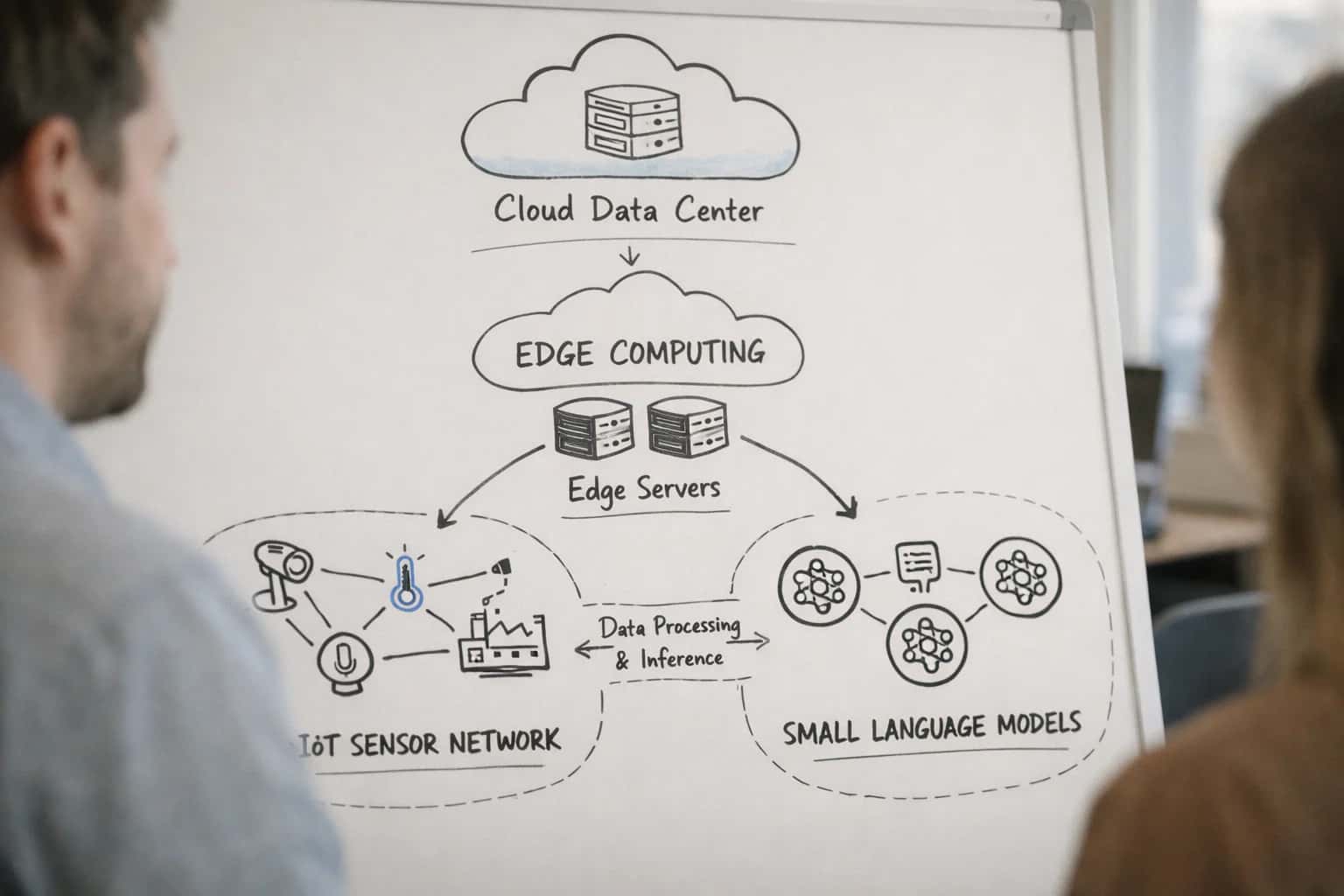
THE LATENCY PROBLEM
The Cloud-Centric Smart City Is a Fantasy
Smart city reliability depends on sub-second decisions that cloud latency and bandwidth constraints make impossible.
Bandwidth costs are economically unsustainable. Streaming raw, high-resolution video from thousands of city cameras to a central cloud for AI processing consumes terabytes of data daily, creating crippling operational expenses. Edge AI frameworks like TensorFlow Lite or NVIDIA's DeepStream process video locally on the camera or a nearby NVIDIA Jetson device, sending only critical alerts and metadata, slashing bandwidth by over 95%.
Centralized processing creates a single point of failure. A cloud outage or network disruption paralyzes every connected smart service, from adaptive traffic lights to emergency response coordination. Distributed edge intelligence ensures that core functions like intersection management or leak detection continue operating autonomously, a concept central to resilient smart city infrastructure.
Evidence: Studies by the IEEE show that moving computer vision inference from cloud to edge reduces latency from 300ms to under 10ms, a 30x improvement necessary for autonomous vehicle coordination and real-time public safety analytics.
THE RELIABILITY IMPERATIVE
Key Takeaways: The Edge AI Imperative
For smart cities, the cloud is a liability. Critical infrastructure decisions must be made on-device to ensure resilience, speed, and privacy.
01
The Problem: The Cloud's Single Point of Failure
Centralized AI processing creates a brittle architecture. A network outage or cloud provider downtime can paralyze traffic signals, emergency alerts, and grid management.
- Critical Failure: A ~500ms cloud round-trip is too slow for collision avoidance at intersections.
- Bandwidth Tax: Streaming raw video from 10,000+ cameras to a central cloud is economically and technically infeasible.
- Operational Risk: Centralized systems are high-value targets for cyberattacks, creating systemic urban vulnerability.
10,000+
Cameras
~500ms
Cloud Latency
02
The Solution: Distributed Intelligence on NVIDIA Jetson
Edge AI moves the brain to the sensor. Deploying optimized models on devices like the NVIDIA Jetson Orin enables autonomous, real-time decisioning.
- Sub-10ms Latency: On-device inference allows traffic signals to react to pedestrians in real-time.
- Bandwidth Reduction: Only send actionable insights (e.g., 'accident detected') not raw data streams.
- Resilient Architecture: The system remains operational during network partitions, a core tenet of Sovereign AI infrastructure.
<10ms
Edge Latency
-90%
Bandwidth
03
The Mandate: Privacy by Architecture with Federated Learning
Citizen data must never leave the device. Federated Learning enables model improvement across a city's sensor fleet without centralizing sensitive video or location data.
- Data Sovereignty: Complies with regulations like the EU AI Act by design, avoiding the Hidden Cost of Insecure AI Endpoints.
- Collective Intelligence: Cameras at intersections collaboratively learn new traffic patterns without sharing identifiable footage.
- Trust Foundation: This architectural approach is a non-negotiable component of a comprehensive AI TRiSM framework for public trust.
0%
Data Egress
EU AI Act
Compliance
04
The Blueprint: Agentic AI for Autonomous Urban Operations
Edge devices must be more than simple classifiers; they need to be agentic nodes in a larger autonomous system.
- Local Autonomy: A smart camera detects a fallen tree, alerts nearby autonomous street sweepers, and updates the city's Digital Twin—all without human intervention.
- Predictive Action: Graph Neural Networks on the edge analyze local entity relationships to forecast micro-congestion and pre-emptively adjust signals.
- Unified Control: These distributed agents are orchestrated by a central Agent Control Plane, enabling Cross-Departmental Data Sharing for city-wide optimization.
Agentic
Nodes
Real-Time
Orchestration
05
The Economics: From Capex Silos to Operational Efficiency
Edge AI transforms smart city finance from hardware procurement to continuous value delivery.
- Reduced TCO: Eliminates exorbitant long-term cloud data transfer and storage fees, directly attacking The Cost of Over-Reliance on Centralized AI.
- Scalable Deployment: Adding a new intersection involves a single edge device, not a redesign of central cloud capacity.
- Value Realization: Enables revenue-generating services like AI-Optimized Space Utilization for parking and dynamic congestion pricing.
-50%
TCO
Scalable
Deployment
06
The Future: Edge AI as the Foundation for Urban Resilience
The next phase of smart cities isn't about more data; it's about localized, intelligent action. Edge AI is the prerequisite for everything from Predictive Disaster Response to Hyperlocal Air Quality monitoring.
- Systemic Resilience: Creates an Industrial Nervous System for the city that is adaptive and self-healing.
- Innovation Platform: Provides the low-latency, high-privacy foundation required for future applications like Autonomous Drone Fleets and AR-assisted maintenance.
- Strategic Imperative: Cities that master edge architecture will lead in sustainability, safety, and quality of life; those that don't will remain fragile and reactive.
Foundation
Layer
Resilient
By Design
THE DATA
The Physics of Failure: Latency, Bandwidth, and Single Points
Edge AI is a reliability requirement, not an optimization, because the physics of data transmission creates unavoidable failure modes in centralized architectures.
Edge AI eliminates latency-induced failure. A centralized cloud model introduces a round-trip delay that violates the real-time constraints of critical infrastructure. A traffic signal must react in milliseconds to prevent an accident; a cloud-based decision loop adds hundreds of milliseconds of fatal latency.
Bandwidth constraints make cloud AI impractical. Sending continuous high-resolution video from thousands of city cameras to a central cloud for analysis with models like YOLO or NVIDIA Metropolis consumes unsustainable bandwidth. Edge processing compresses data to actionable insights before transmission.
Centralized AI creates a single point of failure. A cloud outage or network partition disables every smart city function dependent on it. Distributing inference to edge devices like NVIDIA Jetson Orin creates a resilient, fault-tolerant mesh where local nodes operate autonomously.
Evidence: A study by the IEEE found that moving anomaly detection for water pressure sensors to the edge reduced mean time to detection (MTTD) for leaks by 92% compared to a cloud model, directly preventing infrastructure damage. This is a core principle of our work in Predictive Maintenance and Industrial Reliability.
The counter-intuitive insight is cost. While edge hardware has an upfront cost, it eliminates the perpetual operational expense of cloud data egress and the catastrophic financial risk of a city-wide system failure. This aligns with the strategic infrastructure planning discussed in Hybrid Cloud AI Architecture and Resilience.
DECISION MATRIX
Cloud vs. Edge AI: The Latency Gap That Kills Reliability
A data-driven comparison of deployment architectures for latency-sensitive smart city applications, such as traffic signal control, emergency response, and real-time public safety analytics.
| Critical Metric | Centralized Cloud AI | Hybrid Fog AI | Distributed Edge AI |
|---|---|---|---|
End-to-End Decision Latency | 500-2000 ms | 100-500 ms | < 100 ms |
Bandwidth Consumption per Camera Feed | 4-8 Mbps | 1-2 Mbps (processed metadata) | < 0.1 Mbps (alerts only) |
Uptime During Network Outage | 0% | Degraded (central coordination lost) |
|
Data Sovereignty & Privacy Risk | High (raw data leaves jurisdiction) | Medium (some processing local) | Low (raw data never leaves device) |
Inference Cost per 1M Operations | $2.50 - $5.00 | $1.00 - $2.50 | $0.10 - $0.50 |
Time to Deploy New Model City-Wide | 2-4 weeks | 1-2 weeks | 1-3 days (OTA updates) |
Required AI TRiSM Overhead | High (central attack surface) | Medium (distributed attack surface) | High (hardened, distributed endpoints) |
Suitable for: Traffic Signal Optimization | |||
Suitable for: Real-Time Gunshot Detection | |||
Suitable for: Monthly Utility Usage Analytics |
CRITICAL INFRASTRUCTURE
Where Edge AI Makes or Breaks Urban Operations
For latency-sensitive, mission-critical urban systems, the decision point must be on the device, not in a distant data center.
01
The Problem: The 500ms Lag That Kills Emergency Response
Cloud-based video analytics for gunshot detection or traffic incident analysis introduces a ~500ms to 2-second latency. In emergency response, this delay is the difference between a dispatched unit and a preventable tragedy.\n- Critical Gap: Cloud round-trip time exceeds the human reaction window for life-saving intervention.\n- Bandwidth Bloat: Streaming HD video from thousands of cameras to the cloud is cost-prohibitive and creates a single point of failure.
~500ms
Cloud Latency
0
Tolerance
02
The Solution: NVIDIA Jetson-Powered On-Site Autonomy
Deploying compact, powerful NVIDIA Jetson Orin modules directly in traffic cabinets, on drones, or in vehicles enables sub-100ms inference. This allows for immediate, localized decision-making.\n- Real-Time Actuation: AI can change a traffic signal phase or trigger an immediate alert to first responders without waiting for a central command.\n- Bandwidth Freedom: Only critical metadata (e.g., 'accident at intersection X') is transmitted, slashing network costs and congestion.
<100ms
Edge Latency
-90%
Data Sent
03
The Problem: Centralized AI as a Single Point of Failure
A cloud outage or network disruption can blind an entire city's AI-driven operations—traffic grids freeze, public safety systems go offline. This creates systemic vulnerability.\n- Catastrophic Downtime: A DDoS attack on central servers can paralyze urban functions.\n- Scalability Limits: Centralized processing cannot cost-effectively scale to millions of distributed IoT endpoints.
1
Failure Point
City-Wide
Impact Radius
04
The Solution: Federated Learning for Sovereign, Resilient Models
Federated Learning allows AI models to be trained across thousands of edge devices without raw data ever leaving its source. This is essential for data sovereignty and compliance with regulations like the EU AI Act.\n- Inherent Resilience: The system operates even if parts of the network are disconnected.\n- Privacy by Design: Sensitive data from cameras or acoustic sensors is never centralized, mitigating privacy risks.
0
Data Centralized
100%
Local Compliance
05
The Problem: The $10M Data Lake of Useless Sensor Feeds
Deploying IoT sensors without a real-time AI inference layer is just expensive data hoarding. Cities pay millions to store petabytes of video and sensor data that is never analyzed for actionable insights.\n- Storage Sprawl: Costs escalate for data with no immediate operational value.\n- Analysis Paralysis: Retroactively mining these lakes for patterns is too slow for real-time urban operations.
$10M+
Wasted Storage
0
Real-Time Value
06
The Solution: Sensor Fusion AI at the Edge
Edge AI fuses data from video, LiDAR, acoustic, and environmental sensors on-device to create a coherent situational awareness model. This turns raw data into immediate, actionable commands.\n- Instant Insight: Correlating a sound (breaking glass) with video (person fleeing) triggers a precise alert.\n- Eliminates Data Gravity: Processing at the source means only high-value intelligence is forwarded, transforming cost centers into operational assets. For a deeper dive into this unsung hero, see our analysis on sensor fusion AI for smart infrastructure.
10x
Context Enriched
-80%
Storage Needs
THE GOVERNANCE
Beyond Speed: Sovereignty, Privacy, and AI TRiSM at the Edge
Edge AI is the foundation for data sovereignty, citizen privacy, and trustworthy smart city operations, not just a latency fix.
Edge AI enables data sovereignty. Processing data on local devices like NVIDIA Jetson Orin modules ensures sensitive municipal information never leaves city jurisdiction, a core requirement for compliance with regulations like the EU AI Act. This prevents geopolitical risks associated with centralized cloud providers.
Privacy is a technical architecture. On-device inference with frameworks like TensorFlow Lite or ONNX Runtime anonymizes data at the source, eliminating the privacy risks of transmitting raw citizen video or location data to the cloud. This is a foundational element of Privacy-Enhancing Technologies (PET).
AI TRiSM is non-negotiable. Deploying models at the edge requires a dedicated Trust, Risk, and Security Management framework. Each camera running a computer vision model is a potential attack vector; securing these endpoints demands adversarial testing and continuous monitoring for model drift, which is a core component of our AI TRiSM services.
Evidence: A 2023 study by the IEEE found that edge AI systems reduced data exfiltration risk in public surveillance by over 70% compared to cloud-only architectures, directly supporting sovereign and private operations.
SMART CITY RELIABILITY
The Hidden Costs and Risks of Edge AI Deployment
Edge AI is critical for real-time urban decision-making, but its deployment introduces unique financial and operational risks that can undermine entire smart city initiatives.
01
The Cost of Over-Reliance on Centralized AI for Distributed IoT
Sending all sensor data to a central cloud for processing creates unsustainable latency, bandwidth costs, and a single point of failure for critical city functions.
- Bandwidth Tax: Transmitting raw video from thousands of cameras can cost $100k+ monthly for a mid-sized city.
- Critical Latency: Cloud round-trip for emergency response decisions introduces ~500ms delays, making them useless.
- Single Point of Failure: A cloud outage disables all distributed intelligence, crippling traffic, safety, and utility systems.
~500ms
Decision Lag
$100k+
Monthly Bandwidth
02
The Hidden Cost of AI Model Drift in Long-Term Infrastructure
Urban AI systems deployed for decades will degrade as city dynamics change, requiring continuous MLOps monitoring and retraining pipelines that most municipalities fail to budget for.
- Performance Decay: A traffic flow model can lose >20% accuracy within 18 months as construction and patterns shift.
- Unbudgeted Ops: Continuous retraining requires a dedicated MLOps pipeline, often a 2-3x multiplier on initial development cost.
- Data Foundation Problem: Retraining requires fresh, labeled data from the edge, creating a complex feedback loop most IoT sensing deployments aren't designed for.
>20%
Accuracy Drop
2-3x
Cost Multiplier
03
The Hidden Cost of Insecure AI Endpoints in IoT Networks
Every camera and sensor running an AI model is a potential attack vector; securing these endpoints requires a dedicated AI TRiSM strategy beyond traditional cybersecurity.
- Expanded Attack Surface: A compromised traffic camera running YOLO can become a botnet node or data exfiltration point.
- Model Poisoning: Adversaries can manipulate training data at the edge to corrupt federated learning cycles, causing city-wide system failure.
- Compliance Debt: Without confidential computing at the edge, processing biometric or license plate data violates regulations like the EU AI Act, incurring massive fines.
10k+
New Endpoints
€35M
Max EU Fine
04
The Hidden Cost of Vendor Lock-In with Proprietary Platforms
Choosing closed-source AI solutions traps municipal data and workflows, preventing integration with best-in-class tools and inflating long-term total cost of ownership.
- Exit Strategy Tax: Migrating from a proprietary digital twin or control room platform can cost millions and take years.
- Innovation Stagnation: Inability to integrate new multi-modal AI models (e.g., GPT-4V, Claude 3) or agentic AI orchestration layers.
- Sovereignty Risk: Data and logic controlled by a third-party vendor conflicts with sovereign AI and geopatriated infrastructure mandates for critical urban systems.
3-5x
TCO Increase
2+ years
Migration Timeline
05
The Cost of Bias in AI-Powered Public Service Allocation
If training data reflects historical inequities, AI models for allocating services like policing, sanitation, or park maintenance will perpetuate and even amplify those biases at scale.
- Amplified Inequity: An edge AI model for predictive policing trained on biased historical data can increase patrols in already over-policed neighborhoods by 30% or more.
- Public Trust Erosion: Discovered bias leads to litigation, public backlash, and project cancellation, wasting the entire smart city infrastructure investment.
- Explainability Mandate: Municipal contracts now require explainable AI (XAI) audits, adding complexity and cost to edge deployment pipelines that prioritize efficiency over transparency.
30%+
Resource Skew
100%
Project Risk
06
The Hidden Cost of Siloed AI Models in Municipal Operations
Separate AI systems for traffic, waste, and energy cannot optimize city-wide resource allocation, leading to inefficiencies that a unified agentic AI control plane could solve.
- Sub-Optimization: A traffic AI creates green waves that conflict with a waste management AI's truck routing, increasing fuel consumption by 15%.
- Missed Synergies: Without sensor fusion AI, data from water pressure sensors isn't used to predict sinkholes that affect traffic routes.
- Orchestration Debt: Retrofitting siloed systems into a coherent agentic workflow is often more expensive than building a unified hybrid cloud AI architecture from the start.
15%
Inefficiency
$10M+
Integration Cost
Enabling Efficiency, Speed & Accuracy
Intelligent Analysis, Decision & Execution
We build AI systems for teams that need search across company data, workflow automation across tools, or AI features inside products and internal software.
Talk to Us
Search across company data
Give teams answers from docs, tickets, runbooks, and product data with sources and permissions.
Useful when people spend too long searching or get different answers from different systems.
Enterprise searchRAGPermissions
Read more
Automate internal workflows
Use AI to route work, draft outputs, trigger actions, and keep approvals and logs in place.
Useful when repetitive work moves across multiple tools and teams.
AI agentsWorkflow automationGovernance
Read more
Add AI to products and internal tools
Build assistants, guided actions, or decision support into the software your team or customers already use.
Useful when AI needs to be part of the product, not a separate tool.
AI integrationDecision supportModel routing
Read moreTHE ARCHITECTURE
The Hybrid Future: Orchestrating the Edge with Agentic Control Planes
Smart city reliability requires a hybrid architecture where edge AI handles real-time decisions and a central Agent Control Plane orchestrates long-term strategy.
Edge AI handles latency-critical decisions like adjusting a traffic signal or detecting a pipe leak, while a cloud-based Agent Control Plane orchestrates long-term strategy and cross-system optimization. This hybrid model is the only architecture that meets the dual demands of instant response and city-wide coordination.
The cloud is for strategy, the edge is for execution. A traffic camera with an NVIDIA Jetson module makes immediate collision-avoidance decisions; the central control plane's agentic system analyzes city-wide flow to optimize signal timing patterns. This separation of concerns is fundamental to resilient infrastructure.
Agentic Control Planes manage multi-agent systems (MAS) where specialized AI agents for traffic, energy, and public safety collaborate. Frameworks like AutoGen or LangGraph enable these agents to share findings and hand off tasks, creating a cohesive operational intelligence layer above the distributed edge. Learn more about this orchestration in our guide to Agentic AI and Autonomous Workflow Orchestration.
Evidence: Sending all IoT sensor data to a central cloud creates a 300-500ms latency penalty; edge inference on devices like Google Coral or Intel Movidius reduces this to under 10ms. This difference determines whether an AI can prevent a traffic accident or merely record it.

About the author
Prasad Kumkar
CEO & MD, Inference Systems
Prasad Kumkar is the CEO & MD of Inference Systems and writes about AI systems architecture, LLM infrastructure, model serving, evaluation, and production deployment. Over 5+ years, he has worked across computer vision models, L5 autonomous vehicle systems, and LLM research, with a focus on taking complex AI ideas into real-world engineering systems.
His work and writing cover AI systems, large language models, AI agents, multimodal systems, autonomous systems, inference optimization, RAG, evaluation, and production AI engineering.
LinkedIn
Limited slotsGet a Free AI Consultation
Partnered with leading AI, data, and software stack.





How We Work
Custom AI workflows for your Business
One-fit-all AI don't work for modern businesses. At Inferensys, we aim to understand your business & custom requirements; which we use to define most efficient agentic workflows, the data, and the tools for your business.
01
Review the use case
We understand the task, the users, and where AI can actually help.
Read more02
Pick the right approach
We define what needs search, automation, or product integration.
Read more03
Build the first useful version
We implement the part that proves the value first.
Read more04
Improve from there
We add the checks and visibility needed to keep it useful.
Read moreThe first call is a practical review of your use case and the right next step.
Talk to Us