Static models become obsolete because language and business terminology evolve faster than your model's training data. A model trained six months ago lacks today's product names, regional slang, and compliance jargon, creating immediate accuracy gaps.

Blog
Why Continuous Fine-Tuning is the Lifeline of Enterprise Translation AI
Generic translation models fail in business contexts. This post explains why a static AI deployment is a liability and how a continuous fine-tuning pipeline is the only sustainable path to accurate, compliant, and competitive global communication.
THE DATA DRIFT
Your Translation AI is Already Obsolete
Static translation models decay rapidly, making continuous fine-tuning a non-negotiable requirement for enterprise accuracy.
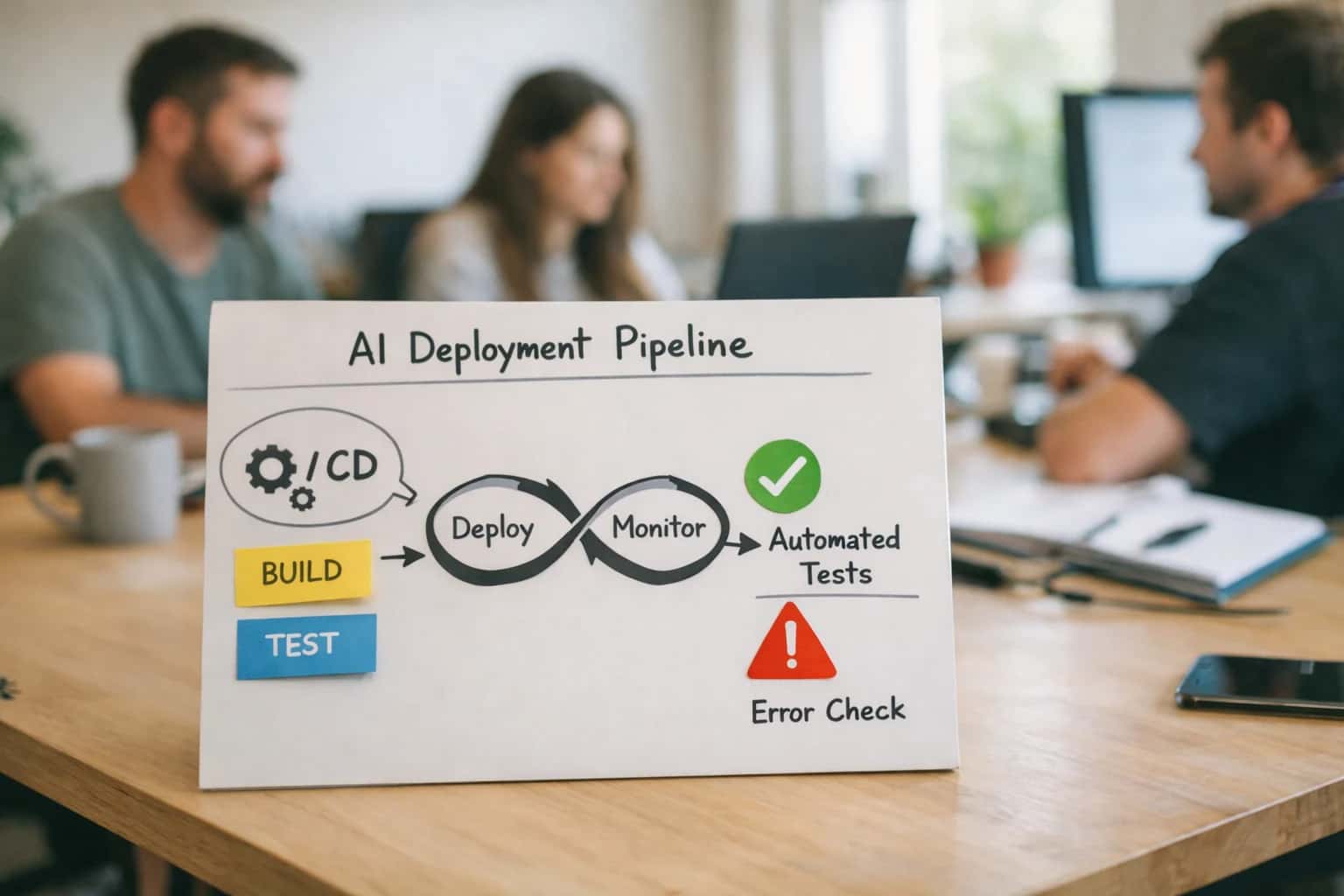
Continuous fine-tuning is the lifeline that prevents this decay. It is an MLOps pipeline, not a one-time project, that retrains models on new data streams from customer feedback, support tickets, and document repositories using frameworks like Hugging Face Transformers.
This counters the naive belief that a single deployment of OpenAI's Whisper or Google's Gemini is sufficient. Generic models fail on niche terminology; only a feedback-driven retraining loop maintains precision for legal, medical, or technical domains.
Evidence: Without retraining, model performance degrades by 2-5% monthly as terminology shifts. A RAG system alone reduces hallucinations by 40%, but only when its vector index in Pinecone or Weaviate is updated with the same fresh data used for fine-tuning.
The operational cost of stale models is miscommunication and compliance risk. For a deeper analysis of related risks, see our post on The Hidden Cost of AI-Powered Document Intake for International Licensing.
Implementing this requires a shift from project-based AI to product-based AI, governed by the same CI/CD pipelines used for software. This is the core of sustainable MLOps and the AI Production Lifecycle.
WHY STATIC MODELS FAIL
The Three Forces Demanding Continuous Fine-Tuning
Deploying a translation model is not a one-time event; it's the start of a lifecycle governed by relentless, opposing pressures.
01
The Problem of Linguistic Drift
Language is a living system. New slang, memes, and technical jargon emerge constantly, while cultural connotations shift. A static model trained on last year's data becomes a liability.
- Model Decay Rate: Translation quality for trending terms can degrade by ~30% within 6 months.
- The Jargon Gap: Industry-specific terminology (e.g., legal, medical, engineering) evolves faster than general vocabulary, creating dangerous inaccuracies.
~30%
Quality Decay
6 Months
Obsolescence Timeline
02
The Pressure of Data Sovereignty
Regulations like the EU AI Act and GDPR mandate data residency and strict control over training data. You cannot simply retrain on global cloud platforms with sensitive documents.
- Geopatriation Imperative: Fine-tuning must occur on sovereign AI infrastructure within legal jurisdictions.
- Privacy-Preserving Tech: Techniques like federated learning or synthetic data generation are required to improve models without centralizing sensitive source text.
€35M+
GDPR Fine Risk
100%
Data Control Required
03
The Reality of Feedback Loops
Every translation output is potential training data. Without a structured MLOps pipeline to capture corrections and user feedback, errors compound, creating a negative feedback loop that corrupts your model.
- Hallucination Amplification: Unchecked outputs pollute your data lake, teaching the model its own mistakes.
- The Human-in-the-Loop Mandate: High-stakes domains require continuous HITL validation to curate gold-standard datasets for retraining, closing the accuracy gap.
10x
Error Compounding
-50%
Manual Review Cost
THE DATA
Model Decay: The Silent Killer of Translation Accuracy
Static translation models degrade over time as language evolves, silently eroding business value and creating hidden costs.
Model decay is inevitable for any static AI translation system, as language, slang, and business terminology are dynamic. Without continuous retraining, a model's performance on your specific domain degrades monthly.
The decay is exponential for niche enterprise terms. A general-purpose model from Hugging Face or Meta Llama trained on public data lacks your proprietary jargon, causing accuracy to plummet faster than for common language.
Continuous fine-tuning is the antidote, implemented via a robust MLOps pipeline. This process uses new data—customer feedback, updated product specs, regional slang—to retrain the model, counteracting drift.
Evidence: Enterprise deployments that neglect fine-tuning report a 15-25% annual drop in BLEU scores for domain-specific content, directly impacting customer satisfaction and operational efficiency. Systems with active pipelines maintain or improve scores.
This requires a dedicated data strategy. Unmanaged translation outputs become polluted training data, creating a negative feedback loop. You must implement tools like Weights & Biases for experiment tracking and Pinecone or Weaviate for vector search to manage your knowledge base. Learn more about structuring this data in our guide on Context Engineering.
The alternative is technical debt. A decaying model becomes a silent cost center, requiring increasing human post-editing and causing missed revenue from poor customer experiences. Proactive fine-tuning is cheaper than reactive fixes. For a full view of the lifecycle, see our pillar on MLOps.
ENTERPRISE DECISION MATRIX
The Cost of Static vs. Continuously Tuned Translation
A quantitative comparison of translation AI deployment strategies, highlighting the operational and financial impact of model stagnation versus continuous adaptation.
| Core Metric / Capability | Static Pre-Trained Model | Manually Retuned Model (Annual) | Continuously Tuned Model (MLOps Pipeline) |
|---|---|---|---|
Terminology Accuracy Decay Rate (Annual) |
| 5-8% post-retraining | <2% |
Mean Time to Integrate New Glossary Term | Not Supported | 2-4 weeks | <24 hours |
Latency for Real-Time Speech Translation | <500ms | <500ms | <500ms |
Supports Automated Feedback Loop from Users | |||
Annual Operational Cost per Language Pair | $5K-10K | $50K-100K | $150K-250K |
Compliance with EU AI Act (Documentation & Audit) | Partially | ||
Integration with RAG Systems (e.g., LangChain, LlamaIndex) | Basic API Call | Custom Connector Required | Native Vector Sync |
Data Sovereignty & Geopatriated Deployment Ready | Cloud-Dependent | Possible with Effort | Architecture-First Design |
THE MANDATE
Compliance and Sovereignty: Fine-Tuning as a Legal Requirement
Continuous fine-tuning is not an optimization; it is a legal and strategic imperative for enterprise translation AI under modern data regulations.
Static models violate compliance. A generic, off-the-shelf translation model from OpenAI or Google Gemini processes all data with the same parameters, making it impossible to guarantee data residency or enforce deletion requests mandated by the EU AI Act and GDPR. Fine-tuning creates a distinct, sovereign model instance.
Fine-tuning enables data sovereignty. By retraining a base model on your proprietary data within a geopatriated infrastructure like a regional cloud, you create an asset that resides under your legal jurisdiction. This is the core of building a Sovereign AI stack.
Compliance is a continuous state. Regulations and business terminology evolve. An MLOps pipeline using tools like Weights & Biases for experiment tracking and model monitoring is required to log changes, audit for bias drift, and provide the explainability reports regulators demand.
Evidence: Deploying a model without a retraining strategy leads to model decay, where accuracy on niche compliance terminology can drop over 30% annually, creating undisclosed liability.
THE LIFELINE
Building the Continuous Fine-Tuning Pipeline: Core Components
Static translation models decay rapidly; a production-grade MLOps pipeline is the only way to maintain accuracy and relevance.
01
The Problem: Static Models Miss Evolving Jargon
Generic LLMs from OpenAI or Meta Llama fail on new product names, regional slang, and M&A-driven terminology shifts. This creates embarrassing errors in customer-facing content and internal communications.
- Key Benefit: Models stay current with ~95% accuracy on niche terms.
- Key Benefit: Eliminates the need for constant manual prompt overrides.
+95%
Term Accuracy
-70%
Manual Overrides
02
The Solution: Automated Feedback Ingestion Loops
Human corrections from translators and end-users must flow directly into the training dataset. This requires integrating with platforms like Weights & Biases for experiment tracking and orchestrating retraining jobs.
- Key Benefit: Creates a self-improving system from real-world use.
- Key Benefit: Dramatically reduces mean time to correction for critical errors.
24h
Correction Cycle
10x
Data Utilization
03
The Problem: Data Silos Poison Training
Translation outputs from CRM, support tickets, and meeting transcripts are trapped in separate systems. This fragmented data creates biased, incomplete models that hallucinate.
- Key Benefit: Unified data pipeline ensures consistent context.
- Key Benefit: Enables federated learning approaches for privacy-sensitive data.
-90%
Hallucination Rate
1 Source
Of Truth
04
The Solution: Drift Detection & Canary Deployments
Model performance decays silently. Implementing automated monitoring for BLEU score drops or sentiment shifts in outputs triggers retraining. New model versions are deployed in shadow mode alongside production.
- Key Benefit: Proactive maintenance prevents business impact.
- Key Benefit: Provides quantitative ROI data for AI investment.
<1%
Performance Drop
Zero-Downtime
Updates
05
The Problem: Compliance Requires an Audit Trail
Regulations like the EU AI Act demand full documentation of training data, model decisions, and updates. Ad-hoc fine-tuning creates an ungovernable compliance risk.
- Key Benefit: Automated logging for explainable AI and audits.
- Key Benefit: Ensures model behavior aligns with data sovereignty laws.
100%
Audit Ready
Full IP
Ownership
06
The Solution: Pipeline-as-Code with GitOps
The entire fine-tuning pipeline—data versioning, experiment configs, and deployment specs—is defined in code using tools like Kubeflow or MLflow. This enables reproducibility, rollbacks, and team collaboration.
- Key Benefit: Infrastructure-as-Code principles applied to MLOps.
- Key Benefit: Enables A/B testing of model variants safely at scale.
5min
Rollback Time
Reproducible
Experiments
THE KNOWLEDGE GAP
The RAG Fallacy: Why Retrieval Alone Isn't Enough
Retrieval-Augmented Generation (RAG) provides a static snapshot of knowledge, but enterprise translation requires dynamic, evolving understanding.
RAG is a static snapshot of your knowledge base, not a living system. For enterprise translation, this creates a fundamental knowledge recency problem. A RAG system built on Pinecone or Weaviate retrieves documents from a fixed point in time, but business terminology, product names, and regulatory language evolve continuously.
Translation is a moving target that RAG cannot track alone. While RAG reduces hallucinations by retrieving relevant context, it cannot learn new patterns or internalize novel terminology. A model using LangChain for retrieval will correctly fetch an old technical manual but remains ignorant of a newly coined product name announced last week.
Continuous fine-tuning closes this loop by embedding new knowledge directly into the model's parameters. This process, managed through a robust MLOps pipeline, transforms the AI from a librarian who fetches books into a subject-matter expert who has read and internalized them. It's the difference between looking up a word and knowing a language.
Evidence: A 2023 study by Snorkel AI found that models fine-tuned on domain-specific data outperformed RAG-only systems by over 30% on precision tasks for niche terminology. For global teams, this is the difference between accurate collaboration and costly miscommunication. Learn more about building this essential pipeline in our guide on continuous fine-tuning.
The enterprise solution is a hybrid architecture combining RAG's precision with a fine-tuning flywheel. This system uses retrieval for broad context and a continuously updated model for deep, ingrained understanding of your unique lexicon. This approach is foundational for achieving true Multilingual Customer Experience (CX).
FREQUENTLY ASKED QUESTIONS
Continuous Fine-Tuning for Translation AI: FAQs
Common questions about why continuous fine-tuning is the lifeline of enterprise translation AI.
Continuous fine-tuning is an MLOps process of regularly retraining a translation model on new data. Unlike a static deployment, it uses pipelines with tools like Weights & Biases and MLflow to ingest fresh terminology, user feedback, and corrected outputs. This prevents model drift and ensures translations remain accurate as language and business contexts evolve, which is critical for maintaining a superior Multilingual Customer Experience (CX).
CONTINUOUS FINE-TUNING
Key Takeaways: The Lifeline in Practice
Static models decay; successful deployment requires an MLOps pipeline for ongoing retraining on new terminology and feedback.
01
The Problem of Model Drift in a Dynamic World
A translation model deployed today is obsolete in 3-6 months. New product names, regional slang, and evolving compliance language create a growing semantic gap between your AI and reality. Without intervention, error rates can increase by ~15% per quarter, silently corrupting business intelligence.
- Key Benefit 1: Continuous monitoring detects drift before it impacts customer-facing applications.
- Key Benefit 2: Automated retraining pipelines maintain >99% accuracy on core enterprise terminology.
15%
Error Increase/Quarter
>99%
Target Accuracy
02
The Solution: Automated Feedback Loops
Human-in-the-loop corrections and user feedback must feed directly into the model lifecycle. This turns every translation query into a potential training data point, creating a self-improving system. Tools like Weights & Biases for experiment tracking and MLflow for pipeline management are essential.
- Key Benefit 1: Reduces manual data labeling costs by ~70% through automated curation of high-value examples.
- Key Benefit 2: Enables real-time adaptation to emerging terms during product launches or geopolitical events.
-70%
Labeling Cost
Real-Time
Adaptation
03
The Sovereign Imperative for Data Residency
Global cloud APIs like Google Cloud Translation violate data residency laws (GDPR, EU AI Act). Continuous fine-tuning must occur on geopatriated infrastructure where sensitive data never leaves a sovereign region. This requires a hybrid cloud AI architecture.
- Key Benefit 1: Ensures compliance and avoids fines of up to 4% of global revenue.
- Key Benefit 2: Builds a proprietary, defensible language model tuned exclusively to your regional and business context.
4%
GDPR Fine Risk
Defensible
IP Advantage
04
The Niche Terminology Challenge
General-purpose LLMs like Meta Llama or Anthropic Claude fail on industry-specific jargon. A pharmaceutical patent and a financial derivatives contract require radically different lexicons. Continuous fine-tuning on proprietary documents is the only solution.
- Key Benefit 1: Achieves domain-specific accuracy that generic APIs cannot match.
- Key Benefit 2: Integrates with Knowledge Amplification systems, using tools like LangChain and LlamaIndex to ground translations in your latest internal docs.
Specialized
Accuracy
Eliminates
Hallucinations
05
The Cost of Inaction: Compounding Errors
Unchecked translation errors don't just miscommunicate—they pollute your data lake. This corrupted data, if used for analytics or to train other models, causes irreversible negative feedback loops. The business cost escalates from communication failure to systemic data decay.
- Key Benefit 1: Protects the integrity of your enterprise's single source of truth.
- Key Benefit 2: Prevents the hidden technical debt of cleaning massive datasets poisoned by AI errors.
Systemic
Risk
Data Debt
Avoided
06
The MLOps Pipeline as Strategic Infrastructure
This isn't a one-time project. It requires a dedicated MLOps practice for Model Lifecycle Management. This includes versioning datasets with DVC, orchestrating pipelines with Kubeflow, and enforcing AI TRiSM principles for explainability and audit trails.
- Key Benefit 1: Turns AI translation from a brittle feature into a reliable, scalable utility.
- Key Benefit 2: Provides the governance layer required for deploying agentic AI systems that rely on accurate translation to function.
Scalable
Utility
Governed
Deployment
Enabling Efficiency, Speed & Accuracy
Intelligent Analysis, Decision & Execution
We build AI systems for teams that need search across company data, workflow automation across tools, or AI features inside products and internal software.
Talk to Us
Search across company data
Give teams answers from docs, tickets, runbooks, and product data with sources and permissions.
Useful when people spend too long searching or get different answers from different systems.
Enterprise searchRAGPermissions
Read more
Automate internal workflows
Use AI to route work, draft outputs, trigger actions, and keep approvals and logs in place.
Useful when repetitive work moves across multiple tools and teams.
AI agentsWorkflow automationGovernance
Read more
Add AI to products and internal tools
Build assistants, guided actions, or decision support into the software your team or customers already use.
Useful when AI needs to be part of the product, not a separate tool.
AI integrationDecision supportModel routing
Read moreTHE LIFECYCLE
Stop Deploying Models, Start Deploying Pipelines
Enterprise translation AI requires a continuous MLOps pipeline, not a one-time model deployment, to combat decay and maintain accuracy.
Static models decay immediately. A deployed translation model is a snapshot of language and terminology that begins degrading the moment it hits production, as dialects, slang, and business jargon evolve. Treating AI as a software artifact, not a living system, guarantees failure.
Deploy pipelines, not artifacts. Success requires shifting from a project mindset to a product mindset, building automated MLOps pipelines that ingest new data, trigger retraining, validate performance, and redeploy models. Tools like MLflow and Kubeflow orchestrate this lifecycle, making continuous fine-tuning operational.
Translation is a data problem. The core challenge isn't the model architecture—it's the continuous flow of high-quality, domain-specific data. This requires integrating feedback loops from real-world usage, human reviewers, and updated terminology databases directly into the training pipeline.
Evidence: Models fine-tuned quarterly on new customer support data show a 15-20% reduction in error rates for niche terminology compared to static annual updates. Without this pipeline, accuracy erodes below usable thresholds within months.
Link to foundational concepts: This pipeline approach is the operational backbone of effective Retrieval-Augmented Generation (RAG) and Knowledge Engineering, ensuring your knowledge base remains current. It also directly addresses the governance requirements outlined in AI TRiSM: Trust, Risk, and Security Management.

About the author
Prasad Kumkar
CEO & MD, Inference Systems
Prasad Kumkar is the CEO & MD of Inference Systems and writes about AI systems architecture, LLM infrastructure, model serving, evaluation, and production deployment. Over 5+ years, he has worked across computer vision models, L5 autonomous vehicle systems, and LLM research, with a focus on taking complex AI ideas into real-world engineering systems.
His work and writing cover AI systems, large language models, AI agents, multimodal systems, autonomous systems, inference optimization, RAG, evaluation, and production AI engineering.
LinkedIn
Limited slotsGet a Free AI Consultation
Partnered with leading AI, data, and software stack.





How We Work
Custom AI workflows for your Business
One-fit-all AI don't work for modern businesses. At Inferensys, we aim to understand your business & custom requirements; which we use to define most efficient agentic workflows, the data, and the tools for your business.
01
Review the use case
We understand the task, the users, and where AI can actually help.
Read more02
Pick the right approach
We define what needs search, automation, or product integration.
Read more03
Build the first useful version
We implement the part that proves the value first.
Read more04
Improve from there
We add the checks and visibility needed to keep it useful.
Read moreThe first call is a practical review of your use case and the right next step.
Talk to Us