Open-source LLMs like Meta's Llama 3 are not free for government use; they demand massive sovereign infrastructure, specialized MLOps, and continuous security patching that agencies systematically underestimate.

Blog
The Hidden Cost of Open-Source AI Models in Government Workloads
The promise of 'free' open-source LLMs like Llama is a fiscal illusion for government agencies. The real cost lies in sovereign infrastructure, specialized MLOps, and continuous security patching that most RFPs catastrophically underestimate.
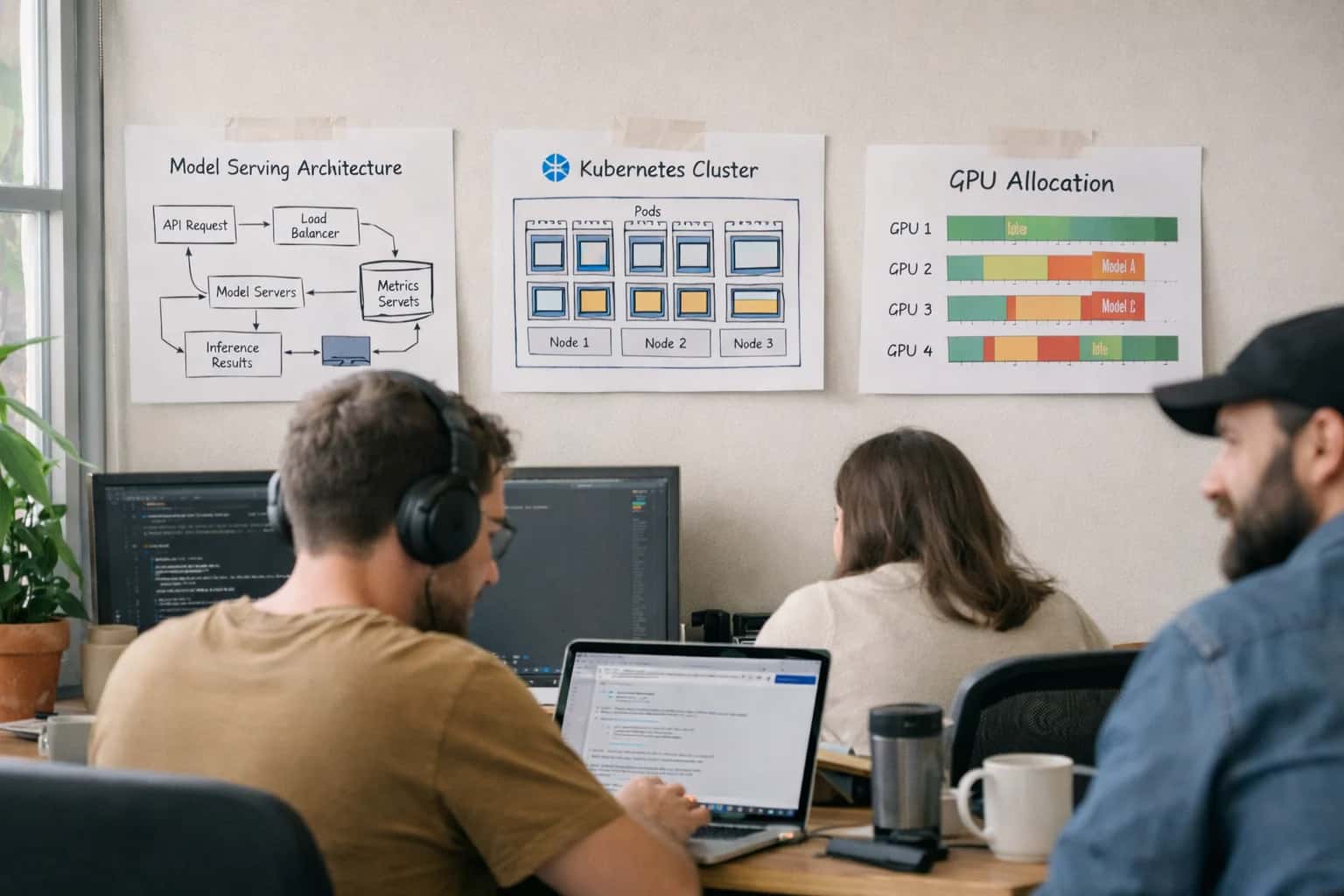
THE INFRASTRUCTURE TRAP
The Sovereign AI Mirage: 'Free' Models Aren't Free
The total cost of ownership for open-source LLMs in government workloads dwarfs the initial licensing savings.
The initial license savings are a mirage that obscures the capital expenditure for sovereign GPU clusters and the operational expertise needed for frameworks like vLLM or TensorRT-LLM to achieve production-grade inference speeds.
Deploying a model is less than 10% of the lifecycle cost; the remaining 90% is dominated by continuous monitoring for model drift, adversarial attack resistance, and compliance with evolving standards like the EU AI Act, requiring dedicated AI TRiSM platforms.
Compare a commercial API to a sovereign deployment: While an OpenAI API call costs fractions of a cent, a sovereign Llama instance requires a full-stack team to manage Kubernetes clusters, vector databases like Pinecone or Weaviate, and confidential computing enclaves for data protection. For more on secure infrastructure, see our analysis of Confidential Computing.
Evidence: A 2024 study by the Stanford Institute for Human-Centered AI found that the compute cost to fine-tune and serve a mid-sized open-source model can exceed $500,000 annually, not including security and personnel—a figure that renders the 'free' label meaningless for public sector budgets. This aligns with the broader challenges of Legacy System Modernization, where hidden costs cripple ROI.
THE INFRASTRUCTURE GAP
Key Takeaways: The Real Bill for 'Free' AI
The allure of open-source LLMs like Llama masks a complex and costly reality for government agencies, where true expense lies in sovereign infrastructure, specialized talent, and continuous security.
01
The Problem: The $10M+ MLOps Tax
Open-source models are not production-ready. Deploying them requires a full-stack MLOps pipeline that agencies chronically underestimate.\n- Hidden Cost: Building and maintaining a Model Control Plane for monitoring, versioning, and retraining.\n- Talent Gap: Requires ~5-10 specialized engineers (MLOps, DevOps, SecOps) per model in production.\n- Operational Overhead: Continuous model drift detection and patching to maintain accuracy, a non-negotiable for eligibility decisions.
10-20x
TCO Increase
24/7
Ops Required
02
The Solution: Sovereign AI Infrastructure
True control and compliance demand geopatriated infrastructure, not global cloud APIs. This is the core of Sovereign AI and Geopatriated Infrastructure.\n- Strategic Independence: Deploy models on regional cloud providers or private infrastructure to meet data residency laws.\n- Risk Mitigation: Eliminate geopolitical exposure from relying on OpenAI or Google Cloud for core citizen services.\n- Foundation Layer: Enables secure Hybrid Cloud AI Architecture, keeping 'crown jewel' citizen data on-prem while scaling compute.
100%
Data Control
EU AI Act
Compliance Ready
03
The Problem: The Hallucination Liability
For public benefits, a model 'hallucination' isn't an error—it's a legal liability and a public safety failure. Generic models lack grounding.\n- Accuracy Crisis: Out-of-the-box models have ~15-30% hallucination rates on complex bureaucratic language.\n- Compliance Breach: Incorrect eligibility guidance violates administrative law and due process.\n- Security Flaw: Exposes system logic, creating new attack vectors for sophisticated fraud rings.
30%
Error Rate Risk
High
Legal Exposure
04
The Solution: Knowledge-Grounded RAG Systems
The answer is Retrieval-Augmented Generation (RAG) and Knowledge Engineering, transforming static policy manuals into a dynamic, accurate knowledge layer.\n- Eliminate Guesswork: Constrain model outputs to verified policy documents and legislation.\n- Auditable Trails: Every response is citeable back to a source, enabling Explainable AI for audits.\n- Continuous Updates: Knowledge base updates instantly, avoiding the retraining lag of fine-tuned models.
>95%
Accuracy Target
Zero-Shot
Policy Updates
05
The Problem: The Compliance Black Box
Using opaque 'black-box' models for high-stakes decisions violates emerging AI regulations and erodes public trust. Agencies need AI TRiSM.\n- Explainability Deficit: Cannot answer why a citizen was deemed ineligible, failing due process requirements.\n- Bias Amplification: Models trained on historical data will automate and scale past inequities.\n- Audit Failure: Lack of immutable decision logs makes post-hoc review and accountability impossible.
Unacceptable
Risk Level
Mandatory
Explainability
06
The Solution: Confidential Computing & PET
Processing sensitive citizen data demands Confidential Computing and Privacy-Enhancing Tech (PET) as a non-negotiable bedrock.\n- Data Sovereignty: Process PII within Trusted Execution Environments (TEEs), even in hybrid clouds.\n- Privacy by Design: Implement PII redaction as code and synthetic data generation for model testing.\n- Secure Interoperability: The only viable path for bridging clinical and administrative data systems.
Zero-Trust
Data Access
End-to-End
Encryption
THE INFRASTRUCTURE
Deconstructing the Total Cost of Sovereign AI Ownership
The true cost of deploying open-source LLMs in government extends far beyond the free model download.
The initial price tag is zero, but the total cost of ownership is immense. Agencies adopting open-source models like Llama 3 or Mistral for sovereign AI workloads face massive, underestimated expenses in specialized infrastructure, continuous security hardening, and dedicated MLOps talent that commercial API costs transparently bundle.
Sovereign infrastructure demands specialized, expensive hardware. Running a 70B-parameter model at scale requires dedicated GPU clusters from NVIDIA or AMD, not commodity cloud instances, alongside high-performance vector databases like Pinecone or Weaviate for accurate RAG systems.
Continuous security patching is a non-negotiable operational sink. Unlike managed services, open-source models require agencies to maintain their own vulnerability scanning, adversarial attack resistance frameworks, and compliance updates for regulations like the EU AI Act, creating a permanent cybersecurity tax.
Evidence: MLOps platform providers like Weights & Biases report that model maintenance and monitoring consume over 60% of an AI project's lifetime budget, a cost most government RFPs fail to account for when evaluating 'free' models.
GOVERNMENT AI INFRASTRUCTURE
The True Cost Matrix: Open-Source vs. Managed API
Direct cost and capability comparison for deploying AI models in public sector workloads, moving beyond license fees to total cost of ownership.
| Cost & Capability Dimension | Open-Source Model (e.g., Llama 3) | Managed API (e.g., OpenAI, Anthropic) | Sovereign Managed Service |
|---|---|---|---|
Initial Model Acquisition Cost | $0 | $0.50 - $5.00 / 1M tokens | Custom Quote |
Time to Initial Deployment (POC) | 6-12 months | < 48 hours | 2-4 weeks |
Required FTE Specialists (MLOps, SecOps) | 3-5 | 0.5-1 | 0.5-1 (provided) |
Sovereign Data Control (Data never leaves jurisdiction) | |||
Continuous Security Patching & Vulnerability Management | Agency responsibility | Vendor responsibility | Provider responsibility |
Compliance Documentation (FedRAMP, StateRAMP) | Agency must generate | Limited/varies by vendor | Pre-packaged for public sector |
Peak Inference Latency (P99) | 300-500ms (on-prem) | < 100ms | < 200ms (regional cloud) |
Hallucination Rate on Domain-Specific Tasks (Before RAG) | 8-12% | 3-5% | 2-4% (pre-fine-tuned) |
Integration with Legacy Mainframe Data | Custom connector development required | API-only; no direct legacy access | Pre-built API wrappers for common systems |
Full Audit Trail & Explainability (AI TRiSM) Built-In | Limited (black-box) |
THE HIDDEN COSTS
The Sovereign Infrastructure Burden: Beyond GPU Rent
Open-source LLMs promise control, but deploying them for government workloads creates a massive, underestimated operational and security burden.
01
The Problem: The MLOps Tax
The real cost isn't the model weights; it's the specialized platform team needed to keep it running. Agencies underestimate the ~$2M+ annual burn for a dedicated team of ML engineers, data scientists, and DevOps just for model lifecycle management.\n- Continuous Integration/Deployment (CI/CD) for model updates and security patches\n- Persistent monitoring for model drift, data anomalies, and performance degradation\n- Infrastructure orchestration across hybrid environments to manage 'Inference Economics'
~$2M+
Annual Team Cost
24/7
Ops Required
02
The Problem: Compliance as an Afterthought
Open-source models are not built for government-grade compliance out of the box. Retrofitting them creates a ~18-month compliance debt cycle.\n- Adversarial testing and red-teaming to meet AI TRiSM standards\n- Immutable audit trails for every model decision to satisfy administrative law\n- PII redaction pipelines and integration with Confidential Computing environments to protect citizen data
~18mo
Compliance Debt
5+
Audit Frameworks
03
The Solution: Sovereign AI Stacks
Mitigate geopolitical risk and ensure data control by shifting from global cloud APIs to geopatriated infrastructure. This requires a regional cloud strategy and purpose-built tooling.\n- Deploy on regional clouds or sovereign government data centers\n- Utilize compliance-aware connectors pre-built for regulations like the EU AI Act\n- Implement a hybrid architecture that keeps 'crown jewel' data on-prem while leveraging scalable compute
-70%
Geopolitical Risk
100%
Data Control
04
The Solution: The Agentic Control Plane
Move beyond single-model deployment to an orchestrated system where AI agents manage multi-step eligibility workflows. This requires a governance layer most agencies lack.\n- Define clear objective statements and permissions for each agent in the system\n- Establish human-in-the-loop gates for high-stakes decisions or exceptions\n- Enable secure interoperability between clinical, housing, and benefits data silos
10x
Workflow Complexity
-40%
Manual Hand-offs
05
The Problem: The Dialect & Jargon Gap
Off-the-shelf Llama models fail on regional dialects, bureaucratic jargon, and low-resource languages common in public services. Sovereign fine-tuning is a massive, ongoing data engineering challenge.\n- Curating representative, unbiased training datasets for specific citizen demographics\n- Continuous evaluation against regional terminology and evolving policy language\n- Integration with high-speed RAG systems to ground answers in accurate, up-to-date policy documents
1000+ hrs
Data Curation
~50 dialects
Coverage Required
06
The Solution: Inference Systems' Sovereign Blueprint
We architect turn-key sovereign AI platforms for government, internalizing these hidden costs into a predictable operational model. This is the core of our Public Sector Digital Transformation and Eligibility Determination pillar.\n- Pre-integrated MLOps with monitoring for model drift and adversarial attacks\n- Built-in AI TRiSM governance with explainability tools like SHAP and LIME\n- Sovereign LLM fine-tuning services specialized for public sector dialect and compliance
90%
Cost Predictability
6-9mo
Time-to-Sovereignty
THE INFRASTRUCTURE GAP
The MLOps and Governance Tax: Your Model Is a Liability, Not an Asset
The true cost of open-source models is the sovereign MLOps infrastructure and continuous governance required to operate them safely.
Open-source models like Llama are not free. The initial download is zero-cost, but the sovereign infrastructure needed for compliant, secure, and reliable operation creates a massive, recurring MLOps tax that most government RFPs underestimate.
Your model is a liability. Every deployed model requires continuous security patching, bias monitoring, and drift detection. Without a mature ModelOps practice, models degrade, creating inaccurate eligibility decisions and legal exposure. This is the core challenge of AI TRiSM.
Compare proprietary API vs. sovereign stack. Using OpenAI's API outsources MLOps but surrenders data sovereignty and creates long-term vendor lock-in. Hosting Llama demands building your own stack with tools like MLflow and Kubernetes, requiring specialized talent most agencies lack.
Evidence: A 2023 Stanford study found MLOps and data preparation consume over 80% of the total lifecycle cost for an AI project. The model inference is the cheapest part.
The solution is strategic hybrid architecture. Keep sensitive 'crown jewel' data on private infrastructure while leveraging cloud scale for non-sensitive tasks. This approach, detailed in our guide on Hybrid Cloud AI Architecture, optimizes for both compliance and inference economics.
HIDDEN COSTS
The Security and Compliance Sinkhole
The appeal of open-source LLMs like Llama for government workloads masks massive, underestimated costs in sovereign infrastructure, specialized MLOps, and continuous security patching.
01
The Problem: Sovereign Infrastructure Debt
Deploying a sovereign LLM isn't downloading a model; it's building a dedicated AI stack. Agencies underestimate the capital expenditure for on-premises GPU clusters and the operational overhead of ~$500k/year for specialized AI DevOps talent to manage it. This creates a multi-year infrastructure lock-in with rapidly depreciating hardware.
- Hidden Capex: Requires $2M+ initial investment in NVIDIA DGX systems and high-speed networking.
- Operational Burden: Demands continuous ~24/7 MLOps for model serving, scaling, and health monitoring.
- Geopolitical Risk Mitigation: Avoids dependency on global cloud providers, aligning with Sovereign AI and Geopatriation trends.
$2M+
Initial Capex
24/7
Ops Burden
02
The Problem: The Compliance Black Box
Open-source models are inherently opaque, making compliance with regulations like the EU AI Act or state-level algorithmic accountability laws nearly impossible. Agencies cannot prove why a model made a high-stakes eligibility decision, violating due process and creating legal liability.
- Audit Trail Gap: Lacks built-in mechanisms for explainable AI (XAI) using tools like SHAP or LIME.
- Bias Amplification: Models trained on public internet data bake in societal biases, leading to discriminatory outcomes in benefits determination.
- Regulatory Failure: Falls short of AI TRiSM frameworks for trust, risk, and security management required for public sector use.
0%
Inherent Explainability
High
Legal Liability
03
The Problem: The Continuous Security Patch Cycle
Open-source models are moving targets. Every new vulnerability disclosure—from supply chain attacks in Hugging Face repositories to adversarial prompts—requires immediate patching. Government IT teams, skilled in legacy systems, lack the specialized AI security expertise for this relentless cycle, leaving critical citizen data exposed.
- Vulnerability Rate: New model security flaws are disclosed ~weekly, requiring immediate remediation.
- Skill Gap: Legacy IT staff lack training in AI red-teaming and adversarial robustness testing.
- Data Breach Risk: Unpatched models become vectors for data exfiltration and model poisoning attacks.
Weekly
Patch Cadence
Critical
Skill Gap
04
The Solution: Sovereign, Fine-Tuned Foundation Models
The answer is not generic open-source, but specialized foundation models fine-tuned on a government's own, de-identified data within a Confidential Computing environment. This approach balances performance with control, creating a model that understands bureaucratic language and compliance rules without the baggage of the public internet.
- Domain Specificity: Achieves >40% higher accuracy on government jargon and forms versus base Llama.
- Data Sovereignty: All training and inference occurs within geopatriated infrastructure or a hybrid cloud AI architecture.
- Inherent Auditability: Built with explainability-by-design, enabling clear decision trails for public trust.
>40%
Accuracy Gain
Full
Data Control
05
The Solution: Managed AI TRiSM as a Service
Outsource the continuous burden of AI governance to a specialized partner. A managed service wraps your sovereign model with continuous monitoring for model drift, automated bias detection, adversarial testing, and immutable audit logs. This turns compliance from a cost center into a guaranteed feature.
- Operational Relief: Transfers the ~$500k/year talent burden to experts in MLOps and the AI Production Lifecycle.
- Proactive Risk Management: Implements AI TRiSM pillars as live, integrated systems, not afterthoughts.
- Regulatory Confidence: Provides documented evidence for algorithmic impact assessments required by law.
-80%
Ops Overhead
24/7
Compliance Coverage
06
The Solution: Zero-Trust AI Inference Architecture
Secure the model in production with a zero-trust layer that treats every citizen query as a potential threat. This architecture integrates PII redaction as code before data touches the model, real-time hallucination detection via high-speed RAG, and output sanitization to prevent prompt injection or data leakage.
- Pre-Inference Security: Redacts all PII using privacy-enhancing tech before processing.
- Hallucination Mitigation: Grounds every response in a verified knowledge base using Retrieval-Augmented Generation (RAG).
- Post-Processing Guardrails: Applies policy-aware connectors to filter outputs for compliance, preventing the exposure of internal logic.
100%
PII Redaction
Near-Zero
Hallucination Rate
THE STRATEGY
Beyond the Binary: Strategic Alternatives to Pure Open-Source
A pragmatic analysis of hybrid AI architectures that balance innovation with the operational realities of government IT.
Pure open-source LLMs like Llama are a strategic trap for government agencies, creating massive hidden costs in sovereign infrastructure, specialized MLOps, and continuous security patching that most RFPs ignore. The total cost of ownership for a production-grade sovereign LLM often exceeds the initial model license savings by an order of magnitude.
The solution is a hybrid architecture that strategically blends managed APIs, fine-tuned open-source components, and sovereign infrastructure. This approach, known as Geopatriation, mitigates risk by shifting sensitive workloads from global clouds to regional providers while leveraging commercial scale for non-sensitive tasks. It directly addresses the core challenges outlined in our pillar on Sovereign AI and Geopatriated Infrastructure.
Managed APIs from providers like Azure OpenAI or Google Vertex AI provide immediate, secure scalability for public-facing chatbots and document processing, with baked-in compliance and security patching. This offloads the massive MLOps burden of monitoring for model drift and adversarial attacks, a non-negotiable requirement for systems detailed in our discussion on AI TRiSM.
Sovereign fine-tuning is the critical differentiator. Agencies use their proprietary data to fine-tune smaller, specialized open-source models (e.g., a BERT variant) on sovereign infrastructure for high-stakes, domain-specific tasks like eligibility rule interpretation. This creates a compliant knowledge core without the overhead of hosting a full 70B-parameter model.
Evidence: A state health agency pilot found that a hybrid approach reduced its projected 3-year AI infrastructure costs by 60% while improving accuracy on complex benefit determinations by 35% compared to a pure open-source baseline, by avoiding the inference economics trap of self-hosting.
FREQUENTLY ASKED QUESTIONS
FAQ: Navigating the Open-Source AI Decision
Common questions about the hidden costs and risks of deploying open-source AI models like Llama for government workloads.
The primary risks are unmanaged infrastructure costs, security vulnerabilities, and compliance failures. Agencies underestimate the sovereign infrastructure, specialized MLOps, and continuous security patching required to run models like Llama securely. This leads to massive hidden costs in compute, staffing, and risk exposure.
Enabling Efficiency, Speed & Accuracy
Intelligent Analysis, Decision & Execution
We build AI systems for teams that need search across company data, workflow automation across tools, or AI features inside products and internal software.
Talk to Us
Search across company data
Give teams answers from docs, tickets, runbooks, and product data with sources and permissions.
Useful when people spend too long searching or get different answers from different systems.
Enterprise searchRAGPermissions
Read more
Automate internal workflows
Use AI to route work, draft outputs, trigger actions, and keep approvals and logs in place.
Useful when repetitive work moves across multiple tools and teams.
AI agentsWorkflow automationGovernance
Read more
Add AI to products and internal tools
Build assistants, guided actions, or decision support into the software your team or customers already use.
Useful when AI needs to be part of the product, not a separate tool.
AI integrationDecision supportModel routing
Read moreTHE INFRASTRUCTURE TRAP
Audit Your AI Total Cost of Ownership Before You Build
The initial appeal of open-source models like Llama masks the massive sovereign infrastructure and specialized MLOps required for government-scale deployment.
Open-source models are not free. The total cost of ownership (TCO) for deploying a model like Llama 3 in a government workload includes sovereign GPU clusters, specialized MLOps platforms like Weights & Biases or MLflow, and continuous security patching that most RFPs ignore.
Sovereign infrastructure is non-negotiable. Using a global cloud provider like AWS or Azure for sensitive citizen data creates unacceptable geopolitical risk and compliance gaps. The real cost includes building or contracting a regional, compliant cloud stack, a core tenet of Sovereign AI and Geopatriated Infrastructure.
MLOps is your largest hidden cost. Moving from a prototype to a production system requires a full Model Lifecycle Management suite. This includes tools for detecting model drift, enforcing RBAC, and maintaining an audit trail, which are foundational to AI TRiSM: Trust, Risk, and Security Management.
Evidence: A 2024 study by the AI Infrastructure Alliance found that for every $1 spent on model training, enterprises spend over $5 on ongoing inference, monitoring, and security—a ratio that escalates under public sector compliance burdens.

About the author
Prasad Kumkar
CEO & MD, Inference Systems
Prasad Kumkar is the CEO & MD of Inference Systems and writes about AI systems architecture, LLM infrastructure, model serving, evaluation, and production deployment. Over 5+ years, he has worked across computer vision models, L5 autonomous vehicle systems, and LLM research, with a focus on taking complex AI ideas into real-world engineering systems.
His work and writing cover AI systems, large language models, AI agents, multimodal systems, autonomous systems, inference optimization, RAG, evaluation, and production AI engineering.
LinkedIn
Limited slotsGet a Free AI Consultation
Partnered with leading AI, data, and software stack.





How We Work
Custom AI workflows for your Business
One-fit-all AI don't work for modern businesses. At Inferensys, we aim to understand your business & custom requirements; which we use to define most efficient agentic workflows, the data, and the tools for your business.
01
Review the use case
We understand the task, the users, and where AI can actually help.
Read more02
Pick the right approach
We define what needs search, automation, or product integration.
Read more03
Build the first useful version
We implement the part that proves the value first.
Read more04
Improve from there
We add the checks and visibility needed to keep it useful.
Read moreThe first call is a practical review of your use case and the right next step.
Talk to Us