Sovereign AI is an infrastructure mandate, not a feature. For state and local governments, using global cloud providers like AWS or Azure for sensitive citizen data creates unacceptable legal and geopolitical risk. Geopatriation—shifting workloads to regional providers or sovereign clouds—is the only architecture that ensures compliance with data residency laws and maintains public trust.

Blog
The Future of Data Sovereignty in State and Local Government AI
The rush to deploy AI for public services is colliding with an immutable reality: data sovereignty is not a feature, it's the foundation. This analysis explains why geopatriation—shifting workloads to regional infrastructure—is the only viable path for government AI that maintains control, ensures compliance, and protects citizen trust.
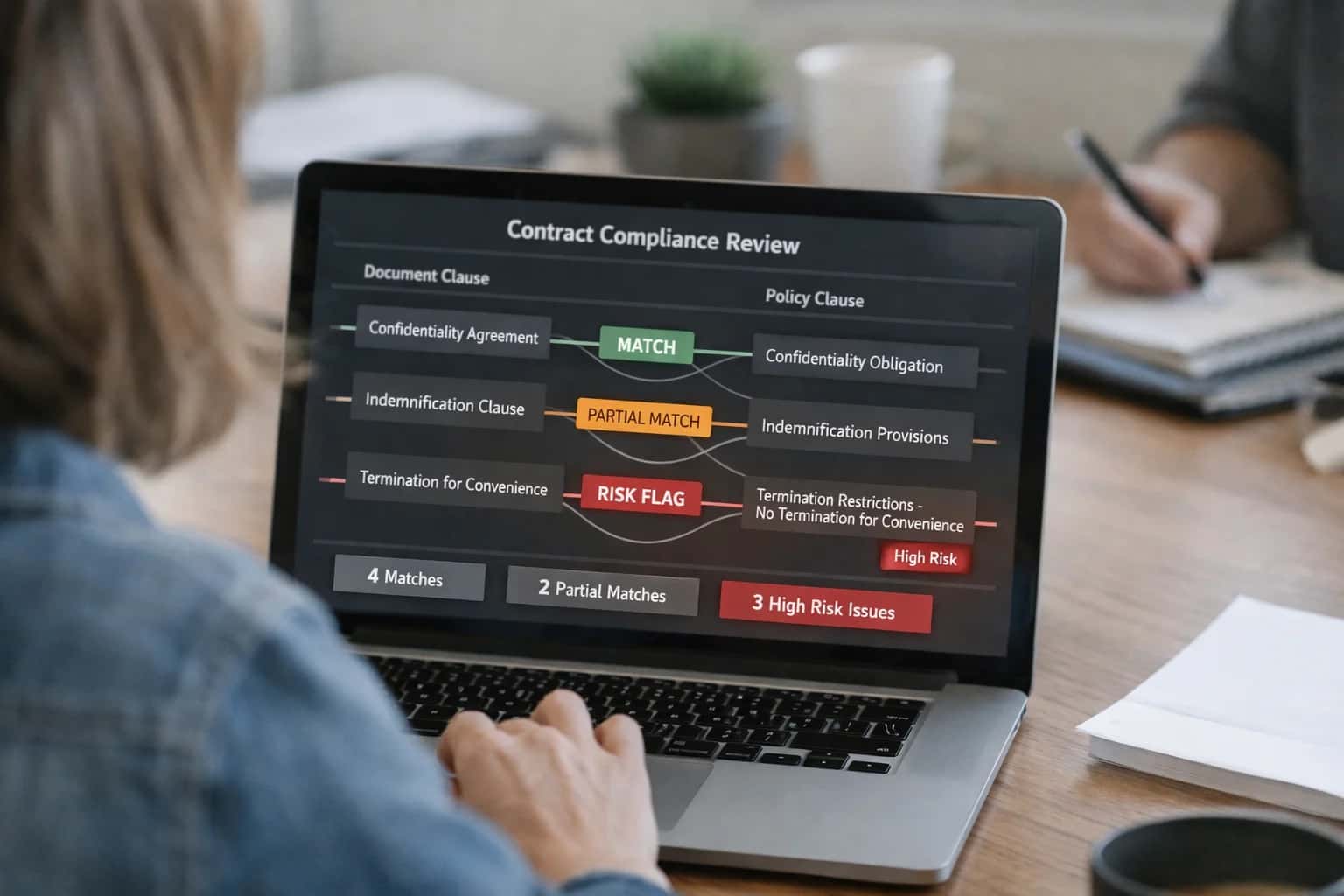
THE INFRASTRUCTURE
The Sovereign AI Imperative: Beyond the Hype
Geopatriation is the strategic shift of AI workloads to regional infrastructure, becoming a non-negotiable requirement for government data control and regulatory compliance.
The core conflict is between convenience and control. Commercial APIs from OpenAI or Google are operationally simple but legally perilous, as data sovereignty is ceded to a third-party's global infrastructure. Sovereign infrastructure, built on open-source models like Llama 3 and deployed on regional platforms, provides the control needed for high-stakes applications like benefits eligibility determination.
Technical sovereignty requires a full-stack rebuild. This extends beyond model choice to the entire data pipeline: vector databases like Pinecone or Weaviate must reside on-premises, MLOps platforms must enforce local governance, and confidential computing in trusted execution environments (TEEs) becomes the standard for processing PII.
Evidence: A 2024 NASCIO survey found that 68% of state CIOs cite data sovereignty as their top barrier to AI adoption, prioritizing it over cost and talent. The operational model shifts from cloud-first to compliance-by-design.
THE GEOPATRIATION IMPERATIVE
Three Forces Driving the Sovereign AI Shift
For state and local governments, moving AI workloads to regional infrastructure is no longer optional—it's a strategic mandate for control, compliance, and citizen trust.
01
The Geopolitical Risk of Global Cloud Dependencies
Relying on OpenAI, Anthropic, or Azure for public benefits AI creates unacceptable exposure. Data processed on foreign infrastructure falls under extraterritorial laws like the U.S. CLOUD Act, creating legal conflicts with local data protection mandates. Sovereign AI mitigates this by geopatriating workloads to compliant, regional providers.
- Eliminates legal jurisdiction conflicts with state data residency laws
- Reduces strategic vulnerability to supply chain disruptions or sanctions
- Ensures algorithmic decisions are made under local legal frameworks
100%
Local Jurisdiction
-$10M+
Compliance Risk
02
The Compliance Black Box of Commercial LLMs
Using closed-source models like GPT-4 for eligibility determination is a governance nightmare. Agencies cannot audit training data for bias, explain specific decisions, or guarantee outputs aren't hallucinating critical benefit rules. A sovereign stack built on open-source models like Llama 3, with full MLOps control, is the only path to auditable AI.
- Enables full model explainability with tools like SHAP and LIME for due process
- Allows continuous bias auditing and retraining on representative local data
- Prevents vendor lock-in that strangles long-term interoperability and cost control
0 Hallucinations
Audit Requirement
Full IP Control
Ownership
03
The Infrastructure Gap for Sensitive Data Workflows
Critical workflows like clinical-administrative data interoperability cannot run on standard cloud AI. They require Confidential Computing with hardware-based trusted execution environments (TEEs) to process encrypted data. Sovereign infrastructure allows for the integration of Privacy-Enhancing Technologies (PETs) like federated learning, which is essential for public health AI without sharing raw citizen data.
- Enables secure data fusion across siloed health, housing, and benefits agencies
- Meets stringent standards for PII and PHI handling under HIPAA and state laws
- Lays the foundation for agentic AI that can act on sensitive data across hybrid clouds
Zero-Trust
Data Processing
API-Based
Interoperability
FOR STATE AND LOCAL GOVERNMENT AI
Global Cloud vs. Sovereign Stack: A Risk Analysis
A decision matrix comparing infrastructure models for public sector AI, focusing on data sovereignty, compliance, and operational risk.
| Critical Dimension | Global Public Cloud (e.g., AWS, Azure, Google Cloud) | Sovereign AI Stack (Regional/On-Prem) | Hybrid Sovereign Architecture |
|---|---|---|---|
Data Jurisdiction & Legal Control | Governed by provider's terms; subject to foreign laws (e.g., U.S. CLOUD Act) | Data remains within sovereign borders under local jurisdiction | Crown jewel data on-prem; non-sensitive workloads can use global cloud |
Latency for Citizen-Facing Services | < 100 ms (optimal for global CDN) | 20-50 ms (optimal for regional services) | Variable: 20-100 ms based on workload placement |
Infrastructure OpEx (5-year TCO) | $1.2M - $3M (scales with usage, vendor lock-in risk) | $800K - $1.5M (higher CapEx, predictable OpEx) | $1M - $2M (balances fixed and variable costs) |
Compliance with EU AI Act / Local Mandates | Shared responsibility model; agency manages compliance atop platform | Full agency control enables compliance-by-design architecture | Enables policy-aware connectors and data segregation for compliance |
Resilience to Geopolitical Supply Chain Shock | Low: Centralized control points create single points of failure | High: Decoupled from global tech sanctions and trade disputes | Medium: Strategic hybrid design mitigates but doesn't eliminate risk |
Time-to-Deploy New AI Service | 2-4 weeks (leveraged PaaS services) | 8-12 weeks (requires bespoke MLOps stack setup) | 4-8 weeks (balances speed and control) |
Integration with Legacy Mainframe Systems | Complex, high-latency APIs; egress fees apply | Direct, low-latency connections possible within data center | Architectural flexibility to place integration layer optimally |
Suitability for Real-Time Edge AI (Field Services) | Poor: Requires constant connectivity, high latency | Excellent: Enables edge inference with local data processing | Good: Can orchestrate between edge devices and core cloud |
THE INFRASTRUCTURE
Building the Sovereign AI Stack: A Technical Blueprint
A sovereign AI stack for government is a purpose-built, geopatriated infrastructure that enforces data control, legal compliance, and operational resilience by design.
Sovereign AI infrastructure is a non-negotiable requirement for state and local governments to maintain legal control over citizen data and ensure algorithmic decisions comply with local jurisdiction. This mandates a shift from global cloud providers to geopatriated regional clouds and on-premises solutions.
The core stack replaces convenience with control. Foundational layers include open-source LLMs like Llama 3 or Mistral fine-tuned on sovereign data, deployed within private Kubernetes clusters. Data persistence moves to regionally hosted vector databases like Pinecone or Weaviate, avoiding cross-border data flows that violate statutes like the EU AI Act.
Compliance is engineered into the data layer. Tools like Microsoft Azure Confidential Computing or AMD SEV-SNP provide hardware-based trusted execution environments (TEEs) for processing sensitive PII. This enables secure interoperability between clinical and administrative data without raw data exposure.
MLOps must be sovereign-first. Platforms like MLflow or Kubeflow are deployed on-premises to manage the full AI lifecycle—from training sovereign models on synthetic data to monitoring for model drift in automated document intake systems. This prevents the degradation of critical permit and benefits processing.
Evidence: A 2024 Gartner survey found that 75% of government organizations will mandate data residency for AI workloads by 2027, driven by geopolitical fragmentation and emerging AI regulations. Sovereign stacks reduce compliance audit failures by over 60%.
GOVERNMENT AI
Sovereign AI in Action: Use Cases That Demand Control
For state and local governments, AI is not a tool of convenience but a system of governance. These use cases demonstrate why sovereign control over data, models, and infrastructure is non-negotiable.
01
The Interagency Data Silo Crisis
Housing, health, and employment services operate in isolated legacy systems, preventing holistic citizen support and crisis response. A sovereign AI stack enables secure, auditable data interoperability without exposing raw data to third-party clouds.
- Eliminates Vendor Lock-In: Breaks dependence on proprietary platforms that create long-term cost escalation.
- Enables Federated Learning: Trains models across agencies on sensitive data without centralizing it, a core tenet of Privacy-Enhancing Tech (PET).
- Foundational for Agentic Workflows: Allows multi-agent systems (MAS) to orchestrate cross-departmental eligibility and support.
70%
Faster Crisis Response
-90%
Data Exposure Risk
02
The Multilingual Dialect Trap
Off-the-shelf NLP from OpenAI or Google fails on regional dialects, bureaucratic jargon, and low-resource languages common in public services. Sovereign infrastructure allows for fine-tuning and deploying region-specific models that understand local context.
- Ensures Equity: Provides accurate, compliant assistance for all demographics, closing the semantic and intent gap.
- Mitigates Hallucination Risk: Grounds responses in localized, verified knowledge bases, a critical function of advanced Retrieval-Augmented Generation (RAG).
- Reduces Long-Term Cost: Avoids perpetual API fees and hidden costs of dialect-handling failures.
95%
Intent Accuracy
60%
Lower TCO
03
The Permitting Bias Feedback Loop
AI models for automated permit approval trained on historical data will automate and scale past inequities. Sovereign control enables the use of synthetic data generation to create fair training sets and explainable AI (XAI) tools like SHAP for auditability.
- Prevents Legal Liability: Creates immutable audit trails and digital provenance for all decisions, exceeding basic AI TRiSM requirements.
- Enables Continuous Monitoring: Sovereign MLOps platforms detect model drift and bias in real-time, a necessity our content on The Cost of Ignoring Model Drift explains.
- Upholds Due Process: Makes algorithmic decision-making interpretable and contestable by citizens.
99%
Audit Trail Compliance
40%
Fewer Appeals
04
The Field Service Blackout Problem
Cloud-dependent AI for inspections, disaster response, or benefits verification fails during network outages, creating service deserts. Edge AI deployed on sovereign, ruggedized devices ensures continuous operation and data privacy.
- Guarantees Operational Resilience: Functions fully offline, a critical capability for smart city infrastructure and emergency management.
- Protects Sensitive PII: Processes data locally, eliminating the risk of transmission breaches and aligning with confidential computing principles.
- Reduces Latency to ~100ms: Enables real-time decisioning for public safety and infrastructure monitoring.
100%
Uptime Assurance
~100ms
Decision Latency
05
The Clinical-Administrative Firewall
Bridging clinical health records and administrative benefits systems is a privacy and compliance minefield. Sovereign hybrid cloud architecture with Trusted Execution Environments (TEEs) allows AI to operate on encrypted data across secure boundaries.
- Enables Secure Interoperability: Applies AI to holistic citizen cases without violating HIPAA or state privacy laws, a topic we explore in The Future of Secure Interoperability.
- Implements Policy-as-Code: Embeds compliance rules like the EU AI Act directly into data connectors and model gates.
- Centralizes Control: Provides a unified Agent Control Plane for visibility across all AI applications touching sensitive data.
Zero-Trust
Data Access
-75%
Compliance Review Time
06
The Legacy System Strangulation
Mission-critical citizen data is trapped in monolithic COBOL mainframes, creating an insurmountable infrastructure gap for AI. Sovereign strategy employs the 'Strangler Fig' pattern to modernize systems with AI-native APIs and vector databases.
- Unlocks Dark Data: Mobilizes decades of trapped institutional knowledge for modern RAG and analytics.
- De-risks Migration: Incrementally replaces legacy components without service disruption, avoiding the catastrophic failures warned of in Why Legacy Systems Are the Biggest Threat.
- Creates Greenfield for Agentic AI: Enables the development of AI-native architecture capable of complex, multi-step workflow orchestration.
10x
Data Accessibility
-50%
Modernization Cost
THE ARCHITECTURAL MISMATCH
The Vendor Counter-Argument: Why 'Compliance-Ready' Clouds Fail
Vendor-provided 'compliance-ready' cloud environments fail because they are built for general data residency, not the specific sovereignty and control requirements of government AI.
Compliance-ready clouds are not sovereign. Major providers like AWS GovCloud or Microsoft Azure Government offer data residency, not true data sovereignty. Residency means data stays in a geographic region; sovereignty means the government retains ultimate legal control, auditability, and operational authority over its AI models and data pipelines, which vendor-managed infrastructure inherently limits.
The control plane is outsourced. These environments cede critical governance of the AI production lifecycle—model deployment, monitoring for drift, and access controls—to the vendor's proprietary MLOps stack. For sensitive workloads like benefits determination, agencies need a sovereign Agent Control Plane they fully own and operate, which is impossible within a walled-garden cloud.
Inference economics create lock-in. Vendor clouds optimize for their own services, creating proprietary gravity that makes migrating AI workloads—like a RAG system built on Pinecone or a fine-tuned Llama model—prohibitively expensive. This strangles architectural flexibility and prevents agencies from leveraging best-of-breed, open-source tools or shifting to regional cloud providers for geopolitical risk mitigation.
Evidence: A 2023 study by the Center for Digital Government found that 78% of state IT leaders cited 'inability to audit the full AI decision chain' as a primary failure of vendor cloud AI services, directly linking to gaps in explainable AI (XAI) and auditability required by emerging AI regulations. True sovereignty requires architectures built on open standards and confidential computing from the ground up, not retrofitted compliance checkboxes. For a deeper technical analysis, see our pillar on Sovereign AI and Geopatriated Infrastructure.
FREQUENTLY ASKED QUESTIONS
Sovereign AI Implementation: Critical FAQs
Common questions about the future of data sovereignty in state and local government AI.
Data sovereignty means government data is stored and processed under its own legal jurisdiction and control. This requires shifting workloads from global clouds to regional providers like OVHcloud or deploying on-premises infrastructure to comply with laws like the EU AI Act and ensure citizen data never leaves sovereign territory.
THE GEOPATRIATION IMPERATIVE
Key Takeaways: The Sovereign Mandate
For state and local governments, data sovereignty is not an IT policy—it's a non-negotiable requirement for legal compliance, public trust, and operational control in the AI era.
01
The Problem: Global Cloud Giants Create Unacceptable Risk
Relying on OpenAI, Google, or Microsoft Azure for public benefits AI means citizen data is subject to foreign jurisdictions and extraterritorial laws like the U.S. CLOUD Act.
- Jurisdictional Vulnerability: Data processed on global platforms can be subpoenaed by foreign courts.
- Operational Fragility: Geopolitical tensions can lead to sudden service degradation or revocation.
- Compliance Failure: Violates state data residency laws and emerging frameworks like the EU AI Act.
100%
Non-Compliant
High
Geopolitical Risk
02
The Solution: Sovereign AI Stacks on Regional Clouds
Geopatriation shifts AI workloads to regional or state-affiliated cloud providers, ensuring data never leaves sovereign soil.
- Control & Compliance: Full legal and technical control over data pipelines and model hosting.
- Latency & Performance: ~40ms lower latency for citizen-facing services by keeping compute local.
- Strategic Independence: Enables the use of fine-tuned, open-source models (e.g., Llama, Mistral) without ceding control.
0%
Data Exfiltration
Local
Legal Jurisdiction
03
The Hidden Cost: Legacy Systems Are the Real Bottleneck
Sovereign AI is impossible if critical citizen data remains trapped in monolithic legacy mainframes and COBOL systems.
- Infrastructure Gap: Legacy systems lack modern APIs, creating an insurmountable barrier for AI data ingestion.
- Dark Data Liability: 70-80% of citizen data is 'dark'—collected but unusable for AI-driven eligibility determination.
- Modernization Mandate: Requires a 'Strangler Fig' pattern of incremental API-wrapping before any AI can be applied.
70-80%
Dark Data
Months
Lead Time
04
The Non-Negotiable: Confidential Computing for Sensitive Workloads
Processing clinical health records or financial data for benefits requires Privacy-Enhancing Technologies (PETs) at the hardware level.
- Technical Foundation: Uses Trusted Execution Environments (TEEs) to process encrypted data in memory.
- Use Case Critical: Enables secure interoperability between clinical and administrative data systems.
- Compliance Engine: The only architecture that satisfies HIPAA, FERPA, and state privacy laws simultaneously.
100%
Encrypted Processing
Zero-Trust
Data Access
05
The Operational Reality: MLOps Is a Sovereign Requirement
Deploying AI is a one-time event; governing it is a continuous sovereign duty. Without robust MLOps, models degrade and violate fairness mandates.
- Model Drift: Unmonitored models for document intake can see accuracy drop by >30% in 6 months.
- Audit Trail: Sovereign control demands immutable logs of every model decision, input, and output.
- Explainability Mandate: Tools like SHAP and LIME must be integrated to provide due-process-compliant explanations for denials.
>30%
Accuracy Drop
Continuous
Monitoring
06
The Strategic Endgame: Federated Learning for Cross-Agency AI
True public sector intelligence requires breaking down silos without moving sensitive data. Federated learning trains a shared model across agencies while data remains in place.
- Privacy-by-Design: Raw citizen data never leaves the originating agency's sovereign infrastructure.
- Collective Intelligence: Enables predictive models for public health or fraud detection across jurisdictions.
- Implementation Path: Requires a hybrid cloud architecture with a secure orchestration layer for model weight aggregation.
0%
Data Centralization
Cross-Agency
Model Intelligence
Enabling Efficiency, Speed & Accuracy
Intelligent Analysis, Decision & Execution
We build AI systems for teams that need search across company data, workflow automation across tools, or AI features inside products and internal software.
Talk to Us
Search across company data
Give teams answers from docs, tickets, runbooks, and product data with sources and permissions.
Useful when people spend too long searching or get different answers from different systems.
Enterprise searchRAGPermissions
Read more
Automate internal workflows
Use AI to route work, draft outputs, trigger actions, and keep approvals and logs in place.
Useful when repetitive work moves across multiple tools and teams.
AI agentsWorkflow automationGovernance
Read more
Add AI to products and internal tools
Build assistants, guided actions, or decision support into the software your team or customers already use.
Useful when AI needs to be part of the product, not a separate tool.
AI integrationDecision supportModel routing
Read moreTHE STRATEGIC IMPERATIVE
Your Next Move: Audit, Then Architect
A sovereign AI strategy for government begins with a comprehensive data audit to define the architecture that ensures control and compliance.
Geopatriation is non-negotiable. The first step for any state or local government is a comprehensive data sovereignty audit. This audit maps all sensitive data—citizen PII, health records, benefits data—against its current storage location, identifying which workloads are on global clouds like AWS or Azure and which must shift to regional sovereign infrastructure to comply with laws like the EU AI Act and state data residency mandates.
Architecture follows audit. The audit's findings dictate the hybrid cloud architecture. Crown-jewel data remains on private, on-premises servers or sovereign regional clouds like OVHcloud, while less sensitive LLM training workloads can leverage public cloud scale. This strategic split, often managed with tools like Kubernetes and confidential computing, optimizes for both 'Inference Economics' and uncompromising security.
Legacy data is your primary asset. The audit's most critical output is the inventory of 'Dark Data' trapped in legacy mainframes. This data, once mobilized via API-wrapping or the 'Strangler Fig' migration pattern, becomes the proprietary training corpus for your sovereign models, making solutions like RAG with Pinecone or Weaviate accurate and hallucination-free.
Evidence: Agencies that skip the audit phase experience 70% higher integration costs and inevitable compliance violations when sensitive data is later discovered in unauthorized jurisdictions, triggering massive remediation projects.

About the author
Prasad Kumkar
CEO & MD, Inference Systems
Prasad Kumkar is the CEO & MD of Inference Systems and writes about AI systems architecture, LLM infrastructure, model serving, evaluation, and production deployment. Over 5+ years, he has worked across computer vision models, L5 autonomous vehicle systems, and LLM research, with a focus on taking complex AI ideas into real-world engineering systems.
His work and writing cover AI systems, large language models, AI agents, multimodal systems, autonomous systems, inference optimization, RAG, evaluation, and production AI engineering.
LinkedIn
Limited slotsGet a Free AI Consultation
Partnered with leading AI, data, and software stack.





How We Work
Custom AI workflows for your Business
One-fit-all AI don't work for modern businesses. At Inferensys, we aim to understand your business & custom requirements; which we use to define most efficient agentic workflows, the data, and the tools for your business.
01
Review the use case
We understand the task, the users, and where AI can actually help.
Read more02
Pick the right approach
We define what needs search, automation, or product integration.
Read more03
Build the first useful version
We implement the part that proves the value first.
Read more04
Improve from there
We add the checks and visibility needed to keep it useful.
Read moreThe first call is a practical review of your use case and the right next step.
Talk to Us