Cloud latency breaks real-time AI. Multimodal intelligence requires fusing high-bandwidth video, audio, and sensor streams, a process that fails when round-trip cloud transmission adds hundreds of milliseconds.

Blog
Why Edge Computing is a Prerequisite for Scalable Multimodal AI
Processing video, audio, and sensor data in the cloud for multimodal AI creates crippling latency and bandwidth costs. This analysis explains why edge computing is a non-negotiable architectural foundation, not an optional optimization, for scalable enterprise deployments.
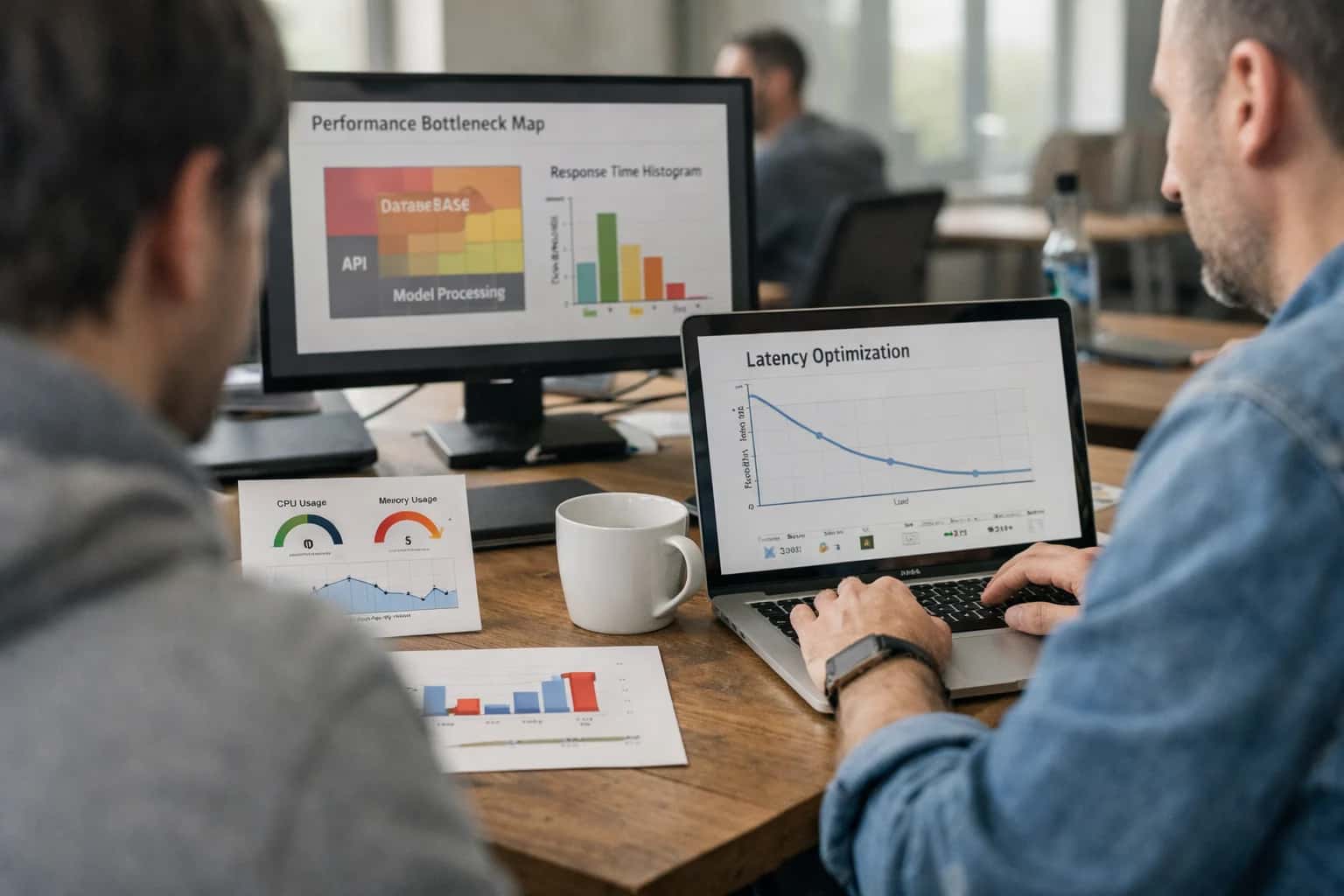
THE LATENCY PROBLEM
The Cloud is a Bottleneck for Multimodal Intelligence
Processing video, audio, and sensor data in the cloud introduces prohibitive latency that breaks real-time multimodal applications.
Bandwidth costs are multiplicative. Sending raw 4K video or LIDAR point clouds for central processing is economically unsustainable at scale, unlike text-based Retrieval-Augmented Generation (RAG).
Edge computing enables sensor fusion. Platforms like NVIDIA's Jetson Orin perform local feature extraction, sending only compact, fused embeddings to the cloud, which aligns with the principles of Physical AI and Embodied Intelligence.
Evidence: A real-time safety system analyzing video and audio for industrial anomalies requires sub-100ms response; cloud-based inference typically exceeds 500ms, creating an operational hazard.
THE LATENCY IMPERATIVE
Key Takeaways: Why Edge is Non-Negotiable
Processing video, audio, and sensor data in the cloud for multimodal AI creates unsustainable bottlenecks. Edge computing is the foundational layer for scalable, real-time intelligence.
01
The Bandwidth Tax on Video Streams
Sending raw, high-fidelity video to the cloud for analysis is economically and technically infeasible at scale. Edge processing filters and extracts only relevant features, collapsing data volume before transmission.
- Reduces upstream bandwidth demand by 90%+ for continuous video feeds.
- Enables real-time object detection and anomaly identification with sub-100ms latency.
- Directly integrates with Physical AI systems like autonomous robots and smart sensors.
90%+
Bandwidth Saved
<100ms
Latency
02
Privacy by Default for Sensitive Modalities
Multimodal data—especially video from factories, audio from call centers, and biometrics from healthcare—contains regulated PII and trade secrets. Edge inference ensures raw data never leaves the secure perimeter.
- Enables compliance with GDPR, HIPAA, and the EU AI Act by design.
- Aligns with Sovereign AI principles by keeping critical data on-premises or in regional nodes.
- Forms the backbone of Confidential Computing architectures for sensitive AI workloads.
0%
Raw Data Egress
In-Region
Data Sovereignty
03
The Cost of Cloud-Only Multimodal Inference
The compute burden of fusing vision, language, and audio models is multiplicative, not additive. Edge deployment shifts the heaviest inference loads to the point of data generation, optimizing Inference Economics.
- Cuts per-query cloud inference costs by 40-60% for high-volume sensor data.
- Eliminates egress fees for terabytes of pre-processed telemetry.
- Enables scalable deployment for use cases like Predictive Maintenance and Real-Time Translation.
40-60%
Cost Reduction
$0
Data Egress Fees
04
Resilience in Unstable Network Environments
Field operations in construction, mining, and logistics often occur in areas with poor or intermittent connectivity. Edge AI nodes provide continuous operation and decision-making autonomy.
- Ensures mission-critical systems function during network outages.
- Supports Autonomous Delivery drones and vehicles that cannot afford latency-induced hesitation.
- A core tenet of Hybrid Cloud AI Architecture, creating a resilient, distributed intelligence layer.
100%
Uptime
Offline-First
Operation
05
Real-Time Sensor Fusion for Instant Actuation
True multimodal intelligence requires correlating data streams—like camera feeds, LiDAR, and vibration sensors—within milliseconds to enable physical action. Only edge processing provides the necessary temporal alignment.
- Enables Construction Robotics to navigate dynamic sites safely.
- Powers Industrial Reliability systems that predict failures from converging sensor anomalies.
- Fundamental for Embodied Intelligence where perception must immediately drive actuation.
10ms
Sensor Fusion
Real-Time
Actuation
06
The Foundation for Agentic Edge Ecosystems
The future is decentralized Agentic AI where autonomous agents on devices collaborate. Edge computing provides the local compute substrate for these agents to perceive, reason, and act independently.
- Enables M2M transactions and Agentic Commerce without round-trips to a central cloud.
- Reduces load on central Agent Control Plane by handling local coordination.
- Critical for scaling Multi-Agent Systems (MAS) across thousands of endpoints in a supply chain.
Local
Agent Autonomy
Distributed
Orchestration
THE DATA
The Physics of Data Makes Cloud-Only Multimodal AI Impossible
Latency and bandwidth constraints make processing video and sensor data at the edge a technical imperative, not an optimization.
Cloud-only architectures fail for multimodal AI because the fundamental physics of data movement—latency and bandwidth—create insurmountable bottlenecks for real-time video, audio, and sensor streams.
Latency kills real-time context. A cloud round-trip for a 4K video frame introduces 100+ milliseconds of delay, destroying the temporal coherence needed for applications like autonomous robotics or interactive customer support. This makes edge inference with frameworks like TensorFlow Lite or ONNX Runtime non-negotiable.
Bandwidth costs are multiplicative. Sending raw, high-fidelity multimodal data to the cloud is economically prohibitive at scale. Intelligent data filtering at the source—using edge models to extract only relevant features—reduces upstream data volume by orders of magnitude before it hits your vector database.
Evidence: A single HD video stream consumes ~5 Mbps. A warehouse with 100 cameras requires 500 Mbps of constant uplink bandwidth for cloud processing, a cost and infrastructure burden that evaporates with on-site edge computing nodes.
The hybrid imperative is proven. Successful systems use the edge for low-latency perception and the cloud for heavy aggregation and model retraining. This architectural pattern is central to building a resilient Multi-Modal Enterprise Ecosystem.
Ignoring this physics forces a choice between crippling latency, bankrupting bandwidth costs, or drastically reduced functionality. Edge computing is the prerequisite that enables scalable, real-time Multimodal AI.
DECISION MATRIX
The Multimodal Data Tsunami: Cloud vs. Edge Economics
A direct comparison of deployment strategies for processing high-volume, real-time multimodal data (video, audio, sensor streams).
| Critical Metric | Cloud-Centric Processing | Hybrid Edge-Cloud | Edge-First Architecture |
|---|---|---|---|
End-to-End Latency for 1GB Video Stream |
| 100 - 300 ms | < 50 ms |
Bandwidth Cost per Terabyte of Raw Sensor Data | $80 - $120 | $20 - $40 | $0 - $5 |
Real-Time Decision Capability (e.g., anomaly detection) | |||
Data Sovereignty & Privacy Compliance | High Risk | Moderate Risk | Inherently Secure |
Inference Cost per 1M Frames (Video Analysis) | $45 - $65 | $15 - $30 | $2 - $10 |
Resilience to Network Outages | 0% Uptime Guarantee | Partial Functionality | 100% Autonomous Operation |
Hardware & Deployment Capex | $0 (OpEx only) | $10k - $50k | $50k - $200k+ |
Scalability for 10,000+ Concurrent Streams | Theoretically Unlimited | Requires Careful Orchestration | Requires Distributed Mesh |
THE TECHNICAL IMPERATIVE
Where Edge Computing Unlocks Multimodal Scalability
Latency and bandwidth constraints make processing video and sensor data at the edge a prerequisite for scalable multimodal AI, not an optimization.
01
The Latency Wall for Real-Time Fusion
Fusing video, audio, and sensor streams for instant decision-making is impossible with cloud round-trips. Edge processing eliminates the ~100-500ms network latency that breaks real-time applications.
- Enables sub-50ms response for autonomous systems and interactive AI.
- Makes real-time cross-modal correlation (e.g., lip-sync with audio) computationally feasible.
<50ms
Response Time
10x
Faster Fusion
02
The Bandwidth Tax of Raw Sensor Streams
Sending continuous high-resolution video and audio to the cloud is economically and technically prohibitive. Edge nodes perform initial filtering and feature extraction, reducing data payloads by over 90%.
- Cuts cloud egress and compute costs by 50-70% for video-heavy workflows.
- Turns raw streams into lightweight, actionable semantic data for central models.
-90%
Data Sent
-60%
Cloud Cost
03
Privacy as a First-Class Constraint
Multimodal data from cameras and microphones is intensely sensitive. Edge computing enforces data sovereignty by design, processing PII and proprietary visuals locally.
- Enables compliance with regulations like GDPR and the EU AI Act without complex data masking.
- Provides a foundational layer for Confidential Computing in AI, keeping raw data on-premises.
0-Export
Raw Data
Inherent
Compliance
04
NVIDIA Jetson and the Hardware Catalyst
Platforms like NVIDIA Jetson Orin provide the dedicated TOPS (Tera Operations Per Second) needed for on-device multimodal inference, making edge deployment practical.
- Delivers 40-100 TOPS in a compact, power-efficient form factor for embedded AI.
- Enables the Physical AI convergence of machine learning with robotics and industrial machinery.
40-100
TOPS
Embedded
Form Factor
05
Hybrid Inference and the Agent Control Plane
The edge acts as a tactical layer, handling time-sensitive perception, while the cloud serves as a strategic layer for complex reasoning. This requires a sophisticated Agent Control Plane to orchestrate workflows.
- Enables Resilient AI that functions during network outages.
- Aligns with Hybrid Cloud AI Architecture principles, optimizing for 'Inference Economics'.
Tactical
Edge Layer
Strategic
Cloud Layer
06
The Data Foundation for Physical AI
Machines in construction, manufacturing, and healthcare operate in unstructured environments. Edge computing solves the 'Data Foundation Problem' by processing real-world sensor data where it's generated.
- Provides the high-frequency, low-latency feedback required for autonomous actuation.
- Feeds Digital Twins with real-time operational data for accurate simulation and optimization.
Real-Time
Feedback Loop
Unstructured
World Data
THE IMPERATIVE
Architecting for Edge-First Multimodal AI
Edge computing is a technical prerequisite for scalable multimodal AI because centralized cloud processing creates unsustainable latency, bandwidth, and cost bottlenecks for real-time video, audio, and sensor fusion.
Edge computing is non-negotiable for scalable multimodal AI. Processing video, audio, and sensor streams in a centralized cloud creates prohibitive latency, saturates network bandwidth, and incurs crippling egress costs, making real-time applications impossible.
Latency determines utility. A multimodal system analyzing a live security feed or guiding an autonomous vehicle must fuse vision and LiDAR data in <100ms. Cloud round-trip times of 200-500ms render these systems useless. Real-time decisioning only happens at the edge.
Bandwidth is the hidden cost. Streaming raw, high-fidelity video from thousands of cameras or IoT sensors to the cloud for analysis is economically and technically infeasible. Edge inference with frameworks like TensorFlow Lite or ONNX Runtime compresses data to actionable insights before transmission.
Inference economics shift. The multiplicative compute cost of fusing vision, language, and audio models makes cloud-based inference prohibitively expensive at scale. Deploying optimized models on NVIDIA Jetson or Qualcomm AI Hub platforms slashes operational expense and enables deployment density.
Data sovereignty is enforced. Processing sensitive video or audio locally on edge devices, rather than streaming it to a public cloud, inherently satisfies data residency requirements and reduces privacy attack surfaces, a core concern of AI TRiSM.
Evidence: Deploying a computer vision model for defect detection on a factory line at the edge reduces latency from 300ms to 15ms and cuts bandwidth consumption by over 95% compared to a cloud-based architecture, turning a pilot into a scalable production system.
WHY EDGE COMPUTING IS NON-NEGOTIABLE
The Hidden Risks of Ignoring the Edge Imperative
Processing video, audio, and sensor data in the cloud for multimodal AI creates unsustainable latency, cost, and privacy bottlenecks that undermine scalability.
01
The Problem: The Latency Tax on Real-Time Context
Sending high-fidelity sensor streams to a centralized cloud for fusion creates a ~500ms+ decision lag. For applications like autonomous robotics or real-time translation, this delay is catastrophic, breaking the user experience and rendering the AI system ineffective.
- Real-time video analysis for quality control becomes impossible.
- Live multilingual meetings suffer from jarring, out-of-sync audio.
- Predictive maintenance alerts arrive after the machine has failed.
500ms+
Decision Lag
0
Real-Time Viability
02
The Solution: On-Device Fusion with Federated Learning
Deploy lightweight, specialized models directly on edge devices (e.g., NVIDIA Jetson, smartphones) to perform initial modality fusion. This reduces raw data transmission by over 90% and enables sub-100ms inference. Federated learning allows these edge models to improve collectively without exposing raw, sensitive data.
- Local video/audio transcription before sending compact text.
- Privacy-preserving model updates across a device fleet.
- Hybrid architectures that balance edge speed with cloud scale.
-90%
Bandwidth Use
<100ms
Edge Latency
03
The Problem: The Bandwidth Bankruptcy of Video Streams
A single HD video feed can consume ~5 Mbps continuously. Scaling to hundreds of cameras or IoT sensors for enterprise multimodal AI would require exorbitant cloud egress fees and saturate network infrastructure, making the business case untenable.
- Egress costs scale linearly with sensor count, destroying ROI.
- Network congestion cripples other critical business operations.
- Raw video storage in the cloud is prohibitively expensive for retention.
5 Mbps
Per Feed
$10K+
Monthly Egress
04
The Solution: Edge Pre-Processing and Semantic Compression
Process and distill data at the source. Use edge AI to extract only semantically rich features—like object counts, anomaly flags, or transcript summaries—instead of transmitting raw pixel streams. This turns a bandwidth-heavy video feed into a lightweight ~10 Kbps data packet.
- Extract events, not frames, for efficient cloud aggregation.
- Implement tiered storage: keep raw data locally, send insights globally.
- Leverage 5G network slicing for prioritized, efficient data flows.
10 Kbps
After Compression
-99%
Data Volume
05
The Problem: The Privacy Violation of Centralized Data Lakes
Consolidating multimodal data—employee video, patient audio, proprietary blueprints—in a public cloud creates a single point of failure for regulatory compliance (GDPR, HIPAA) and intellectual property theft. It violates the core principle of data minimization.
- Geopolitical risk from cross-border data transfers under laws like the EU AI Act.
- Catastrophic breach potential from a compromised cloud tenant.
- Loss of sovereign control over sensitive training datasets.
1
Attack Surface
High
Compliance Risk
06
The Solution: Sovereign AI Stacks and Confidential Computing at the Edge
Build Sovereign AI infrastructure where sensitive data never leaves the local network or region. Combine edge processing with Confidential Computing enclaves (e.g., Intel SGX, AMD SEV) to keep data encrypted even during inference. This enables compliant multimodal AI for healthcare, defense, and finance.
- Local inference for PII-rich modalities like voice and video.
- Secure, attested model execution on edge hardware.
- Regional cloud options for aggregation without geopolitical exposure.
0
Data Exodus
100%
Local Compliance
Enabling Efficiency, Speed & Accuracy
Intelligent Analysis, Decision & Execution
We build AI systems for teams that need search across company data, workflow automation across tools, or AI features inside products and internal software.
Talk to Us
Search across company data
Give teams answers from docs, tickets, runbooks, and product data with sources and permissions.
Useful when people spend too long searching or get different answers from different systems.
Enterprise searchRAGPermissions
Read more
Automate internal workflows
Use AI to route work, draft outputs, trigger actions, and keep approvals and logs in place.
Useful when repetitive work moves across multiple tools and teams.
AI agentsWorkflow automationGovernance
Read more
Add AI to products and internal tools
Build assistants, guided actions, or decision support into the software your team or customers already use.
Useful when AI needs to be part of the product, not a separate tool.
AI integrationDecision supportModel routing
Read moreTHE IMPERATIVE
The Future is Neuromorphic and Edge-Native
Scalable multimodal AI will not run in the cloud; it must be processed at the edge to overcome fundamental physical constraints.
Edge computing is a prerequisite for scalable multimodal AI because latency and bandwidth constraints make processing video and sensor data in the cloud physically impossible for real-time applications. The round-trip to a centralized data center introduces fatal delays for systems that must see, hear, and act.
The bandwidth tax is prohibitive. Streaming raw, high-fidelity video from thousands of endpoints like security cameras or autonomous vehicles to a cloud API for analysis would saturate network capacity and incur unsustainable costs. On-device inference with frameworks like TensorFlow Lite or ONNX Runtime eliminates this bottleneck entirely.
Latency determines utility. A multimodal AI system analyzing a factory floor must correlate visual defects with acoustic anomalies from machinery within milliseconds to prevent downtime. This real-time sensor fusion is only possible with edge-native architectures that colocate processing with the data source.
Neuromorphic hardware is the accelerator. Chips like Intel's Loihi 2, which mimic the brain's event-driven, low-power processing, are engineered for the sparse, continuous data streams of edge sensors. They enable efficient cross-modal reasoning where vision and audio models run concurrently without overwhelming traditional von Neumann CPUs.
Privacy and sovereignty are enforced by design. Processing sensitive data—from patient health monitors to confidential boardroom discussions—on the device itself complies with regulations like GDPR and the EU AI Act by default, avoiding the risk of data in transit. This aligns with the principles of our Sovereign AI pillar.
Evidence: The economics are decisive. Deploying a computer vision model for quality inspection on an NVIDIA Jetson edge module can reduce inference latency from 500ms (cloud) to under 20ms, while cutting bandwidth costs by over 90%. This makes the business case for edge AI not an optimization, but a foundational requirement for any industrial application.

About the author
Prasad Kumkar
CEO & MD, Inference Systems
Prasad Kumkar is the CEO & MD of Inference Systems and writes about AI systems architecture, LLM infrastructure, model serving, evaluation, and production deployment. Over 5+ years, he has worked across computer vision models, L5 autonomous vehicle systems, and LLM research, with a focus on taking complex AI ideas into real-world engineering systems.
His work and writing cover AI systems, large language models, AI agents, multimodal systems, autonomous systems, inference optimization, RAG, evaluation, and production AI engineering.
LinkedIn
Limited slotsGet a Free AI Consultation
Partnered with leading AI, data, and software stack.





How We Work
Custom AI workflows for your Business
One-fit-all AI don't work for modern businesses. At Inferensys, we aim to understand your business & custom requirements; which we use to define most efficient agentic workflows, the data, and the tools for your business.
01
Review the use case
We understand the task, the users, and where AI can actually help.
Read more02
Pick the right approach
We define what needs search, automation, or product integration.
Read more03
Build the first useful version
We implement the part that proves the value first.
Read more04
Improve from there
We add the checks and visibility needed to keep it useful.
Read moreThe first call is a practical review of your use case and the right next step.
Talk to Us