A model in production without a feedback loop is a static artifact decaying in real-time. It cannot learn from mistakes, adapt to new data patterns, or improve its performance, rendering the initial investment in training a sunk cost.

Blog
The Cost of Ignoring Feedback Loops in Production AI
A static AI model is a decaying asset. This analysis details the technical and business consequences of failing to implement structured feedback loops, from silent revenue erosion to regulatory failure, and provides a framework for building self-improving production systems.
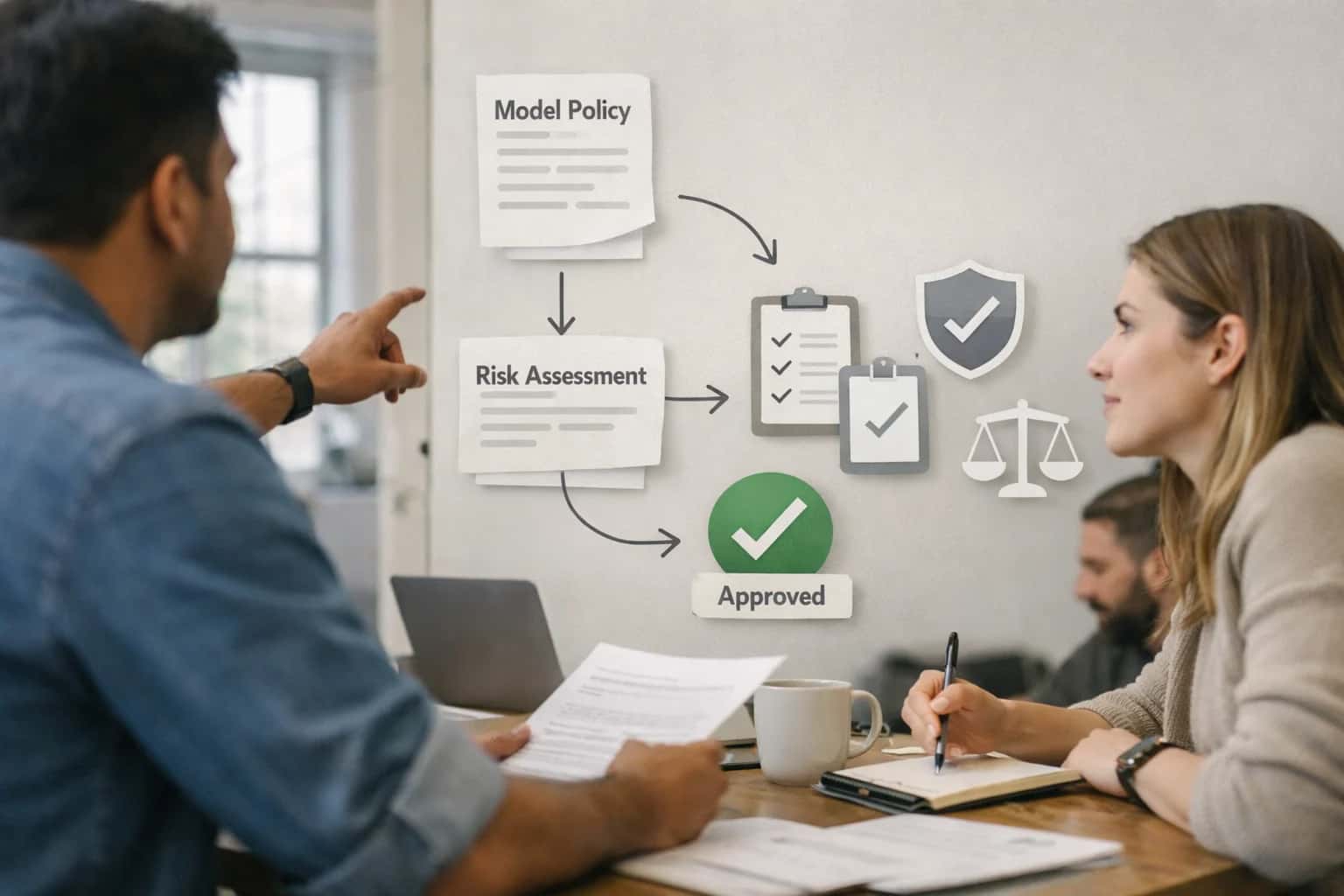
THE FEEDBACK GAP
Your Production AI is Learning Nothing
Deploying a model without a structured feedback loop guarantees its immediate obsolescence and perpetuates errors.
Feedback loops are the retraining trigger. Without mechanisms to capture user corrections, failed predictions, or performance metrics, your model's weights remain frozen, blind to the evolving world it operates in. This is a core failure of Model Lifecycle Management.
Ignoring feedback institutionalizes bias. Errors and skewed predictions are not just repeated; they are amplified over time as the model reinforces its own flawed understanding on new data, creating a toxic data flywheel that is expensive to correct.
Evidence: Systems with automated feedback collection and retraining pipelines, monitored by platforms like Weights & Biases or Arize AI, maintain prediction accuracy 30-50% longer than static deployments. The absence of this loop is the primary cause of Model Drift.
THE COST OF IGNORING FEEDBACK LOOPS
Key Takeaways: The Feedback Imperative
Without structured feedback collection, production AI models cannot learn from their mistakes, perpetuating errors, bias, and financial loss.
01
The Problem: Silent Revenue Erosion
Unchecked model drift degrades prediction accuracy by 15-30% annually, directly impacting core business metrics like conversion and churn. This decay is often invisible until a major failure occurs, making it a silent revenue killer.
- Direct Impact: Degraded personalization leads to ~5% lower average order value.
- Hidden Cost: Increased customer service load from incorrect AI recommendations.
15-30%
Annual Accuracy Loss
~5%
Lower AOV
02
The Solution: Automated Retraining Triggers
Implement a continuous retraining loop using monitoring tools like Weights & Biases or MLflow to detect data and concept drift. Automated pipelines retrain models when KPIs drop below a threshold, maintaining performance.
- Key Benefit: Reduces time-to-remediation from weeks to ~4 hours.
- Key Benefit: Ensures models adapt to real-world data shifts, sustaining >95% target accuracy.
~4h
Remediation Time
>95%
Target Accuracy
03
The Problem: The Governance Paradox
Organizations plan for agentic AI but lack the mature ModelOps frameworks to oversee it. Without a control plane for model lineage and access, feedback loops are fragmented and unactionable, creating compliance risk under regulations like the EU AI Act.
- Direct Impact: Inability to audit model decisions leads to failed compliance checks.
- Hidden Cost: Technical debt from unmanaged model versions and dependencies.
High
Compliance Risk
Critical
Tech Debt
04
The Solution: Centralized Feedback Orchestration
Deploy a dedicated Model Control Plane that ingests performance metrics, user corrections, and business KPIs into a unified system. This enables proactive monitoring and structured feedback flow to trigger the retraining pipeline.
- Key Benefit: Creates a single source of truth for model health across teams.
- Key Benefit: Enforces policy-based access controls and audit trails for governance.
Unified
Health View
Policy-Driven
Access Control
05
The Problem: Brittle, Monolithic Pipelines
A single-point-of-failure pipeline for data processing and model serving cannot support rapid iteration. When feedback is collected, there's no efficient path to retrain and redeploy, trapping teams in pilot purgatory.
- Direct Impact: Lifecycle velocity slows to a crawl, killing ROI.
- Hidden Cost: Inability to run Shadow Mode deployments to safely validate new models.
Low
Lifecycle Velocity
High
Deployment Risk
06
The Solution: Iteration as Infrastructure
Architect MLOps pipelines that are orchestrated, not manual. Use tools like Kubeflow or Airflow to automate the feedback-to-retraining lifecycle. This turns iteration speed into a competitive moat.
- Key Benefit: Enables Shadow Mode deployment to de-risk new model releases.
- Key Benefit: Scales model management across hybrid cloud environments, optimizing inference economics.
10x
Faster Iteration
De-risked
Deployments
THE SYSTEM
What a Real AI Feedback Loop Actually Is
A real AI feedback loop is an automated, instrumented system that collects performance signals and triggers model retraining without human intervention.
A real AI feedback loop is not a manual review process; it is an automated, instrumented system that collects performance signals from production and triggers model retraining. This closed-loop system is the core of Model Lifecycle Management.
The loop requires structured logging of inputs, outputs, and business outcomes. Tools like Weights & Biases or MLflow track prediction drift and user corrections, turning raw logs into training datasets. Without this instrumentation, feedback is anecdotal and useless.
Automation is the differentiator between a theoretical loop and a real one. A real system uses this logged data to automatically retrain models on platforms like SageMaker or Vertex AI, then redeploys the improved version. Manual loops fail at scale.
Evidence: Deployed RAG systems with automated feedback loops reduce hallucination rates by over 40% within three retraining cycles, as corrections from tools like Pinecone or Weaviate directly improve retrieval accuracy.
FEEDBACK LOOP COMPARISON
The Tangible Cost of Silent Models
A direct comparison of production AI strategies based on their capacity for structured feedback collection and iteration, quantifying the operational and financial impact of ignoring feedback loops.
| Metric / Capability | Silent Model (No Feedback Loop) | Basic Monitoring (Alerting Only) | Active Learning System (Closed Loop) |
|---|---|---|---|
Mean Time to Detect Model Drift |
| 14-30 days | < 24 hours |
Average Accuracy Degradation Before Intervention | 15-25% | 5-10% | < 2% |
Monthly Cost of Perpetuated Errors (per model) | $50k - $250k+ | $10k - $50k | < $5k |
Automated Retraining Trigger | |||
Human-in-the-Loop Validation Gate | |||
Integrated with Model Registry (e.g., MLflow) | |||
Feedback Data Versioned with Model Artifact | |||
Supports Shadow Mode Deployment for Validation |
THE COST OF IGNORING FEEDBACK LOOPS
Three Inevitable Failure Modes Without Feedback
Without structured feedback collection, models cannot learn from their mistakes, perpetuating errors and bias. These are the concrete, costly outcomes.
01
The Silent Revenue Killer: Model Drift
Data distributions change, but your static model doesn't. Unchecked model drift silently degrades prediction accuracy, directly eroding core business metrics like conversion and retention. This decay is inevitable, not hypothetical.
- Accuracy decays 2-5% monthly without retraining, depending on domain volatility.
- Customer churn increases as recommendations and personalization become irrelevant.
- Regulatory risk escalates as model decisions deviate from approved, documented behavior.
-20%
Accuracy Loss
+15%
Churn Risk
02
The Compliance Time Bomb: Unauditable Decisions
When a model fails, you must explain why. Without a feedback loop capturing inputs, outputs, and corrections, you cannot reconstruct the decision chain. This creates catastrophic audit failures under frameworks like the EU AI Act.
- Forensic debugging is impossible without lineage data connecting bad outputs to their source data.
- Bias amplification goes undetected as skewed predictions lack a correction mechanism.
- Model versioning becomes meaningless if you cannot trace which version produced a specific, faulty outcome.
100%
Audit Failure
$10M+
Potential Fine
03
The Operational Black Hole: Brittle Pipelines
A production AI system is a pipeline, not a artifact. Without feedback on data quality, latency, and cost, the entire pipeline becomes a single point of failure. Small degradations cascade into total outages.
- Data anomalies poison retraining, causing models to learn from garbage.
- Latency spikes go unnoticed until user abandonment hits critical levels.
- Inference costs balloon as inefficient models run unchecked, destroying ROI.
~500ms
Latency Spike
+300%
Cloud Cost
THE COST
Building a Closed-Loop MLOps System
Ignoring feedback loops in production AI guarantees model decay, directly eroding revenue and customer trust.
A static model is a failing model. Without structured feedback collection, production AI cannot learn from its mistakes, perpetuating errors and creating silent business risk. This decay directly impacts core metrics like conversion and retention.
Feedback loops are your only defense against model drift. Tools like Weights & Biases or MLflow track performance degradation, but they only report the symptom. A closed-loop system automates the response, triggering retraining pipelines when drift exceeds a threshold.
The cost of manual intervention is unsustainable. Relying on data scientists to manually analyze logs and retrain models creates a bottleneck. This slows the model iteration loop, the key metric for AI ROI, and cedes advantage to competitors with automated MLOps.
Evidence: Models in dynamic environments like dynamic pricing or fraud detection can experience concept drift rendering them ineffective within weeks. A closed-loop system with automated retraining maintains accuracy where manual processes fail.
Implementing a closed-loop requires a control plane. This governance layer, central to modern MLOps and the AI Production Lifecycle, orchestrates data collection, model evaluation, and redeployment. It transforms MLOps from a deployment tool into a competitive moat.
Start with shadow deployment. Run new model versions in shadow mode against live traffic, comparing outputs with your legacy system. This validates performance and gathers targeted feedback without user impact, de-risking the entire model lifecycle management process.
FREQUENTLY ASKED QUESTIONS
Feedback Loop Implementation FAQs
Common questions about the critical risks and implementation costs of ignoring feedback loops in production AI systems.
A feedback loop is a system that collects model predictions and real-world outcomes to continuously retrain and improve the AI. This process, central to Model Lifecycle Management, uses tools like MLflow or Weights & Biases to log performance data, detect Model Drift, and trigger automated retraining pipelines.
Enabling Efficiency, Speed & Accuracy
Intelligent Analysis, Decision & Execution
We build AI systems for teams that need search across company data, workflow automation across tools, or AI features inside products and internal software.
Talk to Us
Search across company data
Give teams answers from docs, tickets, runbooks, and product data with sources and permissions.
Useful when people spend too long searching or get different answers from different systems.
Enterprise searchRAGPermissions
Read more
Automate internal workflows
Use AI to route work, draft outputs, trigger actions, and keep approvals and logs in place.
Useful when repetitive work moves across multiple tools and teams.
AI agentsWorkflow automationGovernance
Read more
Add AI to products and internal tools
Build assistants, guided actions, or decision support into the software your team or customers already use.
Useful when AI needs to be part of the product, not a separate tool.
AI integrationDecision supportModel routing
Read moreTHE FEEDBACK GAP
Stop Deploying Artifacts, Start Deploying Systems
Deploying a static model artifact ignores the reality that production AI is a dynamic system requiring continuous feedback to remain viable.
Deploying a static model artifact is the primary reason production AI fails. A model is not a software binary; it is a living system that decays without structured feedback. The moment you deploy, real-world data begins to diverge from your training set, a process known as concept drift and data drift. Without a mechanism to capture and learn from production errors, your model becomes obsolete, silently eroding accuracy and business value.
The critical shift is from artifact to system. A deployable AI system integrates monitoring tools like Weights & Biases or Arize AI to track performance metrics, data quality, and business KPIs in real-time. This system includes automated pipelines to collect user feedback, flag prediction errors, and trigger retraining. The architecture must treat feedback as a first-class data stream, not an afterthought.
Ignoring feedback loops creates compounding technical debt. Each uncorrected error reinforces model bias and degrades user trust. In regulated industries like finance or healthcare, this lack of a closed-loop learning system leads directly to compliance violations under frameworks like the EU AI Act. The cost is not just model accuracy; it is regulatory fines and reputational damage.
Evidence shows feedback is non-negotiable. A 2023 study by Fiddler AI found that models without active performance monitoring and retraining loops experience accuracy decay of up to 20% within three months of deployment. This decay directly impacts core metrics like customer conversion rates and fraud detection efficacy. Building a resilient AI production lifecycle requires embedding feedback mechanisms from the start, a core principle of effective Model Lifecycle Management.

About the author
Prasad Kumkar
CEO & MD, Inference Systems
Prasad Kumkar is the CEO & MD of Inference Systems and writes about AI systems architecture, LLM infrastructure, model serving, evaluation, and production deployment. Over 5+ years, he has worked across computer vision models, L5 autonomous vehicle systems, and LLM research, with a focus on taking complex AI ideas into real-world engineering systems.
His work and writing cover AI systems, large language models, AI agents, multimodal systems, autonomous systems, inference optimization, RAG, evaluation, and production AI engineering.
LinkedIn
Limited slotsGet a Free AI Consultation
Partnered with leading AI, data, and software stack.





How We Work
Custom AI workflows for your Business
One-fit-all AI don't work for modern businesses. At Inferensys, we aim to understand your business & custom requirements; which we use to define most efficient agentic workflows, the data, and the tools for your business.
01
Review the use case
We understand the task, the users, and where AI can actually help.
Read more02
Pick the right approach
We define what needs search, automation, or product integration.
Read more03
Build the first useful version
We implement the part that proves the value first.
Read more04
Improve from there
We add the checks and visibility needed to keep it useful.
Read moreThe first call is a practical review of your use case and the right next step.
Talk to Us