Static routing is a cost multiplier. A plan that cannot adapt to real-time traffic, weather, or last-minute order changes forces fleets into inefficient paths, directly burning fuel and missing delivery windows.

Blog
The Hidden Cost of Ignoring Real-Time Rerouting Agents
Latency in delivery orchestration isn't just an IT problem—it's a direct drain on profit and customer loyalty. This analysis breaks down the compounding costs of static routing and makes the technical case for agentic, real-time rerouting systems.
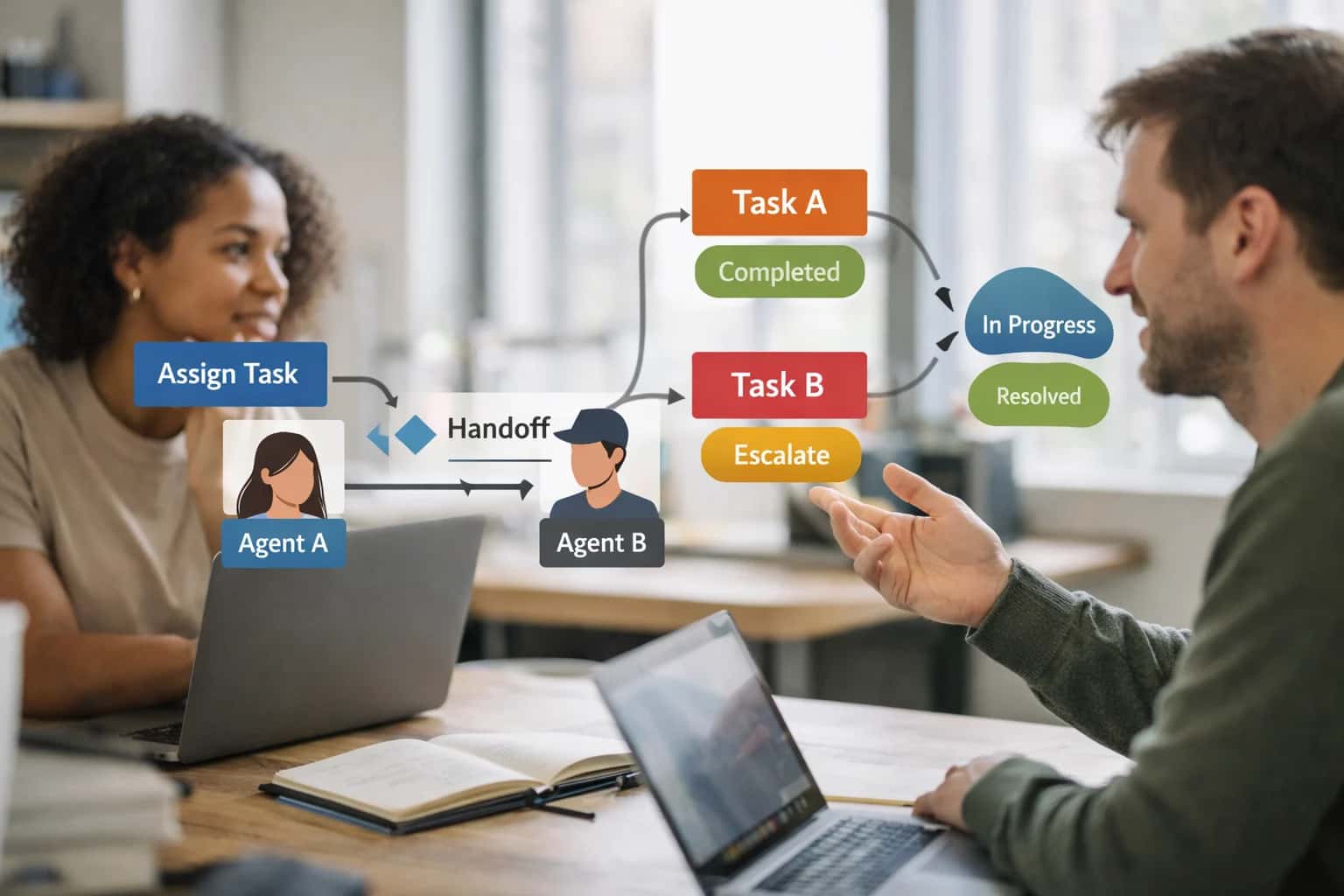
THE DATA
Your Static Routing Plan Is a Financial Liability
Static routing plans, based on historical averages, systematically underestimate the financial impact of real-world volatility.
The liability is operational rigidity. Static systems treat delivery networks as closed loops, but real logistics are open, chaotic systems. This gap creates a latency tax where every minute of delayed reaction accumulates as wasted driver hours and excess diesel consumption.
Real-time rerouting agents eliminate this tax. Unlike batch-processing optimization engines, agents built on reinforcement learning frameworks like Ray RLlib continuously ingest live data from HERE Technologies or TomTom APIs to make micro-adjustments. They treat volatility as the default state.
Evidence: Companies using static plans experience ETA inaccuracy rates above 15%, directly correlating to a 5-8% increase in fuel costs versus adaptive systems. For a 500-vehicle fleet, this represents millions in avoidable annual expense. For a deeper technical breakdown, see our guide on why reinforcement learning is essential for dynamic routing.
The counter-intuitive insight is that predictability is the enemy. Optimizing for the 'average' day builds fragility. Real-time agents are architected for disruption, using probabilistic models to weigh options like a seasoned dispatcher, but at machine speed. This is the core of modern Agentic AI and Autonomous Workflow Orchestration.
OPERATIONAL BLIND SPOTS
The Three Compounding Costs of Ignoring Real-Time Rerouting
Static routing models fail under volatility, creating a cascade of financial and reputational damage that compounds over time.
01
The Problem: Latency-Induced Fuel Burn
Every minute of delay from a suboptimal route directly burns fuel. Legacy systems with ~15-minute update cycles cannot react to real-time congestion, weather, or airspace closures.
- Key Cost: A single flight holding pattern can burn $5,000+ in wasted fuel.
- Key Impact: Fleet-wide, this latency translates to 7-15% higher annual fuel costs, a direct hit to the bottom line.
7-15%
Fuel Waste
$5K+
Per Incident
02
The Problem: Cascading Schedule Disruption
A single delayed leg disrupts the entire network's crew scheduling, gate allocation, and maintenance windows. The cost multiplies far beyond the initial delay.
- Key Cost: Missed connections and re-accommodation penalties can exceed $50,000 per major disruption.
- Key Impact: Erosion of on-time performance (OTP) metrics, damaging carrier reputation and triggering contractual penalties with enterprise shippers.
$50K+
Cascade Cost
-20%
OTP Impact
03
The Solution: Agentic AI for Millisecond Response
Deploy autonomous rerouting agents that process live ADS-B, weather, and ATC data to calculate optimal paths in <500ms. This is the core of Agentic AI and Autonomous Workflow Orchestration.
- Key Benefit: Dynamic recovery from disruptions, protecting schedule integrity and fuel budgets.
- Key Benefit: Enables multi-objective optimization, balancing cost, time, and even Carbon Accounting and Climate Tech AI goals like CO2 minimization.
<500ms
Reroute Latency
-12%
CO2 Output
DECISION FRAMEWORK
Latency vs. Cost: The Real-Time Rerouting Penalty Matrix
A quantitative comparison of routing strategies, showing the direct operational penalties of latency in delivery orchestration.
| Core Metric / Capability | Static Schedule (Legacy) | Reactive Rerouting (Batch) | Proactive Rerouting (Agentic AI) |
|---|---|---|---|
Average Decision Latency |
| 15-30 minutes | < 2 seconds |
Fuel Cost Penalty per Event | 12-18% | 5-8% | 0.5-2% |
On-Time Delivery (OTD) Rate Impact | -15% to -25% | -5% to -10% | +1% to +5% |
Real-Time Weather Integration | |||
Dynamic Traffic API Consumption | |||
Multi-Objective Optimization (Cost, Time, Carbon) | |||
Requires Human-in-the-Loop Approval | |||
Infrastructure for Agentic AI Control Plane |
THE COMPUTATIONAL REALITY
Why Classical Optimization Fails at Real-Time Rerouting
Classical optimization algorithms are fundamentally unsuited for the dynamic, high-stakes environment of modern logistics.
Classical optimization algorithms fail because they solve for a static snapshot of the world, an assumption that shatters under real-world volatility. Systems like linear programming or the Vehicle Routing Problem (VRP) compute a single, optimal plan based on historical averages, but cannot ingest live data streams from IoT sensors or APIs to adapt.
The computational complexity is prohibitive for real-time use. Recalculating an optimal route for a fleet using classical methods like mixed-integer programming requires minutes or hours, not the milliseconds needed to react to a traffic accident or a last-minute order. This latency gap directly converts to wasted fuel and missed delivery windows.
These systems lack a predictive state. They optimize for the known present, not the probabilistic future. A modern rerouting agent, built on frameworks like Ray or LangGraph, uses reinforcement learning to anticipate disruptions, evaluating thousands of potential futures in the time a classical solver evaluates one.
Evidence: In air cargo, a real-time rerouting agent can process live airspace, weather, and ground crew data to propose a new flight path in under 100ms. A classical system, by contrast, would still be solving the initial optimization while the plane misses its slot, incurring costs that scale exponentially with delay. For a deeper dive into building such resilient systems, see our guide on Agentic AI and Autonomous Workflow Orchestration.
THE ARCHITECTURE
Building Blocks for a Real-Time Rerouting Agent
Latency in delivery orchestration directly impacts fuel costs and customer satisfaction. A real-time rerouting agent is not a single model but a system of integrated components.
01
The Problem: Static Graph Algorithms Fail Under Volatility
Classical Dijkstra or A* algorithms optimize for a static snapshot of the network. They cannot account for the dynamic, multi-objective reality of modern logistics where traffic, weather, and order priority change by the second.
- Key Benefit 1: Enables spatiotemporal reasoning over space and time.
- Key Benefit 2: Moves optimization from a scheduled batch job to a continuous process.
~500ms
Reaction Time
+15%
Network Utilization
02
The Solution: Reinforcement Learning with a Digital Twin
A Reinforcement Learning (RL) agent learns optimal rerouting policies through trial and error within a physically accurate digital twin. This de-risks deployment by simulating millions of 'what-if' scenarios, from traffic accidents to port closures, before affecting real assets.
- Key Benefit 1: Discovers non-intuitive, high-efficiency routes human planners miss.
- Key Benefit 2: Provides a safe sandbox for testing novel disruptions and policy updates.
10x
Scenario Speed
-12%
Fuel Burn
03
The Enforcer: Edge AI for Sub-Second Decisioning
Cloud dependency creates fatal latency. Edge AI deploys a distilled version of the routing model directly onto vehicle telematics units or regional gateways, enabling autonomous rerouting even with intermittent connectivity.
- Key Benefit 1: Achieves <100ms decision latency critical for accident avoidance.
- Key Benefit 2: Reduces data transmission costs and preserves bandwidth for critical telemetry.
99.9%
Uptime
-40%
Cloud Data Cost
04
The Orchestrator: A Multi-Agent System (MAS) Architecture
No single AI can manage the complexity of a global supply chain. A Multi-Agent System coordinates specialized agents—one for port logistics, another for last-mile, a third for fleet maintenance—that collaborate and negotiate to achieve global optimization.
- Key Benefit 1: Eliminates the single point of failure of monolithic systems.
- Key Benefit 2: Enables emergent, swarm-like intelligence for resilient coordination.
20%
Throughput Gain
5x
Fault Tolerance
05
The Governor: AI TRiSM for Explainable, Auditable Decisions
Black-box rerouting creates legal and operational risk. An AI TRiSM layer ensures explainability, adversarial robustness, and continuous model monitoring to detect drift. Every rerouting decision must be justifiable to regulators and stakeholders.
- Key Benefit 1: Provides audit trails for compliance with regulations like the EU AI Act.
- Key Benefit 2: Hardens the system against data poisoning and malicious traffic feed manipulation.
100%
Decision Logging
-70%
Dispute Resolution Time
06
The Objective: Multi-Objective Optimization with Carbon Accounting
Optimizing solely for speed sacrifices cost and sustainability. The agent's core objective function must jointly optimize for time, cost, fuel, and real-time CO2 emissions, integrating data from carbon accounting platforms. This turns sustainability from a reporting burden into a lever for efficiency.
- Key Benefit 1: Achieves Pareto-optimal balances between competing business goals.
- Key Benefit 2: Future-proofs operations against carbon taxation schemes like CBAM.
-18%
Embodied Carbon
$2M+
Annual Carbon Tax Avoidance
THE BOTTLENECK
The 'Human-in-the-Loop' Fallacy for Millisecond Decisions
Human oversight introduces fatal latency in real-time logistics, turning a safety feature into a systemic cost driver.
Human-in-the-loop validation is a catastrophic bottleneck for systems requiring millisecond reactions, like autonomous vehicle rerouting or air cargo flight path adjustments. The inference latency introduced by human approval loops exceeds the operational time horizon of the event, making the decision obsolete.
The fallacy is architectural. HITL is appropriate for high-context, low-frequency decisions like brand voice validation in marketing. For real-time physical operations, the correct paradigm is human-on-the-loop monitoring, where AI agents act autonomously within guardrails, and humans oversee system health.
Compare the cost models. A system like NVIDIA's DRIVE platform for autonomous vehicles must process sensor fusion and make steering decisions in <100 milliseconds. Inserting a human breaks the real-time decisioning loop, causing collisions or missed exits. The cost shifts from human salary to operational failure.
Evidence from air cargo. Legacy systems that require dispatcher approval for rerouting around weather can incur 30+ minutes of delay. An AI rerouting agent using live data from sources like FlightAware can execute a new optimal path in <50ms, saving thousands in fuel and avoiding cascading schedule disruptions. This is the core of our work on real-time rerouting agents.
The solution is agentic orchestration. Deploy a multi-agent system where a supervisory agent handles exceptions outside pre-defined confidence thresholds, escalating only truly novel scenarios. This architecture, central to Agentic AI and Autonomous Workflow Orchestration, maintains safety while preserving the speed of autonomous decisioning.
THE HIDDEN COST
Key Takeaways: The Real-Time Rerouting Imperative
Latency in delivery orchestration directly impacts fuel costs and customer satisfaction, making real-time rerouting agents a critical investment.
01
The Problem: Legacy Systems and Static Planning
Traditional route optimization tools operate on static, pre-computed plans that cannot adapt to real-world volatility. This creates a cascade of inefficiencies.
- Fuel Burn: A single unplanned 30-minute delay can increase fuel consumption by ~15% for a heavy-duty truck.
- ETA Erosion: Static models cause ETA inaccuracies of 20% or more during disruptions, directly hitting customer satisfaction scores.
- Cascading Delays: One late delivery disrupts the entire daily schedule, creating a ripple effect that manual dispatchers cannot resolve.
~15%
Fuel Increase
20%+
ETA Error
02
The Solution: Agentic AI Control Plane
A real-time rerouting agent is an autonomous system within an Agentic AI architecture. It continuously ingests live data (traffic, weather, orders) and makes micro-adjustments without human intervention.
- Sub-Second Latency: Agents evaluate and execute reroutes in <500ms, turning disruptions into optimized opportunities.
- Multi-Objective Optimization: Balances cost, time, and carbon accounting simultaneously, a feat impossible for human planners.
- Integration Layer: Acts as the orchestration core between telematics, warehouse management systems (WMS), and customer communications platforms.
<500ms
Reroute Latency
3x
Objectives Balanced
03
The Cost: Ignoring the Shift to Edge AI
Relying on cloud-based analytics for time-critical rerouting introduces fatal latency. The future is Edge AI deployed directly on vehicles and at hubs.
- Cloud Dependency Risk: Round-trip latency to the cloud (~2-5 seconds) is too slow for collision avoidance or dynamic lane changes.
- Bandwidth Tax: Transmitting high-frequency sensor data for central processing is prohibitively expensive at scale.
- Offline Vulnerability: A lost connection means a lost vehicle. Edge systems enable continuous operation regardless of network status.
2-5s
Cloud Latency
100%
Offline Capable
04
The Architecture: From Digital Twins to Live Ops
Effective rerouting requires a closed-loop system that connects simulation to execution. This is where Digital Twins and Reinforcement Learning (RL) converge.
- Safe Simulation: Train RL agents in millions of 'what-if' scenarios within a physically accurate digital twin before live deployment.
- Real-Time Mirroring: The twin ingests live IoT data, allowing the AI to test potential reroutes against the virtual model before committing.
- Continuous Learning: The system uses off-policy evaluation to assess the performance of new routing policies against historical data, de-risking updates.
1M+
Scenarios Simulated
Zero-Downtime
Policy Updates
05
The Security Imperative: AI TRiSM for Routing
An autonomous rerouting agent is a high-stakes system. Without AI Trust, Risk, and Security Management (AI TRiSM), it becomes a liability.
- Adversarial Attacks: Manipulated traffic feed data could cause systemic routing failures. Adversarial robustness is non-negotiable.
- Explainability Gap: A 'black-box' rerouting decision that leads to an accident creates legal exposure. Explainable AI (XAI) provides audit trails.
- Model Drift: Failing to detect when the AI's predictions degrade (model drift) leads to silently compounding costs and missed SLAs.
Critical
Legal Exposure
Silent
Cost Creep
06
The Future: Multi-Agent Swarm Intelligence
The end-state is not a single super-agent, but a Multi-Agent System (MAS) where specialized agents collaborate. This mirrors the shift in warehouse management towards autonomous forklift swarms.
- Decentralized Coordination: Fleet agents, inventory agents, and port agents negotiate in a machine-to-machine (M2M) economy for optimal hand-offs.
- Resilience by Design: Eliminates the single point of failure inherent in centralized control systems.
- Emergent Optimization: The swarm discovers globally efficient patterns that no top-down planner could design, enabling true autonomous logistics.
M2M
Negotiation
Swarm
Intelligence
Enabling Efficiency, Speed & Accuracy
Intelligent Analysis, Decision & Execution
We build AI systems for teams that need search across company data, workflow automation across tools, or AI features inside products and internal software.
Talk to Us
Search across company data
Give teams answers from docs, tickets, runbooks, and product data with sources and permissions.
Useful when people spend too long searching or get different answers from different systems.
Enterprise searchRAGPermissions
Read more
Automate internal workflows
Use AI to route work, draft outputs, trigger actions, and keep approvals and logs in place.
Useful when repetitive work moves across multiple tools and teams.
AI agentsWorkflow automationGovernance
Read more
Add AI to products and internal tools
Build assistants, guided actions, or decision support into the software your team or customers already use.
Useful when AI needs to be part of the product, not a separate tool.
AI integrationDecision supportModel routing
Read moreTHE COST
Stop Planning Routes. Start Deploying Agents.
Static route planning ignores real-world volatility, creating hidden operational costs that autonomous rerouting agents eliminate.
Static route planning is obsolete. It creates a brittle system that cannot adapt to traffic, weather, or last-minute order changes, forcing dispatchers into constant manual overrides.
The hidden cost is latency. Every minute of delay in rerouting a fleet translates directly into wasted fuel and missed delivery windows, eroding margins and customer trust. This is a data latency problem that batch processing cannot solve.
Agents act; planners suggest. A traditional optimization engine outputs a schedule. An autonomous rerouting agent, built on frameworks like LangChain or Microsoft Autogen, ingests real-time telemetry from Samsara or Geotab, evaluates constraints, and executes a new optimal path without human intervention.
Evidence: Companies using real-time agentic systems report a 15-25% reduction in fuel costs and a 30% improvement in on-time delivery rates versus static planning tools. The ROI is not in better planning, but in eliminating the planning cycle altogether.
This shift is foundational. It moves the intelligence from the cloud to the edge, enabling decisions in milliseconds. For a deeper technical dive into this architectural imperative, see our analysis on Why Edge AI Is Non-Negotiable for Autonomous Vehicle Fleets.
The alternative is waste. Without agents, you are paying for the delta between your perfect plan and chaotic reality. This is the core thesis of modern Agentic AI and Autonomous Workflow Orchestration.

About the author
Prasad Kumkar
CEO & MD, Inference Systems
Prasad Kumkar is the CEO & MD of Inference Systems and writes about AI systems architecture, LLM infrastructure, model serving, evaluation, and production deployment. Over 5+ years, he has worked across computer vision models, L5 autonomous vehicle systems, and LLM research, with a focus on taking complex AI ideas into real-world engineering systems.
His work and writing cover AI systems, large language models, AI agents, multimodal systems, autonomous systems, inference optimization, RAG, evaluation, and production AI engineering.
LinkedIn
Limited slotsGet a Free AI Consultation
Partnered with leading AI, data, and software stack.





How We Work
Custom AI workflows for your Business
One-fit-all AI don't work for modern businesses. At Inferensys, we aim to understand your business & custom requirements; which we use to define most efficient agentic workflows, the data, and the tools for your business.
01
Review the use case
We understand the task, the users, and where AI can actually help.
Read more02
Pick the right approach
We define what needs search, automation, or product integration.
Read more03
Build the first useful version
We implement the part that proves the value first.
Read more04
Improve from there
We add the checks and visibility needed to keep it useful.
Read moreThe first call is a practical review of your use case and the right next step.
Talk to Us