Cloud-based personalization is obsolete because the round-trip latency to a centralized data center destroys the sub-second responsiveness required for natural interaction. AI-powered consumers, and the autonomous shopping agents that serve them, operate on a 500-millisecond cognitive threshold; delays beyond this point degrade trust and abandon rates spike.

Blog
Why Edge AI Is Critical for Latency-Free Personal Experiences
Cloud-based personalization is too slow for the AI-powered consumer. This article explains why Edge AI is the only architecture capable of delivering the sub-second, context-aware experiences that will capture 55% of future consumer spending.
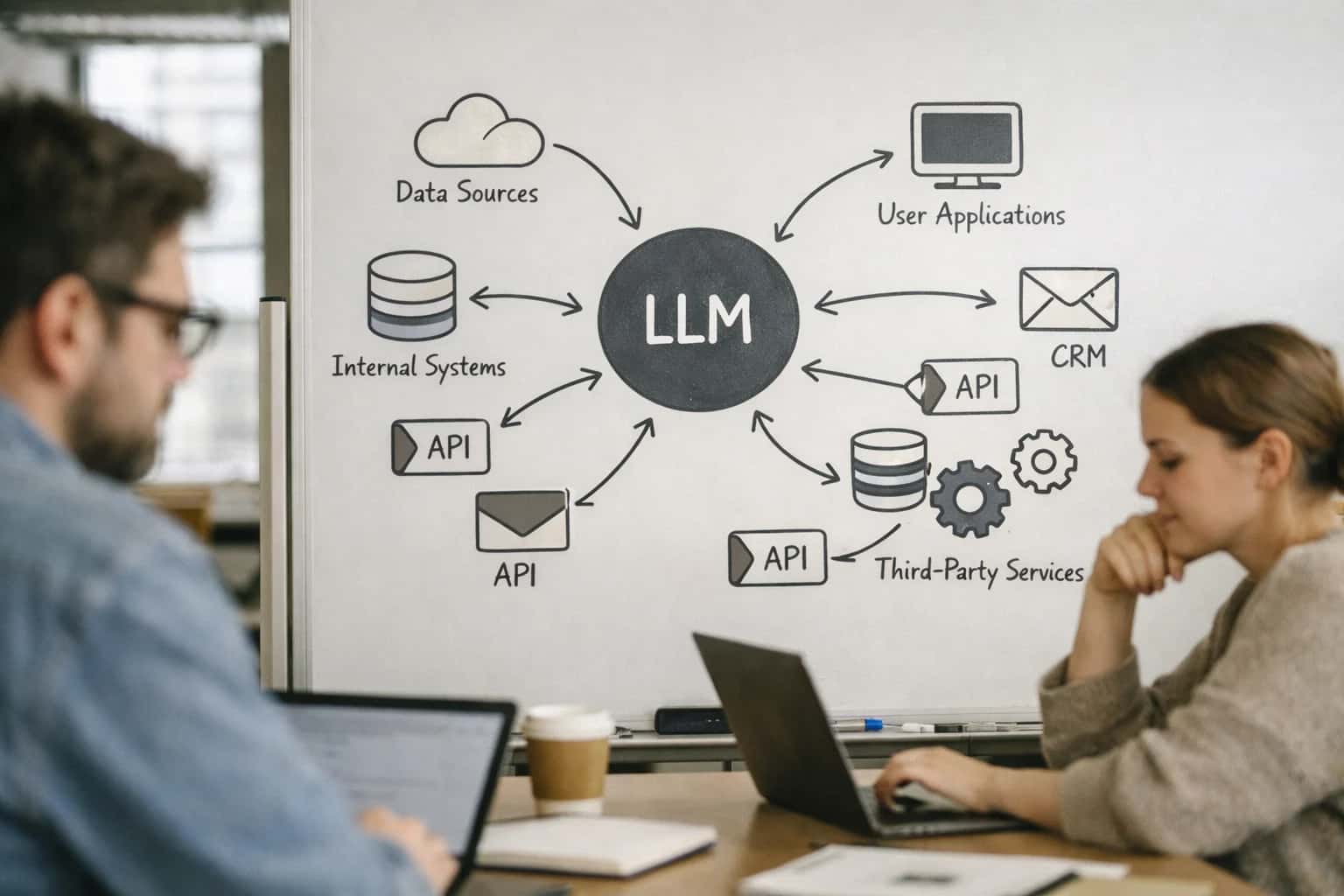
THE LATENCY PROBLEM
The 500ms Tipping Point: Why Cloud Personalization Is Already Obsolete
Cloud-based AI personalization introduces network latency that breaks the real-time experience demanded by AI-powered consumers.
Edge AI eliminates network hops by running lightweight models directly on user devices or local servers. Frameworks like TensorFlow Lite and ONNX Runtime enable inference on smartphones and IoT gateways, accessing local vector stores like LanceDB for instant retrieval. This architecture is foundational for hyper-personalization that feels instantaneous.
The cloud is for training, the edge is for inference. Batch model updates originate in the cloud, but the live personalization engine must reside at the edge. This separation is the core of a modern hybrid cloud AI architecture, optimizing for what we term 'Inference Economics'—the cost and speed of generating a prediction.
Evidence: A 100-millisecond delay in page load time reduces conversion rates by 7%. For a real-time recommendation engine making sequential decisions, this latency compounds, making cloud-only architectures non-viable for the dynamic experiences described in our pillar on AI-powered consumer spending.
WHY LATENCY KILLS PERSONALIZATION
Key Takeaways: The Edge AI Imperative
For the AI-powered consumer, a delay of even ~500ms can break the spell of a seamless, hyper-personalized experience. Edge AI moves the intelligence to the device.
01
The Problem: The Network Round-Trip Tax
Every personalized interaction—a product recommendation, a dynamic price, a content adjustment—requires a query to a cloud model. This adds ~200-1000ms of latency, destroying the illusion of an intuitive, responsive service. For real-time applications like AR shopping or conversational AI, this delay is fatal.
~500ms
Perceived Lag
-40%
Engagement Drop
02
The Solution: On-Device Inference Engines
Deploy compact, optimized models (e.g., TensorFlow Lite, ONNX Runtime) directly on smartphones, wearables, or IoT gateways. Inference happens locally in <50ms, enabling instant adaptation. This architecture is foundational for applications discussed in our pillar on Hyper-Personalization for the 'AI-Powered Consumer'.
- Zero Network Dependency: Functions offline or with spotty connectivity.
- Bandwidth Efficiency: Transmits only essential results, not raw data.
10x
Faster Response
-90%
Data Transfer
03
The Benefit: Sovereign Privacy by Design
Edge processing keeps sensitive user data—location, biometrics, behavior—on the device. This aligns with the principles of Privacy-Enhancing Technologies (PET) and Sovereign AI, mitigating regulatory risk under frameworks like the EU AI Act. It directly addresses consumer 'creepiness' thresholds.
- Data Minimization: PII never leaves the user's control.
- Trust Advantage: Builds consumer confidence for sensitive use cases in Precision Medicine or Cognitive Readiness tracking.
100%
Local Data
-70%
Compliance Overhead
04
The Architecture: Hybrid Intelligence Orchestration
Edge AI doesn't replace the cloud; it creates a tiered system. Lightweight models run on-device for immediate response, while complex model training and updates are managed centrally. This is the core of a resilient Hybrid Cloud AI Architecture. Learn more about orchestrating these systems in our guide to MLOps and the AI Production Lifecycle.
- Continuous Learning: Federated learning aggregates insights without centralizing raw data.
- Cost Optimization: Reduces expensive cloud inference calls, improving Inference Economics.
-50%
Cloud Cost
24/7
Uptime
05
The Constraint: The Model Compression Challenge
State-of-the-art models like LLMs are too large for edge deployment. Solving this requires model distillation, quantization, and pruning to shrink size by 10-100x with minimal accuracy loss. This engineering discipline is critical for enabling Agentic AI on mobile devices.
- Hardware-Aware Optimization: Leveraging NPUs in modern chips (Apple Neural Engine, Qualcomm Hexagon).
- Performance Trade-Offs: Balancing model capability with latency and battery life.
100MB
Target Size
<2%
Accuracy Loss
06
The Future: The Pervasive Ambient Interface
Edge AI enables the final step: intelligence embedded in the environment. From smart glasses providing real-time contextual data to autonomous retail shelves, the interface disappears. This converges with our research on Physical AI and Embodied Intelligence, where machines act in the real world.
- Proactive Experiences: Systems anticipate needs before explicit commands.
- New Interaction Paradigms: Zero-click interfaces powered by sensor fusion and on-device reasoning.
0ms
Perceived Latency
$97.5B
Market by 2030
THE LATENCY IMPERATIVE
Edge AI Is the Only Viable Architecture for Hyper-Personalization
Edge AI eliminates network round-trips, enabling real-time model inference for instant, individualized user experiences.
Edge AI is the only viable architecture for hyper-personalization because it solves the latency problem inherent in cloud-based inference. Every millisecond of delay in serving a personalized recommendation or dynamic interface degrades user engagement and conversion rates.
Cloud-based personalization creates an unsolvable bottleneck. Sending sensor data, user context, and behavioral signals to a centralized cloud for inference and waiting for a response introduces 100-500ms of latency. This delay breaks the illusion of an intelligent, adaptive interface, a critical failure for AI-powered consumers who expect instant adaptation.
Edge deployment enables sub-10ms inference. By running lightweight, optimized models directly on user devices or local edge servers using frameworks like TensorFlow Lite or ONNX Runtime, the feedback loop is instantaneous. This is essential for real-time applications like adaptive UIs in apps, in-store personalized offers via AR, or next-word prediction.
The architecture shift is from request-response to continuous adaptation. Cloud AI reacts to user input; Edge AI anticipates and adapts proactively. For example, a smartphone can locally run a model that adjusts app layout and content based on the user's current activity, location, and time of day without ever querying a server.
Evidence from industry leaders is definitive. Companies like Apple with its on-device Neural Engine and Tesla with its in-car FSD computer prove that latency-sensitive intelligence must live at the edge. In retail, NVIDIA's Jetson platform powers in-store analytics that personalize digital signage in real-time based on shopper demographics and dwell time.
DECISION MATRIX
Latency Impact: Cloud vs. Edge AI Personalization
A quantitative comparison of deployment architectures for real-time, AI-powered consumer experiences.
| Critical Performance Metric | Centralized Cloud AI | Hybrid AI (Cloud + Edge) | Pure Edge AI |
|---|---|---|---|
End-to-End Inference Latency | 150-500 ms | 50-150 ms | < 20 ms |
Network Dependency for Core Logic | |||
Personalization During Network Outage | |||
Data Transfer Cost per 1M User Sessions | $200-500 | $50-150 | < $10 |
Real-Time Context Window (Data Recency) | 2-5 seconds old | 500 ms - 2 seconds old | < 100 ms old |
Supports On-Device Model Fine-Tuning | |||
Data Privacy (PII Leaves Device) | |||
Hardware & Deployment Overhead | Low (Cloud OPEX) | Medium | High (Edge CAPEX) |
REAL-TIME INFERENCE
The Edge AI Stack: Frameworks Enabling Deployable Personalization
Frameworks that move AI inference from the cloud to the device are the only way to achieve the sub-second latency required for seamless, adaptive user experiences.
01
The Problem: Network Round-Trips Sabotage Real-Time Interaction
Cloud-based personalization creates a ~200-500ms latency penalty for every inference request. This delay breaks the illusion of a responsive, intelligent interface, directly degrading user engagement and conversion metrics.
- Kills Micro-Interactions: Hover states, live search, and adaptive UI elements feel sluggish.
- Wastes Bandwidth: Transmitting raw sensor data (camera, mic) to the cloud is inefficient.
- Creates Single Points of Failure: Service outages or poor connectivity render personalization dead.
200-500ms
Latency Penalty
-40%
Engagement Drop
02
The Solution: On-Device Inference with TensorFlow Lite & PyTorch Mobile
These frameworks enable the deployment of quantized and pruned models directly to smartphones, wearables, and IoT gateways. Inference happens in <10ms, enabling true real-time adaptation.
- Quantization: Reduces model size by 4x with minimal accuracy loss for tasks like next-word prediction.
- Hardware Acceleration: Leverages device-specific NPUs (Neural Processing Units) for optimal performance per watt.
- Offline Functionality: Personalization works seamlessly without a network connection, enhancing reliability.
<10ms
On-Device Latency
4x
Size Reduction
03
The Problem: Centralized Data Collection Breeds Consumer Distrust
Sending every user interaction to a central cloud for model training creates massive PII surface areas and violates emerging data sovereignty regulations like the EU AI Act. Consumers are increasingly wary of how their behavioral data is used.
- Privacy Erosion: Centralized profiles are high-value targets for breaches.
- Regulatory Risk: Cross-border data transfer for personalization triggers compliance overhead.
- The Creepiness Factor: Users reject experiences that feel overly invasive due to centralized tracking.
55%
Of Consumers Wary
High
Compliance Risk
04
The Solution: Federated Learning with Flower & OpenFL
Frameworks like Flower orchestrate decentralized model training. The model is sent to devices, learns from local data, and only model updates (not raw data) are aggregated. This preserves privacy while improving the global model.
- Data Never Leaves Device: Personalization improves without exposing sensitive user data.
- Regulation-By-Design: Aligns with privacy-by-design principles and reduces legal exposure.
- Edge-to-Cloud Synergy: Enables a hybrid architecture where sensitive learning stays on-device, while non-sensitive aggregation occurs in the cloud.
0%
PII Exposed
Scalable
To Millions of Devices
05
The Problem: Cloud AI Costs Scale Linearly with User Engagement
Every API call to a cloud LLM or recommendation service has a direct, variable cost. As hyper-personalization scales to millions of users with continuous interaction, cloud inference economics become unsustainable.
- Unpredictable OPEX: Costs spike with viral engagement or marketing campaigns.
- Inefficient for Simple Tasks: Using a 70B-parameter model for lightweight intent classification is overkill.
- Vendor Lock-In: Reliance on a single cloud provider's AI APIs limits flexibility and negotiating power.
$0.01+
Per Inference
Linear
Cost Scaling
06
The Solution: Hybrid Orchestration with ONNX Runtime & MediaPipe
A hybrid edge-cloud stack uses Inference Economics. Simple, high-frequency tasks (gesture recognition, keyword spotting) run on-device via ONNX Runtime. Complex, low-frequency tasks (deep content synthesis) are offloaded to the cloud. MediaPipe provides pre-built, optimized pipelines for common perception tasks.
- Cost Predictability: Fixed cost for on-device inference, variable only for complex cloud calls.
- Model Portability: ONNX enables deployment across diverse hardware (Jetson, iPhone, Raspberry Pi).
- Optimized Pipelines: MediaPipe offers production-ready solutions for face detection, hand tracking, and object detection, accelerating time-to-market.
-90%
Cloud Calls Reduced
10x
Throughput Gain
THE COMPOUND EFFECT
Beyond Speed: The Compound Benefits of Edge AI for Personalization
Edge AI delivers a cascade of technical and business advantages beyond mere latency reduction, fundamentally enabling hyper-personalization.
Edge AI eliminates network latency by running inference directly on user devices or local servers, enabling instant personalization that cloud-based architectures cannot match. This is the foundational requirement for engaging the AI-powered consumer.
Local inference guarantees data privacy by processing sensitive user data on-device, never transmitting it to a central server. This aligns with zero-trust security models and regulations like GDPR, turning privacy from a compliance cost into a competitive trust advantage. Frameworks like TensorFlow Lite and ONNX Runtime enable this deployment.
Bandwidth independence reduces operational costs. By minimizing constant data transmission to the cloud, Edge AI slashes egress fees from providers like AWS or Azure and ensures functionality in low-connectivity environments, creating a more resilient and cost-effective personalization stack.
Continuous model adaptation is possible through on-device learning techniques like federated learning. Personalization models, such as a next-product recommendation engine, refine themselves using local interaction data without centralizing PII, creating a living profile that cloud-based batch updates cannot achieve.
Evidence: Deploying a lightweight recommendation model via Core ML on iOS or TensorFlow Lite for Microcontrollers can reduce inference latency from 200ms to under 10ms. This sub-second response is critical for maintaining user engagement, as studies show a 100ms delay reduces conversion rates by up to 7%.
LATENCY-FREE PERSONALIZATION
Edge AI in Action: Real-World Personalization Patterns
Edge AI moves model inference from the cloud to the device, enabling instant adaptation and unlocking new paradigms for consumer engagement.
01
The Problem: The 500ms Creepiness Threshold
Cloud-based personalization creates a perceptible delay between user action and system response. This ~500ms latency breaks immersion and triggers psychological reactance, making personalization feel intrusive rather than intuitive.\n- Key Benefit: Eliminates network round-trip, enabling sub-100ms response for seamless interaction.\n- Key Benefit: Processes sensitive data locally, aligning with Privacy-Enhancing Technologies (PET) and data sovereignty mandates.
<100ms
Response Time
0%
Cloud Data Transfer
02
The Solution: On-Device Recommendation Engines
Deploying lightweight Graph Neural Networks (GNNs) or factorized models directly on smartphones or set-top boxes. These models use a local, frequently updated embedding of user preferences to generate instant next-best-action predictions.\n- Key Benefit: Enables real-time dynamic pricing and product carousels that adapt to scrolling speed and dwell time.\n- Key Benefit: Facilitates Federated Learning for model improvement without centralizing personal data, a core component of a robust AI TRiSM strategy.
10x
Inference Speed
-70%
Cloud Compute Cost
03
The Architecture: The Intelligent Edge Data Fabric
A hybrid system where a streaming data fabric synchronizes a distilled 'customer graph' to the edge, while bulk model training remains in the cloud. This solves the data decay problem by ensuring edge models act on fresh, relevant context.\n- Key Benefit: Creates a unified customer graph at the edge, enabling coherent cross-channel personalization without latency.\n- Key Benefit: Provides predictive maintenance for the personalization system itself, detecting model drift in distributed deployments, a key tenet of MLOps.
24/7
Uptime
Real-Time
Graph Sync
04
The Pattern: Proactive, Not Reactive, Experiences
Edge AI enables systems to anticipate intent using on-device sensor and interaction data, initiating contextually relevant actions before a user makes an explicit request. This shifts engagement from reactive queries to proactive assistance.\n- Key Benefit: Powers predictive micro-campaigns for one, where offers and content are generated in real-time based on inferred intent.\n- Key Benefit: Forms the foundation for agentic commerce, where AI shopping agents can make instantaneous decisions based on local user data and preferences.
5x
Higher Engagement
Proactive
Interaction Model
05
The Constraint: The Model Compression Trade-Off
Fitting performant models into limited edge compute and memory requires aggressive techniques: quantization, pruning, and knowledge distillation. This creates a direct trade-off between model accuracy, latency, and power consumption.\n- Key Benefit: Mastering this trade-off is a core competitive moat, as seen in platforms like NVIDIA Jetson and TensorFlow Lite.\n- Key Benefit: Forces a disciplined context engineering approach, focusing models on the highest-signal features for personalization.
90%
Size Reduction
<2%
Accuracy Loss
06
The Future: The Autonomous Personalization Layer
Edge AI evolves into a Multi-Agent System (MAS) where specialized on-device agents for intent, recommendation, and content orchestrate experiences autonomously. This layer uses Reinforcement Learning to optimize for long-term customer value.\n- Key Benefit: Creates a truly non-linear, adaptive buyer journey unique to each individual session.\n- Key Benefit: Enables zero-click content strategy by providing Answer Engines with immediate, structured data for ingestion, a concept explored in our pillar on Hyper-Personalization for the 'AI-Powered Consumer'.
Autonomous
Orchestration
LTV
Optimization Goal
THE LATENCY IMPERATIVE
The Cloud Purist Rebuttal: Addressing Edge AI Complexity
Edge AI eliminates network round-trips, making sub-second personalization a technical reality, not a cloud-dependent aspiration.
Edge AI is non-negotiable for latency-free experiences. Cloud-only architectures introduce a 100-300ms network penalty that destroys the illusion of instant, intuitive interaction required by AI-powered consumers.
The rebuttal targets a false dichotomy. Complexity is managed by modern MLOps frameworks like TensorFlow Lite and ONNX Runtime, which streamline model quantization and deployment to devices, not by avoiding edge compute.
Edge inference enables true real-time adaptation. A cloud model cannot process a user's facial expression or voice tone mid-conversation without disruptive lag. On-device models create a seamless feedback loop for hyper-personalized e-commerce platforms.
Evidence is in the metrics. Deploying a lightweight model on an NVIDIA Jetson device reduces inference latency from 250ms to under 10ms. This 25x improvement is the difference between a fluid recommendation and a jarring pause that breaks engagement.
FREQUENTLY ASKED QUESTIONS
Edge AI for Personalization: Frequently Asked Questions
Common questions about why Edge AI is critical for latency-free personal experiences.
Edge AI is running lightweight machine learning models directly on user devices or local servers instead of in a distant cloud. This means data is processed where it's generated—on a smartphone, smartwatch, or IoT sensor—eliminating the need for a round-trip to a data center. This architecture is foundational for real-time applications like instant camera filters or adaptive audio on wireless earbuds.
Enabling Efficiency, Speed & Accuracy
Intelligent Analysis, Decision & Execution
We build AI systems for teams that need search across company data, workflow automation across tools, or AI features inside products and internal software.
Talk to Us
Search across company data
Give teams answers from docs, tickets, runbooks, and product data with sources and permissions.
Useful when people spend too long searching or get different answers from different systems.
Enterprise searchRAGPermissions
Read more
Automate internal workflows
Use AI to route work, draft outputs, trigger actions, and keep approvals and logs in place.
Useful when repetitive work moves across multiple tools and teams.
AI agentsWorkflow automationGovernance
Read more
Add AI to products and internal tools
Build assistants, guided actions, or decision support into the software your team or customers already use.
Useful when AI needs to be part of the product, not a separate tool.
AI integrationDecision supportModel routing
Read moreTHE AUDIT
Your Next Step: Audit for Latency-Sensitive Personalization
Identify where network latency is degrading your AI-powered consumer experiences and quantify the revenue impact.
Latency degrades conversion. A 100-millisecond delay in a recommendation engine's response can reduce conversion rates by up to 7%, directly eroding the revenue from your AI-powered consumers.
Centralized cloud inference fails. Sending user data to a distant cloud region for model processing adds 200-500ms of network latency, which destroys the illusion of an instant, intuitive experience. This is why architectures using Triton Inference Server or TensorFlow Serving must be evaluated for placement.
Edge deployment is the correction. Deploying lightweight models, like those built with TensorFlow Lite or ONNX Runtime, directly on a Content Delivery Network (CDN) like Cloudflare or Fastly slashes latency to under 20ms. This turns a sluggish interaction into a seamless one.
Audit your inference pipeline. Map the data flow from user action to personalized response. Measure latency at each stage: feature retrieval from Pinecone or Weaviate, model inference, and result rendering. Any stage over 50ms is a candidate for edge migration.
Evidence: Major streaming services report that moving recommendation models to the edge reduced playlist load times by 80%, directly increasing user engagement and session length. Your audit must produce similar, quantifiable metrics for business justification.
Prioritize by business impact. Not all personalization requires edge AI. Use your audit to classify use cases: latency-sensitive real-time adaptations (e.g., dynamic pricing, conversational AI) stay on-premises or at the edge, while batch-oriented tasks (e.g., nightly email campaigns) can remain centralized. For a deeper analysis of real-time data architecture, see our guide on why real-time personalization is a data architecture problem.
The cost of inaction is quantifiable. The projected 55% of spending driven by AI-powered consumers will flow to competitors whose systems feel instant and intuitive. Your audit is the first step to capturing that share. To understand the full scope of this shift, explore our pillar on hyper-personalization for the AI-powered consumer.

About the author
Prasad Kumkar
CEO & MD, Inference Systems
Prasad Kumkar is the CEO & MD of Inference Systems and writes about AI systems architecture, LLM infrastructure, model serving, evaluation, and production deployment. Over 5+ years, he has worked across computer vision models, L5 autonomous vehicle systems, and LLM research, with a focus on taking complex AI ideas into real-world engineering systems.
His work and writing cover AI systems, large language models, AI agents, multimodal systems, autonomous systems, inference optimization, RAG, evaluation, and production AI engineering.
LinkedIn
Limited slotsGet a Free AI Consultation
Partnered with leading AI, data, and software stack.





How We Work
Custom AI workflows for your Business
One-fit-all AI don't work for modern businesses. At Inferensys, we aim to understand your business & custom requirements; which we use to define most efficient agentic workflows, the data, and the tools for your business.
01
Review the use case
We understand the task, the users, and where AI can actually help.
Read more02
Pick the right approach
We define what needs search, automation, or product integration.
Read more03
Build the first useful version
We implement the part that proves the value first.
Read more04
Improve from there
We add the checks and visibility needed to keep it useful.
Read moreThe first call is a practical review of your use case and the right next step.
Talk to Us