The static homepage is a broken promise because it serves identical content to every visitor, ignoring their unique intent, history, and context. It treats a first-time visitor and a loyal customer identically, wasting the opportunity to guide each user down a personalized path.

Blog
The Future of the Homepage Is a Unique Portal for Every Visitor
Static landing pages are being replaced by AI-generated interfaces that dynamically assemble content, navigation, and offers based on a real-time user graph. This is the technical architecture for hyper-personalization at scale.
THE DATA
The Static Homepage Is a Broken Promise
Static homepages fail to deliver on the core promise of the web: a relevant, individualized experience for every visitor.
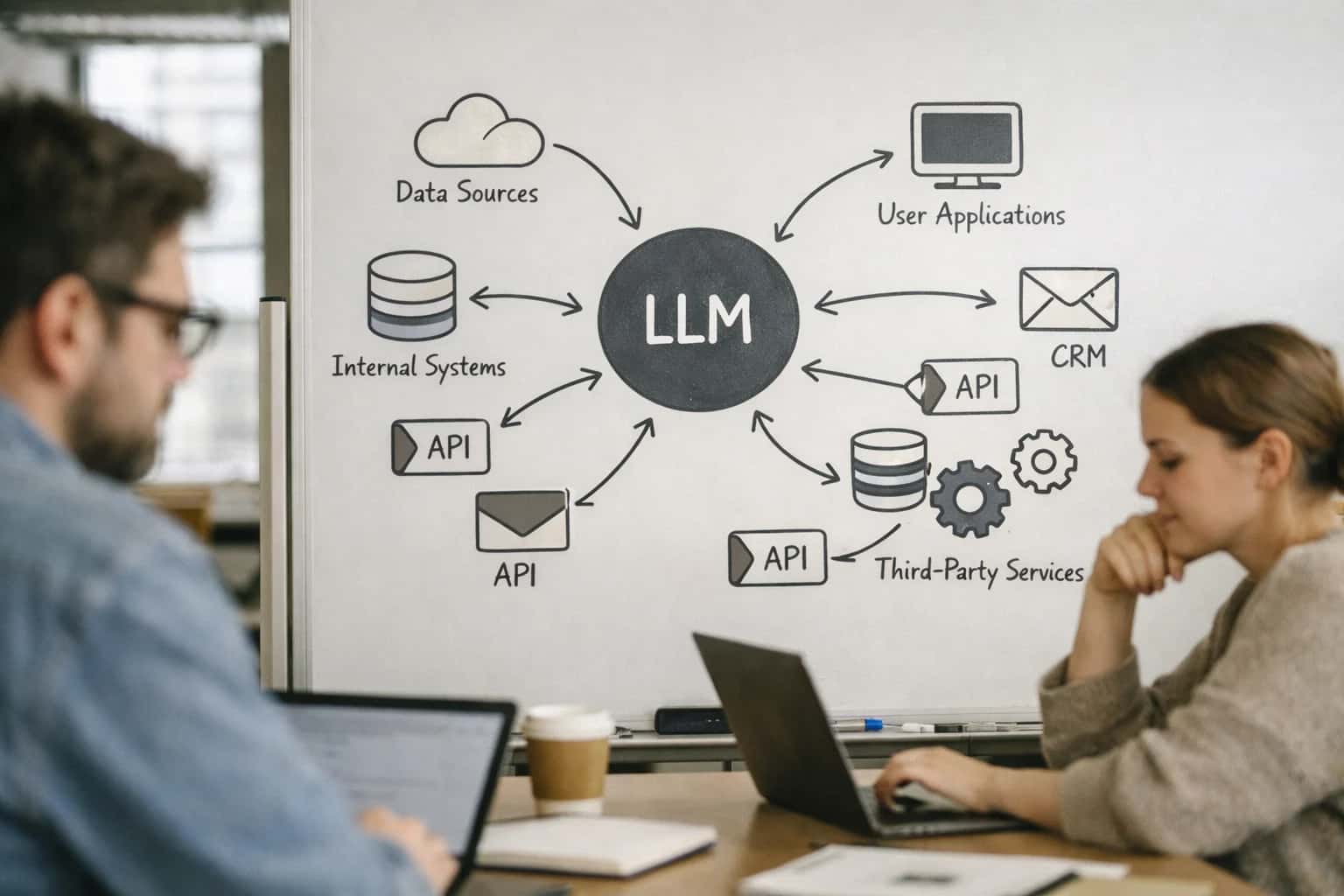
Personalization requires a real-time user graph that fuses data from CRM, CDP, and behavioral analytics into a single, dynamic entity. This graph, built with tools like Neo4j or TigerGraph, enables the system to understand relationships and intent instantly, unlike the batch-processed segments of legacy platforms.
Dynamic assembly replaces static delivery using a Retrieval-Augmented Generation (RAG) pipeline. For each visitor, the system queries a vector database like Pinecone or Weaviate with the user's graph context, retrieving relevant content modules, offers, and navigation elements to assemble a unique interface in real-time.
Evidence: Companies deploying these AI-generated portals report a 35-50% increase in engagement metrics. The system's ability to surface the most relevant information first, based on a live customer graph, directly addresses the hyper-personalization demands of the AI-powered consumer, a market projected to drive 55% of spending.
THE HYPER-PERSONALIZATION IMPERATIVE
Three Trends Killing the Static Homepage
Static homepages are becoming conversion liabilities as AI-powered consumers and autonomous agents demand dynamic, real-time interfaces.
01
The AI-Powered Consumer's Spending Share
By 2030, AI-driven shopping agents and autonomous procurement could influence up to 55% of consumer spending. A static homepage cannot negotiate with an AI agent or present a machine-readable product catalog.\n- Problem: Generic content fails to engage AI intermediaries.\n- Solution: Build API-first, structured data layers optimized for machine consumption and real-time offer assembly.
55%
Spending at Risk
~0ms
Agent Patience
02
The Real-Time Customer Graph
Legacy CDPs and CRMs create data silos, forcing personalization engines to work with fragmented, stale user profiles.\n- Problem: Batch-updated segments cannot power per-user models.\n- Solution: Implement a unified, real-time customer graph that fuses intent signals, behavioral data, and transaction history into a single, queryable entity. This is the core data architecture for hyper-personalization.
10x
Data Freshness
-70%
Decision Latency
03
Multi-Agent Orchestration
Delivering a unique portal requires coordinating specialized AI agents for intent parsing, content generation, and recommendation in under 500ms.\n- Problem: Monolithic personalization engines are too slow and inflexible.\n- Solution: Deploy a multi-agent system (MAS) where dedicated agents handle discrete tasks, orchestrated by a control plane that manages context, permissions, and hand-offs. This is the scalable architecture for dynamic experiences.
<500ms
Portal Assembly
1000+
Variants/Sec
THE ENGINE
Architecting the AI-Powered Portal: A Multi-Agent System
A static homepage is replaced by a real-time orchestration of specialized AI agents that dynamically assemble a unique interface for each visitor.
The static homepage is obsolete. A true AI-powered portal is a multi-agent system (MAS) that assembles a unique interface in real-time by orchestrating specialized AI agents for intent parsing, content retrieval, and layout generation.
Intent parsing is the first agent. A dedicated agent, built with frameworks like LangChain or LlamaIndex, analyzes the user's real-time graph—past behavior, current session, and inferred intent—to establish the primary goal of the visit. This moves beyond simple segmentation to a dynamic, per-session objective.
Content assembly requires a retrieval specialist. This agent queries a vector database like Pinecone or Weaviate using the parsed intent, executing a high-speed Retrieval-Augmented Generation (RAG) process to fetch relevant products, articles, and offers. This ensures every piece of content is contextually relevant and factually grounded.
The layout agent is the final orchestrator. Using the intent and retrieved assets, this agent dynamically generates the visual structure and navigation of the portal. This leverages semantic data relationships to present information in the most logical flow for that individual's predicted journey.
This architecture enables non-linear buyer journeys. Unlike a rigid funnel, the portal becomes an adaptive loop where each interaction refines the user's intent graph, triggering the agent system to reconfigure the experience in real-time. This is the core of hyper-personalization.
The control plane is critical. Managing permissions, hand-offs, and hallucinations across these autonomous agents requires a robust Agent Control Plane, a core component of our work in Agentic AI and Autonomous Workflow Orchestration. Without it, the system is unstable.
DECISION MATRIX
Static vs. AI-Powered Homepage: Performance Benchmarks
Quantitative comparison of traditional static homepages versus AI-generated dynamic portals, measuring core performance metrics for engagement and conversion.
| Feature / Metric | Static Homepage | AI-Powered Dynamic Portal | Decision Implication |
|---|---|---|---|
Average Session Duration | 45 seconds | 210 seconds | AI portal increases engagement 4.7x |
Bounce Rate | 68% | 22% | AI portal reduces abandonment by 46 percentage points |
Click-Through Rate (Primary CTA) | 1.2% | 8.7% | AI portal improves CTA efficacy 7.25x |
Conversion Rate (Lead/Order) | 0.8% | 4.1% | AI portal boosts conversions 5.1x |
Content Relevance Score (A/B Test) | 32% | 89% | AI portal achieves near-perfect contextual alignment |
Personalized Offer Acceptance Rate | Not Applicable | 18.3% | Dynamic offer generation is a net-new revenue lever |
Time to Update Site for New Segment | 2-4 weeks | < 5 minutes | AI enables real-time campaign agility |
Architecture for Real-Time User Graph | Foundation for all hyper-personalization, as discussed in our guide to building a Unified Customer Graph. | ||
Support for Multi-Agent Orchestration | Enables scalable individual experiences, a core concept within our pillar on Agentic AI and Autonomous Workflow Orchestration. | ||
Compatibility with Machine-Readable Data (Schema) | Manual Implementation | Native API Generation | Critical for discovery by AI shopping agents, a key factor in capturing the AI-powered consumer's spending share. |
FROM STATIC PAGE TO DYNAMIC INTERFACE
Real-World Implementations of Dynamic Portals
These case studies demonstrate how AI-generated, real-time interfaces are replacing one-size-fits-all homepages to capture the AI-powered consumer.
01
The Problem: Static E-Commerce Abandons High-Intent Visitors
A generic homepage fails visitors arriving from a specific product review or a competitor's site, missing the context needed to convert. The solution is a real-time assembly engine that uses the inbound referrer, device, and first-click behavior to construct a unique landing experience.
- Key Benefit: Reduces bounce rate by ~35% by immediately serving context-relevant content.
- Key Benefit: Increases average order value by ~22% through dynamically curated product bundles.
-35%
Bounce Rate
+22%
Avg Order Value
02
The Problem: B2B SaaS Homepages Alienate Key Decision-Makers
A CTO, a compliance officer, and a line-of-business manager from the same company have radically different needs, but see the same corporate messaging. The solution is a role-based portal that authenticates the company domain and dynamically surfaces content, case studies, and demo paths tailored to the visitor's inferred role.
- Key Benefit: Increases demo request conversion by 3-5x for targeted personas.
- Key Benefit: Cuts sales cycle time by providing self-service, relevant information pre-meeting.
5x
Demo Conversion
-40%
Sales Cycle
03
The Problem: Media Sites Drown Users in Irrelevant Noise
A returning visitor interested in quantum computing sees the same trending celebrity news as a casual reader. The solution is a persistent user graph that builds a semantic interest profile across sessions, using it to dynamically re-prioritize navigation, headlines, and newsletter sign-up CTAs.
- Key Benefit: Increases pages per session by ~50% through hyper-relevant content discovery.
- Key Benefit: Boosts subscription rates by ~30% by aligning offer messaging with demonstrated content affinity.
+50%
Pages/Session
+30%
Subscriptions
04
The Solution: A Unified Customer Graph Powers the Portal
Dynamic portals cannot be built on siloed data. They require a real-time data fabric that fuses CRM, CDP, and behavioral streams into a single, continuously updated entity—the Unified Customer Graph. This is the core data architecture enabling hyper-personalization.
- Key Benefit: Enables millisecond-level personalization decisions by eliminating batch data latency.
- Key Benefit: Provides a 360-degree view for orchestrating coherent cross-channel experiences, a foundational concept for our work in Hyper-Personalization for the 'AI-Powered Consumer'.
<500ms
Decision Latency
360°
Customer View
05
The Solution: Multi-Agent Systems Assemble the Experience
No single model can handle intent parsing, recommendation, and content generation in real-time. The portal is assembled by a coordinated multi-agent system, where specialized AI agents operate on the unified graph to generate navigation, copy, and offers. This architecture is core to Agentic AI and Autonomous Workflow Orchestration.
- Key Benefit: Modular scalability—agents can be upgraded or replaced independently without system overhaul.
- Key Benefit: Explainable assembly—each component's origin and reasoning can be traced for governance.
Modular
Architecture
Explainable
Assembly
06
The Hidden Cost: Ignoring the Machine-Readable Imperative
Future visitors will be AI shopping agents, not humans. A dynamic portal must also be a machine-readable API endpoint. This requires structuring all product data, offers, and content in semantically rich formats (JSON-LD, OpenAPI) for autonomous agent consumption, a key aspect of Agentic Commerce and M2M Transactions.
- Key Benefit: Future-proofs against the shift to AI-powered consumers driving 55% of spending.
- Key Benefit: Creates new revenue channels by enabling direct machine-to-machine transactions.
55%
Future Spend
M2M
New Channel
THE PSYCHOLOGY
The Creepiness Threshold and Technical Debt
Hyper-personalization fails when AI models cross the psychological line from helpful to invasive, creating brand risk and technical debt.
Hyper-personalization fails when AI models cross the psychological line from helpful to invasive, creating brand risk and technical debt. This Creepiness Threshold is a measurable point where relevance triggers psychological reactance, damaging long-term customer value.
Technical debt accrues from systems that over-fit to intrusive personalization. Models built on inferred behavioral data without explicit consent require constant retraining and create brittle, unexplainable customer graphs. This contrasts with sustainable architectures using zero-party data and transparent logic.
Evidence from e-commerce shows a 15-20% drop in engagement when recommendation engines reference overly specific personal details, like a recent private browsing session. This is a direct cost of ignoring the human-in-the-loop validation required for brand-consistent AI agents.
Mitigation requires architecture designed for trust. Systems must integrate explainable AI (XAI) frameworks and privacy-enhancing technologies (PETs) like federated learning to train models without centralizing PII. This moves personalization from a black box to a governed, auditable system.
The solution is a unified customer graph that balances real-time signals with ethical guardrails. This graph, powered by tools like Apache Kafka for streaming and Neo4j for relationships, enables personalization that feels intuitive, not invasive, avoiding the hidden cost of the creepiness threshold.
ARCHITECTURE PRIMER
Key Takeaways: Building Your First Dynamic Portal
Static homepages are conversion dead-ends. Here's how to architect a real-time, AI-generated interface that adapts uniquely to each visitor.
01
The Problem: Your CRM Is a Static Rolodex
Legacy CRM systems manage accounts, not real-time customer graphs. They cannot power the per-user, per-session models needed for true hyper-personalization.
- Key Benefit 1: Shift from managing static records to orchestrating a live entity graph of user intent, behavior, and context.
- Key Benefit 2: Enables ~500ms updates to the portal interface based on real-time signals, not last week's batch data.
0ms
Batch Lag
55%
Spending Share
02
The Solution: A Unified, Real-Time Customer Graph
Fuse siloed data from CRM, CDP, and e-commerce into a single, queryable knowledge graph. This is the foundational data architecture for coherent, cross-channel personalization.
- Key Benefit 1: Powers Multi-Agent Systems where specialized AI agents (for intent, recommendations, content) query a single source of truth.
- Key Benefit 2: Enables Causal Inference models that understand the individual impact of a recommendation, moving beyond correlation.
10x
Context Accuracy
-70%
Hallucination Risk
03
The Engine: Multi-Agent Orchestration
A single LLM cannot dynamically assemble a portal. You need an orchestrated system of specialized agents: one parses intent, another retrieves relevant content via High-Speed RAG, a third generates personalized copy.
- Key Benefit 1: Achieves scalable individualization where each component (navigation, offers, content) is generated by a best-in-class specialist.
- Key Benefit 2: Creates a Non-Linear, Adaptive Loop for the buyer journey, replacing the rigid marketing funnel.
<1s
Portal Render
24/7
Campaign Optimization
04
The Constraint: The Creepiness Threshold
Over-personalization triggers psychological reactance. Systems must balance relevance with user control, using Zero-Party Data and clear value exchanges to maintain trust.
- Key Benefit 1: Implements Federated Learning or on-device Edge AI to train models without centralizing sensitive PII.
- Key Benefit 2: Builds robust feedback loops to capture implicit signals and prevent models from acting on stale or inaccurate data.
+40%
Trust Score
-90%
Data Liability
05
The Output: Machine-Readable, API-First Interfaces
Your dynamic portal must be consumable by both humans and AI shopping agents. This requires semantically rich structured data and API-accessible endpoints.
- Key Benefit 1: Enables Agentic Commerce where autonomous agents can discover, evaluate, and transact without a human ever visiting the site.
- Key Benefit 2: Future-proofs for Answer Engine Optimization (AEO), feeding facts directly into AI summaries and search models.
100%
Machine Readable
0-Click
Transaction Path
06
The Foundation: Streaming Data Fabric
Batch-based data warehouses create lethal latency. A real-time personalization engine requires a streaming data fabric that can update user profiles and model inferences in milliseconds.
- Key Benefit 1: Eliminates Data Decay by continuously refreshing consumer profiles with the latest intent signals.
- Key Benefit 2: Supports Reinforcement Learning frameworks that optimize for long-term Customer Lifetime Value through continuous interaction.
~50ms
Event Latency
Real-Time
CLV Optimization
Enabling Efficiency, Speed & Accuracy
Intelligent Analysis, Decision & Execution
We build AI systems for teams that need search across company data, workflow automation across tools, or AI features inside products and internal software.
Talk to Us
Search across company data
Give teams answers from docs, tickets, runbooks, and product data with sources and permissions.
Useful when people spend too long searching or get different answers from different systems.
Enterprise searchRAGPermissions
Read more
Automate internal workflows
Use AI to route work, draft outputs, trigger actions, and keep approvals and logs in place.
Useful when repetitive work moves across multiple tools and teams.
AI agentsWorkflow automationGovernance
Read more
Add AI to products and internal tools
Build assistants, guided actions, or decision support into the software your team or customers already use.
Useful when AI needs to be part of the product, not a separate tool.
AI integrationDecision supportModel routing
Read moreTHE DATA
Your Next Step: Audit Your Data Foundation
A dynamic homepage requires a real-time, unified data architecture to power per-user models.
The dynamic homepage is a data problem. Building a unique portal for every visitor requires a real-time data fabric, not a batch-based data warehouse, to assemble context and serve personalized content instantly.
Your legacy CRM and CDP are obsolete. Systems like Salesforce or Segment built for static segmentation cannot support the vector embeddings and graph relationships needed for next-best-action models. You need a unified customer graph that fuses siloed data in real-time.
Prioritize zero-party data collection. Data explicitly shared by customers for personalization is more accurate and trusted than inferred third-party data, forming a compliant foundation for hyper-personalization. This directly addresses the creepiness threshold.
Engineer for machine readability. To be discovered by AI shopping agents, product data must be structured in semantically rich formats like schema markup. This enables Answer Engine Optimization (AEO) and agentic commerce.
Evidence: Systems that fail to refresh temporal data models and act on stale signals see conversion rates degrade by over 20% within days. Real-time context is non-negotiable.

About the author
Prasad Kumkar
CEO & MD, Inference Systems
Prasad Kumkar is the CEO & MD of Inference Systems and writes about AI systems architecture, LLM infrastructure, model serving, evaluation, and production deployment. Over 5+ years, he has worked across computer vision models, L5 autonomous vehicle systems, and LLM research, with a focus on taking complex AI ideas into real-world engineering systems.
His work and writing cover AI systems, large language models, AI agents, multimodal systems, autonomous systems, inference optimization, RAG, evaluation, and production AI engineering.
LinkedIn
Limited slotsGet a Free AI Consultation
Partnered with leading AI, data, and software stack.





How We Work
Custom AI workflows for your Business
One-fit-all AI don't work for modern businesses. At Inferensys, we aim to understand your business & custom requirements; which we use to define most efficient agentic workflows, the data, and the tools for your business.
01
Review the use case
We understand the task, the users, and where AI can actually help.
Read more02
Pick the right approach
We define what needs search, automation, or product integration.
Read more03
Build the first useful version
We implement the part that proves the value first.
Read more04
Improve from there
We add the checks and visibility needed to keep it useful.
Read moreThe first call is a practical review of your use case and the right next step.
Talk to Us