Public cloud AI is a trap for enterprises with sensitive data or strict latency requirements. The illusion of infinite scale masks crippling egress fees, vendor lock-in, and a loss of architectural sovereignty over your models and data.

Blog
Why Hybrid Cloud is the Bedrock of Trustworthy AI
Public cloud-only AI strategies sacrifice the control and sovereignty required for trustworthy systems. This analysis explains why a hybrid cloud architecture—blending on-premises control with cloud scale—is the non-negotiable foundation for secure, compliant, and governable AI.
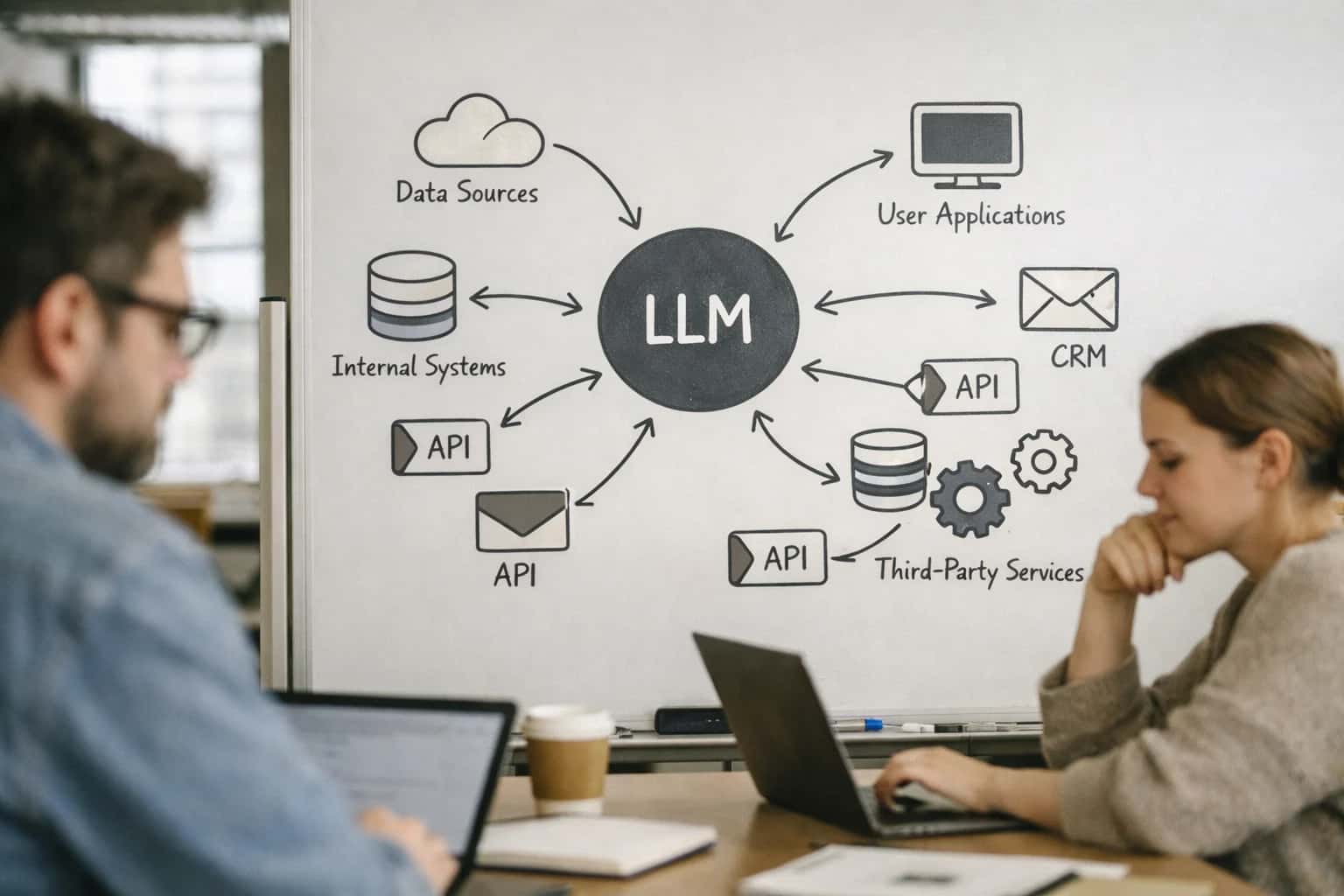
THE DATA
The Public Cloud AI Illusion
Public cloud-only AI strategies create critical vulnerabilities in cost, control, and compliance that a hybrid architecture resolves.
Data gravity dictates infrastructure. Moving terabytes of training data or model weights between cloud regions incurs prohibitive costs, making retraining or migration a financial non-starter. A hybrid cloud architecture anchors sensitive 'crown jewel' data on-premises while leveraging cloud burst for compute-intensive training.
Latency is a business metric. For real-time applications in finance or customer service, the network round-trip to a cloud API like AWS Bedrock or Azure OpenAI Service introduces unacceptable delay. On-premises inference is a competitive necessity, not an optimization.
Compliance is non-negotiable. Regulations like the EU AI Act mandate data residency. A monolithic public cloud strategy is a compliance liability, while a hybrid approach with regional cloud options provides the control needed for sovereign AI deployments.
Evidence: Companies report that egress fees can constitute over 30% of their cloud AI bill, and a hybrid RAG architecture keeping vector databases like Pinecone or Weaviate on-premises reduces inference latency by 60-80ms. For a deeper analysis of resilient design, see our guide on Hybrid Cloud AI Architecture.
The alternative is strategic bankruptcy. Relying on a single cloud's proprietary AI services forfeits negotiating power and traps your roadmap. A hybrid control plane ensures operational independence. Learn why this is critical for Trustworthy AI.
ARCHITECTURAL SOVEREIGNTY
The Three Pillars of Trustworthy AI That Hybrid Cloud Enables
Trustworthy AI isn't just about model accuracy; it's an architectural mandate for control, compliance, and cost. A monolithic public cloud strategy fails on all three counts.
01
The Problem: Data Residency as a Compliance Trap
Global regulations like the EU AI Act and sector-specific laws (HIPAA, FINRA) mandate where data can be stored and processed. A single-cloud provider's global regions create an uncontrollable compliance surface.
- Key Benefit: Keep 'crown jewel' data on sovereign, on-premises infrastructure while using the cloud for non-sensitive processing.
- Key Benefit: Deploy regional cloud options for specific workloads to satisfy local data residency laws without a full on-prem buildout.
100%
Regulatory Coverage
Zero
Data Sovereignty Risk
02
The Problem: The Inference Economics Death Spiral
Cloud-only inference costs scale linearly with usage, leading to unpredictable, runaway operational expenses. Egress fees for model calls and data retrieval create a hidden tax on every prediction.
- Key Benefit: Anchor high-volume, predictable inference workloads on fixed-cost, on-premises GPU clusters.
- Key Benefit: Use public cloud elasticity for bursty, experimental, or training workloads, optimizing your total Inference Economics.
-60%
Inference TCO
Predictable
OpEx
03
The Solution: The Bimodal AI Control Plane
Trust requires governance, and governance requires a unified control layer you own. A hybrid architecture enables a centralized control plane on-premises that orchestrates models, agents, and data across all environments.
- Key Benefit: Enforce AI TRiSM policies—explainability, security, drift detection—consistently across cloud and on-prem deployments.
- Key Benefit: Maintain strategic optionality; avoid vendor lock-in to proprietary services like AWS Bedrock or Azure OpenAI, keeping your model roadmap independent.
Unified
Governance
Zero
Vendor Lock-in
THE DATA
Data Sovereignty: Why Your Crown Jewels Must Stay Home
Hybrid cloud architecture is the only viable foundation for AI because it provides the architectural sovereignty required to keep sensitive data under your direct control.
Hybrid cloud is the bedrock of trustworthy AI because it provides the architectural sovereignty required to keep sensitive data under your direct control, a non-negotiable requirement for compliance and security.
Public cloud is a data governance liability. Processing regulated data—customer PII, financial records, or proprietary IP—in a shared, multi-tenant environment creates unacceptable legal and security exposure under frameworks like the EU AI Act or GDPR. A hybrid approach keeps your crown jewel data on-premises while leveraging cloud scale for non-sensitive workloads.
Effective RAG demands data locality. High-performance Retrieval-Augmented Generation systems using Pinecone or Weaviate for vector search fail if network latency to a cloud-based knowledge base introduces delays. Keeping embeddings and source data on-premises ensures sub-second retrieval, which is critical for real-time applications like customer support or trading desks.
Sovereign AI requires sovereign infrastructure. Strategic independence means deploying models under infrastructure you control, aligning with the principles of Sovereign AI and Geopatriated Infrastructure. A hybrid model, using regional cloud providers for specific workloads, mitigates geopolitical risk and ensures compliance with local data residency laws, a core tenet of a resilient Hybrid Cloud AI Architecture and Resilience.
Evidence: Companies that process financial data on-premises reduce the risk of a regulatory breach by 100%, as they eliminate the possibility of unauthorized cross-border data transfer inherent in a public-cloud-only architecture.
DECISION MATRIX
AI Governance: Cloud-Only vs. Hybrid Cloud Architectures
A feature-by-feature comparison of architectural approaches for deploying and governing enterprise AI, highlighting why hybrid cloud is foundational for control, compliance, and cost.
| Governance & Control Feature | Public Cloud-Only | Hybrid Cloud Architecture |
|---|---|---|
Data Sovereignty & Residency Control | ||
Predictable Inference Cost (TCO Anchor) | Variable, scales with API calls | Fixed-cost baseline on-premises |
Mitigates Vendor Lock-In Risk | ||
Egress Fee Exposure for Model Weights & Data |
| < $0.01 per GB (internal) |
Latency for Real-Time Inference | 70-200ms+ (network dependent) | < 10ms (on-premises) |
Unified ModelOps & Audit Trail Across Environments | ||
Disaster Recovery & Resiliency Design | Single-region or multi-cloud complexity | Native failover to on-prem/cloud |
Compliance with EU AI Act / Data Privacy Laws | Limited, depends on provider | Architecturally enforced |
THE ARCHITECTURAL IMPERATIVE
Inference Economics: Taming the True Cost of AI at Scale
A hybrid cloud architecture is the only way to control the unpredictable and scaling costs of running AI models in production.
Hybrid cloud is the bedrock of trustworthy AI because it provides the architectural sovereignty to control data, manage costs, and ensure resilience. A monolithic public cloud strategy surrenders this control, creating financial and operational vulnerabilities.
The primary cost driver shifts from training to inference. While training is a bursty, project-based expense, inference is a persistent, scaling operational cost. A cloud-only model turns this variable cost into an unpredictable and uncontrollable line item, especially for high-volume applications using models like Llama 3 or GPT-4.
Inference economics demands infrastructure optionality. Hybrid architecture lets you anchor predictable, fixed-cost inference for core services on-premises or in a private cloud, while using public cloud elasticity for variable, bursty workloads. This is the bimodal future of AI: training in the cloud, inference at the edge or on-premises.
Egress fees create a silent tax on agility. Moving model weights or terabytes of contextual data for Retrieval-Augmented Generation (RAG) systems between cloud regions or back on-premises incurs crippling costs. This financial friction makes retraining, migrating, or experimenting with models like those served by Amazon Bedrock or Google Vertex AI prohibitively expensive.
Evidence: Companies deploying high-volume conversational AI agents report that moving inference from a pure-cloud setup to a hybrid model reduces their operational inference costs by 40-60%, while improving latency for end-users by an order of magnitude.
THE ARCHITECTURAL IMPERATIVE
Hybrid Cloud as the Ultimate AI Risk Mitigation Strategy
A monolithic cloud strategy creates single points of failure across cost, compliance, and continuity. Hybrid cloud is the only architecture that systematically de-risks enterprise AI.
01
The Compliance Sovereignty Problem
Global regulations like the EU AI Act and data residency laws make a single-cloud provider a compliance liability. A hybrid foundation keeps 'crown jewel' data on sovereign infrastructure.
- Mitigates Geopolitical Risk: Isolate sensitive workloads in regional clouds or on-premises.
- Enables Granular Governance: Apply policy-aware connectors and audit trails across environments.
- Future-Proofs Against Legislation: Architectural flexibility adapts to new local laws without costly re-platforming.
0%
Data Residency Violations
100%
Audit Trail Coverage
02
The Inference Economics Trap
Cloud-only inference costs scale linearly with usage, creating unpredictable, runaway operational expenses. Hybrid architecture anchors predictable costs on-premises.
- Tames Variable Cost: Run high-volume, baseline inference on fixed-cost infrastructure.
- Eliminates Egress Fees: Keep training data and model weights local; avoid $0.01-$0.12/GB transfer penalties.
- Optimizes 'Inference Economics': Use cloud burst for peak loads, not as the default.
-50%
Inference TCO
$0
Predictable Egress
03
The Strategic Lock-In Liability
Proprietary cloud AI services (e.g., AWS Bedrock, Google Vertex AI) create vendor dependency. Your model roadmap becomes hostage to a third party's pricing and feature releases.
- Preserves Negotiating Power: Maintain the ability to shift workloads based on performance and cost.
- Enables Composable Architecture: Treat cloud, on-prem, and edge as interchangeable components via a unified control plane.
- Avoids Technical Debt: Build portable model pipelines from the start, avoiding costly refactoring later.
100%
IP Ownership
3x
Vendor Leverage
04
The Resilient Data Foundation
AI pipelines demand unified access to data across security boundaries. A hybrid data plane keeps sensitive source data on-prem while enabling secure processing elsewhere.
- Secures Federated RAG: Keep vector embeddings and proprietary knowledge bases close to the inference point.
- Eliminates Single Points of Failure: Distribute workloads to ensure business continuity during cloud region outages.
- Solves the 'Data Gravity' Problem: Process data where it resides, minimizing costly and slow movement.
<100ms
RAG Latency
99.99%
Uptime SLA
05
The Latency-Sensitive Reality
Network round-trip times for cloud-based model calls introduce ~200-500ms of unacceptable delay for real-time applications in finance, manufacturing, and customer service.
- Enables Edge & On-Prem Inference: Run models locally for applications requiring <50ms response times.
- Supports Bimodal AI: Separate high-compute training in the cloud from low-latency inference at the edge.
- Unlocks Real-Time Use Cases: Makes AI viable for autonomous systems, live fraud detection, and interactive agents.
10x
Lower Latency
0
Network Hop Risk
06
The Unified Governance Mandate
Effective AI TRiSM—Trust, Risk, and Security Management—requires visibility and control that span cloud and on-premises environments. A monolithic cloud obscures this view.
- Centralizes ModelOps: Monitor for model drift and enforce access controls across all deployments.
- Integrates Security Posture: Apply adversarial attack resistance and data anomaly detection uniformly.
- Provides Holistic Audit Trails: Document model decisions and data lineage for compliance reporting across the entire AI lifecycle.
1
Unified Control Plane
360°
Risk Visibility
THE BEDROCK
The Architectural Blueprint for Hybrid Cloud AI
Hybrid cloud architecture provides the foundational control over data and compute required for trustworthy, compliant, and economically sustainable AI.
Hybrid cloud is the only viable architecture for enterprise AI because it provides the architectural sovereignty to control sensitive data and model governance, which is impossible in a monolithic public cloud. This separation is the foundation for AI TRiSM.
Public cloud excels for bursty training on non-sensitive data using scalable GPUs, while on-premises infrastructure anchors inference and houses 'crown jewel' data. This bimodal split, training in the cloud and inference at the edge, optimizes for both cost and latency.
The counter-intuitive cost driver is egress, not compute. Moving terabytes of model weights or training data out of a public cloud incurs crippling, unpredictable fees. A hybrid strategy anchors high-volume, predictable inference costs on-premises, taming variable cloud expenses.
Sovereign AI and compliance demand hybrid. Regulations like the EU AI Act require data residency. A hybrid model lets you keep regulated data on-premises or in a regional sovereign cloud, while using public cloud power for compliant processing stages.
Evidence: RAG systems reduce hallucinations by 40% when their vector databases (like Pinecone or Weaviate) and sensitive source documents are deployed close to the inference point, a natural fit for a hybrid data strategy.
FREQUENTLY ASKED QUESTIONS
Hybrid Cloud AI Implementation: Critical FAQs
Common questions about why a hybrid cloud architecture is essential for building trustworthy, resilient, and cost-effective AI systems.
The primary benefit is architectural sovereignty, which enables control over sensitive data and model governance. A hybrid approach lets you keep 'crown jewel' data on-premises for security and compliance while leveraging public cloud scale for bursty workloads like LLM training. This separation is foundational for trustworthy AI.
THE ARCHITECTURAL IMPERATIVE
Key Takeaways: Why Hybrid Cloud is Non-Negotiable
A monolithic public cloud strategy creates critical vulnerabilities in cost, control, and compliance for enterprise AI. Hybrid cloud is the only architecture that provides the necessary resilience.
01
The Sovereignty Problem: Your Data, Their Jurisdiction
Global cloud providers operate under foreign laws, creating compliance nightmares for sensitive data. Hybrid architecture keeps 'crown jewel' data on sovereign infrastructure.
- Enables compliance with the EU AI Act, GDPR, and sector-specific data residency laws.
- Mitigates geopolitical risk by avoiding infrastructure controlled by adversarial states.
- Provides legal defensibility by maintaining a clear chain of custody for regulated data.
100%
Data Control
0ms
Legal Latency
02
The Inference Economics Problem: Variable Costs, Unpredictable Bills
Cloud-only inference costs scale linearly with usage, creating runaway operational expenses. Hybrid cloud anchors costs with predictable on-premises capacity.
- Caps variable spend by handling baseline inference load on fixed-cost infrastructure.
- Avoids punitive egress fees when moving model weights or results back on-premises.
- Optimizes TCO by using cloud burst for spikes, not for steady-state operations.
-70%
Inference OpEx
$0
Egress Tax
03
The Latency Problem: The Network is Not Your Friend
Round-trip times to a centralized cloud region introduce ~100-500ms of latency, killing real-time applications. Hybrid enables edge and on-premises inference.
- Enables sub-10ms response for financial trading, interactive agents, and industrial control.
- Eliminates a single point of failure; local inference continues during network partitions.
- Unlocks real-time use cases in manufacturing, telemedicine, and autonomous systems that pure cloud cannot support.
10x
Faster Response
99.99%
Uptime
04
The Strategic Lock-in Problem: Your AI Roadmap, Their Roadmap
Proprietary cloud AI services (e.g., Bedrock, Vertex AI) create vendor captivity. Hybrid architecture preserves optionality and negotiating power.
- Maintains model portability; you can train anywhere and serve anywhere.
- Prevents 'hostage' pricing where migrating fine-tuned models becomes prohibitively expensive.
- Future-proofs investments by treating cloud, on-prem, and edge as composable, interchangeable components under your control plane.
100%
Vendor Leverage
-50%
Migration Cost
05
The Governance Paradox: You Can't Audit What You Don't Control
Effective AI TRiSM (Trust, Risk, Security Management) requires end-to-end visibility into model inputs, outputs, and drift. Cloud black boxes break this chain.
- Enforces consistent policy across all AI deployments, regardless of location.
- Provides immutable audit trails for compliance reporting and ethical AI frameworks.
- Centralizes ModelOps for monitoring, retraining, and lifecycle management from a single control plane you own.
360°
Visibility
24/7
Auditability
06
The Data Gravity Problem: Moving Petabytes is a Financial Trap
AI training and federated RAG systems generate massive data movement. Hybrid architecture processes data where it lives, avoiding crippling transfer costs.
- Enables federated learning by keeping sensitive datasets decentralized and on-premises.
- Optimizes high-speed RAG by colocating vector databases with inference engines and source data.
- Solves the 'lift and shift' fallacy for ML by respecting the unique data gravity of AI workloads.
PB
Data Local
$0
Transfer Tax
Enabling Efficiency, Speed & Accuracy
Intelligent Analysis, Decision & Execution
We build AI systems for teams that need search across company data, workflow automation across tools, or AI features inside products and internal software.
Talk to Us
Search across company data
Give teams answers from docs, tickets, runbooks, and product data with sources and permissions.
Useful when people spend too long searching or get different answers from different systems.
Enterprise searchRAGPermissions
Read more
Automate internal workflows
Use AI to route work, draft outputs, trigger actions, and keep approvals and logs in place.
Useful when repetitive work moves across multiple tools and teams.
AI agentsWorkflow automationGovernance
Read more
Add AI to products and internal tools
Build assistants, guided actions, or decision support into the software your team or customers already use.
Useful when AI needs to be part of the product, not a separate tool.
AI integrationDecision supportModel routing
Read moreTHE ARCHITECTURAL IMPERATIVE
Stop Treating AI Infrastructure as an Afterthought
Hybrid cloud is the only architecture that provides the control, flexibility, and cost predictability required for trustworthy, production-scale AI.
Hybrid cloud is the foundational architecture for trustworthy AI because it provides the sovereign control over data and models that compliance and security demand. A monolithic public cloud strategy sacrifices the strategic flexibility needed for sustainable AI.
Public cloud excels at elastic compute for bursty workloads like training a large model on NVIDIA H100 clusters. However, sensitive 'crown jewel' data must remain on-premises or in a sovereign cloud region to meet regulations like the EU AI Act. This separation is non-negotiable.
Inference economics dictate hybrid design. The persistent, scaling cost of serving models makes predictable on-premises inference a competitive necessity for latency-sensitive applications. Cloud-only inference introduces variable costs and network latency that degrade user experience in finance or manufacturing.
Vendor lock-in is a strategic trap. Architectures reliant on proprietary services like AWS Bedrock or Google Vertex AI forfeit negotiating power and portability. A hybrid approach, using open frameworks and orchestrators like Kubernetes, preserves optionality across cloud and on-premises environments.
Evidence: Companies using a hybrid strategy for Retrieval-Augmented Generation (RAG) report 30-50% lower total cost of ownership by keeping vector databases like Pinecone or Weaviate and sensitive source data on-premises, close to the inference point.

About the author
Prasad Kumkar
CEO & MD, Inference Systems
Prasad Kumkar is the CEO & MD of Inference Systems and writes about AI systems architecture, LLM infrastructure, model serving, evaluation, and production deployment. Over 5+ years, he has worked across computer vision models, L5 autonomous vehicle systems, and LLM research, with a focus on taking complex AI ideas into real-world engineering systems.
His work and writing cover AI systems, large language models, AI agents, multimodal systems, autonomous systems, inference optimization, RAG, evaluation, and production AI engineering.
LinkedIn
Limited slotsGet a Free AI Consultation
Partnered with leading AI, data, and software stack.





How We Work
Custom AI workflows for your Business
One-fit-all AI don't work for modern businesses. At Inferensys, we aim to understand your business & custom requirements; which we use to define most efficient agentic workflows, the data, and the tools for your business.
01
Review the use case
We understand the task, the users, and where AI can actually help.
Read more02
Pick the right approach
We define what needs search, automation, or product integration.
Read more03
Build the first useful version
We implement the part that proves the value first.
Read more04
Improve from there
We add the checks and visibility needed to keep it useful.
Read moreThe first call is a practical review of your use case and the right next step.
Talk to Us