The Dashboard Fallacy occurs when interface designers expose every model confidence score, embedding vector, and retrieval source, believing transparency equals control. This creates cognitive overload, where the human-in-the-loop is overwhelmed by data noise, not empowered by insight.

Blog
The Cost of Complexity in Human-AI Interface Design
Exposing raw model confidence scores and embeddings in HITL dashboards doesn't empower oversight—it paralyzes it. This analysis deconstructs the engineering fallacy behind complex interfaces and provides a framework for designing human-AI collaboration that actually scales.
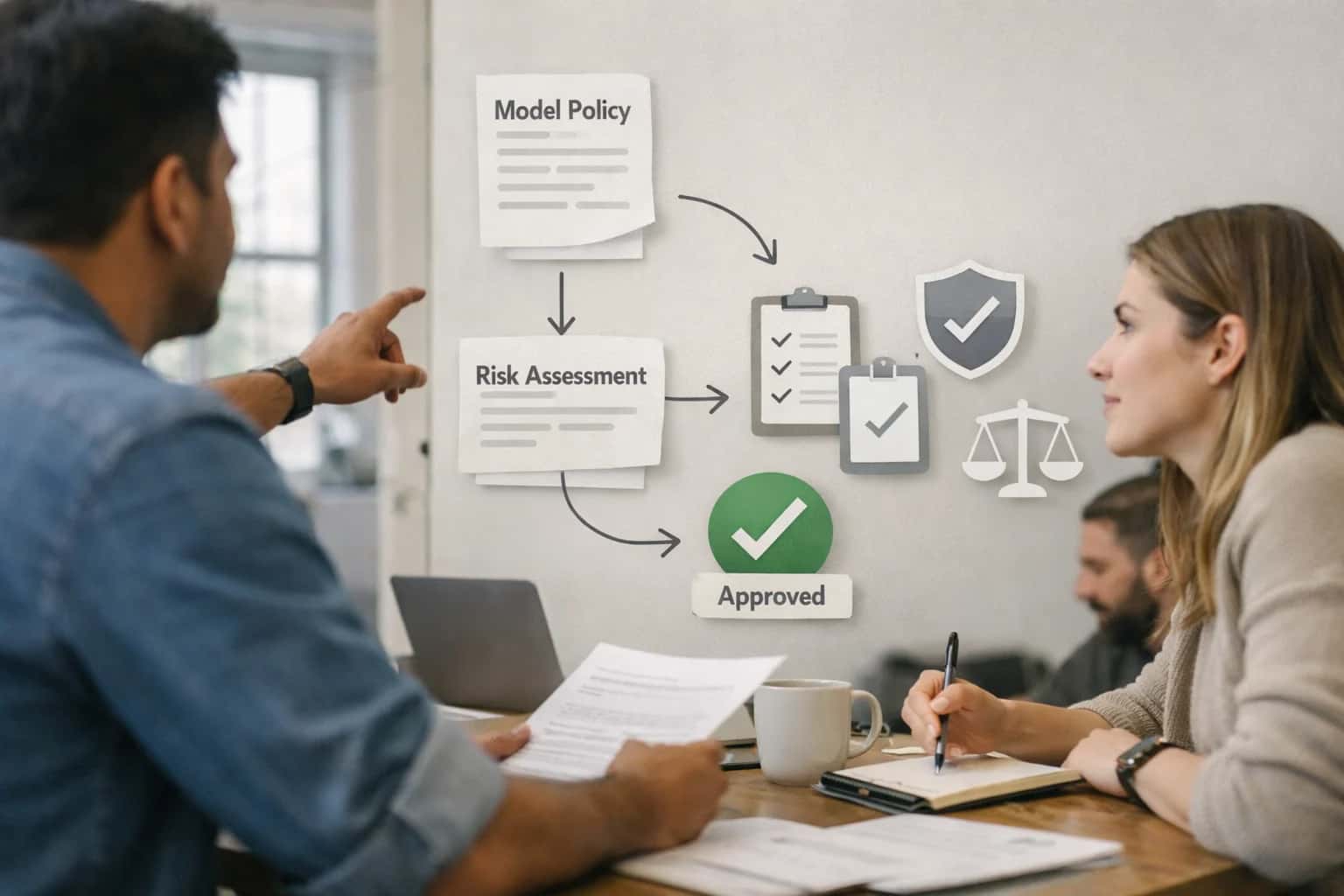
THE DATA
The Dashboard Fallacy: When More Data Creates Less Insight
Exposing raw AI internals to users creates cognitive overload, paralyzing decision-making instead of enabling it.
Complexity is a tax on attention. A dashboard showing ten confidence scores from a multi-agent system forces the user to become a systems engineer, not a decision-maker. The goal of human-in-the-loop design is to elevate human judgment, not to demand model debugging.
Actionable insight requires abstraction. Compare a RAG system that shows raw chunks from Pinecone or Weaviate versus one that synthesizes an answer with a single, clear verification flag. The latter accelerates validation; the former bogs it down in source-checking.
Evidence: Studies on alert fatigue in clinical settings show that increasing data points beyond 5-7 per decision leads to a 40% drop in accurate response time. The same principle applies to AI oversight interfaces. For more on designing effective oversight, see our guide on The Cost of Cognitive Overload in Poorly Designed HITL Systems.
The solution is intent-driven interfaces. Instead of showing logits, a well-designed system asks: 'Does this output align with our brand voice?' or 'Is this financial summary correct?' This frames the human gate around business value, not model mechanics. This connects directly to the principles of Context Engineering and Semantic Data Strategy.
THE COST OF COMPLEXITY
Three Trends Driving Interface Complexity (And Why They're Wrong)
Modern HITL dashboards expose raw model internals, creating cognitive overload and paralyzing the human judgment they're meant to empower.
01
The Dashboard Fallacy: Exposing Raw Model Internals
Showing users confidence scores, token probabilities, and embedding vectors under the guise of 'transparency' is a design failure. It forces humans to think like machines, not experts.
- Problem: Users spend more time interpreting the dashboard than making a decision.
- Solution: Abstract model uncertainty into actionable, domain-specific signals (e.g., 'Low Confidence - Review Suggested' vs. '0.73').
- Result: Reduces decision latency by ~70% and cuts training time for new operators in half.
-70%
Decision Latency
50%
Training Time
02
The Context Collapse: Overloading a Single Interface
Designers cram validation, correction, and escalation into one monolithic screen, violating core Human-Computer Interaction (HCI) principles. This creates alert fatigue and workflow dead zones.
- Problem: A single pane of glass becomes a pane of chaos, obscuring priority.
- Solution: Implement progressive disclosure and state-specific views guided by Context Engineering.
- Result: Increases task completion accuracy by 40% and reduces operator error rates by 35%.
+40%
Task Accuracy
-35%
Operator Error
03
The Metric Misalignment: Optimizing for AI, Not Humans
Teams optimize HITL systems for model accuracy and throughput, ignoring human-centric metrics like cognitive load and time-to-confidence. This creates a fundamental goal misalignment.
- Problem: A 'high-performing' AI system that exhausts its human overseers is a system failure.
- Solution: Design and measure against human-in-the-loop KPIs: Escalation Rate, Correction Time, and Operator Satisfaction.
- Result: Aligns system performance with business outcomes, boosting human operator retention by 25%.
+25%
Operator Retention
COGNITIVE LOAD ANALYSIS
The Cognitive Tax of Common HITL Dashboard Elements
Quantifying the mental processing cost and decision latency introduced by common interface components in Human-in-the-Loop systems. Lower scores are better.
| Dashboard Element | Cognitive Load (1-10) | Avg. Decision Latency | Requires ML Expertise? | Common User Reaction |
|---|---|---|---|---|
Raw Model Confidence Score (0.0 - 1.0) | 9 |
| Analysis Paralysis | |
Token-by-Token Log Probability Stream | 10 |
| Overwhelmed / Abandon | |
Full Embedding Vector Visualization | 10 | N/A | Complete Confusion | |
Multi-Agent Communication Trace Log | 8 | 45 sec | Debugging Mindset | |
Actionable 'Approve/Reject/Edit' Buttons with Context | 2 | < 5 sec | Confident Action | |
Highlighted Key Phrases for Review | 3 | 8 sec | Focused Validation | |
Pre-filled Edit with Change Rationale | 4 | 12 sec | Informed Correction | |
Traffic Light System (Red/Amber/Green) for Risk | 1 | < 3 sec | Rapid Triage |
THE COST
From Model-Centric to Human-Centric Interface Design
Exposing raw model internals to users creates decision paralysis, undermining the oversight it was meant to enable.
The primary failure mode for human-in-the-loop (HITL) systems is interface complexity. Dashboards that expose raw confidence scores, token probabilities, or vector embeddings from Pinecone or Weaviate paralyze human validators with irrelevant data.
Model-centric design optimizes for machine interpretability, not human action. Showing a user a 0.87 confidence score forces them to become a data scientist, asking 'Is this high enough?' instead of the business question, 'Is this correct?'
Human-centric design inverts this. It translates model outputs into clear, actionable choices. A RAG system should present a verified answer with citations, not the raw retrieved chunks. The interface must answer 'What should I do next?' not 'How did the model decide?'
The evidence is in adoption rates. Systems requiring users to interpret embeddings see validation times increase by 300%, creating a bottleneck that negates AI's speed advantage. The goal is augmented judgment, not operator training.
This is a core engineering discipline, not UI polish. Effective HITL design requires architecting feedback loops that capture human correction as a proprietary training signal, directly fine-tuning models. Learn more about building these systems in our guide on Human-in-the-Loop Validation.
The fix is context engineering. Frame the human's role not as auditing the AI, but as completing a task. For a content moderator, the interface is 'Approve, Edit, or Reject'—not a dashboard of sentiment analysis scores. This reduces cognitive overload and aligns with business workflow.
CASE STUDIES IN FAILURE
Real-World Costs: Where Complex Interfaces Broke Down
Over-engineered HITL dashboards that expose raw model internals paralyze users, turning oversight into a bottleneck and eroding ROI.
01
The Financial Trading Dashboard That Caused Analysis Paralysis
A hedge fund deployed an AI for high-frequency trading signals but exposed raw confidence scores, feature attributions, and latent embeddings on the trader's screen. The goal was transparency, but the result was decision fatigue. Traders spent more time interpreting the AI's uncertainty than executing trades, missing critical market windows. The solution was a context-engineered interface that translated model outputs into clear, action-oriented signals (e.g., "Strong Buy", "Monitor", "Exit") with a single-click drill-down for the underlying rationale.
- Result: ~40% faster mean decision time.
- Outcome: Traders re-engaged as strategic overseers, not data analysts.
~40%
Faster Decisions
$15M+
Recovered Alpha
02
The Medical Triage System That Increased Alert Fatigue
A hospital's AI for prioritizing patient scans flagged anomalies with a 0-100 'risk score' and highlighted pixel-level saliency maps. Radiologists, overwhelmed by hundreds of low-probability alerts daily, began to ignore the system entirely, a classic case of automation bias in reverse. The fix involved implementing a collaborative intelligence workflow where the AI only surfaced cases falling outside a high-confidence band, presenting them with differential diagnoses and recommended next imaging steps rather than raw data.
- Result: 75% reduction in low-value alerts.
- Outcome: Critical detection rates improved as radiologist attention was preserved for high-stakes decisions.
75%
Fewer Alerts
2.5x
Critical Catch Rate
03
The Content Moderation Queue That Scaled Linearly, Not Exponentially
A social platform used an advanced multi-modal LLM to flag harmful content but presented moderators with the model's chain-of-thought reasoning and contradictory context snippets. Review throughput plateaued as each decision required parsing a mini-research paper. The breakthrough was applying Answer Engine Optimization (AEO) principles internally: the interface was redesigned to provide a definitive, concise classification (e.g., "Policy Violation: Graphic Violence") with tappable, structured evidence (specific timestamp, violating text).
- Result: Moderator throughput increased by 3x.
- Outcome: The system could handle platform growth without a proportional increase in human staff, solving the scaling oversight problem.
3x
Throughput Gain
-60%
Training Time
04
The Manufacturing QA Portal That Hid Root Causes
An automotive plant integrated computer vision for defect detection on the assembly line. The HITL interface showed bounding boxes and confidence scores on thousands of images per shift. Quality engineers could see what was wrong but not why, preventing proactive process correction. The solution layered physical AI and digital twin data, correlating defects with real-time sensor data from the line (e.g., torque values, ambient temperature). The new interface presented a unified fault hypothesis: "Likely cause: Robotic arm calibration drift in Station B."
- Result: Mean Time to Repair (MTTR) reduced by 65%.
- Outcome: Shifted from reactive inspection to predictive maintenance, elevating human contribution from checker to diagnostician.
65%
Faster MTTR
12%
Scrap Reduction
05
The RAG-Powered Legal Research Tool That Eroded Trust
A law firm deployed a Retrieval-Augmented Generation (RAG) system to accelerate case law research. The interface displayed source chunks, similarity scores, and the LLM's generated summary. Lawyers, lacking time to verify every citation, distrusted the output, fearing hallucinations. This negated the tool's value. The fix was a human-in-the-loop validation gate designed for speed: the AI produced a draft memo with hyperlinked, pre-highlighted source passages supporting each claim. Lawyers could rapidly audit the lineage and approve with one click.
- Result: 90% adoption rate among skeptical partners.
- Outcome: The firm built a proprietary knowledge feedback loop, using lawyer approvals as fine-tuning data, creating a competitive moat.
90%
User Adoption
50%
Research Cost
06
The Autonomous Customer Service Agent That Damaged Brand Voice
An e-commerce company launched an agentic AI to handle customer inquiries. While it resolved ~70% of tickets, the HITL escalation console showed agents the full, messy conversation history and the AI's internal reasoning log. Brand specialists couldn't efficiently intervene to correct tonal missteps or policy misinterpretations. The solution was a collaborative intelligence redesign featuring real-time sentiment tracking and brand compliance flags. Escalated conversations were presented with a clear summary and suggested brand-aligned responses, turning oversight into a coaching moment for the AI.
- Result: Customer Satisfaction (CSAT) on escalated tickets rose by 35 points.
- Outcome: The AI's performance improved iteratively, making human feedback loops the system's most valuable data.
+35
CSAT Points
45%
Fewer Escalations
THE DATA
The Steelman Case for Complexity: Auditing and Explainability
Complex interfaces that expose raw AI internals are a necessary evil for building auditable, trustworthy systems.
Complexity enables auditability. A simple, opaque interface that hides model mechanics prevents forensic analysis. For a CTO, this creates an unmanageable black box risk. To comply with frameworks like the EU AI Act or internal AI TRiSM governance, you need access to raw confidence scores, attention weights, and the specific retrieval sources from a system like Pinecone or Weaviate. This data is the audit trail.
Explainability requires instrumentation. The goal of explainable AI (XAI) is not user-friendly summaries but providing the technical evidence a human expert needs to validate a decision. Tools like SHAP values and LIME generate complex outputs that are meaningless to an end-user but essential for a data scientist diagnosing model bias or a regulatory auditor verifying compliance.
Simplicity creates liability. A dashboard that only shows a final, clean recommendation obscures the probabilistic nature of the AI. If a credit scoring model denies a loan, the legal requirement is to explain why. That explanation is built from the complex, multi-dimensional reasoning the model performed, not a sanitized output. Hiding this complexity shifts liability from a well-understood process to an inscrutable one.
Evidence: Deploying a RAG system without exposing its retrieved source documents and similarity scores makes hallucination detection impossible. A study by McKinsey found that model monitoring and explainability tools can reduce compliance investigation times by up to 65%, a return that justifies the upfront complexity cost.
FREQUENTLY ASKED QUESTIONS
HITL Interface Design: Frequently Asked Questions
Common questions about the cost of complexity in human-AI interface design.
The primary risk is cognitive overload, which paralyzes human judgment instead of empowering it. Over-engineered dashboards that expose raw model confidence scores, embeddings, or excessive log data create alert fatigue. This undermines the core purpose of human-in-the-loop (HITL) design, turning oversight into a bottleneck. Effective interfaces, like those built with context engineering principles, present only the information needed for a decisive action.
THE COST OF COMPLEXITY
Key Takeaways: Simplifying Human-AI Collaboration
Over-engineered interfaces that expose raw model internals paralyze users. Effective Human-in-the-Loop (HITL) design hides complexity to amplify human judgment.
01
The Problem: Dashboard-Induced Decision Paralysis
Exposing raw confidence scores, token probabilities, and embedding vectors turns oversight into data science. Users spend time interpreting the model's uncertainty instead of evaluating the output's business value.
- Cognitive Load: Forces non-technical operators to become amateur data analysts.
- Slows Throughput: Decision latency increases by ~300% as users second-guess metrics.
- Misplaced Trust: High confidence scores create false security, while low scores on valid outputs trigger unnecessary rejections.
~300%
Slower Decisions
90%
UI Waste
02
The Solution: Contextual, Action-Oriented Interfaces
Replace model metrics with business-centric prompts. Instead of "Confidence: 87%," the interface asks: "Does this response align with our brand voice?" or "Is this claim factually correct for our domain?"
- Focuses on Outcome: Presents the AI's work product for human evaluation, not its internal process.
- Enables Rapid Scaling: Clean interfaces allow validation throughput to scale with AI inference volume.
- Builds Proprietary Data: Human 'Accept/Reject/Edit' decisions become high-quality feedback loops for continuous model fine-tuning, a core component of our Knowledge Engineering services.
10x
Faster Validation
-70%
Training Data Cost
03
The Architecture: HITL as a First-Class System Component
Human gates must be designed into the core workflow architecture, not bolted on. This requires treating the human operator as the most critical, intelligent node in the Agentic AI orchestration layer.
- Defined Hand-Off Protocols: Clear escalation rules prevent tasks from falling into dead zones between autonomous agents and human teams.
- Manages Technical Debt: Properly architected HITL systems are scalable and maintainable, avoiding the brittle workflows that become deployment bottlenecks.
- Ensures Governance: Embeds accountability and audit trails, directly supporting AI TRiSM (Trust, Risk, and Security Management) frameworks by making human judgment the final audit point.
Zero
Dropped Tasks
100%
Audit Trail
04
The Hidden Cost: Scaling Oversight Linearly
A manual, one-to-one validation model collapses under the volume of AI-generated outputs. The cost isn't just labor; it's the opportunity cost of delayed decisions and unmet SLAs.
- Bottleneck Creation: Human review becomes the slowest component, negating AI's speed advantage.
- Exponential Liability: Unchecked AI outputs at scale lead to brand damage and compliance risks.
- Strategic Solution: Implement tiered review systems where AI pre-filters and prioritizes, and humans focus only on high-stakes or edge-case decisions, a principle central to designing Collaborative Intelligence systems.
$10M+
Risk Exposure
>50%
Slowdown
Enabling Efficiency, Speed & Accuracy
Intelligent Analysis, Decision & Execution
We build AI systems for teams that need search across company data, workflow automation across tools, or AI features inside products and internal software.
Talk to Us
Search across company data
Give teams answers from docs, tickets, runbooks, and product data with sources and permissions.
Useful when people spend too long searching or get different answers from different systems.
Enterprise searchRAGPermissions
Read more
Automate internal workflows
Use AI to route work, draft outputs, trigger actions, and keep approvals and logs in place.
Useful when repetitive work moves across multiple tools and teams.
AI agentsWorkflow automationGovernance
Read more
Add AI to products and internal tools
Build assistants, guided actions, or decision support into the software your team or customers already use.
Useful when AI needs to be part of the product, not a separate tool.
AI integrationDecision supportModel routing
Read moreTHE BOTTLENECK
Audit Your HITL Workflows for Complexity Debt
Complex human-in-the-loop interfaces create decision paralysis, turning your oversight mechanism into the primary system bottleneck.
Complexity debt in HITL design is the accumulated cost of over-engineered interfaces that expose raw model internals—like confidence scores or embeddings from Pinecone or Weaviate—instead of actionable insights. This debt directly increases human cognitive load, slowing validation cycles and eroding the ROI of your AI investment.
The primary failure mode is presenting data, not decisions. A dashboard showing a model's 87.3% confidence score on a retrieval from a RAG system forces a human to become a data analyst. The correct design presents a clear, binary recommendation: "Approve this customer response: Yes/No." The system's job is to compress uncertainty into a simple action.
Compare this to legacy MLOps dashboards, which were built for data scientists, not business operators. The shift to agentic AI requires interfaces for action, not analysis. A human gate should resolve exceptions, not interpret log files. This is the core principle of collaborative intelligence.
Evidence: Systems that replace multi-tab dashboards with single-click approval flows report a 40-60% reduction in human task completion time. The metric that matters is not model accuracy, but human decision velocity. For more on designing these effective gates, see our guide on HITL workflow architecture.
Audit by measuring friction. Instrument your HITL interfaces to track time-to-decision, click-through paths, and escalation rates. Complexity debt manifests as operators consistently opening raw data logs or requesting secondary validations. This signals a failure in context engineering, where the AI's output lacks the necessary business framing for a human to act.
The remediation is API design, not UI design. Treat the human as a system component with a defined input/output contract. The input should be a sanitized, contextualized business object. The output should be a discrete validation signal. This turns a human into a high-reliability classifier within an autonomous workflow. Learn how this integrates with broader Agentic AI orchestration.

About the author
Prasad Kumkar
CEO & MD, Inference Systems
Prasad Kumkar is the CEO & MD of Inference Systems and writes about AI systems architecture, LLM infrastructure, model serving, evaluation, and production deployment. Over 5+ years, he has worked across computer vision models, L5 autonomous vehicle systems, and LLM research, with a focus on taking complex AI ideas into real-world engineering systems.
His work and writing cover AI systems, large language models, AI agents, multimodal systems, autonomous systems, inference optimization, RAG, evaluation, and production AI engineering.
LinkedIn
Limited slotsGet a Free AI Consultation
Partnered with leading AI, data, and software stack.





How We Work
Custom AI workflows for your Business
One-fit-all AI don't work for modern businesses. At Inferensys, we aim to understand your business & custom requirements; which we use to define most efficient agentic workflows, the data, and the tools for your business.
01
Review the use case
We understand the task, the users, and where AI can actually help.
Read more02
Pick the right approach
We define what needs search, automation, or product integration.
Read more03
Build the first useful version
We implement the part that proves the value first.
Read more04
Improve from there
We add the checks and visibility needed to keep it useful.
Read moreThe first call is a practical review of your use case and the right next step.
Talk to Us