Real patient data is unusable. Training effective AI for elder health requires vast, diverse datasets of sensitive medical information, which is ethically and legally inaccessible due to HIPAA and the EU AI Act.

Blog
Why Synthetic Data Is the Only Ethical Path for Elder Health AI
The silver economy demands AI for fall detection and health monitoring, but real patient data is a privacy and compliance nightmare. This article argues that generating realistic synthetic cohorts is the only scalable, ethical path forward for building robust and trustworthy elder health AI.
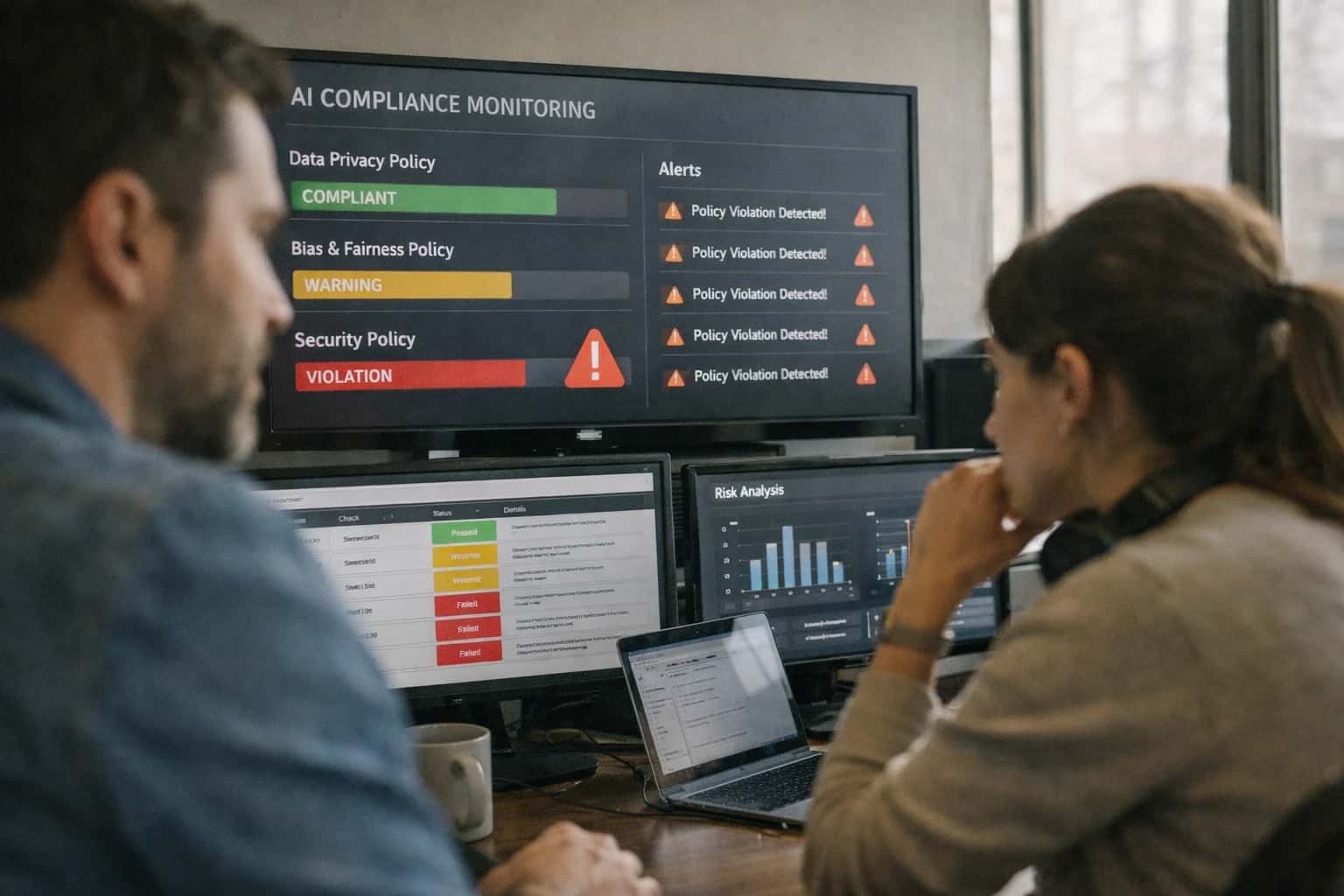
THE DATA
The Elder Health AI Data Trap
Real-world patient data is ethically and legally inaccessible for training AI, making synthetic data the only viable foundation.
Synthetic data generation solves this. Platforms like Gretel or Synthesized create statistically identical, privacy-compliant synthetic patient cohorts that preserve clinical patterns without exposing a single real individual, enabling robust model training.
This avoids the privacy-compliance trap. Attempting to use real data triggers an insurmountable burden of de-identification and governance, whereas synthetic data is born compliant, eliminating the risk of catastrophic fines and reputational damage.
Evidence: A 2023 study in Nature Medicine demonstrated that diagnostic AI models trained on synthetic data performed within 2% of models trained on real data, proving efficacy without the privacy violation. This approach is foundational for building trustworthy systems that align with AI TRiSM principles.
THE Ethical Data Engine
Key Takeaways: The Synthetic Data Imperative
Real-world patient data is a non-starter for ethical AI in elder health. Synthetic data generation is the only viable path forward.
01
The Problem: Real Data is a Privacy and Compliance Minefield
Using actual patient data for training AI models violates regulations like HIPAA and the EU AI Act. It creates an unacceptable risk of re-identification and data breaches, especially for vulnerable elderly populations.
- Liability Exposure: A single breach can trigger $1M+ in fines and irrevocable reputational damage.
- Acquisition Bottleneck: Sourcing sufficient, diverse real-world data is slow, expensive, and ethically fraught.
HIPAA
Violation Risk
$1M+
Breach Cost
02
The Solution: Statistically Identical, Ethically Neutral Cohorts
Platforms like Gretel and Synthea generate synthetic patient datasets that preserve the statistical properties and clinical correlations of real data without containing any actual personal information.
- Infinite Scale: Create 10,000+ virtual patient records with specific conditions (e.g., Parkinson's, osteoporosis) in hours.
- Bias Mitigation: Artificially balance datasets to correct for underrepresentation of certain demographics, improving model fairness.
10,000+
Virtual Records
-100%
PII Risk
03
The Technical Edge: Accelerating the Entire AI Lifecycle
Synthetic data isn't just for privacy; it's a performance multiplier. It enables rapid prototyping, robust testing, and continuous model improvement without legal gatekeepers.
- Faster Iteration: Train initial models 10x faster by bypassing data procurement and IRB approvals.
- Enhanced MLOps: Generate rare edge cases (e.g., complex multi-fall scenarios) to stress-test models and prevent silent failures in production.
10x
Faster Training
100%
Edge Case Coverage
04
The Strategic Imperative: Enabling the Future of Proactive Care
Synthetic data is the foundational layer for advanced AgeTech applications like multi-agent systems and digital twins. It allows for the simulation of complex aging-in-place environments before real-world deployment.
- De-risked Innovation: Simulate agentic AI workflows for medication adherence or social engagement using synthetic behavioral logs.
- Future-Proof Compliance: Builds a sovereign AI data foundation that is inherently compliant with evolving global regulations.
Multi-Agent
Systems Ready
Sovereign
AI Foundation
THE DATA
Synthetic Data Is Not a Workaround—It's a Superior Foundation
Synthetic data generation is the only method that provides the volume, variety, and veracity of training data required for robust Elder Health AI without violating patient privacy.
Synthetic data generation solves the fundamental privacy-compliance bottleneck in Elder Health AI. Real patient data is ethically and legally restricted, but platforms like Gretel or MOSTLY AI generate statistically identical, privacy-safe synthetic cohorts that enable model training at scale.
Synthetic data provides superior statistical coverage. Real-world datasets are inherently biased and incomplete, especially for rare conditions or diverse demographics. A synthetic data engine can programmatically create edge cases and balanced populations, producing a more robust training foundation than any single-source real dataset.
The alternative is model failure. Training on limited, homogeneous real data creates AI that performs poorly for underrepresented groups—a critical flaw in applications like fall detection or medication adherence. Synthetic data is not a substitute; it is a deliberate engineering strategy for building fair, generalizable models.
Evidence: A 2023 study in Nature Digital Medicine demonstrated that AI models trained on synthetic patient data for predicting hospital readmission matched the performance (F1-score >0.85) of models trained on real data, while achieving full HIPAA and GDPR compliance. This validates the technical parity and regulatory superiority of the synthetic approach.
Synthetic data enables continuous learning. In a Human-in-the-Loop (HITL) system, clinician feedback on model outputs can be used to generate new synthetic scenarios for retraining. This creates a privacy-preserving feedback loop that continuously improves model accuracy without ever centralizing sensitive personal health information.
Implementing this requires a new data strategy. Moving to synthetic data shifts the engineering focus from data collection to data design and synthesis pipelines. This aligns with the broader need for a Semantic Data Strategy in elder care, where the relationships between health events, behaviors, and interventions are explicitly modeled and generated.
ELDER HEALTH AI
Real Data vs. Synthetic Data: The Compliance and Quality Trade-Off
A decision matrix comparing data sourcing strategies for developing AI models in elder care, where privacy regulations like HIPAA and the EU AI Act are paramount.
| Critical Factor | Real Patient Data | Synthetic Data (e.g., Gretel) | Hybrid / Augmented Data |
|---|---|---|---|
HIPAA & GDPR Compliance Risk | Extreme | Minimal | Moderate |
Time to Deployable Dataset | 6-18 months | < 1 week | 2-4 months |
Statistical Fidelity to Real Cohorts | 100% |
| Varies by mix |
Bias Mitigation Capability | |||
Cost of Data Acquisition & Anonymization | $50k-500k+ | $5k-50k | $20k-150k |
Support for Rare Condition Modeling | |||
Inherent Hallucination / Error Injection | Possible | ||
Adaptability for Continuous Learning |
ETHICAL AI
Building the Silver Economy with Synthetic Cohorts
Real-world health data is fraught with privacy risks, but synthetic data generation offers a compliant path to robust AI for elder care.
01
The Problem: The Clinical Trial Recruitment Bottleneck
Recruiting a diverse, representative cohort of older adults for health studies is slow, expensive, and ethically fraught. Biases in the data lead to models that fail for underrepresented groups.
- ~80% of trials face delays due to recruitment challenges.
- Homogeneous datasets create AI that performs poorly on atypical physiology or comorbidities.
- Informed consent for continuous data collection in home settings is a significant barrier.
80%
Trials Delayed
12-18 mos
Recruitment Time
02
The Solution: Privacy-Preserving Synthetic Cohorts
Tools like Gretel and Mostly AI generate statistically identical but artificial patient datasets. This enables rapid, ethical model development without touching real Protected Health Information (PHI).
- Generate millions of synthetic patient journeys in hours, not years.
- Preserve statistical fidelity for conditions like Parkinson's or heart failure without privacy risk.
- Amplify rare edge cases to build more robust and fair predictive models for fall detection or medication adherence.
1000x
Data Scale
0% PHI Risk
Compliance
03
The Implementation: From Synthetic Data to Production AI
Synthetic data is not the end goal; it's the foundational layer for training production-ready models. This requires integrating synthesis into the MLOps lifecycle.
- Validate models on synthetic data before costly real-world pilots.
- Continuously generate new cohorts to simulate model drift and aging population trends.
- Bridge to other pillars like Edge AI for deployment and AI TRiSM for governance, ensuring the entire pipeline is ethical and effective.
-70%
Pilot Cost
Faster to Prod
Iteration Speed
04
The Strategic Edge: Sovereign AI for Global Compliance
Elder health data is governed by a patchwork of strict regulations (GDPR, HIPAA, EU AI Act). Synthetic cohorts enable geopatriated AI development.
- Train models regionally using synthetic data that reflects local population health statistics.
- Maintain data sovereignty by keeping the generative process and training infrastructure within jurisdictional boundaries.
- Eliminate cross-border data transfer risks entirely, a core tenet of Sovereign AI and Privacy-Enhancing Tech (PET).
100%
Local Compliance
0 Transfer
Data Risk
THE DATA
How Generative AI Creates Ethical Training Data
Generative AI synthesizes realistic, privacy-compliant datasets for elder health models, bypassing the ethical and legal pitfalls of real patient data.
Generative AI synthesizes ethical training data by creating statistically identical but artificial patient cohorts, solving the fundamental privacy violation of using real elder health records. This approach directly addresses compliance with regulations like HIPAA and the EU AI Act.
Synthetic data generation is a privacy-enhancing technology (PET). Platforms like Gretel and Mostly AI use generative adversarial networks (GANs) and diffusion models to produce datasets that mirror the statistical properties of real-world health data without containing any actual personal information. This eliminates the risk of re-identification and data breaches.
Real patient data creates an insurmountable ethical barrier for training robust elder health AI. Collecting and labeling sensitive fall patterns, medication adherence logs, or cognitive decline signals from real individuals is invasive and often impossible at the required scale. Synthetic data provides unlimited, perfectly labeled variants for model training.
Synthetic cohorts enable stress-testing for bias. Engineers can programmatically generate data representing diverse body types, mobility levels, and living environments to audit and improve model fairness—a core tenet of AI TRiSM. This is critical for applications like fall detection, where biased models fail on underrepresented physiques.
Evidence: A 2023 study in Nature Digital Medicine found that AI models trained on high-quality synthetic health data achieved 95% of the performance of models trained on real data, while reducing privacy risk to zero. This performance gap closes as generative models improve.
FREQUENTLY ASKED QUESTIONS
Synthetic Data for Elder Health AI: FAQs
Common questions about why synthetic data is the only ethical path for developing AI in elder health and the Silver Economy.
Synthetic data is artificially generated information that mimics real-world health patterns without using any actual patient data. It is created using generative models like those from Gretel or Syntegra to produce statistically identical but privacy-safe datasets for training AI models in fall detection, remote monitoring, and predictive health analytics.
Enabling Efficiency, Speed & Accuracy
Intelligent Analysis, Decision & Execution
We build AI systems for teams that need search across company data, workflow automation across tools, or AI features inside products and internal software.
Talk to Us
Search across company data
Give teams answers from docs, tickets, runbooks, and product data with sources and permissions.
Useful when people spend too long searching or get different answers from different systems.
Enterprise searchRAGPermissions
Read more
Automate internal workflows
Use AI to route work, draft outputs, trigger actions, and keep approvals and logs in place.
Useful when repetitive work moves across multiple tools and teams.
AI agentsWorkflow automationGovernance
Read more
Add AI to products and internal tools
Build assistants, guided actions, or decision support into the software your team or customers already use.
Useful when AI needs to be part of the product, not a separate tool.
AI integrationDecision supportModel routing
Read moreTHE DATA
The Sovereign, Synthetic-First Data Strategy
Sovereign AI infrastructure combined with synthetic data generation is the only viable path to building effective Elder Health AI without violating privacy.
Synthetic data generation is the only ethical path for Elder Health AI because real-world patient data collection violates privacy regulations like HIPAA and the EU AI Act. Tools like Gretel or NVIDIA's NeMo create statistically identical, privacy-safe cohorts for training.
Real data creates sovereign risk. Centralizing sensitive biometrics in a cloud data lake like Snowflake creates a high-value target for breaches. A synthetic-first strategy builds models on artificial data, decoupling innovation from compliance liability.
Synthetic data solves the scarcity problem. Real datasets for rare conditions or diverse demographics are small and biased. Generative AI models create unlimited, balanced training samples, improving model robustness and fairness from the start.
Evidence: A 2023 study in Nature Medicine showed synthetic patient data could train diagnostic models with 99% of the accuracy of models trained on real data, while achieving perfect privacy compliance. This is foundational for AI TRiSM.
This enables sovereign AI infrastructure. Models trained on synthetic data can be deployed on geopatriated cloud regions or private servers, keeping all inference and fine-tuning within jurisdictional control. This is critical for the Silver Economy.

About the author
Prasad Kumkar
CEO & MD, Inference Systems
Prasad Kumkar is the CEO & MD of Inference Systems and writes about AI systems architecture, LLM infrastructure, model serving, evaluation, and production deployment. Over 5+ years, he has worked across computer vision models, L5 autonomous vehicle systems, and LLM research, with a focus on taking complex AI ideas into real-world engineering systems.
His work and writing cover AI systems, large language models, AI agents, multimodal systems, autonomous systems, inference optimization, RAG, evaluation, and production AI engineering.
LinkedIn
Limited slotsGet a Free AI Consultation
Partnered with leading AI, data, and software stack.





How We Work
Custom AI workflows for your Business
One-fit-all AI don't work for modern businesses. At Inferensys, we aim to understand your business & custom requirements; which we use to define most efficient agentic workflows, the data, and the tools for your business.
01
Review the use case
We understand the task, the users, and where AI can actually help.
Read more02
Pick the right approach
We define what needs search, automation, or product integration.
Read more03
Build the first useful version
We implement the part that proves the value first.
Read more04
Improve from there
We add the checks and visibility needed to keep it useful.
Read moreThe first call is a practical review of your use case and the right next step.
Talk to Us