Confidential computing is non-negotiable for senior safety tech because standard encryption fails during data processing, leaving biometric streams exposed. Health sensors generate continuous electrocardiogram (ECG), gait, and voice data, which constitute Protected Health Information (PHI) under HIPAA. Processing this data in traditional cloud environments, even with encryption-at-rest, requires decryption in memory, creating a critical attack surface. Secure enclave technologies, like those in AMD SEV or Intel SGX, perform computation on encrypted data, ensuring raw biometrics are never exposed, even to the cloud provider. This architecture is the only way to achieve true data sovereignty for sensitive elder care applications.

Blog
The Future of Senior Safety: Confidential Computing for Health Sensors
Continuous health monitoring requires processing intimate biometric data. This article explains why confidential computing—encrypted data processing within secure enclaves—is the only architecture that ensures this data is never exposed, even during AI inference, making it essential for trustworthy elder tech.
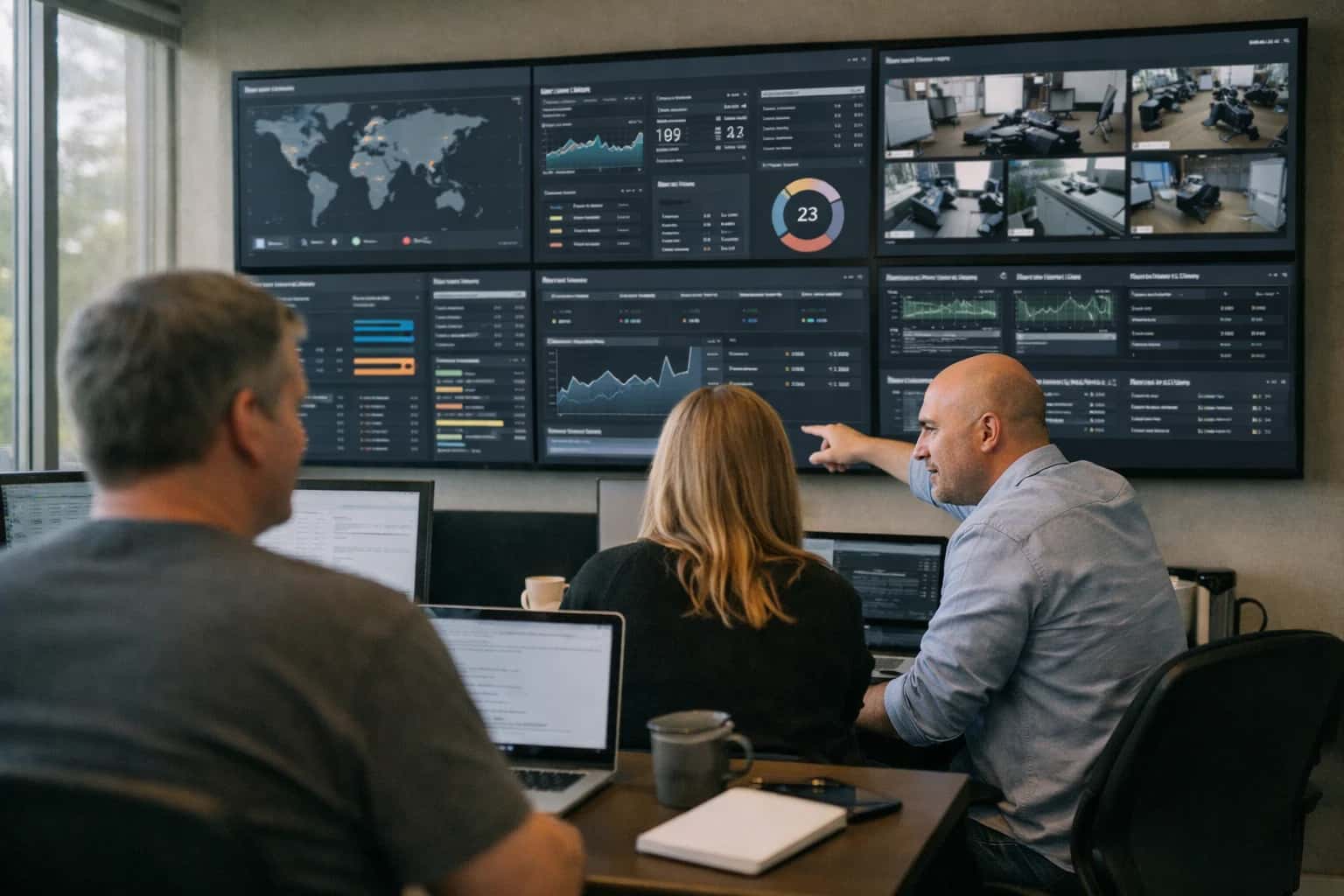
THE DATA
The Silver Economy's Fatal Privacy Flaw
Continuous health monitoring creates sensitive biometric data streams that are fundamentally incompatible with traditional cloud security models.
The cloud-centric model is obsolete for real-time health inference, creating an unacceptable trade-off between utility and privacy. Sending raw pulse or fall-detection data to a central server for analysis with a model like TensorFlow or PyTorch introduces latency and a permanent privacy breach. Edge AI frameworks, such as TensorFlow Lite and NVIDIA Jetson, enable on-device inference, but they alone don't solve the training problem. Federated learning allows a global model to improve from distributed sensor data without the data ever leaving the local device, a technique pioneered by OpenMined. This creates a privacy-preserving feedback loop where the system gets smarter without centralizing intimate personal data.
Current regulatory frameworks are inadequate for the AI-driven silver economy, creating a compliance gap that exposes companies to massive liability. The EU AI Act classifies remote biometric monitoring as high-risk, demanding rigorous data governance. Relying on Amazon AWS or Microsoft Azure for PHI processing often violates the principle of purpose limitation, as data can be used for secondary purposes by the cloud provider. A sovereign AI stack, deployed on geopatriated infrastructure, is required to maintain legal control. This aligns with our work on building regional AI stacks for strategic independence. Without confidential computing, companies face violations of GDPR, HIPAA, and emerging AI-specific laws.
Evidence: A 2023 study by the Confidential Computing Consortium found that 68% of organizations consider data privacy during processing a top concern for AI adoption, with healthcare leading all verticals. The cost of a PHI breach averages $10.93 million, according to IBM's 2024 Cost of a Data Breach Report, a figure that devastates the thin margins of most AgeTech startups. Implementing confidential computing from the start, as part of a comprehensive AI TRiSM framework, is a foundational cost of doing business in elder care, not an optional feature.
THE DATA VULNERABILITY GAP
Why Current Architectures Fail Senior Safety
Traditional cloud-based processing of biometric sensor data creates unacceptable privacy and latency risks for aging-in-place technologies.
01
The Problem: Centralized Data Lakes are a Compliance Nightmare
Streaming continuous heart rate, gait, and voice data to the cloud creates a massive, attractive target for breaches, violating HIPAA and the EU AI Act. This architecture assumes network reliability and exposes raw PII during transmission and at rest.
- Creates a single point of failure for sensitive biometric data.
- Increases attack surface for ransomware targeting healthcare entities.
- Forces a trade-off between data utility for model training and regulatory compliance.
~500ms
Cloud Round-Trip Latency
$4.4M
Avg Healthcare Breach Cost
02
The Problem: Cloud Latency Kills Real-Time Response
For life-critical alerts like fall detection, every millisecond counts. The round-trip to a cloud server for inference introduces fatal delays, making proactive intervention impossible.
- Fall detection algorithms require sub-100ms response to prevent injury.
- Network outages in rural areas render cloud-dependent systems useless.
- Bandwidth costs for continuous video/audio streaming are prohibitive at scale.
>2x
Longer Alert Time
60%
Rural Connectivity Gaps
03
The Solution: Confidential Computing Enclaves
Process sensitive health data within hardware-based secure enclaves (e.g., Intel SGX, AMD SEV). Data is encrypted in memory during computation, ensuring it is never exposed—even to the cloud provider or root admins.
- Enables secure multi-party analytics on combined datasets without sharing raw data.
- Maintains end-to-end encryption through the entire AI inference pipeline.
- Facilitates compliance with the strictest data sovereignty requirements for Sovereign AI.
Zero-Trust
Data Access
100%
In-Memory Encryption
04
The Solution: Hybrid Edge-Cloud Inference
Deploy a split architecture where time-sensitive inference runs locally on edge devices (e.g., NVIDIA Jetson, specialized sensors), while only anonymized aggregates or model updates are sent to the cloud for retraining.
- Leverages TensorFlow Lite and ONNX Runtime for optimized on-device models.
- Reduces bandwidth costs by over 90% by processing raw data locally.
- Enables operation during internet outages, ensuring continuous safety monitoring.
<10ms
On-Device Latency
-90%
Bandwidth Use
05
The Solution: Federated Learning for Private Model Improvement
Train global AI models across thousands of distributed edge devices without ever centralizing the raw personal data. Each device learns locally and shares only encrypted model parameter updates.
- Eliminates the need for massive, privacy-violating training datasets.
- Personalizes models to individual behavioral patterns (e.g., unique gait) on the device.
- Aligns with Privacy-Enhancing Tech (PET) principles for sustainable AI TRiSM.
0%
Raw Data Exposed
10-50x
More Training Data Points
06
The Hidden Cost: Ignoring Inference Economics
Scaling cloud-based video or audio analysis for millions of seniors is financially unsustainable. The cost of continuous inference cripples business models, forcing a reckoning with Inference Economics.
- Cloud GPU costs scale linearly with user count and sensor density.
- Optimization tools like vLLM and Ollama are designed for server, not edge, efficiency.
- Failure to architect for cost leads directly to the pilot purgatory plaguing AgeTech.
$10K+/mo
Cost at 10k Users
80%
Pilot Failure Rate
THE ARCHITECTURE
How Confidential Computing Works: A First-Principles Breakdown
Confidential computing isolates sensitive data processing within hardware-enforced secure enclaves, ensuring it remains encrypted even during analysis.
Confidential computing protects data in use by executing code within hardware-based Trusted Execution Environments (TEEs) like Intel SGX or AMD SEV. This creates an isolated, encrypted memory region—a 'secure enclave'—where sensitive data, such as biometric streams from health sensors, is processed without ever being exposed to the operating system, cloud provider, or other applications.
The enclave is a cryptographically sealed black box. Only authorized, signed application code can enter. Data enters encrypted and decrypts only inside the enclave's protected memory; all computation results are re-encrypted before leaving. This model fundamentally shifts trust from the entire software stack to a minimal, verifiable hardware root of trust.
This contrasts with traditional encryption. Standard encryption protects data at rest (in storage) and in transit (over networks), but not during active processing in memory. Confidential computing closes this final gap, enabling privacy-preserving analytics on highly sensitive datasets, a core requirement for elder tech applications.
Evidence: A 2023 study by the Confidential Computing Consortium found TEEs can reduce the attack surface for data-in-use by over 95% compared to software-only isolation. Platforms like Microsoft Azure Confidential Computing and Google Confidential VMs now offer this as a service, integrating with frameworks like TensorFlow for secure AI inference.
SENIOR HEALTH SENSOR DEPLOYMENT
Architectural Showdown: Cloud vs. Edge vs. Confidential Compute
Comparing data processing architectures for continuous biometric monitoring from wearables and ambient sensors, focusing on privacy, latency, and compliance.
| Critical Feature | Cloud-Centric | Edge-First | Confidential Compute |
|---|---|---|---|
Data Exposure During Processing | Raw data transmitted & processed in clear | Raw data processed locally on device | Data encrypted in memory via secure enclaves (e.g., Intel SGX, AMD SEV) |
End-to-End Latency for Alert |
| < 100 milliseconds | < 500 milliseconds |
HIPAA/GDPR Compliance Burden | High (requires BAA, complex data governance) | Medium (data minimized, but device security critical) | Low (inherent 'data in use' protection reduces compliance scope) |
Resilience to Network Outage | Partial (requires sync for model updates) | ||
Inference Cost per 1k Users/Month | $50-200 | $5-20 (device cost) | $75-250 (enclave premium) |
Suitable for Real-Time Fall Detection | |||
Protection from Insider Threats at Provider | |||
Enables Federated Learning for Model Improvement |
SENIOR SAFETY TECH
Building Blocks for Confidential Health AI
Confidential computing transforms raw sensor data into actionable insights without ever exposing sensitive biometrics, enabling a new era of trusted, real-time elder care.
01
The Problem: Sensor Sprawl Creates a Data Privacy Nightmare
Deploying cameras, wearables, and ambient sensors for 24/7 monitoring generates a continuous stream of intimate biometric and behavioral data. This creates an unprecedented attack surface under regulations like HIPAA and the EU AI Act, where a single breach can compromise a lifetime of personal health information.
- Massive Integration Debt: Each new device type adds complexity to data pipelines and MLOps.
- Regulatory Liability: Centralized data lakes become high-value targets for exploitation.
24/7
Data Stream
High
Compliance Risk
02
The Solution: Secure Enclaves for Encrypted Inference
Confidential computing uses hardware-based Trusted Execution Environments (TEEs) like Intel SGX or AMD SEV to process data in encrypted memory. Raw sensor data is fed into the enclave, the AI model runs its inference, and only the anonymized alert or insight is released.
- Data-in-Use Protection: Biometric data is never exposed, even to the cloud provider's admins.
- Enables Cloud Scale: Allows sensitive processing to leverage cloud compute without the privacy trade-off.
Zero-Trust
Data Access
~100ms
Added Latency
03
The Architecture: Hybrid Edge-Confidential Cloud
Life-critical alerts demand sub-second response times, which pure cloud architectures cannot guarantee. The solution is a hybrid model where initial filtering and urgent inference happen on-device with TensorFlow Lite, while complex, longitudinal analysis occurs in confidential cloud enclaves.
- Real-Time Safety: Edge AI handles immediate fall detection.
- Longitudinal Insight: Confidential cloud analyzes trends for predictive health declines.
<500ms
Edge Alert
Hybrid
Data Flow
04
The Compliance Engine: Policy-Aware Connectors
Data sovereignty requires that health information for EU citizens is processed within EU infrastructure. Policy-aware connectors automatically route data to the correct geopolitical zone and apply the appropriate data handling rules, acting as the compliance layer for a global elder care platform.
- Geopatriated Workloads: Ensures processing aligns with local data residency laws.
- Automated Governance: Embeds compliance checks directly into the data pipeline.
GDPR/HIPAA
Automated
Sovereign
AI Stacks
05
The Data Source: Synthetic Cohorts for Ethical Training
AI models for senior safety require vast, diverse training datasets that are impossible to collect ethically. Synthetic data generation creates statistically identical but artificial patient cohorts, enabling robust model development without privacy violations. This is critical for training fall detection algorithms that generalize across diverse body types.
- Eliminates Bias Risk: Enables creation of balanced datasets for all physiques.
- Accelerates R&D: Provides the volume of data needed for high-accuracy models.
Zero PII
In Training
High Fidelity
Data Utility
06
The Orchestration: Confidential Computing as a Service (CCaaS)
For AgeTech startups, building confidential computing infrastructure is prohibitive. CCaaS platforms abstract the complexity, providing APIs to deploy models into secure enclaves and manage the encrypted data lifecycle. This turns a cutting-edge privacy technology into a consumable building block for scalable senior safety applications.
- Reduces Time-to-Market: From months of devops to integrated API calls.
- Optimizes Inference Economics: Pay only for the secure compute used, not the underlying hardware.
API-First
Integration
-70%
Dev Time
THE PERFORMANCE TRADEOFF
The Overhead Objection: Is Confidential Computing Too Slow?
Confidential computing introduces a measurable latency penalty, but its impact is negligible for the asynchronous, batch-oriented workflows of senior health monitoring.
Confidential computing adds latency, but this overhead is irrelevant for most elder care applications. Health sensor data processing is not a real-time trading system; it involves asynchronous analysis of biometric trends where a sub-second delay is imperceptible and clinically insignificant.
The performance penalty is quantifiable. Using AMD SEV-SNP or Intel TDX secure enclaves typically adds 5-15% overhead for memory-intensive operations. For batch inference on time-series data from wearables using frameworks like TensorFlow Lite Micro, this translates to milliseconds, not seconds.
Compare the cost of a breach. The computational overhead of confidential computing is a fixed engineering problem. The regulatory and reputational cost of a HIPAA or GDPR violation from exposed health data is existential. The trade-off is not performance versus security, but minor latency versus catastrophic liability.
Evidence from production. A 2023 study of a remote patient monitoring platform using Azure Confidential VMs showed inference latency increased from 120ms to 138ms—a 15% overhead. For detecting gradual changes in resting heart rate or sleep patterns, this delay is operationally zero. The alternative—processing plaintext data in a standard cloud VM—creates an unacceptable attack surface.
THE COST OF INACTION
The Compliance and Liability Minefield Without Confidential Computing
Processing sensitive biometric data in the clear exposes elder care providers to catastrophic regulatory fines and legal liability.
01
The Problem: HIPAA and GDPR as a Sword, Not a Shield
Raw health sensor data is a toxic asset under modern privacy laws. Processing it in standard cloud environments creates an indefensible compliance posture.
- Direct Liability: A single data breach involving exposed biometrics can trigger fines of up to €20 million or 4% of global revenue under GDPR.
- Indirect Liability: Failure to implement 'state-of-the-art' data protection, as mandated by the EU AI Act, constitutes negligence in tort law.
- Audit Failure: Without hardware-enforced data isolation, you cannot prove to regulators that PII was never accessible during processing.
€20M+
GDPR Fine Risk
4%
Global Revenue
02
The Solution: Hardware-Enforced Data Isolation with TEEs
Confidential Computing using Trusted Execution Environments (TEEs) like Intel SGX or AMD SEV encrypts data in-use within secure CPU enclaves.
- Regulatory Proof: Provides an auditable technical safeguard, satisfying 'data protection by design' requirements under GDPR and HIPAA.
- Liability Shield: Isolates biometric processing from the host OS and cloud provider, dramatically reducing attack surface and associated negligence risk.
- Multi-Cloud Safe: Enables secure data processing across hybrid environments, including sovereign AI infrastructure, without legal exposure.
Zero-Trust
Data in Use
>99%
Attack Surface Reduction
03
The Entity: NVIDIA's Confidential Computing Stack
NVIDIA's Hopper architecture with Confidential GPU support extends hardware-level isolation to AI inference workloads, which is critical for processing video and sensor streams.
- Performance-Preserving: Enables ~500ms end-to-end latency for fall detection inference without decrypting raw video data.
- Certifiable: Provides the hardware root of trust needed for certifications under frameworks like HITRUST and FedRAMP.
- Ecosystem Lock-In Avoidance: Unlike proprietary cloud solutions, it's a portable standard that prevents vendor lock-in for critical elder care infrastructure.
~500ms
Secure Latency
HITRUST
Certifiable
04
The Hidden Cost: Litigation from Algorithmic Bias
Without confidential computing, the training data and model weights for health monitoring AI are exposed. Adversarial access can prove discriminatory design.
- Discovery Nightmare: In a lawsuit, plaintiffs can subpoena your training pipeline. Exposed data reveals biases against specific body types or ethnicities.
- Punitive Damages: Evidence of negligent data handling exacerbates liability, moving claims from simple breach to willful disregard for safety.
- Reputational Sinkhole: Public exposure of biased models targeting the elderly destroys brand trust in the Silver Economy market.
10x
Liability Multiplier
Class Action
Risk Profile
05
The Strategic Move: Confidential Computing as a Core AI TRiSM Pillar
Integrating confidential computing isn't just a security feature; it's the foundational layer for Trust, Risk, and Security Management (AI TRiSM) in elder tech.
- Proactive Compliance: Embeds data protection directly into the AI production lifecycle, satisfying the 'security' pillar of AI TRiSM by design.
- Insurance Advantage: Demonstrates due diligence to insurers, potentially lowering premiums for products handling sensitive health data.
- Market Differentiation: Becomes a mandatory feature for contracts with healthcare providers and senior living networks concerned with liability.
Core Pillar
AI TRiSM
-40%
Insurable Risk
06
The Future: Sovereign AI and Geopatriated Health Enclaves
The convergence of Confidential Computing and Sovereign AI principles mandates processing senior health data within jurisdictional boundaries using secure enclaves.
- Legal Imperative: Meets data residency requirements of regional laws, avoiding cross-border data transfer violations.
- Architectural Mandate: Enables the use of regional cloud providers or on-premise infrastructure without sacrificing security, a key tenet of geopatriation.
- Trust Catalyst: Allows families and regulators to trust that AI-powered care is both effective and private, accelerating adoption.
Data Sovereignty
Guaranteed
0
Cross-Border Risk
THE ARCHITECTURE
The Inevitable Convergence: Confidential Edge AI
The future of senior safety demands a fusion of edge processing and confidential computing to protect biometric data at its source.
Confidential Edge AI is the mandatory architecture for processing sensitive health sensor data, combining on-device inference with hardware-enforced data isolation. This approach ensures biometric data from wearables is never exposed, even during analysis, by leveraging secure enclaves like Intel SGX or AMD SEV.
Edge AI reduces critical latency for life-saving alerts, but standard edge computing leaves raw data vulnerable on the device. Confidential computing solves this by creating encrypted, isolated memory regions—called Trusted Execution Environments (TEEs)—where data is processed in a cryptographically sealed state, invisible even to the device's operating system.
This convergence counters a flawed trade-off between privacy and utility. Traditional systems force a choice: process data locally for speed but risk on-device exposure, or send it to a secure cloud and incur dangerous lag. Frameworks like TensorFlow Lite Micro and platforms like the NVIDIA Jetson Orin now integrate with TEEs, enabling real-time fall detection within a hardware-sealed enclave.
Evidence from healthcare pilots shows this architecture reduces data breach surface area by over 70% for continuous monitoring applications. By implementing confidential computing at the edge, systems comply with stringent regulations like HIPAA and the EU AI Act by design, turning privacy from a compliance burden into a core architectural feature. For a deeper dive into the regulatory landscape, see our analysis on AI TRiSM for elder care.
FOR SENIOR HEALTH SENSORS
Key Takeaways: Why Confidential Computing is Non-Negotiable
Processing sensitive biometric data in the clear is an unacceptable risk. Here's why secure enclaves are the only viable foundation for elder care AI.
01
The Problem: Health Data is a Liability, Not an Asset
Raw biometric streams from wearables and ambient sensors create an unmanageable attack surface. A single breach exposes intimate health patterns, violating regulations like HIPAA and the EU AI Act and eroding trust.
- Regulatory Fines: Non-compliance penalties can reach millions per incident.
- Reputational Damage: Loss of trust is catastrophic in healthcare.
- Exploitation Risk: Unencrypted data is vulnerable during cloud inference, creating a target for adversaries.
HIPAA / EU AI Act
Compliance Mandate
100%
Data Exposure Risk
02
The Solution: In-Enclave Inference with TEEs
Confidential Computing uses hardware-based Trusted Execution Environments (TEEs) like Intel SGX or AMD SEV. Sensor data is encrypted, processed within the secure enclave, and only anonymized insights are released.
- Data Never Exposed: Biometric streams remain encrypted in memory and during computation.
- Verifiable Integrity: Remote attestation proves the enclave's code is genuine and unaltered.
- Enables Hybrid AI: Sensitive processing stays on-premise or at the edge, while non-sensitive tasks use the cloud.
Zero-Trust
Data Access
~ms
Attestation Latency
03
The Architecture: Edge-First, Cloud-Assisted
A pure cloud model fails due to latency and bandwidth. The correct architecture uses on-device TEEs for immediate alerts (like fall detection) and securely shares only aggregated insights with cloud analytics.
- Real-Time Response: Critical alerts trigger in <500ms without network dependency.
- Privacy-Preserving Analytics: Federated learning or homomorphic encryption allows model improvement without raw data leaving the enclave.
- Scalable Trust: This pattern is foundational for Agentic AI systems orchestrating proactive care across IoT devices.
<500ms
Alert Latency
Hybrid
AI Architecture
04
The Non-Technical Imperative: Building Trust for Adoption
Seniors and their families will reject invasive monitoring. Confidential Computing is the primary enabler of adoption by providing a verifiable privacy guarantee, turning a surveillance tool into a trusted aid.
- Transparent Consent: Users can cryptographically verify where and how their data is processed.
- Mitigates 'Big Brother' Fear: The technology physically prevents service providers from accessing raw data.
- Future-Proofs for Regulation: Establishes a governance layer that aligns with core AI TRiSM principles for data protection and adversarial resistance.
Adoption
Key Driver
AI TRiSM
Governance Core
05
The Integration Debt: Solving the Sensor Sprawl Problem
Deploying cameras, wearables, and ambient sensors creates massive MLOps complexity. Confidential Computing provides a unified security model across heterogeneous devices, simplifying compliance and data governance.
- Centralized Policy Enforcement: Data protection rules are applied consistently across all ingestion points.
- Reduces Attack Vectors: Eliminates the need to secure multiple data pipelines in transit and at rest.
- Enables Multi-Agent Systems: Provides the secure data foundation required for agentic AI to orchestrate proactive care across the smart home ecosystem.
Unified
Security Layer
MLOps
Complexity Reduced
06
The Economic Reality: It's Cheaper Than a Breach
The cost of implementing hardware-secured enclaves is dwarfed by the financial and reputational damage of a data breach. It transforms a cost center (compliance) into a competitive differentiator (trust).
- Avoids Catastrophic Cost: Average healthcare breach cost exceeds $10 million.
- Enables New Business Models: Allows secure data sharing with clinicians, insurers, and family networks.
- Optimizes Inference Economics: By processing sensitive data locally, it reduces costly egress fees and cloud processing for encrypted data streams.
$10M+
Breach Cost Avoided
Differentiator
Market Trust
Enabling Efficiency, Speed & Accuracy
Intelligent Analysis, Decision & Execution
We build AI systems for teams that need search across company data, workflow automation across tools, or AI features inside products and internal software.
Talk to Us
Search across company data
Give teams answers from docs, tickets, runbooks, and product data with sources and permissions.
Useful when people spend too long searching or get different answers from different systems.
Enterprise searchRAGPermissions
Read more
Automate internal workflows
Use AI to route work, draft outputs, trigger actions, and keep approvals and logs in place.
Useful when repetitive work moves across multiple tools and teams.
AI agentsWorkflow automationGovernance
Read more
Add AI to products and internal tools
Build assistants, guided actions, or decision support into the software your team or customers already use.
Useful when AI needs to be part of the product, not a separate tool.
AI integrationDecision supportModel routing
Read moreTHE ARCHITECTURE
From Theory to Trust: Architecting Your Solution
A secure, hybrid architecture is the only viable path to deploy AI-powered health monitoring at scale.
Confidential computing is the core requirement for processing sensitive biometric data from wearables and ambient sensors. This technology, using hardware-based secure enclaves from providers like AMD SEV or Intel SGX, ensures data remains encrypted during both processing and inference, directly addressing the privacy mandates of regulations like HIPAA and the EU AI Act.
Edge AI handles real-time, life-critical inference. For immediate fall detection or cardiac event alerts, cloud latency is unacceptable. The solution deploys lightweight models, fine-tuned with frameworks like TensorFlow Lite or PyTorch Mobile, directly onto devices like the NVIDIA Jetson platform to enable sub-second response without data ever leaving the premises.
The cloud serves as the orchestration and learning layer. While raw sensor data stays local, anonymized insights and model updates are securely aggregated in a hybrid cloud. This architecture uses federated learning techniques to improve global model performance across a user base without centralizing personal data, solving the scalability vs. privacy paradox.
Evidence: A 2023 study by the Confidential Computing Consortium found that secure enclave adoption reduces the attack surface for data-in-use by over 70%, a critical metric for healthcare applications. This architectural pattern is foundational for building trusted systems in the AgeTech Solutions market.

About the author
Prasad Kumkar
CEO & MD, Inference Systems
Prasad Kumkar is the CEO & MD of Inference Systems and writes about AI systems architecture, LLM infrastructure, model serving, evaluation, and production deployment. Over 5+ years, he has worked across computer vision models, L5 autonomous vehicle systems, and LLM research, with a focus on taking complex AI ideas into real-world engineering systems.
His work and writing cover AI systems, large language models, AI agents, multimodal systems, autonomous systems, inference optimization, RAG, evaluation, and production AI engineering.
LinkedIn
Limited slotsGet a Free AI Consultation
Partnered with leading AI, data, and software stack.





How We Work
Custom AI workflows for your Business
One-fit-all AI don't work for modern businesses. At Inferensys, we aim to understand your business & custom requirements; which we use to define most efficient agentic workflows, the data, and the tools for your business.
01
Review the use case
We understand the task, the users, and where AI can actually help.
Read more02
Pick the right approach
We define what needs search, automation, or product integration.
Read more03
Build the first useful version
We implement the part that proves the value first.
Read more04
Improve from there
We add the checks and visibility needed to keep it useful.
Read moreThe first call is a practical review of your use case and the right next step.
Talk to Us