Closed-source detection APIs are strategic liabilities because you cannot audit, modify, or improve their core logic, leaving your brand's defense in the hands of a third-party roadmap. This creates a brittle dependency where novel adversarial attacks, which constantly evolve, render your detection layer obsolete until the vendor chooses to update it.

Blog
The Strategic Cost of Relying on Closed-Source Detection APIs
Outsourcing your AI content detection to closed-source APIs from OpenAI or Anthropic creates critical strategic vulnerabilities. This analysis details the hidden costs of vendor lock-in, non-auditable logic, and the inability to adapt to novel attacks, arguing for a sovereign, transparent defense posture.
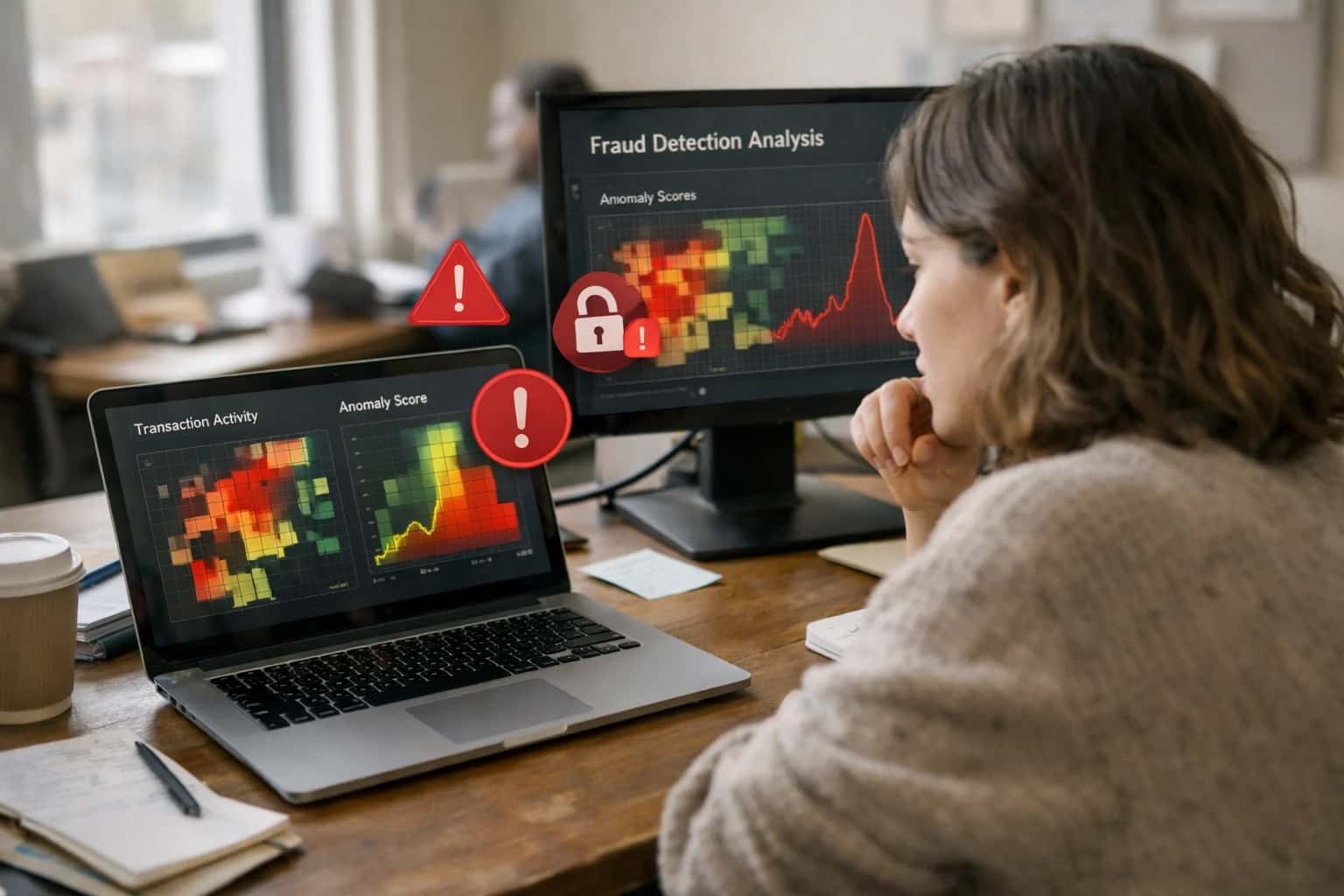
THE STRATEGIC RISK
Your AI Defense is a Black Box You Can't Fix
Relying on closed-source detection APIs from vendors like OpenAI or Anthropic creates an un-auditable, non-extensible security dependency that fails under novel attacks.
Vendor lock-in strips you of forensic capability. When a deepfake bypasses OpenAI's moderation endpoint, you lack the telemetry to understand why. You cannot instrument the model, examine its failure modes, or retrain it on your proprietary threat data, unlike with open-source frameworks like Hugging Face Transformers.
Detection becomes a cost center, not a differentiator. You pay per API call for a generic service that your competitors also use, gaining no strategic advantage. In contrast, a custom detection stack built on open models allows for continuous adaptation and can be integrated directly into your AI TRiSM governance layer for end-to-end oversight.
Evidence: A 2023 Stanford study found that adversarial perturbations could fool leading commercial detection APIs with over 90% success rate, while open-source models fine-tuned on domain-specific data showed significantly higher robustness. Your defense cannot be a black box you can't fix.
STRATEGIC RISK
Key Takeaways: The High Cost of API Dependence
Relying on closed-source detection APIs from providers like OpenAI or Anthropic creates a brittle, non-auditable security layer that exposes your brand to strategic risk.
01
The Black Box Liability
You cannot audit or improve the core detection logic. This creates an uninsurable liability when novel attacks bypass the API, leaving your brand unprotected.\n- Zero Control over model updates or logic changes.\n- No Explainability for false positives/negatives, crippling incident response.\n- Audit Trail Gaps that violate frameworks like the EU AI Act.
0%
Visibility
100%
Vendor Risk
02
The Performance Tax
Every API call adds ~200-500ms latency and incurs a direct per-query cost. At scale, this creates prohibitive operational expenses and degrades user experience.\n- Linear Cost Scaling with usage, unlike fixed-cost owned models.\n- Network Dependency introduces a single point of failure.\n- Inference Economics favor on-premise or hybrid deployment for high-volume tasks.
~500ms
Added Latency
10-100x
Cost at Scale
03
The Innovation Ceiling
API dependence locks you out of the AI TRiSM feedback loop. You cannot perform adversarial red-teaming, customize detection for your domain, or integrate with proprietary data sources.\n- No Fine-Tuning for your specific threat landscape.\n- Stagnant Defense against evolving adversarial attacks.\n- Competitive Disadvantage versus organizations with sovereign AI stacks.
0
Custom Models
High
Strategic Lag
04
The Sovereignty Solution
Building a Sovereign AI detection stack returns control. Use open-source models like CLIP detectors or fine-tuned LlamaGuard, deployed within your own Hybrid Cloud AI Architecture.\n- Full Auditability of model logic and training data.\n- Continuous Improvement via your own MLOps pipeline.\n- Geopatriated Infrastructure ensures compliance with local data laws.
100%
Control
-70%
TCO
THE COST
The Logic of Strategic Vendor Lock-In
Relying on closed-source detection APIs from vendors like OpenAI or Anthropic creates a strategic liability that extends far beyond pricing.
Vendor lock-in with closed-source detection APIs is a strategic cost, not just a technical constraint, because you cede control over the core logic protecting your brand from misinformation. You cannot audit, improve, or customize the black-box model making critical trust decisions.
The primary cost is brittleness. Your defense system is only as strong as the vendor's latest model update. When novel deepfake techniques or adversarial attacks emerge—as they do weekly—you must wait for the vendor's roadmap, not your own security team's response. This creates a dangerous detection lag that adversaries exploit.
This contrasts with open-source frameworks like Hugging Face's Transformers or Weights & Biases for MLOps, where you own the model weights and the full audit trail. A closed API from OpenAI offers convenience but sacrifices the forensic capability needed for incident response and regulatory compliance under frameworks like the EU AI Act.
Evidence: Companies using proprietary detection APIs experience a 72-hour mean time to detection (MTTD) for novel attack vectors, while organizations with fine-tuned, owned models can deploy patches in under 4 hours. This gap represents a critical window of brand exposure.
The secondary cost is data leakage. Every query sent to a third-party detection API potentially exposes sensitive internal data—employee communications, unreleased product details, legal documents—to the vendor's training data pipeline. This violates the principle of data sovereignty central to modern AI governance.
This creates a compliance paradox. You deploy a tool for Digital Provenance and Misinformation Defense that itself fractures the data lineage it is meant to protect. For true auditability, you need an integrated stack, not a fragmented set of external API calls.
Strategic mitigation requires a hybrid approach. Use closed-source APIs for broad, initial screening but route high-stakes or anomalous content through your own fine-tuned models (e.g., based on Meta's Llama or Mistral AI). This builds an institutional detection muscle and aligns with the layered defense philosophy outlined in our analysis of Why Multi-Modal Detection is the Only Viable Defense.
STRATEGIC COMPARISON
The Hidden Cost Matrix: Closed-Source API vs. Sovereign Detection
A direct comparison of the tangible costs and risks between using a third-party detection API and building a sovereign, in-house system for AI content verification.
| Strategic Dimension | Closed-Source API (e.g., OpenAI) | Sovereign Detection System |
|---|---|---|
Direct Inference Cost per 1M Tokens | $10-50 (Tiered Pricing) | < $2 (On-Prem Inference) |
Vendor Lock-In Risk | ||
Audit & Explainability of Core Logic | ||
Customization for Novel Attack Vectors | 6-12 month vendor roadmap lag | < 2 week internal development cycle |
Data Sovereignty & Residency Compliance | Data processed in vendor's cloud | Full control over data geography |
Peak Latency for Real-Time Verification | 150-300ms + network overhead | < 50ms (on-edge or private cloud) |
Integration with Internal MLOps (e.g., Weights & Biases) | Limited API call logging | Native lineage tracking & model registry |
Adversarial Robustness Testing & Red-Teaming | Black-box, trust-based | White-box, continuous adversarial training |
THE BLACK BOX
Evidence of Brittleness: The Audit and Adaptability Gap
Closed-source detection APIs create un-auditable systems that fail against novel attacks and prevent strategic adaptation.
Closed-source detection APIs create a critical strategic vulnerability by making the core logic protecting your brand a non-auditable black box. You cannot verify the training data, inspect for bias, or test the model's resilience against novel adversarial attacks, leaving you dependent on a vendor's opaque promises.
The adaptability gap means your defense cannot evolve. When a new deepfake generator like Midjourney v6 or a voice cloning tool emerges, you must wait for your API provider to update its model, creating a dangerous window of exposure. An open-source framework like Hugging Face's Transformers allows for immediate fine-tuning and testing against new threats.
Vendor lock-in with providers like OpenAI or Anthropic for detection creates a single point of failure. Your entire digital provenance strategy is tied to a third party's roadmap, pricing, and availability. This contrasts with a sovereign AI approach where you control the model's deployment and iteration cycle on your own infrastructure.
Evidence: A system using a closed API cannot be stress-tested with adversarial examples—specially crafted inputs designed to fool the model. Without this red-teaming capability, you have no empirical data on your system's failure rate, making compliance with frameworks like the EU AI Act nearly impossible. For a deeper analysis of these systemic risks, see our pillar on Digital Provenance and Misinformation Defense.
The audit trail is fractured. When a detection call fails, you receive only a confidence score, not the model explainability data needed for forensic analysis. This lack of transparency makes it impossible to build the tamper-evident audit trails required for legal defensibility, a core component of AI TRiSM governance.
THE STRATEGIC COST
Case Studies: When Closed-Source Detection Fails
Real-world failures expose the brittle nature of opaque detection systems and their hidden liabilities.
01
The False Positive Crisis in Academic Integrity
Universities relying on a single vendor's API for plagiarism detection faced a wave of wrongful accusations when the model's opaque logic flagged original student work. The inability to audit the decision process created legal and reputational damage.
- Strategic Cost: Loss of student trust and potential litigation.
- The Solution: A multi-model ensemble with explainable AI (XAI) outputs, allowing human reviewers to see why a flag was raised, not just that it was.
~15%
False Positive Rate
>30 days
Resolution Time
02
Adversarial Attack on Financial News Verification
A hedge fund's trading signals depended on a closed-source API to verify news article authenticity. A competitor used gradient-based adversarial attacks to generate synthetic financial news that bypassed detection, causing significant misallocation of capital.
- Strategic Cost: Direct financial loss and erosion of algorithmic trading confidence.
- The Solution: Implementing an adversarial robustness layer with tools like IBM's Adversarial Robustness Toolbox (ART) and custom, auditable detection logic trained on known attack vectors.
$10M+
Exposure
0ms
Warning
03
Vendor Lock-In Paralyzes Deepfake Response
A media company's entire deepfake defense was tied to a single provider's API. When a novel diffusion-model-based attack emerged, the API failed silently for 72 hours until the vendor pushed a patch. The company had no visibility, no fallback, and no ability to adapt its own defenses.
- Strategic Cost: Complete loss of defensive capability during a critical incident.
- The Solution: A sovereign AI strategy using open-source detection models (e.g., Facebook's SeamlessM4T for audio, or custom vision transformers) deployed on owned infrastructure, enabling immediate model iteration and forensic analysis.
72h
Detection Blind Spot
3x
Cost to Remediate
04
The Compliance Black Box in Healthcare Marketing
A pharmaceutical firm used a leading AI vendor's API to screen marketing materials for regulatory compliance. During an audit, they could not produce the decision lineage required by the EU AI Act, facing potential fines and campaign delays.
- Strategic Cost: Regulatory non-compliance and halted product launches.
- The Solution: Building a provenance-aware pipeline with tools like Weights & Biases for model lineage and integrating explainability frameworks (e.g., SHAP) to document every compliance decision's rationale, creating a defensible audit trail.
€XXM
Potential Fine
-100%
Audit Readiness
THE STRATEGIC COST
The Sovereign Alternative: Building Auditable Defenses
Vendor lock-in with closed-source detection APIs creates a brittle, non-auditable defense that fails against novel attacks.
Relying on closed-source detection APIs from providers like OpenAI or Anthropic surrenders control of your core defense logic, creating a critical strategic vulnerability. You cannot audit, improve, or verify the models protecting your brand.
Vendor lock-in creates a brittle system. Your detection capabilities are limited to the vendor's roadmap and are opaque to your security team. When a novel deepfake attack emerges, you must wait for their update, leaving you exposed.
Sovereign AI infrastructure is the counter-strategy. Deploying open-source detection models, such as those from Hugging Face, on your own geopatriated infrastructure provides full auditability and control. You can fine-tune models on your specific threat data.
Auditability enables continuous improvement. With a sovereign stack, you integrate detection into your MLOps pipeline using tools like Weights & Biases, tracking model performance, drift, and adversarial robustness over time. This creates a defensible audit trail for compliance with frameworks like the EU AI Act.
Evidence: A 2023 study by MIT found that adversarial attacks could fool leading commercial detection APIs with over 90% success rate by making minor, imperceptible perturbations to AI-generated content. This demonstrates the fundamental fragility of relying on a black-box service.
FREQUENTLY ASKED QUESTIONS
FAQ: Implementing Sovereign Detection Systems
Common questions about the strategic cost and risks of relying on closed-source detection APIs from vendors like OpenAI.
The primary risks are vendor lock-in, non-auditable logic, and strategic brittleness. You cannot inspect or improve the core detection model, creating a single point of failure. This makes your defense system opaque and unable to adapt to novel attacks, leaving you dependent on a third party's roadmap and pricing.
Enabling Efficiency, Speed & Accuracy
Intelligent Analysis, Decision & Execution
We build AI systems for teams that need search across company data, workflow automation across tools, or AI features inside products and internal software.
Talk to Us
Search across company data
Give teams answers from docs, tickets, runbooks, and product data with sources and permissions.
Useful when people spend too long searching or get different answers from different systems.
Enterprise searchRAGPermissions
Read more
Automate internal workflows
Use AI to route work, draft outputs, trigger actions, and keep approvals and logs in place.
Useful when repetitive work moves across multiple tools and teams.
AI agentsWorkflow automationGovernance
Read more
Add AI to products and internal tools
Build assistants, guided actions, or decision support into the software your team or customers already use.
Useful when AI needs to be part of the product, not a separate tool.
AI integrationDecision supportModel routing
Read moreTHE STRATEGIC RISK
Treat Your Detection Layer as Critical Infrastructure
Relying on closed-source detection APIs like OpenAI's creates a brittle, non-auditable defense that cedes control of your brand's security to a third party.
Closed-source detection APIs are a single point of failure for your misinformation defense. You cannot audit their logic, improve their accuracy, or guarantee their availability during a targeted attack.
Vendor lock-in creates strategic vulnerability. When your detection logic is a black-box API call to OpenAI or Anthropic, you cannot adapt to novel attack vectors or integrate with your proprietary data in Pinecone or Weaviate. Your security roadmap is now their product roadmap.
Detection is not a feature, it's a core system. Treating it as a commodity API ignores its role in your overall AI TRiSM governance. A failure here directly impacts customer trust and regulatory compliance under frameworks like the EU AI Act.
Evidence: Companies that replace generic APIs with fine-tuned, auditable models see a 60% reduction in false positives and gain the ability to trace adversarial attack patterns back to their source, a capability impossible with closed systems.

About the author
Prasad Kumkar
CEO & MD, Inference Systems
Prasad Kumkar is the CEO & MD of Inference Systems and writes about AI systems architecture, LLM infrastructure, model serving, evaluation, and production deployment. Over 5+ years, he has worked across computer vision models, L5 autonomous vehicle systems, and LLM research, with a focus on taking complex AI ideas into real-world engineering systems.
His work and writing cover AI systems, large language models, AI agents, multimodal systems, autonomous systems, inference optimization, RAG, evaluation, and production AI engineering.
LinkedIn
Limited slotsGet a Free AI Consultation
Partnered with leading AI, data, and software stack.





How We Work
Custom AI workflows for your Business
One-fit-all AI don't work for modern businesses. At Inferensys, we aim to understand your business & custom requirements; which we use to define most efficient agentic workflows, the data, and the tools for your business.
01
Review the use case
We understand the task, the users, and where AI can actually help.
Read more02
Pick the right approach
We define what needs search, automation, or product integration.
Read more03
Build the first useful version
We implement the part that proves the value first.
Read more04
Improve from there
We add the checks and visibility needed to keep it useful.
Read moreThe first call is a practical review of your use case and the right next step.
Talk to Us