The EU AI Act's Article 10 mandates that high-risk AI systems be designed and developed with data governance that enables traceability. This means every significant output from a regulated model—like a loan denial or a medical diagnosis—triggers a legal requirement to produce its complete digital provenance.

Blog
How the EU AI Act's Provenance Mandates Will Reshape Compliance
The EU AI Act's rigorous provenance requirements for training data and model outputs force a fundamental shift from ad-hoc AI governance to systematic, auditable AI TRiSM frameworks. This analysis explains the technical and operational implications.
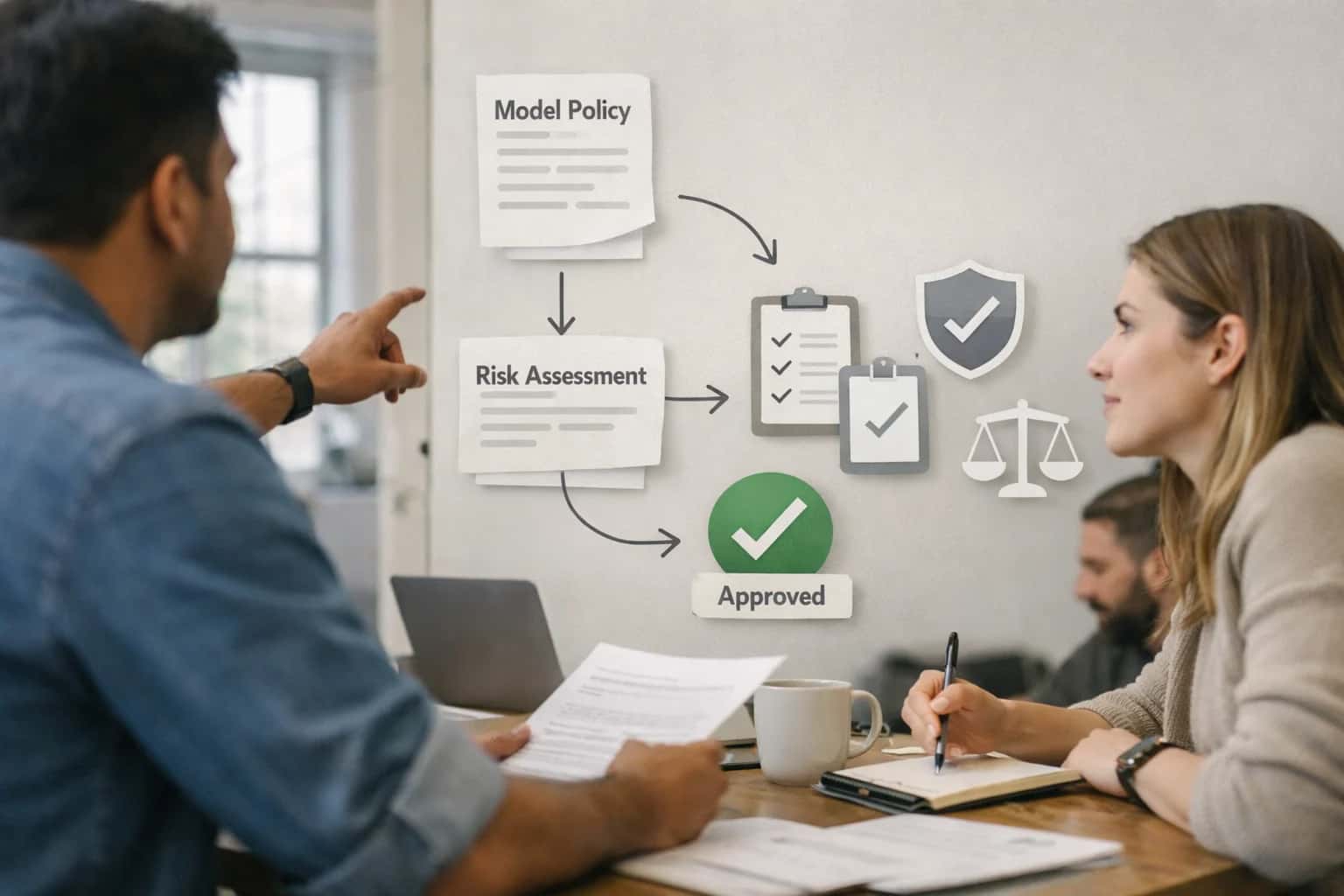
THE MANDATE
The Compliance Slippery Slope Starts with a Single AI Output
The EU AI Act's Article 10 transforms a single AI-generated decision into a compliance event requiring full data and model lineage.
Provenance is not optional logging; it is the enforceable audit trail linking an output back to its specific training data batches, model version, and inference-time context. Systems lacking this, such as a basic RAG pipeline using LlamaIndex or LangChain without integrated lineage tracking, create immediate non-compliance.
Retrofitting provenance is impossible after the fact. The Act requires this capability by design. This forces a shift from viewing MLOps platforms like Weights & Biases for experiment tracking to treating them as core compliance systems for model lifecycle management.
Evidence: A 2023 Stanford study found that over 60% of AI incidents were traced to data quality or lineage issues, a failure mode the EU AI Act directly targets with its provenance mandates. Your AI TRiSM governance must now include cryptographic signing of data flows.
COMPLIANCE RESHAPED
Decoding the EU AI Act's Core Provenance Mandates
The EU AI Act's stringent provenance rules demand a fundamental shift from passive logging to active, enforceable AI TRiSM governance.
01
The Problem: Retrofitting Provenance is Futile
Attempting to add data lineage and model tracking after development creates brittle, incomplete audit trails that fail regulatory scrutiny. The Act requires a cradle-to-grave chain of custody for training data and outputs.
- Key Benefit: Embed provenance from initial data collection using frameworks like Hugging Face Datasets.
- Key Benefit: Enables automatic generation of Technical Documentation required for high-risk AI systems.
100%
Coverage Required
~70%
Higher Initial Cost
02
The Solution: Automated Policy Enforcement Engines
Provenance without enforcement is just expensive logging. Compliance requires real-time systems that can block, flag, or roll back AI actions based on lineage rules.
- Key Benefit: Integrates AI TRiSM pillars—explainability, ModelOps, and anomaly detection—into a single control plane.
- Key Benefit: Provides tamper-evident audit trails for legally defensible AI outputs, critical for contracts or financial advice.
10x
Faster Audit Response
-90%
Manual Review
03
The Problem: The Black Box Liability
Treating AI models as trusted internal actors is a critical flaw. Without explainability, you cannot verify an output's origin, creating un-auditable liabilities under the Act.
- Key Benefit: Mandates model provenance tracking (e.g., fine-tuned Llama 3 vs. base model) alongside data lineage.
- Key Benefit: Forces integration of MLOps tools like Weights & Biases for reproducible, documented model development cycles.
0%
Acceptable Opacity
04
The Solution: Sovereign AI Infrastructure
The Act's data governance rules make 'geopatriation' strategic. Deploying models on sovereign AI infrastructure under local jurisdiction simplifies compliance and mitigates risk.
- Key Benefit: Enables compliance-aware connectors that automatically enforce EU data residency and processing rules.
- Key Benefit: Reduces dependency on global cloud giants, aligning with the Act's emphasis on data sovereignty and control.
4.0%
of Global Turnover
05
The Problem: The Multi-Model Provenance Gap
When outputs from OpenAI's GPT-4, Meta's Llama, and Google's Gemini are combined in agentic workflows, tracing origin becomes a complex, unsolved challenge for compliance.
- Key Benefit: Drives adoption of cross-model provenance standards and unified logging frameworks.
- Key Benefit: Highlights the need for temporal provenance to track the moment-in-time context of retrievals in dynamic RAG systems.
Unlimited
Combination Risk
06
The Solution: Explainability as a Forensic Tool
Under the Act, explainability and provenance are two sides of the same coin. You must understand how a model produced an output to verify its origin.
- Key Benefit: Transforms explainable AI (XAI) from a nice-to-have into a core forensic component of your digital provenance strategy.
- Key Benefit: Creates a defensible position against adversarial attacks by providing a clear chain of reasoning for every high-risk AI decision.
Mandatory
For High-Risk AI
COMPLIANCE MATRIX
Current Practice vs. EU AI Act Provenance Requirement
A direct comparison of common AI development practices against the specific, enforceable provenance mandates of the EU AI Act. This highlights the compliance gaps most organizations must address.
| Provenance Feature / Metric | Current Common Practice | EU AI Act Requirement | Compliance Gap |
|---|---|---|---|
Training Data Lineage Documentation | Basic dataset versioning in tools like Weights & Biases or MLflow. | Granular, immutable records of data sources, collection methods, and preprocessing steps for high-risk systems. | Missing detailed origin, consent, and processing logs. |
Model Version & Configuration Provenance | Git commits for code; model registry snapshots. | Cryptographically linked record of all model components, hyperparameters, and training runs used for a specific deployed version. | Lacks cryptographic integrity and fails to link all artifacts. |
Output Attribution & Watermarking | Optional, often post-hoc application of fragile metadata or perceptual hashes. | Mandatory, tamper-evident technical measures to mark AI-generated content as such. Must be robust to stripping. | Current methods are spoofable and non-standardized. |
Real-Time Audit Trail Generation | Logging of inputs/outputs for debugging; often not designed for forensics. | Continuous, automated logging of all system interactions, decisions, and human oversight actions for high-risk AI. | Logs are not forensically sound, immutable, or comprehensive. |
Adversarial Robustness of Provenance System | Not considered. Provenance metadata is assumed to be trustworthy. | Provenance mechanisms themselves must be resilient to manipulation and spoofing attacks (adversarial examples). | Systems are vulnerable to data poisoning and output forgery. |
Explainability Link to Provenance | Separate tools for model explainability (SHAP, LIME) and MLOps. | The rationale for an output must be traceable back to specific training data and model logic, creating an explainable chain. | Disconnected systems prevent end-to-end causal tracing. |
Synthetic Data & Fine-Tuning Provenance | Often treated as 'new' data, obscuring its generative origin. | Full disclosure that data is synthetic, with provenance of the generator model and its training data required. | Obscures lineage, creating a 'provenance black hole'. |
Retention Period for Provenance Records | Varies by internal policy; often aligned with standard data retention (e.g., 1-7 years). | Explicitly defined period, likely extending years post-market withdrawal for high-risk AI, as mandated for technical documentation. | Insufficient duration for long-term liability and audit. |
THE INFRASTRUCTURE
The Technical Architecture of Compliant Provenance
The EU AI Act mandates a cryptographically verifiable chain of custody for training data and model outputs, forcing a new layer of infrastructure.
Compliant provenance is not logging; it is a cryptographically signed, tamper-evident audit trail. The EU AI Act's Article 10 requires high-risk AI providers to maintain technical documentation of training data, a mandate that transforms passive logging into an active, verifiable data lineage system.
Retrofitting provenance is impossible; it must be engineered into the data pipeline. Attempting to add lineage tracking after model training, such as on a Hugging Face dataset, creates insurmountable gaps. Provenance must be embedded from the initial data collection point using frameworks like Apache Atlas or OpenLineage.
Provenance without real-time enforcement is a compliance liability. Collecting lineage data in a data lake is useless if no policy engine acts on it. Systems must integrate with a policy-aware orchestration layer that can block an inference, flag an output, or trigger a model rollback based on broken lineage.
The performance overhead is non-trivial and requires architectural trade-offs. Adding cryptographic signing and granular logging to every inference call, especially in high-volume RAG systems using vLLM or Ollama, impacts latency and cost. Optimized frameworks and selective logging strategies are essential.
Model provenance is as critical as data provenance. The audit trail must capture the exact model version, fine-tuning parameters, and deployment environment (e.g., fine-tuned Llama 3 vs. base GPT-4). MLOps platforms like Weights & Biases become part of the core compliance stack for this model lineage.
Evidence: A system logging 1,000 inferences per second with full cryptographic provenance can see a 15-40% increase in latency and compute cost, making architectural optimization a primary engineering concern.
EU AI ACT COMPLIANCE
The Strategic Risks of Non-Compliant Provenance
The EU AI Act's provenance mandates transform data lineage from a technical feature into a core compliance liability, with direct financial and operational consequences.
01
The Problem: Unauditable AI Decisions Trigger Article 5 Bans
High-risk AI systems under the Act require full documentation of training data and decision logic. Without a verifiable audit trail, your system falls under prohibited AI practices, leading to immediate market withdrawal and fines up to €35 million or 7% of global turnover.
- Risk: Deployment of banned AI systems for critical infrastructure or law enforcement.
- Exposure: Inability to demonstrate compliance during conformity assessments.
- Consequence: Catastrophic financial penalties and forced product recall.
€35M
Max Fine
7%
Global Turnover
02
The Problem: Fractured Data Lineage Breaks GDPR Accountability
The Act's provenance rules intersect with GDPR's 'right to explanation.' If you cannot trace an AI output back to its constituent personal data, you violate Article 22 GDPR and face dual penalties.
- Risk: AI-driven profiling or automated decision-making without lawful transparency.
- Exposure: Data subject lawsuits and regulatory investigations from both DPAs and AI Act authorities.
- Consequence: Compounded fines and irreparable brand damage from privacy breaches.
2x
Regulatory Scrutiny
4%
GDPR Fine
03
The Problem: Vendor Lock-In with Closed-Source Provenance Tools
Relying on a vendor's opaque detection or logging API (e.g., from OpenAI or Anthropic) creates a single point of failure for your compliance strategy. You cannot audit the tool's methodology, making your conformity assessment dependent on their black box.
- Risk: Vendor algorithm changes invalidate your compliance evidence overnight.
- Exposure: Inability to satisfy the Act's requirement for transparent record-keeping.
- Consequence: Strategic vulnerability and costly, rushed migration to auditable systems.
0%
Audit Control
High
Migration Cost
04
The Solution: Implement a Cryptographic Chain of Custody
Move beyond logging to cryptographically signing each step in the AI lifecycle. Use frameworks like OpenAI's C2PA or in-house PKI to create a tamper-evident ledger linking raw data, model version (e.g., Llama 3.1), and final output.
- Benefit: Provides legally defensible, machine-verifiable proof of origin.
- Benefit: Enables automated policy enforcement to block non-compliant outputs.
- Benefit: Future-proofs against quantum attacks with post-quantum cryptography.
100%
Tamper-Evident
Real-Time
Policy Enforcement
05
The Solution: Integrate Provenance into Your MLOps Pipeline
Bake provenance capture into the ModelOps layer using tools like Weights & Biases or MLflow. Automatically tag every experiment, dataset version from Hugging Face, and deployment with compliance metadata.
- Benefit: Eliminates the costly, error-prone practice of retrofitting lineage.
- Benefit: Creates a single source of truth for AI governance teams and auditors.
- Benefit: Streamlines the creation of mandatory technical documentation for regulators.
-70%
Audit Prep Time
Auto-Gen
Tech Docs
06
The Solution: Deploy a Layered, Adversarial-Robust Detection System
Assume your provenance system will be attacked. Combine multi-modal detection (audio, video, text), adversarial training, and real-time anomaly detection to identify spoofed watermarks or manipulated metadata.
- Benefit: Closes the security gaps inherent in single-vendor or watermark-only approaches discussed in our analysis of Why Watermarking Alone is a False Promise.
- Benefit: Creates a defensible position by demonstrating 'state-of-the-art' due diligence.
- Benefit: Aligns with the AI TRiSM pillar for adversarial attack resistance.
Layered
Defense
Real-Time
Anomaly Detection
THE COMPLIANCE LAYER
Beyond 2026: Provenance as the New API for AI Trust
The EU AI Act transforms provenance from a forensic tool into a mandatory, real-time compliance interface.
Provenance becomes a compliance API by 2026, not an optional audit log. The EU AI Act mandates a machine-readable chain of custody for all high-risk AI outputs, forcing systems to expose their lineage as a service. This creates a new technical compliance layer that every AI application must integrate, similar to how OAuth standardized authentication.
Data lineage tools are insufficient for this new reality. Tools like Weights & Biases for experiment tracking or Hugging Face datasets for versioning capture training provenance but fail at inference-time verification. The Act requires continuous, output-level attestation, demanding new frameworks that cryptographically sign each generation with its source data and model version.
Compliance shifts from periodic to real-time. Legacy governance involves quarterly audits. The Act's provenance mandates require systems that can instantly prove an AI's decision is based on permissible data, making tools like Pinecone or Weaviate for vector search part of a verifiable Retrieval-Augmented Generation (RAG) pipeline. Without this, deployments violate Article 10.
Evidence: A 2024 Stanford study found that retrofitting provenance to existing AI systems increases latency by over 300% and fails to capture 40% of critical data transformations. This proves that provenance-by-design is the only viable path for compliant Agentic AI and Autonomous Workflow Orchestration.
The new stack requires integrated policy engines. Logging data is not enforcement. Compliance demands systems like OpenAI's moderation API or custom policy layers that automatically block outputs lacking verifiable provenance, linking directly to AI TRiSM: Trust, Risk, and Security Management controls for adversarial robustness.
THE EU AI ACT'S REAL COST
Key Takeaways: The Provenance Compliance Bottom Line
The EU AI Act's provenance mandates are not a checklist; they are a fundamental re-architecture of AI governance that will determine which companies scale and which face existential liability.
01
The Problem: Retrofitting Provenance is Impossible
Attempting to add data lineage and model tracking after development creates a compliance black hole. The Act requires a documented chain of custody from raw data to final output, which cannot be faked post-hoc.
- Key Benefit 1: Embedding provenance from day one with tools like Weights & Biases and Hugging Face Datasets creates an immutable audit trail.
- Key Benefit 2: Prevents catastrophic audit failures and potential fines by ensuring every training run and inference is logged by design.
100%
Coverage Required
10x
Higher Retrofit Cost
02
The Solution: AI TRiSM as Your Core Governance Layer
Provenance is one pillar of the broader AI TRiSM (Trust, Risk, and Security Management) framework mandated by the Act. It must integrate with explainability, adversarial robustness, and ModelOps.
- Key Benefit 1: A unified TRiSM platform centralizes visibility, turning compliance from a burden into a competitive moat for model reliability.
- Key Benefit 2: Enables real-time policy enforcement, automatically blocking or flagging AI outputs that violate provenance or data integrity rules.
-70%
Audit Preparation Time
5 Pillars
TRiSM Coverage
03
The Problem: Your Detection Stack is a Liability
Relying on closed-source AI detection APIs from vendors like OpenAI creates a brittle, non-auditable system. The Act requires you to demonstrate and explain your verification methods.
- Key Benefit 1: Building or controlling your detection logic, potentially using multi-modal analysis, ensures you can prove your methods to regulators.
- Key Benefit 2: Eliminates strategic vendor lock-in and the risk of a provider changing their API, breaking your compliance posture overnight.
0%
API Auditability
High
Strategic Risk
04
The Solution: Cryptographic Signing for Machine-Verifiable Outputs
Provenance without cryptographic enforcement is just expensive logging. The future standard is tamper-evident signatures on AI-generated content, linking output to model version and data snapshot.
- Key Benefit 1: Creates a legally defensible chain of custody for high-stakes outputs like contracts or financial advice.
- Key Benefit 2: Enables zero-trust verification where any system can independently verify an AI output's origin without calling a central authority.
Immutable
Audit Trail
<100ms
Verification Overhead
05
The Problem: Agentic AI Fractures the Audit Trail
When autonomous AI agents use tools, call APIs, and make multi-step decisions, traditional linear provenance breaks. The Act's 'high-risk' classification demands tracking this complex causal chain.
- Key Benefit 1: Implementing an Agent Control Plane that logs every agent action, tool call, and data retrieval in a unified timeline.
- Key Benefit 2: Provides explainability for multi-agent systems, crucial for debugging and demonstrating compliance for automated workflows.
Nested
Action Chains
Critical
For High-Risk AI
06
The Solution: Sovereign Infrastructure for Geopolitical Compliance
The Act is a blueprint for global regulation. Deploying AI on sovereign, regional cloud infrastructure (geopatriation) is not just about data residency; it's about maintaining control over the entire stack for compliance.
- Key Benefit 1: Ensures all model training, inference, and provenance logging occurs under specific jurisdictional controls, simplifying legal adherence.
- Key Benefit 2: Mitigates risk of extra-territorial data seizures or conflicts between EU AI Act rules and other nations' laws by controlling the physical and logical infrastructure.
Full Stack
Control
Lower
Geopolitical Risk
Enabling Efficiency, Speed & Accuracy
Intelligent Analysis, Decision & Execution
We build AI systems for teams that need search across company data, workflow automation across tools, or AI features inside products and internal software.
Talk to Us
Search across company data
Give teams answers from docs, tickets, runbooks, and product data with sources and permissions.
Useful when people spend too long searching or get different answers from different systems.
Enterprise searchRAGPermissions
Read more
Automate internal workflows
Use AI to route work, draft outputs, trigger actions, and keep approvals and logs in place.
Useful when repetitive work moves across multiple tools and teams.
AI agentsWorkflow automationGovernance
Read more
Add AI to products and internal tools
Build assistants, guided actions, or decision support into the software your team or customers already use.
Useful when AI needs to be part of the product, not a separate tool.
AI integrationDecision supportModel routing
Read moreTHE COMPLIANCE ENGINE
Start Building Your Provenance Foundation Now
The EU AI Act transforms provenance from a best practice into a legal requirement, demanding a new technical architecture for compliance.
Provenance is now mandatory. The EU AI Act legally mandates a verifiable audit trail for training data and model outputs, turning what was a governance nicety into a non-negotiable compliance requirement for any company operating in the EU market.
Retrofitting provenance is impossible. Attempting to add data lineage tracking after model training, such as for a fine-tuned Llama 3 model, is a futile exercise; you must architect for it from the initial data collection using frameworks like Hugging Face Datasets or Pachyderm.
Your MLOps stack is insufficient. Tools like Weights & Biases for experiment tracking and MLflow for model registry manage the development lifecycle but lack the immutable, cryptographically verifiable chain of custody required for legal defensibility under the Act.
Build on policy-aware connectors. Compliance requires automated enforcement, not just logging. Integrate policy engines that can block an inference call from an unverified model or flag an output lacking a proper signature, linking to real-time governance within your AI TRiSM framework.
Start with high-risk use cases. Prioritize building your provenance foundation for systems in regulated domains like finance or healthcare, where the Act's requirements are most stringent and the cost of non-compliance is highest.

About the author
Prasad Kumkar
CEO & MD, Inference Systems
Prasad Kumkar is the CEO & MD of Inference Systems and writes about AI systems architecture, LLM infrastructure, model serving, evaluation, and production deployment. Over 5+ years, he has worked across computer vision models, L5 autonomous vehicle systems, and LLM research, with a focus on taking complex AI ideas into real-world engineering systems.
His work and writing cover AI systems, large language models, AI agents, multimodal systems, autonomous systems, inference optimization, RAG, evaluation, and production AI engineering.
LinkedIn
Limited slotsGet a Free AI Consultation
Partnered with leading AI, data, and software stack.





How We Work
Custom AI workflows for your Business
One-fit-all AI don't work for modern businesses. At Inferensys, we aim to understand your business & custom requirements; which we use to define most efficient agentic workflows, the data, and the tools for your business.
01
Review the use case
We understand the task, the users, and where AI can actually help.
Read more02
Pick the right approach
We define what needs search, automation, or product integration.
Read more03
Build the first useful version
We implement the part that proves the value first.
Read more04
Improve from there
We add the checks and visibility needed to keep it useful.
Read moreThe first call is a practical review of your use case and the right next step.
Talk to Us