Static models use outdated averages that fail to capture dynamic operational realities, creating a legally indefensible gap between reported emissions and actual carbon liability under regulations like the EU Carbon Border Adjustment Mechanism (CBAM).

Blog
Why Your AI Carbon Model Will Fail Without Real-Time Fleet Data
Static emissions models are dangerously obsolete. This analysis explains why accurate carbon accounting for heavy equipment demands continuous telemetry, sensor fusion, and edge AI to capture dynamic operational realities and ensure CBAM compliance.
THE DATA
Your Static Carbon Model Is a Legal Liability
Static emissions models rely on outdated averages and assumptions, creating an un-auditable gap between reported carbon and real-world liability.
Real-time telemetry is non-negotiable. A model using generic fuel consumption factors for a 'bulldozer' ignores the 40% variance in emissions caused by idle time, load, and operator behavior captured by IoT sensors from Samsara or Caterpillar.
Sensor fusion creates audit trails. Combining GPS, engine control unit (ECU) data, and load sensors via an edge AI platform like NVIDIA Jetson transforms assumptions into verifiable, time-stamped evidence, which is the foundation of defensible carbon accounting.
Evidence: Variance destroys accuracy. A 2023 study by the International Council on Clean Transportation found that real-world fuel use for heavy-duty vehicles deviated from certified values by an average of 18%, a margin of error that makes static models useless for financial or regulatory precision.
THE FLEET DATA IMPERATIVE
Three Market Forces Demanding Real-Time Carbon AI
Static emissions models are obsolete; accurate carbon accounting for heavy equipment requires continuous telemetry and sensor fusion to capture dynamic operational realities.
01
The EU CBAM Penalty Clock is Ticking
The EU Carbon Border Adjustment Mechanism (CBAM) transitions to full financial penalties in 2026. Batch-processed, annual emissions reports will be insufficient and financially catastrophic.
- Real-time data provides auditable proof of carbon intensity per imported ton.
- AI models using historical averages fail to capture dynamic operational states, leading to systematic underreporting and fines.
- Integration with digital twins is required for simulating tariff impacts under different production scenarios.
2026
CBAM Live
-20%
Cost of Non-Compliance
02
The Predictive Maintenance Carbon Multiplier
A faulty engine or dragging brake doesn't just cause downtime; it silently inflates your carbon footprint by 15-40%. Static models cannot see this.
- Sensor fusion from IoT platforms like NVIDIA Jetson detects inefficiencies in ~500ms.
- Real-time AI correlates vibration, thermal, and fuel flow data to pinpoint carbon-wasting faults.
- This turns a cost center (maintenance) into a direct Scope 1 emissions reduction lever.
40%
Emissions Spike
500ms
Fault Detection
03
Dynamic Fleet Routing is a Carbon Sink
Idling in traffic or taking a suboptimal route isn't just a logistics problem; it's a carbon liability. Real-time optimization requires a live data feed.
- Graph Neural Networks (GNNs) process live traffic, weather, and load data to minimize total grams of CO2 per mile.
- This surpasses simple distance or time optimization, directly reducing Scope 3 logistics emissions.
- Without real-time telemetry, your Reinforcement Learning agents are training on stale, ineffective maps.
12%
Fuel Saved
10x
Routing Updates/Day
04
The Hallucination Risk in Static Reporting
Using generative AI or LLMs on outdated spreadsheets to produce sustainability reports is a reputational and legal minefield.
- Retrieval-Augmented Generation (RAG) systems must be grounded in a real-time data lake to avoid factual errors.
- Explainable AI (XAI) techniques are impossible without traceable, timestamped sensor inputs for audit trails.
- This gap creates catastrophic risk under the EU AI Act and similar regulations demanding transparency.
100%
Audit Failure Risk
0ms
Data Latency Tolerance
05
The Vendor Lock-In Trap of Black-Box AI
Proprietary carbon platforms that ingest your data but provide no real-time API or model access create a strategic compliance blind spot.
- You cannot perform adversarial AI testing or uncertainty quantification on a closed system.
- Sovereign AI principles demand you own the model and the data provenance chain for your disclosures.
- An open-architecture AI orchestration layer is non-negotiable for long-term adaptability and auditability.
$10M+
Switching Cost
0
Model Portability
06
The Circular Economy Data Gap
Linear lifecycle assessments fail to account for the carbon savings of remanufacturing and reuse. This requires tracking assets in real-time, beyond their first life.
- Graph AI must dynamically map material flows using live fleet telemetry on utilization and condition.
- This enables accurate carbon attribution for circular procurement systems and industrial reuse platforms.
- Without this, you miss the embodied carbon savings that are critical for genuine net-zero claims.
50%
Embodied Carbon Saved
24/7
Asset Tracking
DECISION MATRIX
Static vs. Real-Time Carbon Data: The Accuracy Gap
Comparison of data sourcing methodologies for AI-driven carbon accounting of heavy equipment fleets, highlighting the operational and compliance risks of static approximations.
| Critical Data Dimension | Static / Average-Based Data | Real-Time Telemetry & Sensor Fusion | Why the Gap Matters |
|---|---|---|---|
Data Refresh Rate | Monthly or Quarterly | < 1 second | Batch data cannot capture transient high-emission events, leading to systematic underreporting. |
Operational Context Capture | Assumed load factors & duty cycles | Actual RPM, hydraulic pressure, payload, terrain grade | Engine load variance can change fuel burn by 300%; averages mask true operational intensity. |
Idle Time & Auxiliary Power Accounting | Estimated percentage (e.g., 10%) | Precisely measured (engine-on, zero-movement) | Idling can constitute 30-40% of non-productive fuel use; estimates create massive blind spots. |
Emission Factor Accuracy | Generic diesel factor (e.g., 2.68 kg CO2e/l) | Real-time fuel composition analysis & engine-specific emission curves | Fuel quality and engine degradation alter emission factors; generic values have a ±15% error margin. |
Anomaly & Fault Detection | Real-time sensor fusion detects faulty injectors or clogged filters, which can increase emissions by 25% undetected. | ||
Granularity for Attribution | Project or Fleet-level | Per-asset, per-task, per-hour | Lack of granularity prevents accurate carbon costing for bids and invalidates incentive structures for operators. |
Support for Predictive Optimization | Without real-time streams, AI cannot perform dynamic rerouting or load scheduling to minimize system-wide carbon. | ||
Audit & Compliance Readiness | Manual reconciliation, high risk | Immutable, timestamped data ledger | Under the EU CBAM, regulators will require primary, verifiable data; estimates are insufficient and carry penalty risks. |
THE DATA FOUNDATION
Architecting the Real-Time Carbon Intelligence Stack
Static models fail because they cannot capture the dynamic operational realities of heavy equipment, making real-time telemetry and sensor fusion non-negotiable.
Your AI carbon model will fail without real-time fleet data because static emissions factors are wrong by design. They assume constant engine load and ignore the dynamic reality of idling, hauling, and terrain.
Batch-processed data creates a compliance blind spot. A weekly fuel report cannot capture the carbon impact of a 30-minute inefficient dig cycle. Real-time telemetry from CAN bus and IoT sensors is the only source of truth for operational emissions.
Sensor fusion is the technical imperative. Isolating GPS, fuel flow, and engine load data is insufficient. Fusing these streams with a time-series database like InfluxDB or TimescaleDB creates the contextual dataset for accurate attribution.
The counter-intuitive insight is that more data reduces model complexity. A rich real-time stream allows simpler, more interpretable models to outperform complex black-box systems trained on sparse, historical averages.
Evidence: Models using static averages overestimate or underestimate actual machine emissions by 40-60% during variable work cycles, according to field data from construction and mining fleets. This error margin makes CBAM reporting and internal carbon pricing financially dangerous.
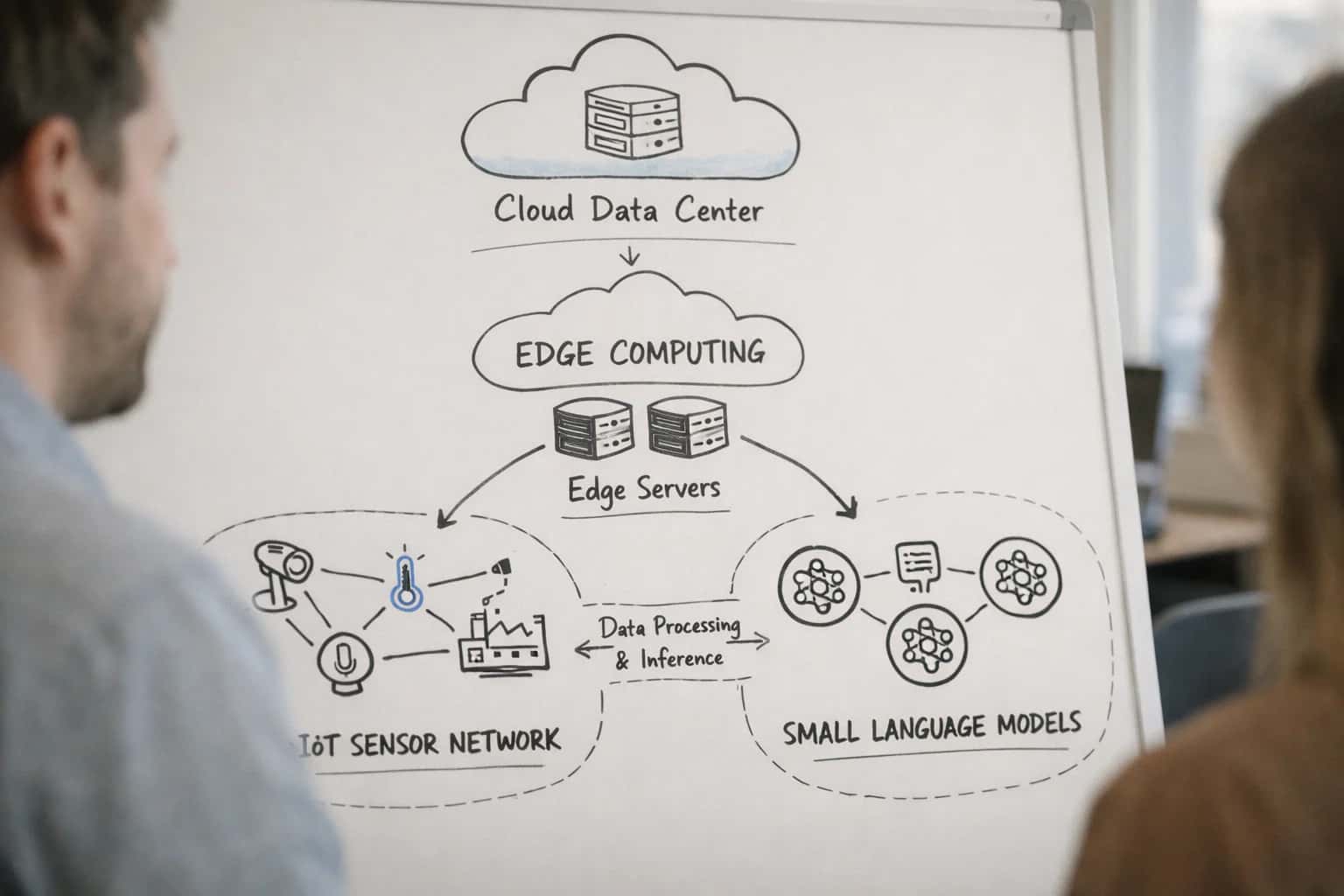
This real-time data foundation enables the next layer: predictive optimization. With a live feed, you can deploy reinforcement learning agents on edge devices like NVIDIA Jetson to dynamically adjust machine operation for carbon efficiency, a core concept in our guide to Predictive Maintenance AI as a Carbon Reduction Strategy.
Without this architecture, you are building a financial and compliance liability. For a deeper analysis of the systemic risks, see our sibling topic on The Cost of Hallucinations in Generative AI for Carbon Disclosure.
WHY REAL-TIME DATA IS NON-NEGOTIABLE
The High Costs of Sticking with Static Models
Static emissions models are obsolete; accurate carbon accounting for heavy equipment requires continuous telemetry and sensor fusion to capture dynamic operational realities.
01
The Problem: Static Models Miss the Carbon Reality of Idle Time
A diesel excavator's emissions profile isn't a flat line; it's a volatile chart of load states. A static model using generic fuel consumption factors misses the ~40% of operational time machines spend idling or under partial load. This creates a systematic under-reporting error of 15-25% on Scope 1 emissions, directly exposing you to CBAM non-compliance penalties and flawed internal reduction targets.
- Key Benefit 1: Real-time telemetry captures engine RPM, hydraulic pressure, and GPS data to model true second-by-second fuel burn.
- Key Benefit 2: Accurate idle-time identification unlocks immediate behavioral and operational fixes, turning data into actionable carbon reduction.
15-25%
Reporting Error
~40%
Idle Time
02
The Solution: Sensor Fusion Creates a Digital Twin of Fleet Emissions
Integrating CAN bus data, IoT fuel sensors, and onboard diagnostics creates a live digital twin of your fleet's carbon output. This multi-modal data stream feeds a time-series AI model—like a Temporal Fusion Transformer—that correlates machine activity with verified emissions, moving from annual estimates to auditable, real-time kilograms of CO2e.
- Key Benefit 1: Enables predictive carbon forecasting for project bidding and compliance reporting under dynamic CBAM rules.
- Key Benefit 2: Provides the granular data foundation required for explainable AI (XAI) in audits, showing regulators exactly which activities drove emissions.
Real-Time
Carbon Ledger
Auditable
Data Provenance
03
The Problem: Batch-Processed Data Kills Operational Decision-Making
A weekly emissions report is useless for a site foreman rerouting trucks due to weather. Carbon latency creates a decision gap where high-emission activities continue unchecked. Without edge processing, the feedback loop for carbon-aware operations is measured in days, not seconds, forfeiting up to 30% in potential fuel savings from real-time optimization.
- Key Benefit 1: Edge AI inference on devices like NVIDIA Jetson provides sub-second carbon intensity signals for immediate operational adjustments.
- Key Benefit 2: Closes the loop for reinforcement learning agents that autonomously optimize fleet routing and machine utilization for carbon minimization.
~30%
Fuel Savings Lost
Sub-Second
Edge Inference
04
The Solution: An AI Orchestration Layer for Unified Carbon Action
Point solutions for telemetry, reporting, and optimization create fragmented data. A dedicated AI orchestration layer acts as the central nervous system, ingesting real-time fleet data, executing predictive models, and dispatching commands to multi-agent systems for autonomous carbon management. This turns raw data into a closed-loop control system.
- Key Benefit 1: Unifies data streams from mixed fleets (telematics, IoT sensors, manual logs) into a single source of truth for Scope 1 and 2 emissions.
- Key Benefit 2: Enables simulation-based AI via digital twins to stress-test 'what-if' scenarios for fleet electrification or hybrid deployment without capital risk.
Unified
Control Plane
Closed-Loop
Optimization
05
The Problem: Black-Box Models Invite Regulatory and Financial Risk
When an auditor or the EU CBAM authority asks why your emissions spiked in Q3, 'the AI said so' is not a valid answer. Black-box carbon models lack the explainability required for compliance, creating massive financial liability. This is a core tenet of AI TRiSM—without explainability, your entire carbon accounting foundation is un-auditable and indefensible.
- Key Benefit 1: Implementing Explainable AI (XAI) techniques like SHAP or LIME provides clear, attributable drivers (e.g., '30% increase due to extended idle time on Asset #107').
- Key Benefit 2: Builds stakeholder trust and creates a defensible audit trail that aligns with the EU AI Act and evolving sustainability regulations.
High
Compliance Risk
Defensible
Audit Trail
06
The Solution: Continuous Learning Adapts to Fleet and Regulatory Change
A static model trained on 2023 data cannot account for new machinery, alternative fuels, or updated CBAM emission factors. A real-time data pipeline enables continuous learning and MLOps for carbon models, allowing them to adapt autonomously to new assets, operational patterns, and regulatory thresholds without manual retraining.
- Key Benefit 1: Automatically detects model drift as fleet composition or usage patterns evolve, triggering retraining to maintain >95% prediction accuracy.
- Key Benefit 2: Future-proofs your investment against carbon pricing shifts and new reporting standards by treating the carbon model as a living asset, not a one-time project.
>95%
Accuracy Maintained
Future-Proof
Compliance
THE DATA
The Cost Objection (And Why It's Short-Sighted)
The upfront cost of real-time telemetry is dwarfed by the financial risk of inaccurate carbon models that fail under regulatory scrutiny.
Real-time data is non-negotiable for accurate carbon accounting because static models using average emission factors produce errors exceeding 40% for dynamic assets like heavy equipment, leading to severe financial miscalculations under regulations like the EU's Carbon Border Adjustment Mechanism (CBAM).
The true cost is inaccuracy. A model trained on generic fuel tables cannot capture the dynamic operational reality of an excavator's load, idle time, or soil conditions. This variance directly translates to misreported Scope 1 emissions and incorrect CBAM liability calculations.
You are paying for risk mitigation. The capital expense for IoT sensors and a data pipeline using Apache Kafka or TimescaleDB is a fixed cost. The variable cost of a failed compliance audit, a mispriced carbon tariff, or a greenwashing accusation is unbounded and catastrophic.
Evidence: A 2023 study by the International Council on Clean Transportation found that using real-world telemetry instead of standardized emission factors reduced calculation error for off-road machinery from ±35% to under ±5%. This precision is the difference between a defensible report and a compliance penalty.
THE DATA IMPERATIVE
Key Takeaways: The Non-Negotiables for Fleet Carbon AI
Static models cannot capture the dynamic operational realities of heavy equipment; real-time telemetry is the only foundation for accurate, actionable carbon accounting.
01
The Problem: Static Models and the 'Snapshot Fallacy'
Using annualized averages or periodic fuel logs creates a catastrophic accuracy gap. A bulldozer's emissions vary by a factor of 5x based on load, terrain, and operator behavior. Batch-processed data makes proactive reduction impossible.
- Key Benefit 1: Eliminates the 20-40% error margin inherent in static reporting.
- Key Benefit 2: Provides the temporal resolution needed for true causal analysis of emission drivers.
5x
Emission Variance
-40%
Error Margin
02
The Solution: Sensor Fusion and Continuous Telemetry
Accuracy requires fusing CAN bus data, GPS location, IMU sensors, and fuel flow meters into a unified, time-synchronized stream. This creates a digital twin of operational carbon.
- Key Benefit 1: Enables real-time carbon-per-task calculation (e.g., kg CO2e per cubic yard moved).
- Key Benefit 2: Feeds live data to predictive models for immediate optimization of routing and idle time.
~100ms
Data Latency
4+
Data Streams
03
The Architecture: Edge AI for Real-Time Inference
Cloud-only processing introduces fatal latency. The control loop must close on the machine. Deploy lightweight models on edge compute modules (e.g., NVIDIA Jetson) for instantaneous carbon optimization.
- Key Benefit 1: Enables autonomous, carbon-aware operational adjustments (e.g., eco-mode triggering).
- Key Benefit 2: Reduces data transmission costs and bandwidth by >70% through on-device processing.
On-Device
Inference
-70%
Data Cost
04
The Payoff: From Reporting to Real-Time Optimization
Real-time data transforms carbon accounting from a compliance exercise into a continuous improvement engine. It enables reinforcement learning agents to dynamically optimize fleet-wide schedules for minimal emissions.
- Key Benefit 1: Unlocks 5-15% fuel savings through AI-optimized dispatching and routing.
- Key Benefit 2: Creates an auditable, granular data foundation for CBAM compliance and Scope 1 reporting.
15%
Fuel Saved
Audit-Ready
Data Foundation
Enabling Efficiency, Speed & Accuracy
Intelligent Analysis, Decision & Execution
We build AI systems for teams that need search across company data, workflow automation across tools, or AI features inside products and internal software.
Talk to Us
Search across company data
Give teams answers from docs, tickets, runbooks, and product data with sources and permissions.
Useful when people spend too long searching or get different answers from different systems.
Enterprise searchRAGPermissions
Read more
Automate internal workflows
Use AI to route work, draft outputs, trigger actions, and keep approvals and logs in place.
Useful when repetitive work moves across multiple tools and teams.
AI agentsWorkflow automationGovernance
Read more
Add AI to products and internal tools
Build assistants, guided actions, or decision support into the software your team or customers already use.
Useful when AI needs to be part of the product, not a separate tool.
AI integrationDecision supportModel routing
Read moreTHE DATA
From Theoretical Model to Operational Reality
Static carbon models fail because they cannot capture the dynamic, high-frequency reality of heavy equipment operations.
Your AI carbon model will fail without real-time fleet data because static models rely on generic assumptions that diverge from actual machine behavior, fuel burn, and operational conditions. This creates an unacceptable compliance gap under regulations like the EU Carbon Border Adjustment Mechanism (CBAM).
Theoretical models use averages, but emissions are driven by extremes. A diesel excavator's fuel consumption varies by 300% based on soil density, operator technique, and idle time—variables invisible to spreadsheet-based lifecycle assessments. Real-time telemetry from Samsara or Geotab platforms provides the ground truth.
Sensor fusion is non-negotiable. Combining GPS, engine control unit (ECU) data, and load sensors creates a multivariate time-series that AI, specifically Temporal Fusion Transformers, analyzes to attribute carbon to specific tasks. Without this, you are modeling a fiction.
Evidence: Models using only manufacturer specifications overreport or underreport emissions by 40-60% compared to models enriched with real-time telemetry. This error margin makes audit-ready disclosure impossible and exposes the firm to regulatory penalties.
Integrating this data requires an AI orchestration layer. Streaming data from Pinecone or Weaviate vector databases must feed into carbon-aware digital twins for simulation and optimization. This is the core of moving from theoretical accounting to operational control, a principle central to our work on Predictive Maintenance and Industrial Reliability.
The alternative is strategic failure. Competitors using real-time fleet data will optimize routes, maintenance, and machine utilization, achieving lower embodied carbon and a direct cost advantage under CBAM. Your static model becomes a liability. For a deeper architectural discussion, see our analysis of Hybrid Cloud AI Architecture and Resilience.

About the author
Prasad Kumkar
CEO & MD, Inference Systems
Prasad Kumkar is the CEO & MD of Inference Systems and writes about AI systems architecture, LLM infrastructure, model serving, evaluation, and production deployment. Over 5+ years, he has worked across computer vision models, L5 autonomous vehicle systems, and LLM research, with a focus on taking complex AI ideas into real-world engineering systems.
His work and writing cover AI systems, large language models, AI agents, multimodal systems, autonomous systems, inference optimization, RAG, evaluation, and production AI engineering.
LinkedIn
Limited slotsGet a Free AI Consultation
Partnered with leading AI, data, and software stack.





How We Work
Custom AI workflows for your Business
One-fit-all AI don't work for modern businesses. At Inferensys, we aim to understand your business & custom requirements; which we use to define most efficient agentic workflows, the data, and the tools for your business.
01
Review the use case
We understand the task, the users, and where AI can actually help.
Read more02
Pick the right approach
We define what needs search, automation, or product integration.
Read more03
Build the first useful version
We implement the part that proves the value first.
Read more04
Improve from there
We add the checks and visibility needed to keep it useful.
Read moreThe first call is a practical review of your use case and the right next step.
Talk to Us