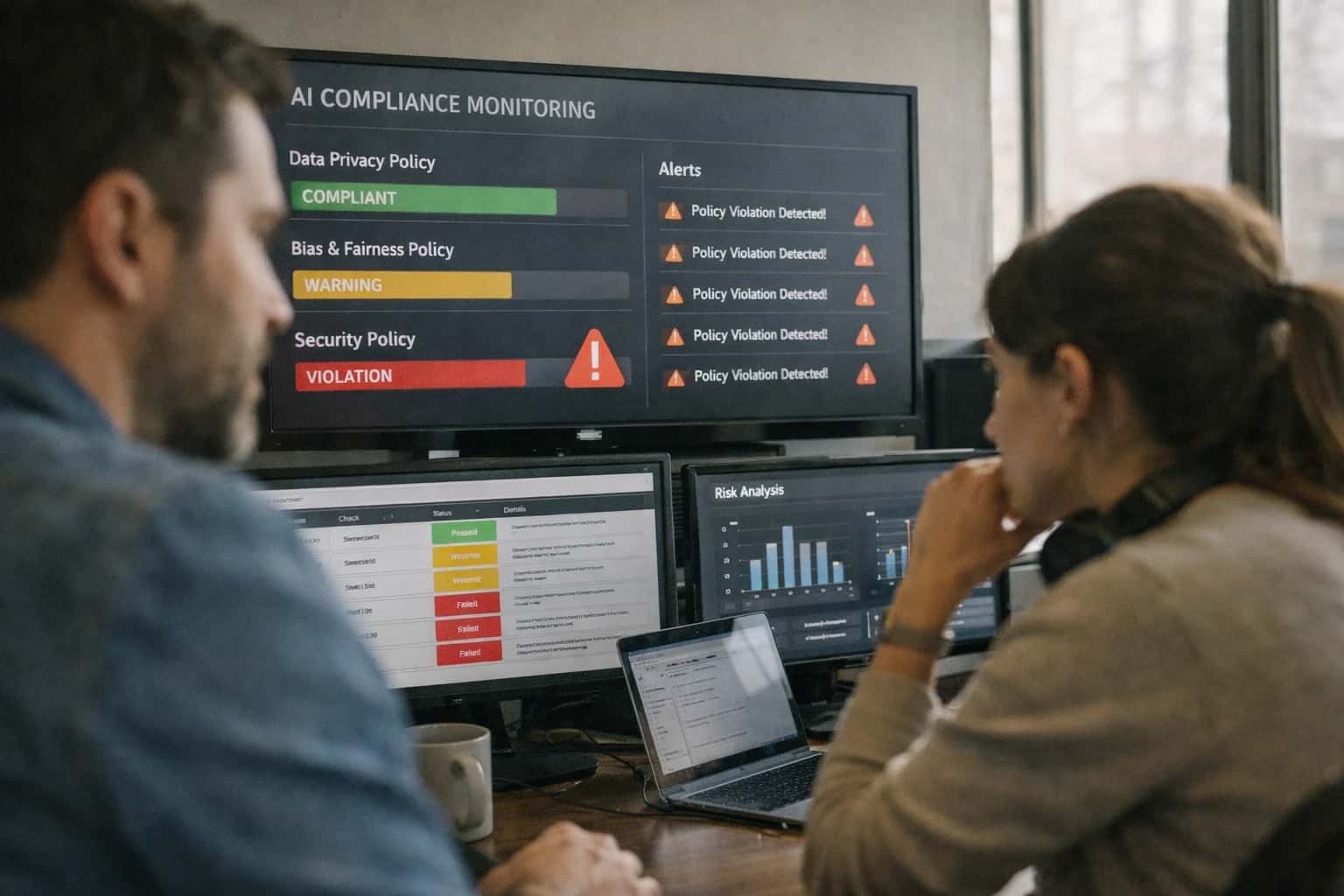
Self-reported emissions data is unreliable. Manual data entry and spreadsheet-based reporting introduce human error, estimation bias, and intentional greenwashing, creating an un-auditable trail that will fail under the forensic scrutiny of regulations like the EU Carbon Border Adjustment Mechanism (CBAM).

Blog
Why Computer Vision AI Is Indispensable for Remote Emissions Monitoring
Manual carbon reporting is a compliance liability. This article explains why computer vision AI systems using satellite and drone data are the only viable path to auditable, real-time emissions verification for the CBAM era.
THE DATA
The Self-Reporting Lie: Why Manual Emissions Data Is a Compliance Time Bomb
Manual emissions reporting is fundamentally flawed, creating an un-auditable data trail that will fail under regulatory scrutiny like the EU CBAM.
The compliance gap is structural. Legacy carbon accounting software relies on these self-reported inputs, creating a garbage-in-gospel-out scenario where flawed data generates legally indefensible disclosures. This structural flaw makes your entire compliance posture a liability.
Computer vision provides an immutable audit trail. Systems using satellite imagery (e.g., Sentinel-2) and drone-based sensors detect methane plumes and deforestation in real-time, creating a verifiable, timestamped record that replaces subjective claims with objective evidence. This is the foundation of audit-ready carbon accounting.
Evidence from the field. A 2023 study by the Environmental Defense Fund found that manual leak detection programs miss over 80% of methane emissions compared to continuous aerial monitoring. This discrepancy represents a massive compliance and financial risk as methane penalties escalate.
REMOTE EMISSIONS MONITORING
Three Market Forces Making Computer Vision AI Indispensable
Self-reported environmental data is no longer credible; these converging forces mandate auditable, real-time verification.
01
The Regulatory Hammer: EU CBAM & Mandatory Audits
The EU Carbon Border Adjustment Mechanism (CBAM) transforms carbon reporting from voluntary to legally binding, with financial penalties for inaccuracies. Legacy self-reporting cannot withstand this scrutiny.
- Enforces third-party verification of Scope 1 emissions, making satellite and drone imagery the new audit standard.
- Creates a $10B+ compliance market for technologies that provide immutable, time-stamped evidence of industrial activity and methane leaks.
- Eliminates the 'trust me' model of sustainability, replacing it with a forensic, evidence-based requirement.
100%
Audit Proof Required
2026
Definitive Phase
02
The Financial Catalyst: The Voluntary Carbon Market's Crisis of Trust
The $2B voluntary carbon market faces a collapse in credibility due to unverified and often fraudulent offset projects. Investors and buyers now demand provable additionality and permanence.
- Computer vision provides continuous monitoring for reforestation projects, detecting deforestation or fire damage in near-real-time.
- Enables high-integrity carbon credits that can command a ~300% price premium by offering verifiable proof of impact.
- Shifts the market from narrative-driven to data-driven, where AI audit trails are the primary asset backing financial instruments.
~300%
Price Premium for Verified Credits
$2B+
Market at Stake
03
The Technological Tipping Point: Ubiquitous Sensing & Foundation Models
The convergence of public satellite constellations (Sentinel, Landsat), commercial drone fleets, and pre-trained vision foundation models has collapsed the cost and complexity of deployment.
- Global daily revisit rates from satellites provide persistent, wide-area surveillance for ~$0 cost for public imagery.
- Foundation models like Segment Anything (SAM) enable rapid fine-tuning for specific tasks—detecting flare stacks, gas plumes, or land cover change—with ~80% less labeled data.
- Creates a defensible data moat: Organizations that operationalize this sensor fusion gain an unassailable lead in emissions intelligence, a core concept in our pillar on Carbon Accounting and Climate Tech AI.
~80%
Less Training Data Needed
Daily
Global Coverage
THE VERIFICATION LAYER
Computer Vision AI Solves the Fundamental Trust Problem in Carbon Accounting
Computer vision provides an auditable, real-time verification layer that makes remote emissions monitoring credible and defensible.
Computer vision AI provides auditable verification for remote emissions monitoring, solving the trust deficit inherent in self-reported data. This technology uses satellite and drone imagery to detect methane plumes, deforestation, and industrial activity, creating an immutable record for regulators and auditors.
Manual reporting is fundamentally flawed because it relies on estimates, infrequent sampling, and human error. In contrast, computer vision systems from providers like Planet Labs or GHGSat deliver continuous, high-frequency observation, turning sporadic snapshots into a verifiable data stream.
The technical stack is non-negotiable. Effective systems integrate PyTorch or TensorFlow models for object detection, process terabytes of geospatial data on platforms like Google Earth Engine, and store temporal evidence in vector databases like Pinecone or Weaviate for rapid audit retrieval. This creates a digital provenance chain.
Evidence from operational deployments shows precision. For example, GHGSat's Kleos satellite can pinpoint methane leaks with a resolution of under 25 meters, identifying emission sources that traditional methods miss. This level of specificity is required for CBAM compliance and credible carbon credit validation.
REMOTE EMISSIONS VERIFICATION
Capability Matrix: Satellite vs. Drone vs. Ground-Based AI Monitoring
A technical comparison of sensor platforms for auditable, real-time emissions monitoring using computer vision AI, critical for CBAM compliance and preventing greenwashing.
| Feature / Metric | Satellite (e.g., Sentinel, GHGSat) | Drone (e.g., Fixed-Wing, Multirotor) | Ground-Based (e.g., Fixed Sensors, Mobile Units) |
|---|---|---|---|
Spatial Resolution | < 30 meters | 5 cm - 10 cm | < 1 cm |
Coverage Area per Mission |
| 1 - 100 km² | < 0.1 km² |
Revisit Frequency | 1 - 7 days | On-demand (hours) | Continuous (real-time) |
Typical Detection Latency | Hours to days | Minutes to hours | < 1 second |
Primary Detection Capability | Methane plumes, deforestation, large flares | Localized methane leaks, venting, small flares | Fugitive emissions (valves, joints), precise leak quantification |
Quantification Accuracy | ± 20-30% for large sources | ± 5-15% for point sources | ± 1-5% for direct measurement |
Operational Cost per km² | $1 - $10 | $50 - $500 | $1,000 - $10,000+ |
Regulatory Audit-Grade Data | |||
Real-Time Alerting for Mitigation | |||
Penetrates Cloud Cover | |||
Requires On-Site Personnel | |||
Integrates with Digital Twin |
REMOTE EMISSIONS MONITORING
Proven Applications: Where Computer Vision AI Is Already Delivering ROI
Self-reported environmental data is unreliable and slow; these applications demonstrate how computer vision AI provides auditable, real-time verification for regulatory compliance and cost savings.
01
The Problem: Unreliable Self-Reporting for Methane Leaks
Manual inspections and operator reports miss >90% of methane super-emitter events, leading to unaccounted emissions, regulatory fines, and wasted product. Satellite and drone-based hyperspectral imaging combined with convolutional neural networks (CNNs) detects leaks at parts-per-billion levels across vast pipeline networks and remote well pads.
- Key Benefit: Enables >90% detection rate for leaks, slashing fugitive emissions and product loss.
- Key Benefit: Provides immutable, timestamped evidence for regulatory compliance under frameworks like the EPA's methane rule.
>90%
Leak Detection Rate
-$10M+
Annual Product Savings
02
The Solution: Continuous Deforestation & Land-Use Auditing
Supply chain due diligence for commodities like palm oil, soy, and timber relies on infrequent, corruptible ground audits. AI models like U-Net analyze daily Sentinel-2 and Planet Labs satellite imagery to classify land cover, detect illegal clearing, and monitor restoration commitments in near real-time.
- Key Benefit: Automates 100% coverage of supplier concessions, replacing costly, sample-based manual audits.
- Key Benefit: Generates verifiable, granular data for ESG reporting and EU Deforestation Regulation (EUDR) compliance.
100%
Concession Coverage
~24h
Change Detection Latency
03
The Entity: GHGSat's Constellation for Industrial Site Monitoring
This commercial satellite operator uses onboard AI processing to identify and quantify CO2 and methane plumes from individual facilities like power plants, steel mills, and landfills. Their patented spectral analysis algorithms deliver meter-scale resolution, attributing emissions to specific assets.
- Key Benefit: Provides facility-level attribution, moving beyond regional estimates to hold specific operators accountable.
- Key Benefit: Enables predictive maintenance by correlating visual emissions with operational data from digital twins, preventing costly shutdowns.
Meter-Scale
Spatial Resolution
<1%
Quantification Error
04
The Problem: Invisible Flaring & Venting at Offshore Platforms
Regulators struggle to verify if offshore oil and gas platforms are flaring efficiently or illegally venting unburned gas. Thermal infrared computer vision on drones or satellites measures flare stack heat signatures and combustion efficiency 24/7, regardless of weather or darkness.
- Key Benefit: Identifies inefficient or non-operational flares, reducing methane venting by up to 95%.
- Key Benefit: Creates an automated compliance ledger for jurisdictions with flaring bans or taxes, such as Norway.
95%
Venting Reduction
24/7
All-Weather Monitoring
05
The Solution: AI-Powered Verification for Carbon Credit Integrity
The voluntary carbon market is plagued by unverified, low-quality offsets. Computer vision AI provides continuous, ground-truth verification for nature-based projects like afforestation and avoided deforestation. Multi-temporal analysis and change detection models confirm additionality and prevent leakage.
- Key Benefit: Drastically reduces project verification costs and time from months to days.
- Key Benefit: Mitigates reputational and financial risk by ensuring offset quality and preventing greenwashing accusations.
-70%
Verification Cost
100%
Project Transparency
06
The Argument: Why Legacy Sensors Are Not Enough
Point sensors (e.g., CEMS) are expensive, require maintenance, and are easily tampered with. They provide data for a single stack, not facility-wide leaks or off-book activity. Wide-area computer vision acts as an independent, tamper-proof audit layer, contextualizing sensor data and detecting sources sensors miss.
- Key Benefit: Delivers system-wide situational awareness, not just point measurements.
- Key Benefit: Future-proofs monitoring for evolving regulations like the EU's CBAM, which will demand higher-fidelity, supplier-specific emissions data.
10x
Coverage Area
Audit-Ready
Data Provenance
THE REALITY CHECK
The Cost and Complexity Objection (And Why It's Wrong)
The perceived high cost and complexity of computer vision AI is a misconception; modern platforms and deployment models make it a scalable, cost-effective necessity for emissions compliance.
Computer vision AI is not a luxury expense; it is a foundational compliance cost. The EU Carbon Border Adjustment Mechanism (CBAM) mandates auditable, third-party-verified emissions data. Self-reported estimates are insufficient and carry financial risk. Systems using satellite imagery and drone footage provide the continuous, objective monitoring required for defensible reporting.
The perceived complexity is solved by modern MLOps platforms. Deploying a vision model no longer requires a team of PhDs. Managed services from Google Vertex AI or Azure Machine Learning abstract infrastructure management. Frameworks like PyTorch and TensorFlow offer pre-trained models for object detection that can be fine-tuned for specific industrial sites, drastically reducing development time.
The cost comparison favors AI over manual audits. A single manual site inspection for a methane leak can cost tens of thousands and only provides a snapshot. A continuously monitoring AI system scales across hundreds of sites for a predictable subscription or compute cost. The ROI is measured in avoided CBAM penalties and operational efficiency gains from early leak detection.
Evidence from the field confirms scalability. Major oil and gas operators have deployed computer vision systems that process petabytes of satellite data monthly to detect leaks across thousands of square miles. These systems, built on cloud-native architectures, demonstrate that the technical and economic barriers to remote emissions monitoring have been eliminated.
FREQUENTLY ASKED QUESTIONS
Technical FAQ: Implementing Computer Vision for Emissions Monitoring
Common questions about relying on computer vision AI for remote emissions monitoring.
Computer vision AI analyzes hyperspectral satellite imagery to identify the unique spectral signature of methane. Satellites like GHGSat and Sentinel-5P capture data across hundreds of narrow wavelength bands. AI models, often convolutional neural networks (CNNs), are trained to spot the specific absorption patterns of methane plumes against the background, enabling remote, continuous monitoring of vast areas like oil fields and landfills.
THE VERIFICATION IMPERATIVE
Key Takeaways: Why You Can't Afford to Wait
Self-reported emissions data is unreliable and exposes organizations to compliance risk and greenwashing accusations. Computer Vision AI provides the only scalable, auditable verification layer.
01
The Methane Blind Spot
Satellite and drone-based computer vision systems detect methane plumes invisible to the human eye, providing continuous monitoring where physical sensors are impractical.
- Identifies leaks with >90% accuracy across vast oil & gas infrastructure.
- Enables near-real-time intervention, preventing tons of CO2e from entering the atmosphere.
- Creates an immutable audit trail for regulatory bodies and carbon credit verifiers.
>90%
Detection Accuracy
24/7
Monitoring
02
Deforestation & Land-Use Auditing
Manual ground surveys for deforestation and illegal land clearing are slow, expensive, and easily circumvented. AI-driven analysis of multi-spectral satellite imagery automates compliance.
- Tracks canopy loss at a sub-hectare resolution with weekly updates.
- Automatically flags unauthorized activity for rapid response teams.
- Provides defensible evidence for supply chain due diligence under regulations like the EU Deforestation Regulation (EUDR).
-70%
Audit Cost
10x
Coverage Speed
03
The Industrial Activity Fingerprint
Self-reported operational data (e.g., flaring, production levels) is often estimated. Computer Vision AI directly observes and quantifies industrial activity from thermal signatures and visual cues.
- Quantifies flaring volume and production throughput from external visual data.
- Correlates activity spikes with emissions data to validate self-reported figures.
- Mitigates strategic misreporting risk, a critical vulnerability for Scope 3 accounting and CBAM compliance.
Audit-Ready
Data Integrity
Real-Time
Verification
04
The Cost of Inaction: Compliance & Reputation
Waiting for perfect self-reported data or manual audits creates a massive liability gap. Computer Vision AI closes this gap proactively.
- Prevents multi-million dollar fines from regulatory non-compliance (e.g., CBAM, methane fees).
- Protects brand equity by providing verifiable proof against greenwashing claims.
- Future-proofs your carbon accounting stack against inevitable regulatory tightening, as seen in the definitive phase of the EU Carbon Border Adjustment Mechanism.
High
Financial Risk
Irreversible
Reputation Damage
Enabling Efficiency, Speed & Accuracy
Intelligent Analysis, Decision & Execution
We build AI systems for teams that need search across company data, workflow automation across tools, or AI features inside products and internal software.
Talk to Us
Search across company data
Give teams answers from docs, tickets, runbooks, and product data with sources and permissions.
Useful when people spend too long searching or get different answers from different systems.
Enterprise searchRAGPermissions
Read more
Automate internal workflows
Use AI to route work, draft outputs, trigger actions, and keep approvals and logs in place.
Useful when repetitive work moves across multiple tools and teams.
AI agentsWorkflow automationGovernance
Read more
Add AI to products and internal tools
Build assistants, guided actions, or decision support into the software your team or customers already use.
Useful when AI needs to be part of the product, not a separate tool.
AI integrationDecision supportModel routing
Read moreTHE VERIFICATION ENGINE
From Observation to Action: Building Your Auditable Monitoring Stack
Computer vision AI transforms passive satellite and drone imagery into an active, auditable verification system for emissions and environmental compliance.
Computer vision AI provides auditable verification where self-reported data fails. Systems using platforms like NVIDIA DeepStream analyze satellite imagery from Planet or drone footage to detect methane plumes and deforestation in real-time, creating an immutable evidence chain for regulators.
The stack requires multi-modal sensor fusion. Isolating visual data creates blind spots. A robust system ingests thermal data from FLIR cameras, hyperspectral imagery, and ground sensor telemetry into a unified vector database like Pinecone, enabling cross-verification and reducing false positives.
Real-time inference demands edge deployment. Cloud latency makes detection useless for intervention. Models must be optimized for edge AI hardware like NVIDIA Jetson to run directly on drones or field sensors, enabling immediate alerts and actionable intelligence.
Evidence: MethaneSAT analytics show a 90% reduction in detection time compared to manual surveys. This speed transforms compliance from a retrospective report into a proactive operational control, directly impacting CBAM compliance strategies.
Integration with an AI orchestration layer is non-negotiable. Isolated detections have no business impact. The vision stack must feed a central orchestrator that triggers workflows—automating incident tickets, updating digital twins, and initiating remediation protocols without human delay.
The output is a cryptographically verifiable ledger. Each detection event, with its supporting image frames and inference metadata, is hashed and stored. This creates the provenance required for audit defense, a core component of a mature AI TRiSM framework for environmental data.

About the author
Prasad Kumkar
CEO & MD, Inference Systems
Prasad Kumkar is the CEO & MD of Inference Systems and writes about AI systems architecture, LLM infrastructure, model serving, evaluation, and production deployment. Over 5+ years, he has worked across computer vision models, L5 autonomous vehicle systems, and LLM research, with a focus on taking complex AI ideas into real-world engineering systems.
His work and writing cover AI systems, large language models, AI agents, multimodal systems, autonomous systems, inference optimization, RAG, evaluation, and production AI engineering.
LinkedIn
Limited slotsGet a Free AI Consultation
Partnered with leading AI, data, and software stack.





How We Work
Custom AI workflows for your Business
One-fit-all AI don't work for modern businesses. At Inferensys, we aim to understand your business & custom requirements; which we use to define most efficient agentic workflows, the data, and the tools for your business.
01
Review the use case
We understand the task, the users, and where AI can actually help.
Read more02
Pick the right approach
We define what needs search, automation, or product integration.
Read more03
Build the first useful version
We implement the part that proves the value first.
Read more04
Improve from there
We add the checks and visibility needed to keep it useful.
Read moreThe first call is a practical review of your use case and the right next step.
Talk to Us