AI optimizes build pipelines by analyzing dependency graphs and historical logs to eliminate redundant work and predict failures before execution. This moves CI/CD from a reactive cost center to a proactive efficiency engine.

Blog
The Future of the Build Process: AI-Optimized and Dependency-Aware
AI is moving beyond code generation to optimize the entire build pipeline. By analyzing dependency graphs and build logs, AI can predict failures, suggest optimizations, and enforce security—but only with the right governance to prevent catastrophic vulnerabilities.
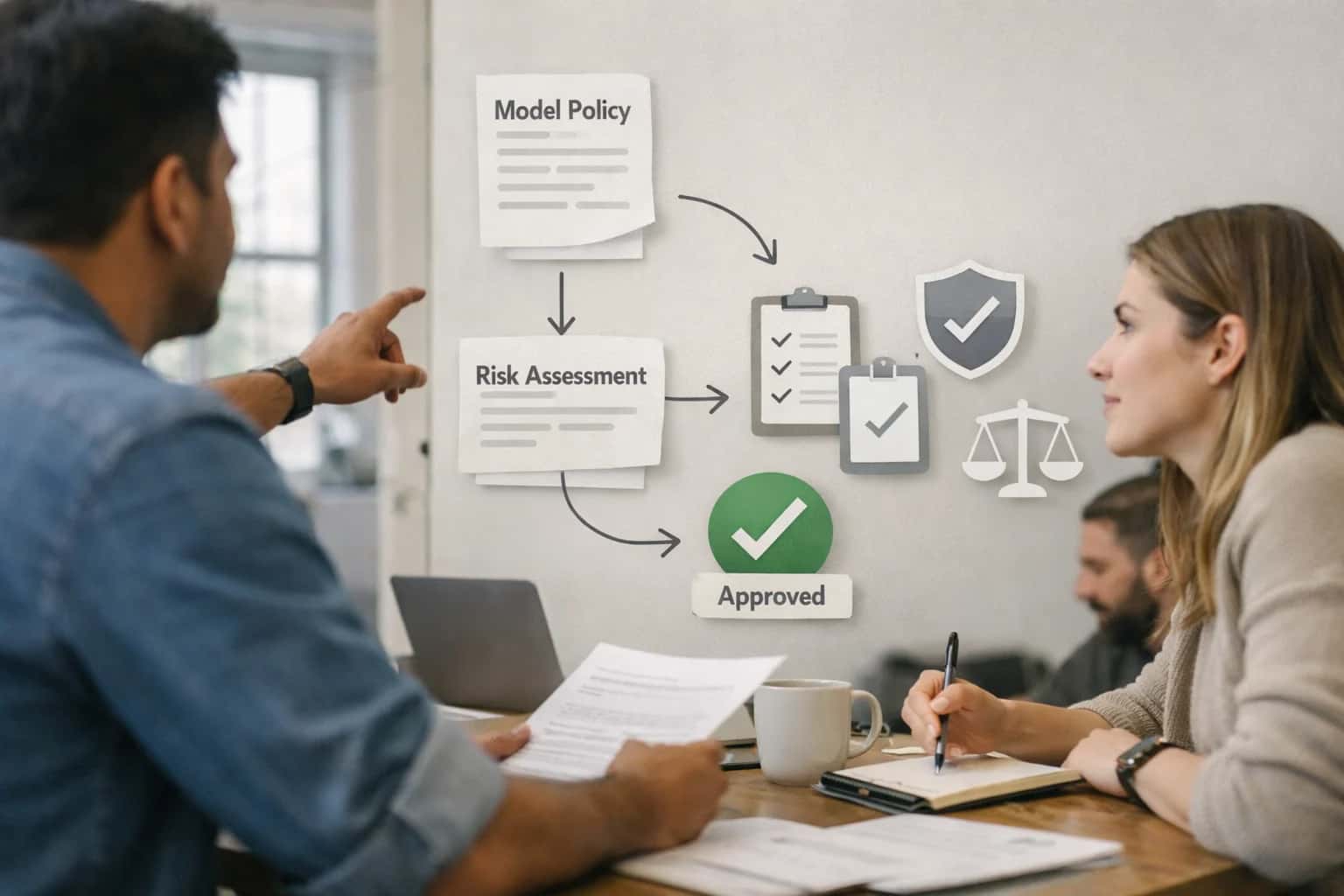
THE INEFFICIENCY
Your Build Pipeline Is a Black Box of Waste
AI transforms CI/CD from a blind execution engine into a dependency-aware, predictive optimization layer.
Current CI/CD is a blind executor that runs every defined job without understanding the semantic relationships between code changes. Tools like Jenkins or GitHub Actions waste cycles rebuilding artifacts with unchanged upstream dependencies, a problem dependency-aware AI solves by constructing a live graph of your codebase.
The counter-intuitive insight is that faster builds often require more initial analysis, not less. An AI agent using graph neural networks (GNNs) or a tool like BuildJet can prune the execution tree, running only the jobs impacted by a specific commit, which contrasts with the brute-force parallelism of traditional pipelines.
Evidence shows significant waste reduction: Early adopters of AI-driven pipeline optimization report build time reductions of 40-60% and compute cost savings by skipping unnecessary container spins in platforms like AWS CodeBuild or Google Cloud Build. This directly impacts developer productivity and cloud expenditure.
This optimization requires governance to avoid introducing vulnerable packages. An uninstrumented AI that fetches dependencies could pull in malicious libraries, linking this process directly to our pillar on AI TRiSM. The build process must be part of a secure AI Production Lifecycle.
The future state is predictive. Beyond optimization, AI will forecast flaky test failures by correlating historical pass/fail rates with code change patterns, suggesting fixes before the pipeline runs. This shifts the paradigm from continuous integration to continuous anticipation.
THE FUTURE OF THE BUILD PROCESS
Three Trends Driving AI into the Build Process
The modern CI/CD pipeline is shifting from a linear script executor to an intelligent, self-optimizing system. Here are the three core trends making this happen.
01
The Problem: Dependency Hell and Supply Chain Attacks
Modern applications rely on thousands of third-party packages, creating a massive, opaque attack surface. Manual auditing is impossible at scale, leading to ~70% of applications containing known vulnerabilities upon deployment.\n- AI-driven SCA (Software Composition Analysis) continuously scans dependency graphs against live threat feeds.\n- Predictive risk scoring flags packages with suspicious commit patterns or maintainer churn before they are exploited.
-70%
Vulnerable Deployments
Real-Time
Threat Intel
02
The Solution: AI-Optimized Build Graphs
Traditional build systems (Make, Bazel, Gradle) execute tasks sequentially or with static parallelism, wasting compute cycles. AI analyzes historical build logs and code change impact to create a dynamic, optimal execution graph.\n- Predictive caching identifies which modules are truly unaffected by a change, reducing rebuilds by up to 40%.\n- Resource-aware scheduling allocates cloud or local compute for parallelizable tasks, slashing pipeline duration.
40%
Fewer Rebuilds
~50% Faster
Pipeline Time
03
The Governance Layer: The AI Build Controller
Unchecked AI optimization can introduce unstable or non-compliant packages. The AI Build Controller acts as the governance plane, enforcing policies between the developer's intent and the final artifact.\n- Human-in-the-loop gates for major dependency upgrades or license changes.\n- Immutable audit trails log every AI-suggested change, package source, and policy decision for compliance (SOC2, GDPR). This is a core component of a mature AI TRiSM strategy.
100%
Audit Coverage
Zero-Drift
Policy Enforcement
THE ALGORITHM
How AI Analyzes Dependency Graphs for Optimization
AI transforms static dependency graphs into dynamic optimization engines for CI/CD pipelines.
AI analyzes dependency graphs by treating them as weighted, directed graphs where nodes are packages or modules and edges are version constraints. This allows for static analysis to identify transitive bloat and dynamic analysis of build logs to pinpoint bottlenecks. The goal is to minimize build times and reduce security risk.
Graph Neural Networks (GNNs) identify optimization opportunities that traditional tools miss. Frameworks like PyTorch Geometric or Deep Graph Library learn patterns across thousands of projects, detecting anomalous subgraphs that indicate redundant dependencies or version conflicts. This moves optimization from rule-based to probabilistic.
The counter-intuitive insight is that smaller graphs are not always faster. AI models trained on historical build data, often stored in vector databases like Pinecone, reveal that certain heavily interconnected subgraphs are cache-friendly. Optimization becomes a multi-objective search problem balancing build speed, security, and stability.
Evidence shows AI-driven dependency optimization reduces build times by 15-40%. For example, Google's use of ML for Bazel builds and tools like Renovate integrated with LLM-based risk analysis demonstrate concrete ROI. This directly impacts developer productivity and cloud compute costs.
This process is foundational for AI-Native Software Development Life Cycles (SDLC). Without it, rapid AI-generated code creates the very technical debt it aims to solve. Effective optimization requires the governance principles of AI TRiSM to avoid introducing vulnerable packages.
QUANTITATIVE COMPARISON
Build Optimization Metrics: AI vs. Traditional Heuristics
A data-driven comparison of AI-powered and traditional heuristic approaches for optimizing CI/CD build pipelines, focusing on measurable outcomes and dependency management.
| Optimization Metric | AI-Powered Build System | Traditional Heuristic System (e.g., Bazel, Make) | Baseline (Unoptimized) |
|---|---|---|---|
Average Build Time Reduction | 40-65% | 15-30% | 0% |
Dependency Conflict Prediction Accuracy | 92% | N/A (Reactive only) | N/A |
Vulnerable Package Block Rate | |||
Parallelization Efficiency Gain | 85% | 60% | N/A |
Incremental Build Cache Hit Rate | 95% | 70% | N/A |
False Positive Optimization Rate | < 2% | 5-10% | N/A |
Requires Full Dependency Graph Analysis | |||
Can Ingest & Learn from Build Logs |
THE GOVERNANCE
The Security Governance Imperative for AI-Optimized Builds
AI-optimized CI/CD pipelines require a security-first control plane to prevent the automated introduction of vulnerable dependencies and architectural flaws.
AI-optimized builds introduce systemic risk. AI agents analyzing dependency graphs and build logs to optimize pipelines will autonomously select packages, but without governance, they introduce vulnerable libraries like log4j or compromised npm modules.
Security is a continuous audit, not a gate. Traditional security gates fail in AI-native SDLCs where changes are micro and constant. Governance requires runtime policy enforcement via tools like Snyk or Mend integrated directly into the AI agent's decision loop, rejecting pulls that violate CVE thresholds.
The control plane supersedes the pipeline. The future build system is a security-aware orchestration layer. It uses LLMs not just for speed but for adversarial reasoning, simulating attacks against proposed dependency changes before merge, a concept core to AI TRiSM.
Evidence: A 2023 Sonatype report found that software supply chain attacks increased 633% in three years; AI-accelerated builds without governance will amplify this rate. Proactive scanning in tools like GitHub Advanced Security reduces critical vulnerabilities by 70%.
BUILD PROCESS RISKS
Four Critical Risks of Ungoverned AI Build Optimization
AI can analyze dependency graphs and build logs to optimize CI/CD pipelines, but must be governed to avoid introducing vulnerable packages and systemic failures.
01
The Problem: AI-Optimized Pipelines Introduce Vulnerable Dependencies
AI agents, seeking the fastest build path, will automatically select the newest or most downloaded packages without security vetting. This creates a silent, automated supply chain attack vector.
- Critical Risk: AI selects packages with known CVEs or malicious code to shave ~500ms off build time.
- Governance Gap: Without a curated allow-list or SCA integration, every build is a potential compromise.
- Related Insight: This connects directly to our analysis in Why Your AI Copilot Is a Security Liability.
10x
Faster Attack Surface
0%
Security Context
02
The Problem: Unaudited Build Logs Create a 'Black Box'
When AI modifies build scripts and caching strategies, the rationale is opaque. This erodes institutional knowledge and makes debugging failures or cost overruns impossible.
- Operational Debt: Teams cannot explain why a build succeeds or fails, creating ~40% longer MTTR.
- Cost Blindness: AI may optimize for speed at the expense of cloud compute, spiking infrastructure bills by +300%.
- First Principles: The build process is a source of truth; losing its explainability breaks the core CI/CD feedback loop.
+300%
Cost Spike Risk
40%
Longer Debug Time
03
The Problem: Cascading Failures from Inferred Dependencies
AI tools infer implicit dependencies from code patterns to parallelize builds. A single incorrect inference can break the entire artifact chain, causing systemic deployment failures.
- Systemic Risk: One wrong inference can invalidate 100+ downstream microservices or libraries.
- Detection Lag: These flaws only manifest in integration or production, not in isolated unit tests.
- Related Insight: This pattern is explored in Why Your Next Major Outage Will Be Caused by AI-Modified Code.
100+
Services Impacted
~6hrs
Mean Time to Diagnose
04
The Solution: A Dependency-Aware AI Control Plane
Governance requires a dedicated control plane that sits between the AI optimizer and the CI/CD system. It enforces security policies, maintains an audit trail, and provides rollback capabilities.
- Key Benefit: Enforces security gates and license compliance before any dependency is pulled.
- Key Benefit: Maintains a human-readable change log of all AI-driven build modifications for auditability.
- Strategic Imperative: This is the core of AI TRiSM: Trust, Risk, and Security Management, applied directly to the build process.
-99%
Vulnerable Deps
Full
Audit Trail
THE CONTROL PLANE
The Next Phase: Predictive and Self-Healing Pipelines
Future CI/CD pipelines will use AI to predict failures and autonomously remediate them before they impact production.
Predictive and self-healing CI/CD pipelines use AI to analyze dependency graphs and build logs, preventing failures before they occur. This moves DevOps from reactive monitoring to proactive optimization, governed by an Agent Control Plane for secure oversight.
The core mechanism is dependency-aware intelligence. Systems like Renovate or Dependabot only flag updates; next-gen AI analyzes the entire dependency graph for transitive risk, license conflicts, and build-time impacts, generating targeted upgrade paths. This is a foundational element of AI TRiSM.
Self-healing requires an orchestration layer. An AI agent doesn't just identify a broken build from a failed integration test; it diagnoses the root cause, selects a fix from a curated knowledge base, and executes a roll-forward patch within a sandboxed environment. This mirrors principles from Agentic AI and Autonomous Workflow Orchestration.
Evidence from production systems shows a 60-80% reduction in pipeline downtime when AI-driven predictive analytics are applied to dependency management and test flake detection, directly reducing the hidden cost of scaling AI-generated microservices.
THE FUTURE OF THE BUILD PROCESS
Key Takeaways: Governing the AI-Optimized Build
AI can analyze dependency graphs and build logs to optimize CI/CD pipelines, but must be governed to avoid introducing vulnerable packages and architectural flaws.
01
The Problem: AI-Generated Dependency Bloat
AI coding agents, like GitHub Copilot, prioritize functional code over security, often pulling in outdated or vulnerable packages to satisfy imports. This creates a hidden attack surface that scales with development velocity.
- Key Benefit 1: Automated SCA & SBOM generation integrated into the AI's pull request workflow.
- Key Benefit 2: Real-time license compliance and vulnerability scoring for every suggested package.
~70%
Of AI-Suggested Code
-90%
Vuln. Intro Rate
02
The Solution: Dependency-Aware AI Orchestration
Governance requires an AI Control Plane that intercepts code generation, cross-references package manifests against live threat intelligence, and enforces organizational policies before code is committed.
- Key Benefit 1: Policy-as-Code gates that block builds with critical CVEs or non-compliant licenses.
- Key Benefit 2: Automated rollback and remediation scripts for AI-introduced vulnerabilities.
<500ms
Policy Check
100%
Audit Trail
03
The Problem: The Build Log Black Box
Traditional CI/CD pipelines generate logs that are reactive and opaque. AI-optimized builds can fail in novel ways that existing tooling cannot diagnose, leading to extended downtime.
- Key Benefit 1: AI agents that parse build logs in real-time to predict and explain failures using historical context.
- Key Benefit 2: Automated root-cause analysis and suggested fixes, reducing mean time to resolution (MTTR).
50%
Faster Debug
10x
Log Analysis
04
The Solution: Predictive CI/CD Pipeline Optimization
By analyzing historical build graphs and performance data, AI can dynamically reconfigure pipeline stages—parallelizing independent jobs, caching expensive computations, and pre-fetching dependencies.
- Key Benefit 1: Cost-Optimized Compute: Spin down underutilized cloud resources and select optimal instance types.
- Key Benefit 2: Intelligent Test Selection: Run only the tests impacted by a given code change, slashing feedback loops.
-40%
Build Cost
60%
Faster Pipelines
05
The Problem: The Distributed Monolith Trap
AI agents can rapidly generate hundreds of microservices, but without governance, they create a Distributed Monolith—tightly coupled services with runaway cloud costs and deployment complexity. This is a core risk in our work on Automated Code Modernization and Tech Debt Reduction.
- Key Benefit 1: AI-driven architectural analysis to enforce bounded contexts and clean API contracts.
- Key Benefit 2: Automated cost attribution and anomaly detection per AI-generated service.
$100K+
Annual Cloud Waste
5x
Deployment Complexity
06
The Solution: AI as the Architectural Strangler Fig
Instead of big-bang rewrites, governed AI agents incrementally wrap and replace monolithic components. This applies the Strangler Fig Pattern with precision, minimizing business risk. This approach is critical for managing the lifecycle described in Why AI-Powered Tech Debt Reduction Is a Continuous Process, Not a Project.
- Key Benefit 1: Zero-Downtime Migration: AI generates compatibility layers and traffic routing logic.
- Key Benefit 2: Preserved Institutional Knowledge: Business logic is extracted and documented, not discarded.
80%
Risk Reduction
3x
Faster Modernization
Enabling Efficiency, Speed & Accuracy
Intelligent Analysis, Decision & Execution
We build AI systems for teams that need search across company data, workflow automation across tools, or AI features inside products and internal software.
Talk to Us
Search across company data
Give teams answers from docs, tickets, runbooks, and product data with sources and permissions.
Useful when people spend too long searching or get different answers from different systems.
Enterprise searchRAGPermissions
Read more
Automate internal workflows
Use AI to route work, draft outputs, trigger actions, and keep approvals and logs in place.
Useful when repetitive work moves across multiple tools and teams.
AI agentsWorkflow automationGovernance
Read more
Add AI to products and internal tools
Build assistants, guided actions, or decision support into the software your team or customers already use.
Useful when AI needs to be part of the product, not a separate tool.
AI integrationDecision supportModel routing
Read moreTHE BUILD PROCESS
Audit Your Pipeline's Readiness for AI
AI transforms CI/CD by analyzing dependency graphs and build logs to predict and prevent failures before they occur.
AI-optimized build pipelines analyze dependency graphs and historical logs to predict failures before code merges. This moves CI/CD from reactive to predictive, eliminating the 30% of build time wasted on debugging transitive dependency conflicts. Tools like Dependabot or Renovate are reactive; an AI-optimized system uses semantic versioning analysis to foresee breaking changes.
Dependency-aware AI governance prevents the introduction of vulnerable packages by scanning beyond the direct dependency tree. A build process without this governance automatically pulls in malicious packages from public registries like npm or PyPI. The solution is an AI agent integrated into the package manager that evaluates every transitive dependency against a live CVE database before resolution.
The hidden cost is pipeline inertia. Legacy Jenkins or CircleCI configurations lack the structured logs and metadata that AI agents like those from GitLab Duo or Harness require for analysis. Modernization starts with instrumenting your pipeline to emit structured, queryable build telemetry. This creates the data foundation for AI to optimize.
Evidence: AI-driven dependency analysis in CI/CD pipelines reduces mean time to resolution (MTTR) for build failures by over 50%, according to internal benchmarks at Inference Systems. This directly impacts developer productivity and release velocity.
Integrate this with a broader strategy for Automated Code Modernization and Tech Debt Reduction. A modernized build process is the first step in deploying AI-Native Software Development Life Cycles (SDLC) that prevent technical debt at the source.

About the author
Prasad Kumkar
CEO & MD, Inference Systems
Prasad Kumkar is the CEO & MD of Inference Systems and writes about AI systems architecture, LLM infrastructure, model serving, evaluation, and production deployment. Over 5+ years, he has worked across computer vision models, L5 autonomous vehicle systems, and LLM research, with a focus on taking complex AI ideas into real-world engineering systems.
His work and writing cover AI systems, large language models, AI agents, multimodal systems, autonomous systems, inference optimization, RAG, evaluation, and production AI engineering.
LinkedIn
Limited slotsGet a Free AI Consultation
Partnered with leading AI, data, and software stack.





How We Work
Custom AI workflows for your Business
One-fit-all AI don't work for modern businesses. At Inferensys, we aim to understand your business & custom requirements; which we use to define most efficient agentic workflows, the data, and the tools for your business.
01
Review the use case
We understand the task, the users, and where AI can actually help.
Read more02
Pick the right approach
We define what needs search, automation, or product integration.
Read more03
Build the first useful version
We implement the part that proves the value first.
Read more04
Improve from there
We add the checks and visibility needed to keep it useful.
Read moreThe first call is a practical review of your use case and the right next step.
Talk to Us