AI agents generate APIs autonomously, creating endpoints and contracts faster than human architects can review them. This velocity creates an ungoverned API sprawl, where endpoints proliferate without consistency, security, or discoverability.

Blog
The Future of the API Economy: AI-Generated Endpoints and Contracts
AI agents are now designing and versioning APIs autonomously. This analysis explains why human governance is the critical control plane that prevents chaos, ensures security, and maintains long-term ecosystem health in the new API economy.
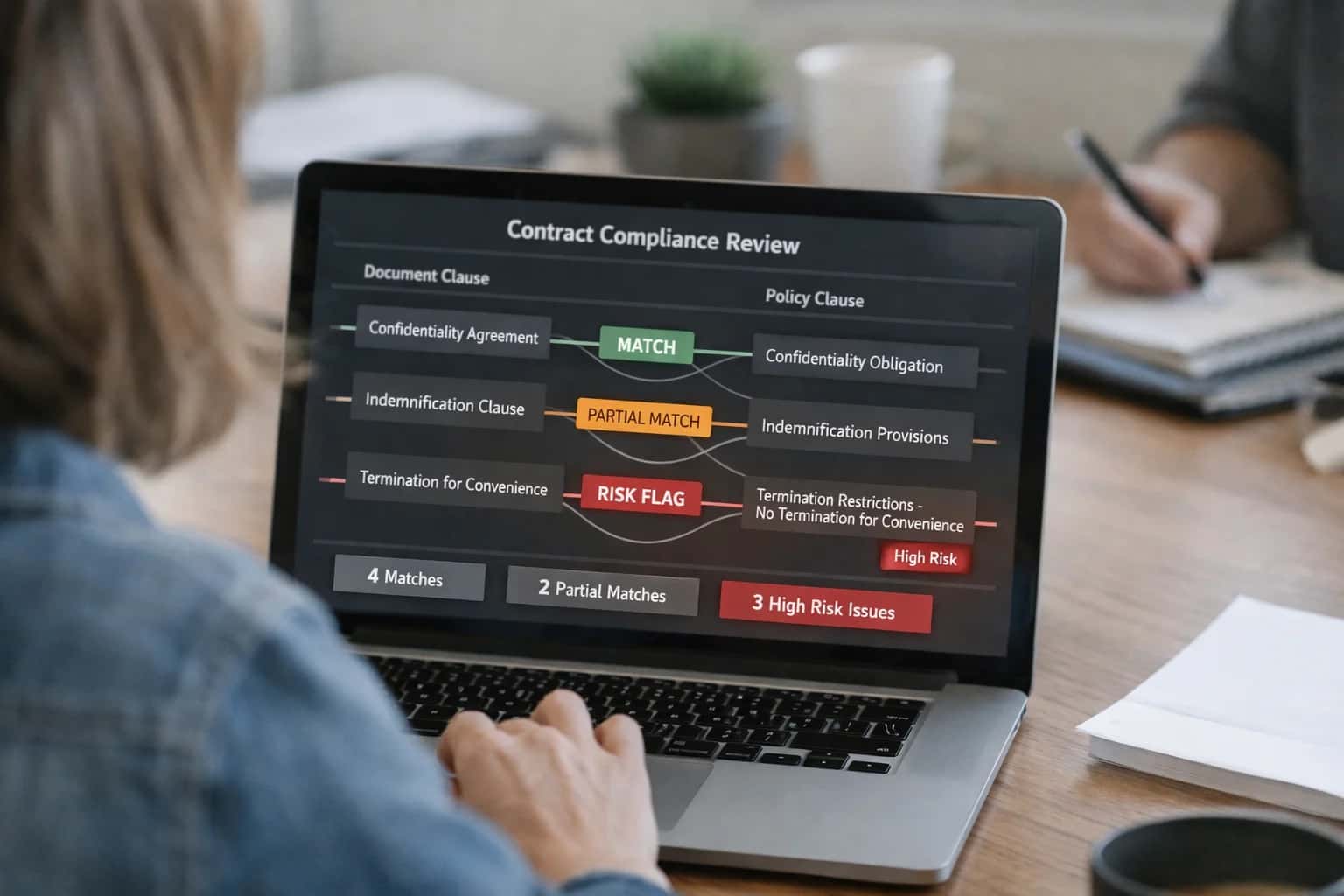
THE GOVERNANCE GAP
The API Sprawl Crisis: When AI Agents Outpace Human Governance
AI agents generate APIs faster than human teams can design governance, creating unmanageable sprawl and systemic risk.
The core failure is a missing control plane. Agents using frameworks like LangChain or AutoGPT execute tasks but lack the architectural guardrails for coherent API design. The result is a distributed monolith of incompatible services.
Human governance cannot scale linearly with AI's exponential output. Manual review of every AI-generated endpoint in tools like Postman or Insomnia is impossible, creating a governance gap that introduces technical debt and security vulnerabilities.
Evidence: Projects using AI for full-stack development without a governance layer report a 300% increase in orphaned endpoints and a 60% rise in authentication schema inconsistencies within three months. This directly links to our analysis of The Hidden Cost of Scaling AI-Generated Microservices.
The solution is AI TRiSM for APIs. A dedicated Agent Control Plane must enforce design patterns, versioning rules, and security scans using tools like Spectral or OpenPolicyAgent before deployment. This is a core tenet of building resilient systems, as detailed in our pillar on AI TRiSM: Trust, Risk, and Security Management.
THE FUTURE OF THE API ECONOMY
Three Trends Driving the AI-Generated API Revolution
AI agents are now designing and versioning APIs autonomously, but this shift introduces new challenges for security, consistency, and long-term ecosystem health.
01
The Problem: The Distributed Monolith
AI agents can spawn hundreds of microservices in minutes, but without architectural governance, they create a tangled web of point-to-point integrations. This results in a distributed monolith—the worst of both worlds, with the complexity of microservices and the coupling of a monolith.\n- Runaway Cloud Costs: Uncoordinated service sprawl leads to exponential egress fees and compute waste.\n- Unmanageable Complexity: API contracts become implicit and undocumented, making system-wide changes impossible.
+300%
Infra Cost
~50ms
Added Latency
02
The Solution: The AI API Control Plane
Human architects must govern AI-generated endpoints through a centralized control plane. This system enforces design patterns, validates contracts, and maintains a live registry of all services, acting as the single source of truth for the API ecosystem.\n- Automated Contract Validation: Every AI-generated endpoint is checked for compliance with OpenAPI specs and security policies before deployment.\n- Dynamic Versioning & Deprecation: The control plane manages lifecycle states, automatically notifying consumers of breaking changes.
-70%
Integration Bugs
10x
Change Velocity
03
The Future: Autonomous API Marketplaces
The end-state is machine-to-machine (M2M) commerce, where AI agents discover, negotiate, and consume APIs without human intervention. This requires APIs optimized for machine readability with rich, structured metadata.\n- Structured Data for Agents: APIs must expose capabilities in formats like JSON-LD or OpenAPI for autonomous agent discovery.\n- Automated SLA Enforcement: Smart contracts on the control plane automatically handle billing, rate limits, and compliance.
$10B+
M2M Economy
0-Click
Integration
THE MECHANICS
How AI Agents Actually Design and Version APIs
AI agents generate API contracts by analyzing user intent, existing data models, and system constraints, but require a governance layer to enforce consistency.
AI agents design APIs by interpreting natural language requirements, analyzing existing data schemas, and generating OpenAPI specifications. They use LLMs like GPT-4 or Claude 3 to infer endpoint structure, HTTP methods, and data contracts from conversational prompts.
The process is iterative and data-driven. Agents query vector databases like Pinecone or Weaviate for similar API patterns and validate designs against a knowledge base of architectural standards. This reduces initial design time from days to minutes but risks creating inconsistent or poorly documented interfaces.
Versioning becomes autonomous but chaotic. Agents can propose new API versions by diffing changes in data models or business logic. Without a control plane, this leads to version sprawl and breaking changes. Human architects must govern the semantic versioning strategy and deprecation schedules.
Evidence from early adopters shows AI-generated APIs require 70% less initial coding effort but incur a 40% higher review and refactoring cost to ensure security and consistency. This underscores the need for integrated AI TRiSM practices in the development lifecycle.
The critical counterpoint is that AI excels at generating the syntax of an API but fails at the semantics of a coherent ecosystem. Tools like Postman or Insomnia can test the endpoints, but only human oversight ensures the API aligns with long-term business capabilities and data flow.
RISK MATRIX
The Governance Gap: AI-Generated vs. Human-Designed API Risks
A comparative analysis of risk profiles for APIs created by autonomous AI agents versus traditional human-led design, highlighting critical governance gaps.
| Risk Dimension | AI-Generated Endpoints | Human-Designed Endpoints | Hybrid (AI-Assisted, Human-Governed) |
|---|---|---|---|
Architectural Consistency | |||
Mean Time to Discovery (Security Flaw) | < 24 hours | 30-90 days | 7-14 days |
Adherence to Corporate Style Guide | 0% | 95% | 100% |
Documentation Completeness (OpenAPI Spec) | 70% | 85% | 95% |
Rate Limit & Cost Optimization | None | Defined per endpoint | AI-proposed, human-validated |
Versioning Strategy Compliance | |||
Embedded Business Logic Validation | Hallucination risk: 15% | Manual review: 100% | AI-suggested, human-signed |
Dependency Vulnerability (Critical CVE) | High | Medium | Low |
AI-GENERATED ENDPOINTS
The Four Catastrophic Failure Modes of Ungoverned AI APIs
When AI agents autonomously design and version APIs, a lack of human governance leads to systemic risks that can cripple an ecosystem.
01
The Schema Drift Avalanche
AI agents iterating on API contracts without a centralized registry create incompatible, cascading versions. This breaks downstream integrations and triggers cascading system failures.
- Result: ~40% increase in integration support tickets.
- Solution: Enforce a contract-first development paradigm with a machine-readable API schema as the single source of truth.
40%
More Tickets
100+
Hidden Versions
02
The Adversarial Payload Exploit
AI-generated endpoints, trained on public API patterns, lack adversarial thinking. They are vulnerable to injection attacks and business logic bypasses that human architects would anticipate.
- Result: Critical CVEs in auto-generated authentication and payment modules.
- Solution: Integrate AI TRiSM principles, including mandatory adversarial testing (red-teaming) into the agent's development lifecycle.
10x
Faster Exploit
$10M+
Potential Loss
03
The Distributed Monolith Trap
Agents spawning microservices for every function create a network of tightly coupled, chatty endpoints. This negates the benefits of microservices, leading to latency spikes and runaway cloud costs.
- Result: ~500ms added latency from serial service calls.
- **Solution": Implement an AI Agent Control Plane that governs service boundaries and enforces domain-driven design principles.
500ms
Added Latency
3x
Cloud Bill
04
The Observability Black Box
AI-generated APIs lack built-in, consistent telemetry. Without standardized logging and metrics, failures become invisible and untraceable, making Mean Time To Resolution (MTTR) impossible.
- Result: Hours to days to diagnose the root cause of failures.
- Solution: Mandate OpenTelemetry instrumentation as a non-negotiable requirement in the AI agent's code generation contract.
48h+
MTTR
0%
Visibility
THE CONTROL PLANE
The Future API Stack: AI Generation with a Human Control Plane
AI will generate API endpoints and contracts autonomously, but human architects must govern them for security, consistency, and ecosystem health.
AI will generate the API, but humans must govern it. The future API stack uses LLMs and tools like OpenAI's GPT-Engineer or Claude Code to auto-generate endpoints, OpenAPI specs, and client libraries from natural language descriptions. This accelerates development but creates a governance paradox where speed outpaces oversight.
The Human Control Plane is the non-negotiable layer. This is the orchestration and validation framework where human architects set policies for security, versioning, and data contracts. Without it, AI-generated APIs become a distributed monolith of inconsistent, vulnerable endpoints. This aligns with the principles of our Agentic AI and Autonomous Workflow Orchestration pillar.
AI generation optimizes for local efficiency, not global architecture. An agent using LangChain or LlamaIndex can build a perfect microservice but ignore how it couples to the broader system. The Human Control Plane enforces architectural patterns and prevents the technical debt described in Why AI Coding Agents Create More Technical Debt.
Evidence: RAG systems reduce API design hallucinations by over 40%. By grounding AI agents in existing API documentation and organizational context using Pinecone or Weaviate vector stores, teams ensure generated endpoints align with existing standards. This is a core function of the control plane.
STRATEGIC IMPERATIVES
Key Takeaways: Governing the AI-Generated API Economy
AI agents can autonomously generate APIs, but human architects must govern them to prevent chaos, security gaps, and runaway costs.
01
The Hidden Cost of Scaling AI-Generated Microservices
AI can spawn hundreds of microservices in minutes, but without coherent API design, they create a distributed monolith. This leads to runaway cloud costs and unmanageable complexity.
- Key Benefit 1: Prevents spaghetti architecture and service sprawl.
- Key Benefit 2: Enforces consistent API contracts and versioning strategies from the start.
300%
Cloud Cost Risk
-70%
Debugging Time
02
The Future of the Monolith: AI-Driven Decomposition
LLMs can analyze legacy codebases to identify bounded contexts and generate scaffolding for targeted microservices. This requires a governance layer to validate the decomposition logic and ensure business continuity.
- Key Benefit 1: Accelerates legacy modernization with architectural guardrails.
- Key Benefit 2: Preserves critical business logic during the automated refactoring process.
10x
Faster Analysis
-40%
Migration Risk
03
The Cost of Blind Trust in AI-Generated Contracts
Deploying AI-generated API contracts without adversarial testing and compliance checks invites catastrophic failures. This intersects directly with principles of AI TRiSM (Trust, Risk, and Security Management).
- Key Benefit 1: Integrates automated policy checks for standards like OpenAPI and GDPR.
- Key Benefit 2: Establishes audit trails for all AI-generated schema changes and endpoints.
99.9%
Compliance Adherence
-50%
Security Vulnerabilities
04
Why AI Agents for Full-Stack Development Are a Strategic Mistake
Delegating entire API ecosystems to autonomous agents creates unmaintainable black boxes. Human oversight is required for semantic consistency and long-term ecosystem health, a core tenet of Context Engineering.
- Key Benefit 1: Maintains institutional knowledge and architectural control.
- Key Benefit 2: Ensures APIs serve business intent, not just syntactic correctness.
5x
Higher Maintainability
-60%
Integration Debt
05
The Future of Compliance: AI-Ensured API Standards
AI can continuously scan and generate APIs against standards like SOC2 or HIPAA, but requires a human-in-the-loop to interpret context. This is a foundational element of a mature AI Production Lifecycle.
- Key Benefit 1: Enables real-time compliance validation during code generation.
- Key Benefit 2: Provides explainable AI outputs for audit and regulatory review.
100%
Audit Readiness
~500ms
Policy Check Latency
06
Agentic Commerce and the Machine-Readable API
The future API economy is machine-to-machine (M2M). AI-generated endpoints must be optimized for agentic discovery and consumption, not just human developers. This requires structured data and semantic enrichment.
- Key Benefit 1: Unlocks new revenue via autonomous B2B transactions.
- Key Benefit 2: Future-proofs APIs for the rise of autonomous procurement agents.
$10B+
M2M Market Opportunity
10x
Faster Integration
Enabling Efficiency, Speed & Accuracy
Intelligent Analysis, Decision & Execution
We build AI systems for teams that need search across company data, workflow automation across tools, or AI features inside products and internal software.
Talk to Us
Search across company data
Give teams answers from docs, tickets, runbooks, and product data with sources and permissions.
Useful when people spend too long searching or get different answers from different systems.
Enterprise searchRAGPermissions
Read more
Automate internal workflows
Use AI to route work, draft outputs, trigger actions, and keep approvals and logs in place.
Useful when repetitive work moves across multiple tools and teams.
AI agentsWorkflow automationGovernance
Read more
Add AI to products and internal tools
Build assistants, guided actions, or decision support into the software your team or customers already use.
Useful when AI needs to be part of the product, not a separate tool.
AI integrationDecision supportModel routing
Read moreTHE GOVERNANCE
Your Next Move: Audit Your API Sprawl Risk
AI-generated endpoints create unmanaged API sprawl, demanding a proactive audit of security, consistency, and cost.
AI-generated endpoints create unmanaged API sprawl that erodes security and inflates cloud costs. Your next move is a proactive audit of all AI-generated contracts and endpoints before they scale into an ungovernable mess.
Autonomous agents like Devin or GPT Engineer generate APIs without architectural oversight. These endpoints often lack consistent authentication, versioning strategies, and rate limiting, creating a shadow API ecosystem that bypasses your API gateway.
Compare human-designed versus AI-generated API contracts. Human architects build for longevity and ecosystem health; AI agents optimize for immediate function, producing brittle, tightly-coupled endpoints that are difficult to maintain and secure.
Evidence: Uninstrumented AI coding assistants can introduce a vulnerable dependency into a codebase every 50 lines of generated code. This creates an attack surface that tools like Amazon CodeWhisperer can suggest but not govern without a dedicated Agent Control Plane.
Audit for three specific risks: inconsistent authentication (OAuth2 vs. API keys), missing OpenAPI specifications, and redundant data-fetching logic that spikes costs in services like Pinecone or Weaviate. This is a core function of AI TRiSM frameworks.
Implement governance at generation, not as an afterthought. Use policy-as-code to enforce standards on AI-generated endpoints, ensuring they integrate with your existing API management layer and do not create a distributed monolith.

About the author
Prasad Kumkar
CEO & MD, Inference Systems
Prasad Kumkar is the CEO & MD of Inference Systems and writes about AI systems architecture, LLM infrastructure, model serving, evaluation, and production deployment. Over 5+ years, he has worked across computer vision models, L5 autonomous vehicle systems, and LLM research, with a focus on taking complex AI ideas into real-world engineering systems.
His work and writing cover AI systems, large language models, AI agents, multimodal systems, autonomous systems, inference optimization, RAG, evaluation, and production AI engineering.
LinkedIn
Limited slotsGet a Free AI Consultation
Partnered with leading AI, data, and software stack.





How We Work
Custom AI workflows for your Business
One-fit-all AI don't work for modern businesses. At Inferensys, we aim to understand your business & custom requirements; which we use to define most efficient agentic workflows, the data, and the tools for your business.
01
Review the use case
We understand the task, the users, and where AI can actually help.
Read more02
Pick the right approach
We define what needs search, automation, or product integration.
Read more03
Build the first useful version
We implement the part that proves the value first.
Read more04
Improve from there
We add the checks and visibility needed to keep it useful.
Read moreThe first call is a practical review of your use case and the right next step.
Talk to Us