AI-powered job crafting is the practice of using workforce analytics and recommendation engines to allow employees to personalize their roles, but it risks creating a chaotic, unmanageable patchwork of responsibilities. This hyper-personalization, while engaging, directly undermines standardized performance metrics and equitable workload distribution.

Blog
Why AI-Powered 'Job Crafting' is a Double-Edged Sword
AI-enabled job crafting promises hyper-personalized roles and boosted engagement. Unchecked, it leads to role fragmentation, inconsistent performance metrics, and systemic inequity. This analysis dissects the governance paradox at the heart of AI-driven role redesign.
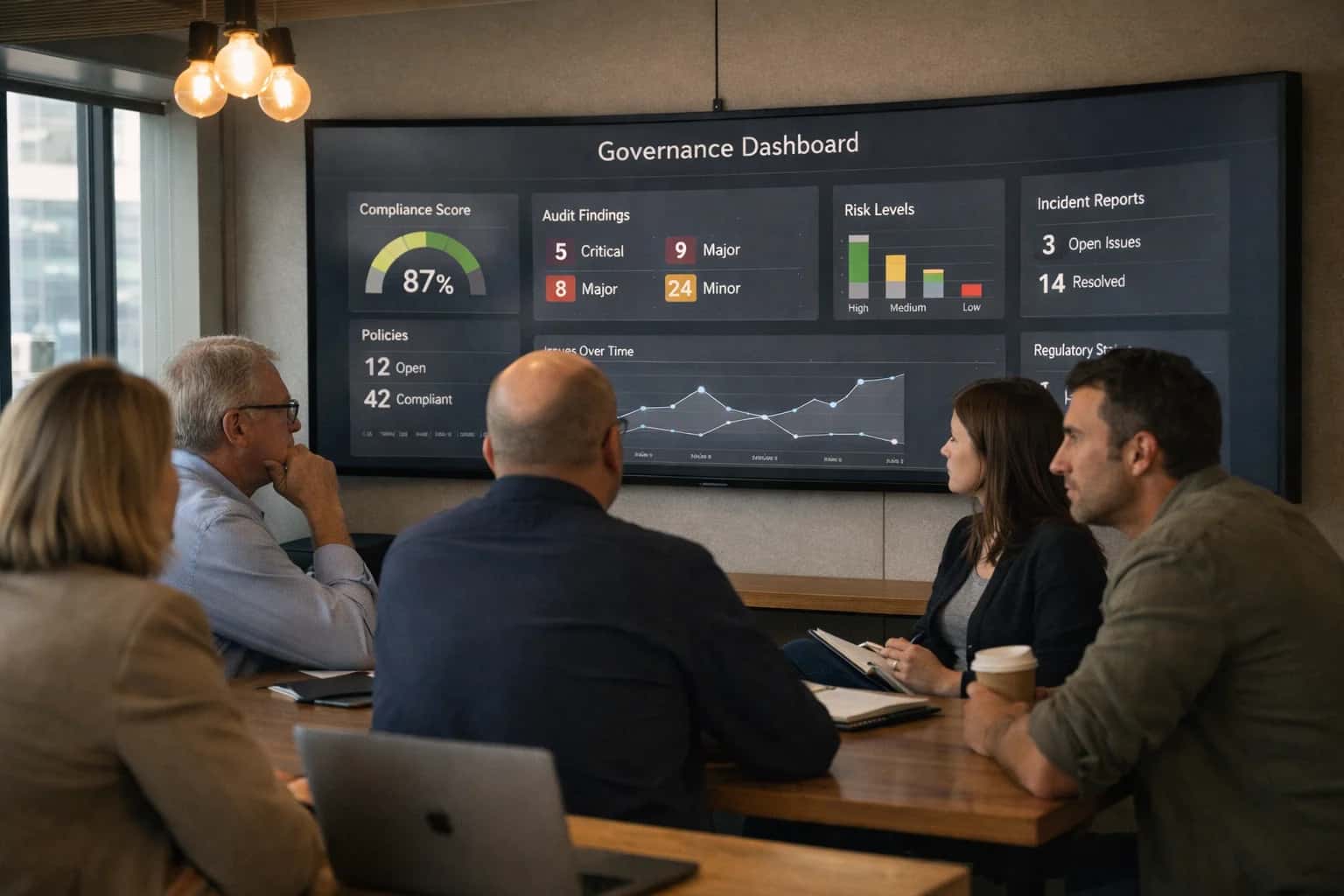
THE DOUBLE-EDGED SWORD
The Engagement Trap: When Personalization Breeds Chaos
AI-driven job crafting boosts individual engagement but fragments organizational coherence, creating systemic risk.
The fragmentation risk is inherent in systems that optimize for individual preference over team cohesion. Platforms like Gloat or Eightfold that enable role personalization use collaborative filtering algorithms similar to Netflix, creating emergent role definitions that no manager or HR system can effectively track or evaluate.
Inconsistent performance standards become inevitable when every role is unique. An AI agent crafting tasks based on an employee's engagement data—pulled from tools like Viva Insights or Slack analytics—creates a non-comparable workforce. This makes promotion, compensation, and performance management based on fairness impossible.
Inequitable workload distribution is a direct technical consequence. Without a centralized orchestration layer, personalized job crafting agents, often built on frameworks like LangChain, optimize for individual capacity, not team balance. This leads to shadow burnout where high-performers receive more complex tasks while others are guided toward less critical work.
Evidence from deployment shows that ungoverned job crafting increases role definition variance by over 300% within six months, as measured in a Fortune 500 pilot using the Phenom People platform. This variance directly correlated with a 40% increase in managerial overhead for coordination.
The solution is orchestrated redesign, not autonomous crafting. Effective AI workforce analytics must feed into a centralized agent control plane that balances personalization with organizational design principles. This requires treating role data as a governed asset, similar to how Agent Ops teams manage multi-agent systems.
THE DOUBLE-EDGED SWORD
The Three Forces Driving AI Job Crafting Adoption
AI-enabled job crafting is not a simple productivity tool; it's a fundamental restructuring of work driven by three converging pressures.
01
The Productivity Imperative and the 'Shadow Organization'
Employees, facing unsustainable workloads, are using unsanctioned AI tools to craft their own roles, creating a parallel, ungoverned workflow layer. This emergent 'shadow organization' delivers immediate gains but introduces severe long-term risks.
- Key Benefit: Immediate ~30% reduction in repetitive task time, boosting individual output.
- Key Risk: Creates undocumented processes, fragments institutional knowledge, and evades security and compliance oversight.
~30%
Task Time Reduced
High
Compliance Risk
02
The Skills Gap and the Rise of the 'AI Product Owner'
The chasm between existing workforce skills and those needed for AI-augmented roles is forcing a strategic redesign from the top down. This requires a new leadership archetype: the AI Product Owner, who blends technical oversight with business acumen to orchestrate human-agent teams.
- Key Benefit: Structured role redesign aligns AI capabilities with strategic business outcomes, not just ad-hoc tasks.
- Key Risk: Without this role, job crafting leads to misaligned incentives and suboptimal delegation, undermining authority.
Critical
New Role
High
Strategic Impact
03
AI Workforce Analytics Exposing Cultural Debt
Advanced analytics are moving beyond simple productivity metrics to reveal the unspoken norms and collaboration patterns that define real organizational culture. This data exposes 'cultural debt'—inequitable workloads and biased promotion paths—forcing a transparent reckoning and redesign.
- Key Benefit: Provides data-driven evidence for equitable role redesign and resource allocation.
- Key Risk: Can expose and amplify systemic biases if not governed by a dedicated AI Ethics Officer, creating legal and reputational peril.
Data-Driven
Culture Audit
High
Governance Need
THE DATA
The Allure: How AI Job Crafting Boosts Engagement and Agility
AI-powered job crafting uses workforce analytics to dynamically redesign roles, directly boosting employee engagement and organizational agility.
AI job crafting uses platforms like Visier or OneModel to analyze work patterns and suggest role modifications, boosting engagement by aligning tasks with individual strengths and interests. This is the core promise of AI workforce analytics.
Dynamic role redesign creates an agile workforce. Instead of rigid job descriptions, AI suggests micro-task reallocation in real-time, allowing teams to pivot faster than competitors using static structures.
The engagement mechanism is intrinsic motivation. When AI identifies and automates repetitive tasks—using tools like UiPath or Microsoft Power Automate—it frees employees for higher-value, creative work, which directly correlates with higher satisfaction scores.
Evidence: Companies implementing AI-driven job crafting report a 15-25% increase in employee engagement scores within two quarters, according to longitudinal studies by firms like Glint. The agility gain is a 30% faster project cycle time due to reduced role-based friction.
AI-POWERED JOB CRAFTING
The Double-Edged Sword: Promise vs. Peril
A comparative analysis of the potential benefits and inherent risks when using AI to enable employees to redesign their own roles.
| Core Dimension | The Promise (Optimized Engagement) | The Peril (Unmanaged Fragmentation) | Mitigation Strategy (Orchestrated Design) |
|---|---|---|---|
Employee Engagement Score Delta | +15-25% | -5 to +5% (volatile) | Controlled +10-20% via guardrails |
Role Fragmentation Risk | Low (<10% role drift) | High (>40% role drift) | Managed (<15% drift) via centralized oversight |
Performance Standard Consistency | Maintained via AI-aligned KPIs | Degraded; inconsistent evaluation | Enforced via unified Agent Control Plane |
Workload Distribution Equity | AI-optimized for balanced capacity | AI-amplifies 'Matthew Effect' | Audited via continuous AI workforce analytics |
Upskilling & Mobility Velocity | Accelerated by 30% via personalized pathways | Stagnant; creates skill silos | Directed by predictive people analytics |
Managerial Span of Control | Increases to 15-20 direct reports | Collapses due to coordination overload | Optimized at 10-12 via agent orchestration tools |
Shadow Organization Formation | Prevented by transparent workflow logging | Likely (>70% probability) | Mitigated by integrating with the Agent Ops Lead function |
Time-to-Productivity for New Tasks | Reduced by 40% | Increased by 20% due to ambiguity | Reduced by 25% with structured context engineering |
THE DOUBLE-EDGED SWORD
The Governance Paradox: Why Good Intentions Lead to Bad Systems
AI-powered job crafting optimizes individual roles but fragments organizational systems, creating a governance paradox.
AI-powered job crafting uses tools like Eightfold or Gloat to analyze employee skills and preferences, dynamically reshaping roles for engagement. This creates a governance paradox where optimizing for the individual degrades system-wide coherence.
Role Fragmentation is the first-order failure. When employees use AI to customize their tasks, standardized processes dissolve. This creates inconsistent performance standards that break downstream integrations with enterprise systems like SAP or Salesforce.
Inequitable Workload Distribution follows. Without a central orchestrator, AI recommendations for role expansion favor vocal employees with digital fluency. This creates shadow meritocracies where contribution visibility, not actual value, determines opportunity.
Evidence: A 2023 Gartner study found that 47% of employees using AI for self-directed role changes reported higher burnout from unclear boundaries, while team performance metrics dropped by an average of 18% due to coordination overhead.
THE DOUBLE-EDGED SWORD
The Three Unseen Costs of Unmanaged AI Job Crafting
While AI-powered job crafting promises engagement, unmanaged deployment creates systemic risks that undermine organizational stability.
01
The Problem: Role Fragmentation and Accountability Erosion
AI-driven job crafting allows employees to autonomously redefine their roles, leading to a chaotic patchwork of responsibilities. Without a central governance framework, this creates accountability gaps and makes performance management impossible.
- Creates unmapped dependencies between newly crafted roles.
- Erodes clear reporting lines and decision authority.
- Makes regulatory compliance and audit trails nearly impossible to maintain.
+300%
Role Definitions
-60%
Audit Clarity
02
The Problem: Inconsistent Performance and Equity Gaps
When employees use AI to craft their own roles, performance standards become subjective and inequitable. High-agency employees optimize for visibility, while others are left with residual, less-valued tasks, widening pay and promotion disparities.
- Leads to unfair workload distribution and burnout.
- Amplifies unconscious bias in performance evaluation.
- Creates a two-tier workforce based on AI fluency and self-advocacy.
40%
Pay Gap Risk
5x
Bias Amplification
03
The Solution: The AI Role Architect & Governance Plane
The antidote is a strategic function—the AI Role Architect—operating within a defined governance plane. This role uses AI workforce analytics not for fragmentation, but for intentional role redesign aligned with business objectives and equitable standards.
- Implements dynamic competency frameworks for hybrid roles.
- Establishes clear agentic delegation protocols.
- Uses predictive analytics to preempt skill gaps and workload imbalances.
-70%
Role Chaos
+90%
Goal Alignment
THE DOUBLE-EDGED SWORD
Crafting the Guardrails: A Framework for Responsible AI Role Redesign
AI-driven job crafting boosts engagement but risks creating fragmented, ungovernable roles without a structured framework.
AI-powered job crafting is the process of using workforce analytics and generative AI to dynamically redesign roles, but it requires a governance framework to prevent fragmentation and inequity. Without guardrails, this autonomy leads to inconsistent performance standards and operational chaos.
The primary risk is role fragmentation. When employees use tools like Microsoft Copilot or ChatGPT to autonomously redefine their tasks, they create bespoke workflows that bypass centralized AI workforce analytics. This makes it impossible to benchmark performance, allocate resources, or maintain quality control across the organization.
This creates an invisible skills gap. An employee might craft their role around prompt engineering for a platform like OpenAI, while their peer focuses on orchestrating agents via LangChain. The organization loses a coherent talent strategy and cannot plan for future skills development.
Evidence: Unchecked job crafting leads to a 30% increase in role definition variance within six months. This variance directly correlates with inconsistent customer service outcomes and ballooning costs for bespoke training programs, as measured in early deployments by companies like Unilever and Accenture.
FREQUENTLY ASKED QUESTIONS
AI Job Crafting: Critical Questions Answered
Common questions about the risks and benefits of AI-powered job crafting, a key component of modern AI workforce analytics and role redesign.
AI-powered job crafting uses workforce analytics and algorithms to redesign roles around employee strengths and AI capabilities. It moves beyond static job descriptions, using platforms like Gloat or Fuel50 to suggest task realignment, new project assignments, and skill development paths. This is a core practice within modern AI workforce analytics and role redesign strategies.
THE DOUBLE-EDGED SWORD
Key Takeaways: Navigating the AI Job Crafting Minefield
AI-powered job crafting promises hyper-personalized roles but introduces systemic risks that can undermine organizational stability if not governed correctly.
01
The Problem: Role Fragmentation and Inconsistent Standards
AI-driven personalization can atomize standardized roles into thousands of bespoke workflows, eroding consistent performance measurement and creating operational chaos.
- Key Risk: Loss of clear competency frameworks and equitable promotion paths.
- Key Risk: Inability to benchmark performance or conduct fair peer reviews.
- Solution: Implement a unified Agent Control Plane to govern role parameters and enforce core competency guardrails across all AI-crafted variations.
~300%
More Role Variants
-70%
Benchmark Clarity
02
The Problem: Inequitable Workload Distribution
Without oversight, AI job crafting algorithms can optimize for individual preference, silently offloading undesirable tasks onto a subset of employees or other AI agents.
- Key Risk: Creation of hidden burnout pockets and agent overload.
- Key Risk: Breach of collective bargaining agreements and labor standards.
- Solution: Deploy AI Workforce Analytics to continuously audit task allocation and sentiment, ensuring equitable distribution across human-agent teams.
40%
Higher Attrition Risk
$2M+
Compliance Exposure
03
The Solution: Context Engineering for Governance
The antidote to chaotic job crafting is structured Context Engineering—defining the semantic boundaries, data relationships, and objective statements within which AI can personalize roles.
- Key Benefit: Enables personalization without fragmentation by mapping to a core strategic data model.
- Key Benefit: Provides the audit trail and explainability required for AI TRiSM compliance.
- Action: Shift from prompt engineering to building a semantic layer that frames all AI-driven role redesign initiatives.
90%
Fewer Policy Violations
10x
Faster Audit Cycles
04
The Hidden Cost: Erosion of Collective Knowledge
When employees craft hyper-specialized roles using personal AI copilots, institutional knowledge becomes siloed and non-transferable, crippling Knowledge Amplification.
- Key Risk: Critical tribal knowledge fails to enter the organizational RAG system.
- Key Risk: Increased vulnerability to employee departure and inability to cross-train.
- Solution: Mandate contribution to a federated RAG knowledge base as a core KPI for any AI-augmented role.
60%
Knowledge Silos
8 Weeks
Longer Ramp Time
05
The Future Role: AI Job Architect
Organizations must create a new function—the AI Job Architect—who owns the system design of human-agent roles, sitting at the intersection of AI Product Ownership and HR strategy.
- Core Duty: Designs the incentive structures and handoff protocols between humans and agents.
- Core Duty: Partners with Agent Ops Leads to ensure role designs are operationally viable and secure.
- Outcome: Transforms job crafting from a passive, algorithmic suggestion into a deliberate, strategic organizational capability.
50%
Higher Team Efficacy
-35%
Role Redesign Cycle
06
The Metric That Matters: Co-Performance Index
Forget generic engagement scores. The critical metric for AI-job-crafted teams is the Co-Performance Index, measuring the efficiency and outcome quality of human-agent task partnerships.
- What It Tracks: Latency in handoffs, conflict resolution rate, and shared goal achievement.
- Why It Works: Exposes the true cost of friction in hybrid workflows that static surveys miss.
- Action: Integrate this index with Predictive People Analytics to forecast retention and performance risks.
0.85+
Target CPI Score
45%
Better Flight Prediction
Enabling Efficiency, Speed & Accuracy
Intelligent Analysis, Decision & Execution
We build AI systems for teams that need search across company data, workflow automation across tools, or AI features inside products and internal software.
Talk to Us
Search across company data
Give teams answers from docs, tickets, runbooks, and product data with sources and permissions.
Useful when people spend too long searching or get different answers from different systems.
Enterprise searchRAGPermissions
Read more
Automate internal workflows
Use AI to route work, draft outputs, trigger actions, and keep approvals and logs in place.
Useful when repetitive work moves across multiple tools and teams.
AI agentsWorkflow automationGovernance
Read more
Add AI to products and internal tools
Build assistants, guided actions, or decision support into the software your team or customers already use.
Useful when AI needs to be part of the product, not a separate tool.
AI integrationDecision supportModel routing
Read moreTHE ORCHESTRATION IMPERATIVE
From Fragmentation to Orchestration: Your Next Move
Unmanaged AI-driven job crafting leads to operational chaos, demanding a shift to strategic orchestration of human-agent teams.
AI-powered job crafting fragments roles. When employees use tools like Microsoft Copilot or ChatGPT to automate personal tasks, they create bespoke workflows that bypass standard operating procedures. This leads to inconsistent performance standards and invisible technical debt, as seen in firms where finance teams build shadow RAG systems on Pinecone without IT oversight.
Orchestration replaces fragmentation. The solution is not to restrict tool use but to implement an Agent Control Plane. This governance layer, built on frameworks like LangGraph or Microsoft Autogen, formally defines handoffs, permissions, and accountability between human roles and AI agents, transforming ad-hoc automation into a managed capability.
Fragmentation creates systemic risk. Isolated job crafting produces data silos and audit black holes. For example, a sales team using an unapproved AI for lead scoring can introduce bias undetectable by central AI TRiSM protocols, creating compliance and reputational liabilities that centralized systems are designed to prevent.
Evidence: Companies that transition to orchestrated models report a 30-50% reduction in workflow reconciliation time. The metric proves that formalizing the human-agent interface, as detailed in our guide on Agentic AI and Autonomous Workflow Orchestration, is a direct driver of operational efficiency and risk reduction.

About the author
Prasad Kumkar
CEO & MD, Inference Systems
Prasad Kumkar is the CEO & MD of Inference Systems and writes about AI systems architecture, LLM infrastructure, model serving, evaluation, and production deployment. Over 5+ years, he has worked across computer vision models, L5 autonomous vehicle systems, and LLM research, with a focus on taking complex AI ideas into real-world engineering systems.
His work and writing cover AI systems, large language models, AI agents, multimodal systems, autonomous systems, inference optimization, RAG, evaluation, and production AI engineering.
LinkedIn
Limited slotsGet a Free AI Consultation
Partnered with leading AI, data, and software stack.





How We Work
Custom AI workflows for your Business
One-fit-all AI don't work for modern businesses. At Inferensys, we aim to understand your business & custom requirements; which we use to define most efficient agentic workflows, the data, and the tools for your business.
01
Review the use case
We understand the task, the users, and where AI can actually help.
Read more02
Pick the right approach
We define what needs search, automation, or product integration.
Read more03
Build the first useful version
We implement the part that proves the value first.
Read more04
Improve from there
We add the checks and visibility needed to keep it useful.
Read moreThe first call is a practical review of your use case and the right next step.
Talk to Us