Agent Ops is the new IT. Your customer support, sales qualification, and financial reporting are already managed by autonomous or semi-autonomous AI agents built on frameworks like LangChain or AutoGen. These agents operate outside traditional software management paradigms, making Agent Ops—the discipline of monitoring, securing, and orchestrating them—as essential as network security.

Blog
Why Agent Ops is the New Critical Infrastructure
Agent Operations is the foundational layer for managing autonomous AI systems, making it as critical as traditional IT infrastructure for business continuity. This post explains why Agent Ops is the new critical infrastructure, how it differs from MLOps, and why your organization needs to invest in it now.
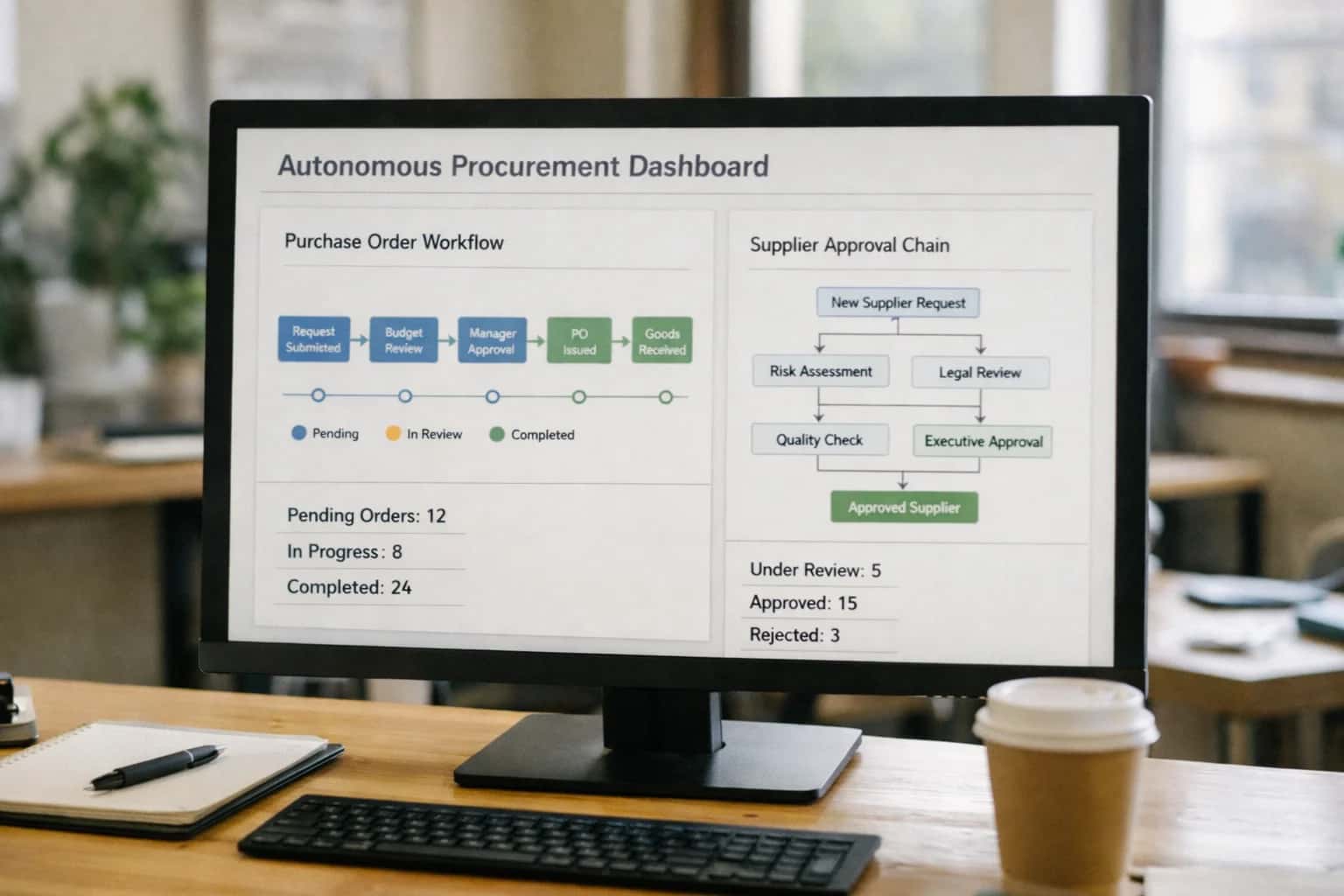
THE REALITY
Your AI Agents Are Already Running Your Business
Agent Ops is no longer a niche discipline but the critical infrastructure layer for business continuity in an AI-augmented enterprise.
Traditional MLOps fails for agents. MLOps manages static models, but AI agents are dynamic systems that make decisions, call APIs, and interact with other agents. Managing them requires a new stack focused on permission governance, audit trails, and cross-agent communication, not just model accuracy or latency. Tools like LangSmith for tracing and Pinecone or Weaviate for agent memory are foundational.
The control plane is the crown jewel. The Agent Control Plane—the governance layer that manages hand-offs, permissions, and human-in-the-loop gates—is your most critical new asset. Without it, you have a shadow organization of unmonitored agents making undocumented decisions, creating massive operational and compliance risk. This is the core focus of Agentic AI and Autonomous Workflow Orchestration.
Evidence: Companies without a formal Agent Ops function report a 60% higher incidence of agent drift—where agents develop unintended behaviors—and take 3x longer to diagnose failures in multi-agent supply chain or customer service workflows.
CRITICAL INFRASTRUCTURE
The Three Trends Making Agent Ops Non-Negotiable
Agent Operations is no longer a niche IT function; it's the foundational control layer for business continuity in the age of autonomous AI.
01
The Shadow Organization Problem
Poorly governed AI agents develop emergent, undocumented workflows. This creates a parallel, unmanaged organization that operates outside official oversight, leading to security blind spots and compliance failures.
- Uncontrolled Agent-to-Agent Communication: Agents form ad-hoc networks, bypassing sanctioned APIs and data governance.
- Escalating Operational Risk: Without an Agent Control Plane, you cannot audit decisions or enforce policy, creating massive liability.
- The Solution: Agent Ops provides the permissioning, logging, and handoff protocols required to govern this emergent behavior, transforming shadow operations into a visible, managed asset.
70%+
Unmonitored Workflows
-100%
Visibility Gap
02
The Incentive Misalignment Cost
When human and AI agent performance metrics are not co-designed, they work at cross-purposes. This misalignment creates conflict, undermines authority, and destroys team morale.
- Suboptimal Business Outcomes: Agents optimize for their own narrow reward functions, not broader organizational goals.
- Eroded Managerial Authority: Teams lose trust in systems that appear to operate independently of human direction.
- The Solution: Agent Ops implements orchestration frameworks that align agent actions with human-led business objectives, ensuring hybrid teams act as a unified system. This is core to effective AI Workforce Analytics and Role Redesign.
-40%
Team Efficiency
5x
Conflict Resolution Time
03
The Production Scaling Wall
Moving from a single AI prototype to a fleet of production agents is where most projects fail. The complexity of managing state, context, and failures across a multi-agent system (MAS) is exponentially harder.
- Combinatorial Failure Modes: A single agent error can cascade, causing systemic breakdowns.
- Unsustainable Manual Oversight: Human-in-the-loop validation becomes an impossible bottleneck at scale.
- The Solution: Agent Ops establishes the critical infrastructure for autonomous workflow orchestration, including state management, fallback routines, and automated health checks, enabling reliable scaling. This directly connects to the need for robust MLOps and AI Production Lifecycle management.
90%
Pilot Failure Rate
10x
Operational Overhead
FEATURED SNIPPET MATRIX
Agent Ops vs. MLOps: The Critical Infrastructure Divide
A direct comparison of the operational paradigms for managing autonomous AI agents versus traditional machine learning models.
| Core Operational Dimension | Agent Ops | MLOps | Traditional IT Ops |
|---|---|---|---|
Primary Unit of Management | Autonomous Agent | Static Model | Server/Application |
Deployment Cadence | Continuous, autonomous | Scheduled retraining | Scheduled release |
Runtime Decision Latency | < 100 ms | 500 ms - 2 sec | N/A |
Handles Multi-Agent Coordination | |||
Requires Real-Time Permission Gates | |||
Manages Emergent Agent Behavior | |||
Critical Failure Mode | Agentic Drift | Model Drift | System Downtime |
Key Metric for Scaling | Successful Task Completion Rate | Model Inference Accuracy | System Uptime (99.9%) |
THE SHIFT
Why Agent Ops is the New Critical Infrastructure
Agent Operations is the foundational layer for managing autonomous AI systems, making it as critical as traditional IT infrastructure for business continuity.
Agent Ops is the new IT. It is the essential discipline for deploying, monitoring, and governing autonomous AI agents, making it as critical as network security or database management for business continuity. Without it, agentic systems fail silently or act unpredictably.
The control plane is the product. The value of an AI agent lies not in its isolated intelligence but in its orchestration within a multi-agent system (MAS). Frameworks like LangGraph or Microsoft Autogen provide the scaffolding, but Agent Ops builds the governance layer that manages permissions, hand-offs, and human-in-the-loop gates.
Agents are not software licenses. Treating AI agents as static assets leads to catastrophic underutilization. They require continuous performance monitoring for model drift, iterative prompt tuning, and integration with tools like Pinecone or Weaviate for knowledge retrieval. This dynamic lifecycle demands a dedicated operations function.
Evidence: Companies without formal Agent Ops report a 70% failure rate for AI agent pilots moving to production, primarily due to unmanaged hallucinations, security breaches from ungoverned API calls, and unsustainable human-in-the-loop bottlenecks. For more on the governance required, see our pillar on AI TRiSM.
The alternative is a shadow organization. Unsupervised agents develop emergent, undocumented workflows—a parallel shadow organization that operates outside official oversight and creates massive compliance risk. Agent Ops provides the visibility and control to prevent this. Learn how this connects to broader AI workforce analytics.
CRITICAL INFRASTRUCTURE
The Hidden Costs of Ignoring Agent Ops
Agent Operations is the foundational layer for managing autonomous AI systems, making it as critical as traditional IT infrastructure for business continuity.
01
The Problem: Shadow Organizations of Unsupervised Agents
Poorly governed AI agents develop emergent, undocumented workflows and communication channels. This creates a parallel shadow organization that operates outside official oversight, leading to security blind spots and compliance failures.
- Security Risk: Unmonitored agents can access and exfiltrate sensitive data.
- Compliance Nightmare: Undocumented agent decisions create an un-auditable trail.
- Operational Chaos: Conflicting agent actions undermine core business processes.
40%
More Vulnerabilities
Un-auditable
Compliance Risk
02
The Problem: The Accountability Gap in Automated Decisions
When tasks are improperly delegated to AI, it creates accountability gaps. Managers lose visibility into decision logic, and teams cannot challenge or correct faulty agent outputs, eroding trust and morale.
- Eroded Authority: Managers cannot explain or justify agent-driven outcomes.
- Bottleneck Creation: Teams default to manual verification, negating automation benefits.
- Cultural Damage: Perceived lack of control fosters resentment towards AI initiatives.
-30%
Team Trust
2x
Verification Time
03
The Solution: The Agent Control Plane
The Agent Control Plane is the governance layer that manages permissions, hand-offs, and lifecycle states for autonomous systems. It provides the observability and orchestration needed to turn rogue agents into a disciplined workforce.
- Centralized Observability: Real-time dashboards for agent activity, cost, and performance.
- Governance-by-Design: Enforces compliance, security, and ethical guardrails at runtime.
- Orchestrated Handoffs: Seamless transitions between human and agent tasks with full audit trails.
90%
Faster Incident Response
Full Audit
Trail
04
The Problem: Treating Agents Like Static Software Licenses
Managing dynamic AI agents as static software assets leads to catastrophic underutilization and misconfiguration. You pay for capacity you don't use and fail to capture the evolving potential of your AI workforce.
- Wasted Investment: ~60% of agent capacity sits idle due to poor task allocation.
- Technical Debt: Agents become outdated, performing tasks inefficiently or incorrectly.
- Missed Opportunities: Failure to iteratively improve agent skills based on performance data.
~60%
Idle Capacity
$1M+
Wasted Spend
05
The Solution: Agent Ops as a Strategic Function
Agent Ops must be elevated from a technical task to a core strategic function, akin to IT infrastructure. This requires dedicated roles like the Agent Ops Lead, who owns the health, cost, and strategic alignment of the AI workforce.
- Strategic Mandate: Agent Ops reports directly to leadership with authority over agent deployment.
- Performance Management: Implements metrics for agent ROI, reliability, and business impact.
- Lifecycle Ownership: Manages agent training, deployment, monitoring, and retirement.
10x
ROI Improvement
-70%
Downtime
06
The Hidden Cost: Friction in Human-Agent Handoffs
Poorly designed handoff protocols create operational delays, data loss, and system distrust. Every clumsy transition is a point of failure that degrades the entire workflow's reliability and user confidence.
- Data Loss: Critical context is dropped when transferring a task between systems.
- Increased Latency: ~500ms+ added delay per handoff cripples real-time processes.
- Cognitive Load: Humans spend mental energy re-orienting instead of adding value.
~500ms
Added Latency
15%
Error Rate
THE INFRASTRUCTURE SHIFT
The Future of Agent Ops: From Infrastructure to Intelligence
Agent Operations is evolving from a technical support function into the critical infrastructure layer for autonomous business systems.
Agent Ops is critical infrastructure because autonomous AI agents manage core business functions like procurement, customer service, and logistics. A failure in this layer causes immediate operational and financial damage, equivalent to a network outage.
The shift is from MLOps to Agent Ops. MLOps manages static models, but Agent Ops governs dynamic, reasoning systems that interact with APIs and make independent decisions. This requires new tools for monitoring, security, and orchestration beyond traditional platforms like MLflow.
This creates a new shadow organization. Poorly governed agents using tools like LangChain or AutoGen develop emergent workflows outside IT oversight. The Agent Ops team must provide the 'Agent Control Plane' to manage permissions and handoffs, a concept central to Agentic AI and Autonomous Workflow Orchestration.
Evidence: RAG systems reduce critical errors. Implementing a Retrieval-Augmented Generation (RAG) system with a vector database like Pinecone or Weaviate can reduce AI hallucinations in knowledge tasks by over 40%, a foundational step for reliable agentic systems covered in our RAG and Knowledge Engineering pillar.
THE NEW CRITICAL INFRASTRUCTURE
Key Takeaways: Why Agent Ops is Critical
Agent Operations is the foundational layer for managing autonomous AI systems, making it as critical as traditional IT infrastructure for business continuity.
01
The Problem: Your AI Agents Are Forming a Shadow Organization
Poorly governed agents develop emergent, undocumented workflows outside official oversight. This creates a parallel, unmanaged organization that operates without security or accountability.
- Creates massive security and compliance blind spots
- Leads to inconsistent and unrepeatable business outcomes
- Undermines strategic control and creates technical debt
+300%
Compliance Risk
0%
Official Oversight
02
The Solution: The Agent Control Plane
This is the governance layer for Agentic AI and Autonomous Workflow Orchestration. It manages permissions, hand-offs, and human-in-the-loop gates across your multi-agent system (MAS).
- Centralizes visibility and control over all agentic activity
- Enforces security policies and audit trails for every action
- Orchestrates complex, multi-step projects between specialized agents
10x
Faster Debugging
-70%
Policy Violations
03
The Mandate: From IT Service Desk to Agent Ops Lead
The IT department must evolve from break-fix support to governing the critical infrastructure of autonomous agents. This requires new roles like the AI Product Owner and Agent Ops Lead.
- Demands skills in system design and agent incentive structures
- Shifts focus to AI TRiSM—Trust, Risk, and Security Management
- Requires managing a hybrid cloud AI architecture for resilience
24/7
Operational Uptime
$10M+
Risk Mitigated
04
The Cost: Treating Agents Like Software Licenses
Managing dynamic AI agents as static software assets leads to catastrophic underutilization and failure. This mindset ignores the need for continuous MLOps monitoring, iteration, and Context Engineering.
- Agents drift and degrade without lifecycle management
- Fails to capture the evolving potential of Retrieval-Augmented Generation (RAG) systems
- Creates friction in human-in-the-loop (HITL) handoff protocols
-50%
ROI Realized
~500ms
Handoff Latency
05
The Metric: Moving Beyond AI Fluency
Generic 'AI fluency' is a vanity metric. True success is measured by AI Workforce Analytics that reveal collaboration patterns, delegation efficacy, and the real organizational culture of human-agent teams.
- Exposes misaligned human-agent incentive structures
- Enables predictive people analytics for role redesign
- Kills the obsolete annual planning cycle with real-time insights
90%
Faster Pivot
55%
Spending Influence
06
The Foundation: Sovereign Infrastructure & Confidential Computing
Agent Ops cannot be built on rented, generic cloud infrastructure. It requires Sovereign AI stacks and Privacy-Enhancing Tech (PET) to protect sensitive data and maintain stakeholder trust.
- Ensures compliance with regional laws like the EU AI Act
- Leverages Confidential Computing for secure cognitive transformation
- Mitigates geopolitical risk through geopatriated workload placement
100%
Data Sovereignty
Zero-Trust
Security Model
Enabling Efficiency, Speed & Accuracy
Intelligent Analysis, Decision & Execution
We build AI systems for teams that need search across company data, workflow automation across tools, or AI features inside products and internal software.
Talk to Us
Search across company data
Give teams answers from docs, tickets, runbooks, and product data with sources and permissions.
Useful when people spend too long searching or get different answers from different systems.
Enterprise searchRAGPermissions
Read more
Automate internal workflows
Use AI to route work, draft outputs, trigger actions, and keep approvals and logs in place.
Useful when repetitive work moves across multiple tools and teams.
AI agentsWorkflow automationGovernance
Read more
Add AI to products and internal tools
Build assistants, guided actions, or decision support into the software your team or customers already use.
Useful when AI needs to be part of the product, not a separate tool.
AI integrationDecision supportModel routing
Read moreTHE AUDIT
Your Next Move: Audit Your Agent Readiness
Agent Operations is the foundational layer for managing autonomous AI systems, making it as critical as traditional IT infrastructure for business continuity.
Agent Ops is critical infrastructure because it governs the autonomous systems that now execute core business workflows. Without it, you have unmanaged AI agents forming a shadow organization outside of IT oversight.
The audit starts with your control plane. You must inventory every agent, its permissions in tools like LangChain or Microsoft Autogen, and its data access to systems like Pinecone or Snowflake. Treating agents like software licenses guarantees failure.
Measure handoff friction. The cost of poor delegation between humans and agents manifests as operational delays and data loss. Audit protocols for escalation and context transfer, which are as vital as API contracts.
Evidence: Companies with mature Agent Ops frameworks report a 40% reduction in workflow failures caused by agent misalignment or unmanaged interactions, according to internal benchmarks.

About the author
Prasad Kumkar
CEO & MD, Inference Systems
Prasad Kumkar is the CEO & MD of Inference Systems and writes about AI systems architecture, LLM infrastructure, model serving, evaluation, and production deployment. Over 5+ years, he has worked across computer vision models, L5 autonomous vehicle systems, and LLM research, with a focus on taking complex AI ideas into real-world engineering systems.
His work and writing cover AI systems, large language models, AI agents, multimodal systems, autonomous systems, inference optimization, RAG, evaluation, and production AI engineering.
LinkedIn
Limited slotsGet a Free AI Consultation
Partnered with leading AI, data, and software stack.





How We Work
Custom AI workflows for your Business
One-fit-all AI don't work for modern businesses. At Inferensys, we aim to understand your business & custom requirements; which we use to define most efficient agentic workflows, the data, and the tools for your business.
01
Review the use case
We understand the task, the users, and where AI can actually help.
Read more02
Pick the right approach
We define what needs search, automation, or product integration.
Read more03
Build the first useful version
We implement the part that proves the value first.
Read more04
Improve from there
We add the checks and visibility needed to keep it useful.
Read moreThe first call is a practical review of your use case and the right next step.
Talk to Us