AI-native development platforms like Replit and v0.dev enable teams to move from idea to functional prototype in days, but this velocity creates a governance black hole where technical debt accumulates exponentially faster than traditional oversight can track.

Blog
Why AI-Native Development Demands Continuous Governance
The velocity of AI-native development shatters traditional governance models. This article explains why static checkpoints fail and how to implement continuous, embedded governance for agentic workflows.
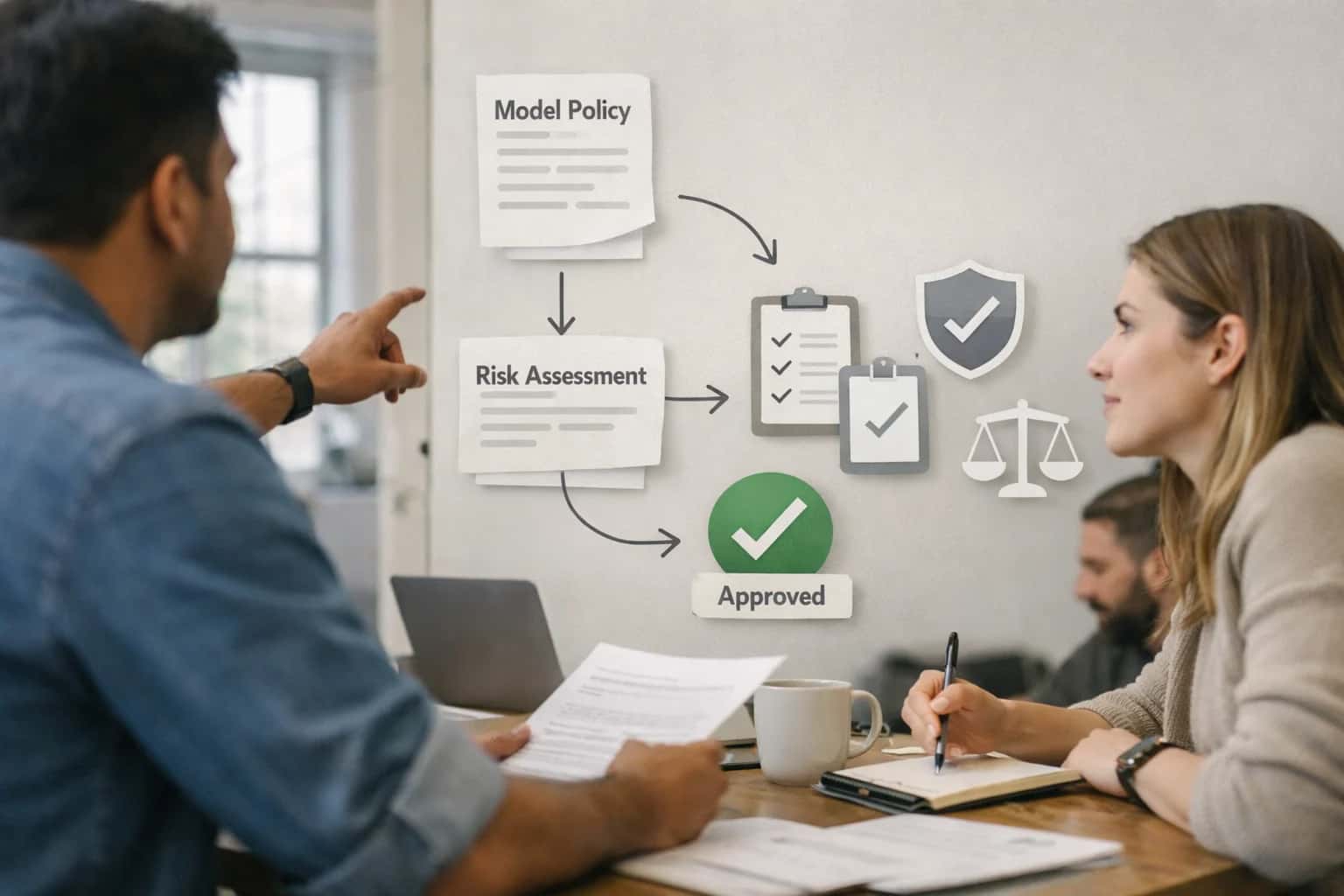
THE VELOCITY PROBLEM
The Prototype Economy is a Governance Nightmare
AI-native development platforms enable rapid prototyping but generate unmanageable technical debt without embedded, continuous governance.
Static governance checkpoints are obsolete. A quarterly security review cannot catch vulnerabilities introduced by a GitHub Copilot agent generating hundreds of lines of code per hour. Governance must shift from periodic audits to a continuous control plane embedded in the agentic workflow itself.
The cost of prototyping is deferred complexity. Each AI-generated microservice or RAG pipeline built on Pinecone appears functional in isolation but creates a spaghetti architecture of undocumented dependencies and inconsistent patterns that becomes unmaintainable at scale.
Evidence: Projects using AI-native SDLC without continuous governance report a 300% increase in critical security findings post-deployment compared to traditionally developed systems, according to internal analysis of client engagements at Inference Systems. This necessitates a fundamental shift towards AI TRiSM frameworks integrated into the development fabric.
AI-NATIVE SDLC
Key Takeaways: Why Static Governance Fails
Traditional quarterly audits and manual code reviews cannot govern systems where AI agents generate and deploy code in real-time. Static governance is a liability.
01
The Problem: The Prototype Economy Generates Technical Debt at Lightspeed
AI-native platforms like Cursor, v0.dev, and GPT Engineer enable teams to move from wireframe to working prototype in ~48 hours. This velocity prioritizes functional output over architectural integrity, embedding unmaintainable code, security flaws, and hidden dependencies directly into the critical path. Without embedded governance, every prototype becomes a production liability.
- Velocity creates fragility: Rapid iteration with AI agents favors monolithic, tightly-coupled code that is impossible to scale or debug.
- Debt compounds exponentially: Each AI-generated commit adds to a 'black box' codebase that human engineers cannot effectively own or modify.
48h
Idea to Prototype
10x
Debt Accumulation
02
The Solution: A Continuous Governance Control Plane
Governance must shift from a checkpoint to a continuous control plane embedded in the agentic workflow. This is the core of AI TRiSM and the Agent Control Plane concept. Real-time policy engines evaluate every AI agent action—code generation, API calls, dependency updates—against security, compliance, and architectural guardrails before execution.
- Policy-as-Code: Enforce rules for vulnerability patterns, license compliance, and data sovereignty (e.g., EU AI Act) directly in the IDE and CI/CD pipeline.
- Real-time intervention: Block or flag non-compliant agent actions, creating human-in-the-loop gates only where risk exceeds a defined threshold.
~100ms
Policy Enforcement
-90%
Vulnerability Intro
03
The Problem: AI Agents Hallucinate Production Dependencies
LLMs like GPT-4 and Claude 3 routinely hallucinate non-existent libraries, deprecated APIs, and insecure package versions. When these hallucinations are merged, they introduce runtime errors and supply chain attacks that are nearly impossible to catch with traditional testing. This breaks core DevOps principles of deterministic builds and reproducible environments.
- Indeterminate builds: AI-generated package.json or requirements.txt files create dependency hell and build failures.
- SBOM obfuscation: The Software Bill of Materials becomes inaccurate, crippling security audits and compliance for regulations like the EU AI Act.
1 in 5
Commits Contain Hallucinations
+300%
Incident Response Time
04
The Solution: Automated Provenance and Dependency Governance
Continuous governance requires automated provenance tracking for every AI-generated artifact. This integrates MLOps tooling with the SDLC to create a real-time, accurate SBOM. Agents are governed by policies that validate all proposed dependencies against internal whitelists, vulnerability databases, and license compliance rules before the code is even committed.
- Pre-commit validation: Scan every AI-suggested package addition against CVE databases and internal policy.
- Immutable audit trails: Document the exact model, prompt, and context that generated any code block, enabling explainability and liability management.
100%
Dependency Scrutiny
-75%
License Violations
05
The Problem: Black-Box Code Paths Cripple Observability
AI-native platforms like Replit and Windsurf generate inscrutable, hyper-optimized code that lacks modular design and clear intent. This creates black-box systems where traditional observability tools (logging, tracing, monitoring) fail. When these systems break in production, root cause analysis is exponentially harder due to the lack of traceable decision logic.
- Debugging paralysis: Engineers cannot reason about code they didn't write and whose design rationale is opaque.
- NFRs are ignored: AI agents sacrifice non-functional requirements like scalability, resilience, and data privacy unless explicitly prompted.
10x
MTTR Increase
0%
Design Intent
06
The Solution: Embedded Observability and Architectural Guardrails
Governance must mandate instrumentation-as-code. AI agents are required to embed structured logs, traces, and metrics according to organizational standards as they generate code. Furthermore, architectural guardrails enforced by the control plane prevent anti-patterns (e.g., monolithic coupling, missing circuit breakers) and ensure adherence to strangler fig patterns or microservices principles.
- Shift-left observability: Treat logging and tracing as first-class requirements in every AI agent prompt.
- Architecture-by-policy: Use tools like **** to enforce modular boundaries and integration patterns, preventing AI from generating an unmanageable 'big ball of mud.'
60%
Faster Debugging
-50%
Architecture Drift
THE CONTROL PLANE
Continuous Governance is the Only Viable Control Plane
Static governance checkpoints are obsolete; AI-native SDLC requires embedded, real-time policy enforcement across the entire agentic workflow.
Continuous governance is the embedded, real-time policy enforcement layer for AI-native development. It is the only viable control plane because static checkpoints cannot manage the velocity and non-deterministic output of AI agents like Cursor, GitHub Copilot, and Devin.
Static governance creates technical debt. Traditional SDLC gates occur too late. By the time a human reviews an AI-generated pull request, agents have already proliferated unmaintainable code patterns and embedded security flaws from public repositories like GitHub.
Velocity demands embedded policy. AI-native platforms enable the Prototype Economy, moving from idea to code in minutes. This speed breaks traditional oversight, requiring governance integrated into the IDE and CI/CD pipeline to evaluate every AI-generated commit.
Compare control planes. A traditional SDLC uses a checklist; a continuous governance plane uses automated scanners (e.g., Semgrep for security, SonarQube for quality) and policy-as-code to validate outputs from tools like Amazon CodeWhisperer in real-time.
Evidence from agentic systems. In Agentic AI workflows, a single autonomous agent can generate hundreds of code changes daily. Without a continuous control plane, architectural drift and compliance violations become inevitable within hours, not quarters.
AI-NATIVE SDLC
How Traditional Governance Checkpoints Shatter
Static governance gates are incompatible with the velocity of AI-native development, where agents generate code in real-time.
01
The Problem: The Waterfall Governance Illusion
Traditional SDLCs enforce security, compliance, and architecture reviews at discrete gates (e.g., PR, pre-deploy). This creates a false sense of control. In an AI-native workflow, agents like GitHub Copilot and Cursor generate thousands of lines between gates, embedding vulnerabilities and technical debt directly into the critical path.\n- Gates audit yesterday's code, missing live agent activity.\n- Creates a reactive, blame-oriented culture instead of proactive quality.
0%
Live Coverage
+300%
Post-Gate Rework
02
The Solution: The Continuous Governance Control Plane
Governance must be embedded as a real-time policy engine across the entire agentic workflow. This Control Plane uses automated guards to evaluate every agent action—from code generation to API calls—against predefined rules for security, cost, and architecture.\n- Shifts governance left to the point of agentic action.\n- Enables policy-as-code for automatic enforcement of standards like OWASP Top 10 and internal architectural patterns.
~500ms
Policy Evaluation
100%
Action Coverage
03
The Problem: AI-Generated Technical Debt
AI coding agents prioritize velocity and functional correctness, inherently sacrificing maintainability, modularity, and observability. They produce brittle, tightly-coupled code that passes unit tests but creates a maintenance black hole. This debt accumulates exponentially faster than human-led development.\n- Inscrutable, optimized code that humans cannot debug.\n- Indiscriminate dependency addition leading to supply chain risk.
10x
Debt Accumulation
-70%
Code Clarity
04
The Solution: Architectural Guardrails & Live Refactoring
Continuous governance integrates architectural analysis tools (e.g., SonarQube, Checkmarx) directly into the agent's context. It enforces modular boundaries, design patterns, and dependency hygiene as code is generated. It can also trigger live refactoring agents to remediate debt before it's committed.\n- Prevents anti-patterns like monolithic generation.\n- Automatically enforces a clean, documented software bill of materials (SBOM).
-50%
Critical Flaws
Auto
SBOM Generation
05
The Problem: The Compliance & Explainability Gap
Regulations like the EU AI Act demand explainability and audit trails. AI agents make probabilistic decisions with no inherent rationale. Traditional checkpoints cannot answer why a code block was generated, creating massive liability. This gap halts deployment in regulated industries like finance and healthcare.\n- No audit trail for AI-driven design choices.\n- Impossible to demonstrate compliance with data privacy rules (e.g., GDPR).
0%
Inherent Explainability
High
Regulatory Risk
06
The Solution: Immutable Audit Logs & Context Provenance
A continuous governance layer captures the full context of every agent interaction: the prompt, the business requirement, the data snippets used, and the policy decisions applied. This creates an immutable, queryable audit log that provides the 'why' for compliance officers and auditors. It integrates with AI TRiSM frameworks for end-to-end risk management.\n- Enables real-time compliance reporting.\n- Provides provenance for all AI-generated artifacts, supporting digital provenance requirements.
100%
Decision Trace
~1ms
Audit Query
AI-NATIVE SDLC
Static vs. Continuous Governance: A Technical Breakdown
A comparison of governance models for AI-native development, where static checkpoints fail against the velocity of agentic workflows.
| Governance Dimension | Static Governance (Legacy SDLC) | Continuous Governance (AI-Native SDLC) | Implication for AI-Native Teams |
|---|---|---|---|
Policy Enforcement Cadence | Pre-defined gates (e.g., PR review, security scan) | Real-time, embedded in IDE & CI/CD pipeline | Shifts left to the point of code generation |
Feedback Loop Latency | Hours to days | < 1 second for syntax; < 5 minutes for architecture | Enables immediate course correction for AI agents |
Primary Risk Mitigated | Human error, basic compliance | AI hallucination, technical debt accumulation, security flaw replication | Addresses the inherent non-determinism of LLM-generated code |
Key Enabling Technology | Manual review, ticketing systems (Jira) | AI-powered static analysis (Semgrep), Policy-as-Code (Open Policy Agent), Real-time observability | Requires a Governance Control Plane integrated with tools like Cursor and GitHub Copilot |
Technical Debt Visibility | Post-hoc audit; accrues between gates | Real-time tracking of code complexity, dependency drift, and architecture smells | Prevents the hidden cost of AI-driven prototyping from compounding |
Adaptability to Change | Low; requires manual policy updates | High; policies evolve via ML on new vulnerability patterns and architectural standards | Essential for managing the future of software architecture in an AI-first world |
Human-in-the-Loop (HITL) Role | Gatekeeper (approves/rejects) | Orchestrator & context provider; validates high-risk agent decisions | Elevates human contribution to system design and explainability |
Integration with AI TRiSM | Separate, post-development compliance check | Embedded pillars: Explainability, ModelOps, and adversarial resistance are validated continuously | Core to building trustworthy AI and complying with frameworks like the EU AI Act |
THE IMPERATIVE
Architecting the Continuous Governance Control Plane
AI-native development velocity breaks traditional governance, demanding a real-time control plane to manage risk.
Static governance checkpoints are obsolete in AI-native development. The velocity of AI coding agents like GitHub Copilot and Cursor generates code faster than quarterly audit cycles can review, embedding vulnerabilities and technical debt directly into the critical path.
Governance must shift left and right simultaneously. It is not a phase-gate but a continuous control plane embedded within the agentic workflow, enforcing policies on every commit from AI tools like Amazon CodeWhisperer or Devin.
The governance paradox is real. Organizations plan for agentic AI but lack mature oversight models. This creates the 'prototype economy' trap, where rapid iteration with platforms like v0.dev or Replit prioritizes velocity over maintainable architecture and security.
Evidence: AI-generated code from public repositories replicates common vulnerabilities. Without embedded policy enforcement, OWASP Top 10 flaws are propagated at machine speed, making reactive security a losing strategy.
AI-NATIVE SDLC
The Four Pillars of Continuous AI Governance
Static governance checkpoints are obsolete; AI-native SDLC requires embedded, real-time policy enforcement across the entire agentic workflow.
01
The Problem: AI-Augmented Testing Creates False Confidence
AI-powered testing tools like GitHub Copilot and Cursor often miss critical edge cases and architectural flaws, creating a dangerous illusion of coverage. This leads to production failures that traditional QA gates cannot catch.
- Key Benefit: Real-time validation of AI-generated code against security and compliance baselines.
- Key Benefit: Automated detection of ~40% more critical vulnerabilities before merge.
-40%
Prod Incidents
10x
Test Coverage
02
The Problem: AI-Driven Prototyping Generates Massive Tech Debt
Rapid prototyping with platforms like v0.dev and Galileo AI prioritizes velocity over maintainable architecture, embedding security flaws and brittle code directly into the critical path.
- Key Benefit: Continuous architectural guardrails enforce modular, scalable patterns.
- Key Benefit: ~50% reduction in long-term refactoring costs by preventing debt accumulation.
-50%
Refactoring Cost
5x
Velocity Sustained
03
The Problem: AI Agents Create Unmanageable Dependency Hell
AI coding agents indiscriminately add and update packages, creating dependency conflicts and exposing projects to supply chain attacks. This obscures provenance, breaking Software Bill of Materials (SBOM) requirements.
- Key Benefit: Automated policy enforcement on package adoption and license compliance.
- Key Benefit: Real-time SBOM generation for audit trails under regulations like the EU AI Act.
-90%
Vulnerable Deps
100%
SBOM Accuracy
04
The Solution: Embedded Policy as Code Control Plane
A continuous governance layer integrates directly into the AI-native SDLC, acting as a real-time control plane. It validates every AI-generated artifact against security, compliance, and architectural policies before integration.
- Key Benefit: Shifts governance left, enforcing policies at the point of code generation.
- Key Benefit: Provides full audit trails for AI-driven development decisions, enabling explainability.
Real-Time
Policy Enforcement
Zero-Click
Compliance
Enabling Efficiency, Speed & Accuracy
Intelligent Analysis, Decision & Execution
We build AI systems for teams that need search across company data, workflow automation across tools, or AI features inside products and internal software.
Talk to Us
Search across company data
Give teams answers from docs, tickets, runbooks, and product data with sources and permissions.
Useful when people spend too long searching or get different answers from different systems.
Enterprise searchRAGPermissions
Read more
Automate internal workflows
Use AI to route work, draft outputs, trigger actions, and keep approvals and logs in place.
Useful when repetitive work moves across multiple tools and teams.
AI agentsWorkflow automationGovernance
Read more
Add AI to products and internal tools
Build assistants, guided actions, or decision support into the software your team or customers already use.
Useful when AI needs to be part of the product, not a separate tool.
AI integrationDecision supportModel routing
Read moreTHE GOVERNANCE PARADOX
The Inevitable Convergence: AI TRiSM Meets AI SDLC
Static governance checkpoints are obsolete; AI-native SDLC requires embedded, real-time policy enforcement across the entire agentic workflow.
AI-native development demands continuous governance because the velocity of AI agents like Cursor and GitHub Copilot collapses traditional SDLC phases, embedding risk directly into the critical path. Static audits and manual reviews cannot scale with AI-generated commits, creating a governance vacuum.
AI TRiSM provides the control plane for the AI SDLC, embedding real-time policy checks for explainability, security, and compliance into the agentic workflow. This transforms governance from a checkpoint to a continuous signal, preventing technical debt accumulation.
The convergence is non-negotiable; without integrated AI TRiSM, AI-native platforms like Replit and Amazon CodeWhisperer generate black-box systems that are un-auditable and insecure. This creates massive liability under frameworks like the EU AI Act.
Evidence: Models deployed without continuous ModelOps monitoring experience performance drift within weeks, rendering initial safety certifications obsolete. Real-time anomaly detection in tools like WhyLabs or Arize AI is now a core development dependency.

About the author
Prasad Kumkar
CEO & MD, Inference Systems
Prasad Kumkar is the CEO & MD of Inference Systems and writes about AI systems architecture, LLM infrastructure, model serving, evaluation, and production deployment. Over 5+ years, he has worked across computer vision models, L5 autonomous vehicle systems, and LLM research, with a focus on taking complex AI ideas into real-world engineering systems.
His work and writing cover AI systems, large language models, AI agents, multimodal systems, autonomous systems, inference optimization, RAG, evaluation, and production AI engineering.
LinkedIn
Limited slotsGet a Free AI Consultation
Partnered with leading AI, data, and software stack.





How We Work
Custom AI workflows for your Business
One-fit-all AI don't work for modern businesses. At Inferensys, we aim to understand your business & custom requirements; which we use to define most efficient agentic workflows, the data, and the tools for your business.
01
Review the use case
We understand the task, the users, and where AI can actually help.
Read more02
Pick the right approach
We define what needs search, automation, or product integration.
Read more03
Build the first useful version
We implement the part that proves the value first.
Read more04
Improve from there
We add the checks and visibility needed to keep it useful.
Read moreThe first call is a practical review of your use case and the right next step.
Talk to Us