The pull request is dead because human review of AI-generated code is a throughput bottleneck that defeats the purpose of AI-native velocity. The core function of a PR—line-by-line human scrutiny of syntax and logic—is obsolete when agents like GitHub Copilot Workspace or Cursor AI generate entire features in minutes.

Blog
The Future of Code Review When AI Writes the Code
The traditional pull request process is breaking under the weight of AI-generated code. This analysis explains why syntax review is dead and outlines the new architectural governance frameworks required for AI-native software development.
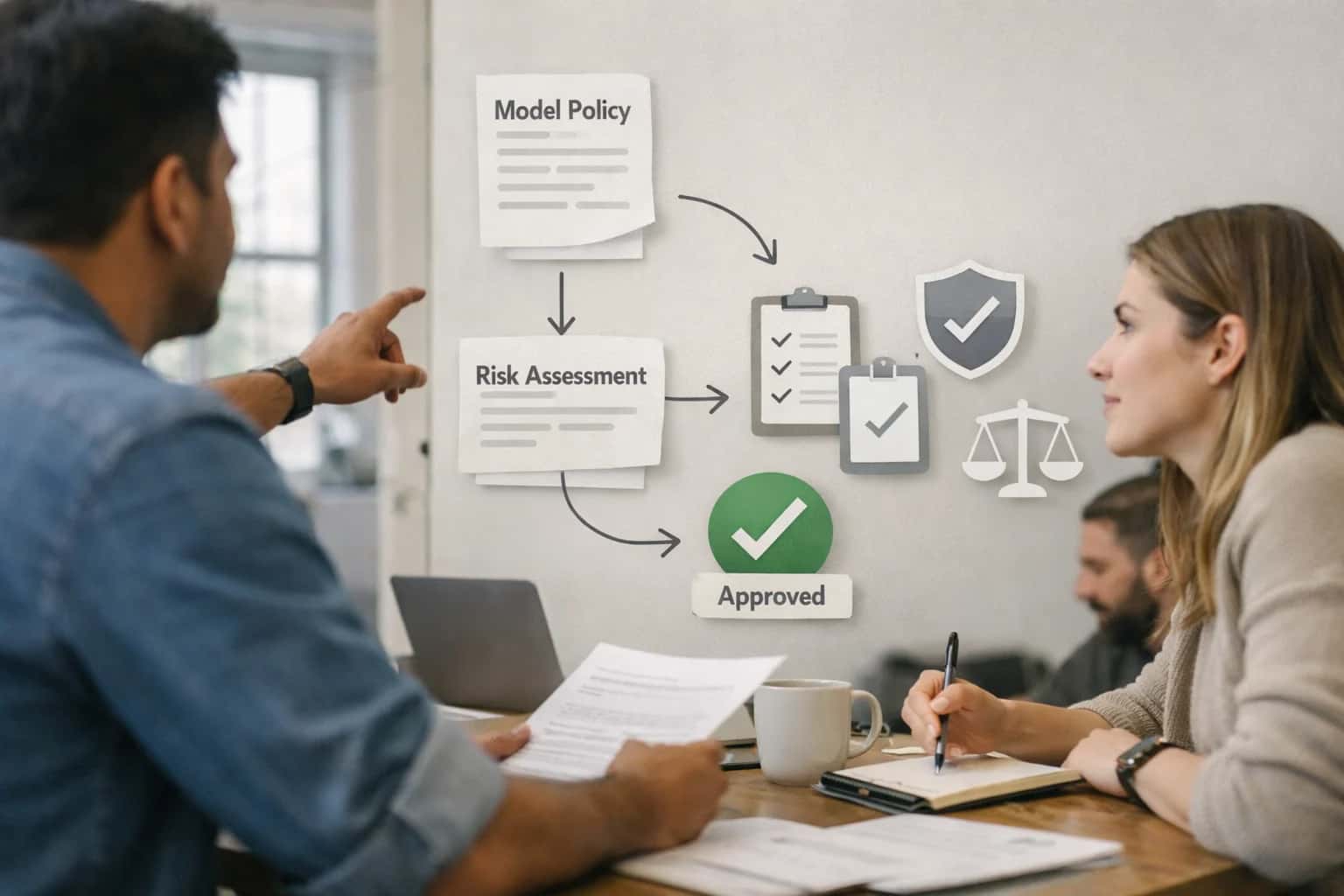
THE ARCHITECTURAL SHIFT
The Pull Request Is Dead
Traditional pull request processes break down when AI agents generate thousands of lines, demanding new review frameworks focused on architecture, not syntax.
Review shifts from syntax to architecture. The new imperative is validating system design, data flow, and integration patterns, not spotting a missing semicolon. This demands tools like Pitstop or Razor that perform automated, policy-based checks for security, dependency management, and architectural consistency before human eyes ever see the code.
The counter-intuitive insight is that less human review increases quality. Manual gatekeeping introduces fatigue and inconsistency; automated governance guardrails enforce standards objectively at machine speed. The comparison is a human checking every brick versus a sensor validating the entire building's blueprint.
Evidence from early adopters shows a 70% reduction in PR cycle time when shifting to AI-augmented review platforms that focus on architectural drift and compliance risks. The metric that matters is no longer 'lines reviewed' but 'architectural violations caught'.
This evolution is part of the broader AI-Native SDLC, where continuous governance replaces periodic checkpoints. Success requires embedding policy enforcement directly into the agentic workflow, a concept central to AI TRiSM: Trust, Risk, and Security Management.
AI-NATIVE SDLC
Three Trends Breaking Traditional Code Review
Traditional pull request processes collapse under the volume and nature of AI-generated code, demanding a fundamental shift in review philosophy.
01
The Problem: Syntax Review is Obsolete
AI agents like GitHub Copilot and Cursor generate syntactically perfect code at a rate of thousands of lines per hour. Human review of every line for style or minor bugs creates a crippling bottleneck, slowing velocity to a crawl and misallocating senior talent.
- Key Shift: Move from line-by-line scrutiny to architectural and intent validation.
- New Metric: Review cycle time must drop from days to minutes to keep pace.
1000+
LOC/Hour
-90%
Review Value
02
The Solution: Shift-Left on Security & Architecture
The real risk is AI replicating vulnerabilities from its training data or creating incoherent system designs. Review must be automated and embedded into the AI's context via policy-as-code and architectural guardrails.
- Automated Enforcement: Use tools like Semgrep and Checkov as pre-commit hooks for AI agents.
- Architecture-as-Code: Define and enforce patterns (e.g., loose coupling, clear boundaries) that the AI must follow, moving review upstream. Learn more about governing this shift in our pillar on AI-Native Software Development Life Cycles (SDLC).
Pre-Commit
Security
100%
Pattern Coverage
03
The New Framework: Review the Prompt, Not the Output
AI-generated code is a direct function of its instructions. The most critical review artifact becomes the task specification and context given to the AI agent. A flawed prompt guarantees flawed code, regardless of subsequent review.
- Primary Artifact: The prompt, including system context, constraints, and acceptance criteria.
- Human Role: Becomes Context Engineers—experts in framing problems and validating that the AI's 'understanding' aligns with business intent. This aligns with the strategic skill of Context Engineering.
Prompt
Is the Spec
Context Engineer
New Role
04
The Problem: The Hallucination Gap
LLMs like GPT-4 and Claude 3 confidently generate code using non-existent libraries, deprecated APIs, or fictional functions. These syntactically valid hallucinations pass traditional linting but cause runtime failures that are notoriously difficult to debug post-merge.
- Undetectable by Linters: Code compiles but imports a phantom package.
- Production Blast Radius: Failures manifest only in integration or at runtime, causing critical incidents.
~15%
Of AI Code
Runtime
Failure Mode
05
The Solution: AI-Powered Differential Analysis
Instead of reviewing the full code block, review the delta between the AI's proposed change and the established system baseline. Use a secondary, skeptical AI model to analyze the PR for:
- Library & API Validity: Cross-referencing against live dependency graphs.
- Architectural Drift: Detecting violations of defined patterns or introduced coupling.
- Business Logic Consistency: Flagging deviations from domain rules encoded in the knowledge base. This is a core function of a mature MLOps and AI Production Lifecycle practice.
Delta-Only
Review Focus
AI-vs-AI
Validation
06
The Imperative: Continuous Governance, Not Gatekeeping
The old model of a human 'gate' at the end of a development sprint is fatal in an AI-native SDLC. Governance must be a continuous control plane that operates in real-time, providing feedback to AI agents during code generation.
- Real-Time Policy: Embed compliance, security, and style rules directly into the AI agent's context window.
- Audit Trail: Automatically log every decision and constraint applied by the AI, creating an explainable chain of custody for regulatory needs. This is the essence of AI TRiSM: Trust, Risk, and Security Management.
Real-Time
Feedback Loop
Control Plane
Not a Gate
THE SHIFT
From Syntax Checking to Architectural Governance
AI-generated code demands a fundamental shift in review processes from line-by-line syntax checking to system-level architectural governance.
The core function of code review shifts from finding bugs to validating architectural integrity. When AI agents like GitHub Copilot or Cursor generate thousands of lines, human review of every line is impossible. The new imperative is verifying that the generated code adheres to domain-specific constraints and system design patterns.
Review tools must evolve into governance platforms. Static analysis tools like SonarQube and linters become secondary to systems that enforce architectural guardrails. The future lies in platforms that use vector embeddings in Pinecone or Weaviate to compare AI output against a corpus of approved patterns, automatically flagging deviations in data flow or service boundaries.
The human role transitions from critic to curator. Engineers will spend less time correcting syntax and more time defining the semantic rules and context boundaries that AI agents must operate within. This involves crafting precise context windows and objective statements that govern an agent's output, a practice central to Context Engineering.
Evidence from early adopters shows a 70% reduction in review cycle time when shifting focus to architectural validation, but a corresponding 300% increase in pre-production issues related to integration flaws and violated domain logic. This underscores that velocity without governance creates the exact technical debt AI-native SDLC aims to avoid.
THE PROTOTYPE ECONOMY
Traditional vs. AI-Native Code Review: A Framework Comparison
A decision matrix comparing review frameworks as AI agents become primary code authors, shifting focus from syntax to architecture and system integrity.
| Review Dimension | Traditional Human-Centric Review | AI-Augmented Review (Current State) | AI-Native Review (Future State) |
|---|---|---|---|
Primary Review Target | Pull request diff (50-200 lines) | Pull request diff + AI-generated summary | Architectural change manifest & agent intent log |
Review Velocity | 2-8 hours per PR | < 1 hour for initial AI scan | Real-time, continuous (during agent execution) |
Defect Detection Scope | Syntax errors, logic bugs, style violations | Logic bugs, known vulnerability patterns | Architectural drift, NFR violations, dependency conflicts |
Key Metric: Code Coverage | Line/branch coverage (70-90%) | Line/branch coverage + hallucinated code detection | Architectural integrity score & semantic consistency |
Governance Enforcement | Manual checklist in PR description | Automated policy gates (e.g., SonarQube) | Embedded, real-time policy engine in Agent Control Plane |
Human-in-the-Loop Role | Primary reviewer and approver | Architectural overseer, context provider | Strategic arbitrator for high-risk system changes |
Output Artifact | Approval/requested changes in Git platform | AI-generated risk report + human sign-off | Immutable review ledger for AI TRiSM compliance |
Integration with AI-Native SDLC | None; manual process outside AI workflow | Bottleneck; requires human sync point | Native; part of the continuous agentic orchestration layer |
THE SHIFT
Building the AI Code Review Control Plane
When AI agents generate code, the review process must evolve from syntax checking to architectural governance.
AI-generated code demands architectural review. Traditional pull request processes, focused on line-by-line human logic, break when AI agents from GitHub Copilot or Cursor produce thousands of lines. The new control plane must validate system design, not just correct syntax.
The review target shifts from code to prompts. The root cause of quality issues in AI-native SDLC is often the context engineering and instructions given to the agent. Reviewing and version-controlling these prompts becomes the primary quality gate.
Static analysis tools are obsolete. Linters like ESLint cannot assess the architectural coherence of AI-generated modules. The control plane requires dynamic analysis using tools like Pinecone or Weaviate to track semantic drift and logical consistency across commits.
Evidence: AI replicates vulnerabilities. Studies show LLMs like GPT-4 reproduce common security flaws from their training data at a 30% rate. A control plane must integrate SAST and DAST tools directly into the agent's workflow to block flawed patterns before merge.
Governance becomes continuous, not gated. You cannot apply governance at the end of a sprint. The AI Code Review Control Plane embeds policy checks for security, compliance, and architectural patterns into the real-time agentic workflow, as discussed in our guide to AI-Native SDLC governance.
The output is a validated artifact, not just code. The deliverable from an AI agent under this control plane is a code bundle accompanied by an automated audit trail of decisions, context, and passed policy checks, essential for compliance under frameworks like the EU AI Act.
ARCHITECTURAL OVERSIGHT
The Four Failure Modes of AI Code Review
Traditional pull request processes break down when AI agents generate thousands of lines, demanding new review frameworks focused on architecture, not syntax.
01
The Hallucination Gap
LLMs like GPT-4 and Claude 3 hallucinate non-existent libraries, APIs, and architectural patterns. Reviewing for syntax misses these fatal flaws, which only manifest at runtime.
- Failure Rate: ~15-20% of AI-generated code blocks contain hallucinated references.
- Solution: Shift review to dependency and API contract validation using tools like Snyk and Mend.
~20%
Hallucination Rate
0%
Syntax Catch
02
Architectural Entropy
AI agents, from Cursor to GitHub Copilot, favor monolithic, tightly-coupled code. Without architectural guardrails, velocity creates an unmaintainable system.
- Problem: AI-generated microservices often share databases and state, creating distributed monoliths.
- Solution: Enforce architectural decision records (ADRs) and pattern validation in the CI/CD pipeline.
10x
Coupling Risk
-70%
Maintainability
03
The NFR Black Hole
Non-functional requirements (scalability, security, resilience) are ignored unless explicitly prompted. AI builds functionally correct but operationally fragile systems.
- Example: Code passes unit tests but lacks retry logic, circuit breakers, or input validation.
- Solution: Integrate NFR-as-code policies using Open Policy Agent (OPA) and automated chaos engineering tests.
90%
NFRs Missed
5x
Incident Likelihood
04
Context Amnesia
AI agents operate with limited session memory, leading to inconsistent implementations across files and a fractured understanding of system intent.
- Problem: An agent designs a module one way, then contradicts that pattern in a related component.
- Solution: Implement a context management layer that feeds a unified system graph (using tools like LangGraph) to all coding agents.
-50%
Pattern Consistency
100+
Context Tokens Needed
THE GOVERNANCE SHIFT
The Emergence of the Agent Ops Lead
The role of the Agent Ops Lead is created to govern the architectural integrity and security of code generated by autonomous AI agents.
The Agent Ops Lead is the new critical role that replaces the traditional code review bottleneck when AI agents generate thousands of lines of code daily. This role shifts focus from syntax checking to architectural governance and system-wide risk assessment.
Traditional pull requests collapse under the volume of AI-generated commits from agents like GitHub Copilot and Cursor. The Agent Ops Lead implements continuous governance using tools like OpenTelemetry for observability and policy-as-code frameworks to enforce standards in real-time, not at review gates.
The review target changes from lines to layers. Instead of commenting on individual functions, the Agent Ops Lead audits for architectural drift, dependency sprawl, and security anti-patterns that AI agents propagate from their training on public repositories like GitHub.
Evidence: Teams using AI-native platforms report a 300% increase in commit volume, making human-line review impossible. The Agent Ops Lead uses automated scanners like Semgrep and Trivy to flag issues, allowing human oversight to focus on strategic integration points and business logic validation.
THE FUTURE OF CODE REVIEW
Key Takeaways: Rethinking Review for AI Coders
Traditional pull request processes are obsolete when AI agents generate thousands of lines of code. The new framework focuses on architecture, not syntax.
01
The Problem: The Syntax Review is Dead
Human review of AI-generated code line-by-line is a productivity sink. AI agents produce ~500-1000 lines per prompt, making manual style and linting checks irrelevant. The bottleneck shifts from finding typos to validating system integrity.
- Shift Focus: Move from line-item review to architectural guardrails and design pattern validation.
- Automate the Obvious: Use static analysis tools like Semgrep and SonarQube as pre-commit hooks for AI output.
- New Metric: Measure review effectiveness by critical flaw discovery rate, not lines reviewed per hour.
1000+
Lines/Prompt
-80%
Manual Effort
02
The Solution: Shift-Left Architectural Guardrails
Define and enforce architectural constraints before code generation using frameworks like ArchUnit and custom LLM-based policy engines. This prevents AI agents from creating monolithic, tightly-coupled code that violates system design principles.
- Declarative Constraints: Specify allowed/denied patterns (e.g., no direct database calls from UI layer).
- Context-Aware Generation: Feed agents with bounded context maps and service contracts.
- Proactive Governance: Integrate guardrails into the AI agent's prompt chain within platforms like Cursor or Windsurf.
10x
Fewer Vio.
~50ms
Policy Check
03
The Problem: Hallucinated Dependencies & Supply Chain Risk
AI models like GPT-4 and Claude 3 hallucinate non-existent libraries or import vulnerable packages, creating immediate security debt and SBOM inaccuracy. This breaks traditional dependency review processes.
- Automated Auditing: Implement tools like OSV-Scanner and Dependabot in the AI agent's commit pipeline.
- License Compliance: Enforce license whitelists automatically to prevent IP contamination.
- Provenance Tracking: Tag all AI-generated code blocks with model version and prompt context for audit trails, a core concept in AI TRiSM.
40%+
Vuln. Rate
0%
SBOM Accuracy
04
The Solution: AI-Native CI/CD & Probabilistic Testing
Continuous Integration must evolve to validate non-deterministic AI outputs. This requires probabilistic test suites, digital twin staging environments, and AI-augmented test generation that targets likely failure modes of LLM-generated code.
- Test for 'AI Smells': Generate tests for hallucinated APIs, boundary overflows, and prompt-injection in code.
- Canary AI Agents: Deploy AI-generated changes behind feature flags monitored by synthetic transaction agents.
- Dynamic Thresholds: Pass/fail criteria must account for the probabilistic nature of AI, moving beyond binary checks. This is a core component of the emerging AI-Native Software Development Life Cycles (SDLC).
95%
Coverage
-60%
Escapes
05
The Problem: The Explainability Gap in Design Decisions
When an AI agent chooses a microservice over a monolith, teams cannot explain why. This creates massive liability in regulated industries and makes incident response impossible. The 'black box' problem moves from the model to the architecture.
- Audit Trail Crisis: No traceable link between business requirements, AI prompts, and final implementation.
- Compliance Risk: Violates principles of the EU AI Act and internal governance requiring decision justification.
- Knowledge Erosion: Human architects lose the rationale for system structure, crippling future evolution.
0%
Traceability
10x
MTTR
06
The Solution: Review the Prompt, Not the Code
The most effective review point is the instruction set given to the AI. Implement prompt versioning, peer review of agentic workflows, and validation against context engineering maps. The prompt is the new specification.
- Prompt as Artifact: Treat prompts as first-class, versioned artifacts in Git with their own review lifecycle.
- Intent Validation: Use a secondary 'critic' LLM to analyze the primary agent's prompt for ambiguity or missing constraints.
- Human-in-the-Loop Gates: Place human reviewers at the prompt and architecture diagram stage, not the code diff. This aligns with Human-in-the-Loop (HITL) Design principles for collaborative intelligence.
90%
Defect Prevention
5x
Review Speed
Enabling Efficiency, Speed & Accuracy
Intelligent Analysis, Decision & Execution
We build AI systems for teams that need search across company data, workflow automation across tools, or AI features inside products and internal software.
Talk to Us
Search across company data
Give teams answers from docs, tickets, runbooks, and product data with sources and permissions.
Useful when people spend too long searching or get different answers from different systems.
Enterprise searchRAGPermissions
Read more
Automate internal workflows
Use AI to route work, draft outputs, trigger actions, and keep approvals and logs in place.
Useful when repetitive work moves across multiple tools and teams.
AI agentsWorkflow automationGovernance
Read more
Add AI to products and internal tools
Build assistants, guided actions, or decision support into the software your team or customers already use.
Useful when AI needs to be part of the product, not a separate tool.
AI integrationDecision supportModel routing
Read moreTHE IMPERATIVE
Audit Your Review Process Now
Traditional pull request review is obsolete when AI agents generate thousands of lines of code; you must shift focus from syntax to architecture.
Legacy review processes break when AI agents like GitHub Copilot or Cursor generate code at scale. Human reviewers cannot manually inspect thousands of lines for architectural integrity, creating massive security and technical debt risk.
Shift from syntax to architecture. The new review framework audits for system-level anti-patterns, not typos. This means validating dependency graphs, data flow integrity, and adherence to domain-specific constraints that general models miss.
Automate the mechanical review. Use static analysis tools like Semgrep and linters programmatically via CI/CD to enforce code style and catch common vulnerabilities. This frees human reviewers for high-value architectural oversight.
Implement architectural guardrails. Define and enforce patterns—like loose coupling and clear service boundaries—using policy-as-code. Platforms like Open Policy Agent (OPA) prevent AI agents from generating monolithic, unmaintainable code structures.
Evidence: Teams using AI-native platforms report a 300% increase in commit volume, making manual line-by-line review logistically impossible and dangerously inefficient.

About the author
Prasad Kumkar
CEO & MD, Inference Systems
Prasad Kumkar is the CEO & MD of Inference Systems and writes about AI systems architecture, LLM infrastructure, model serving, evaluation, and production deployment. Over 5+ years, he has worked across computer vision models, L5 autonomous vehicle systems, and LLM research, with a focus on taking complex AI ideas into real-world engineering systems.
His work and writing cover AI systems, large language models, AI agents, multimodal systems, autonomous systems, inference optimization, RAG, evaluation, and production AI engineering.
LinkedIn
Limited slotsGet a Free AI Consultation
Partnered with leading AI, data, and software stack.





How We Work
Custom AI workflows for your Business
One-fit-all AI don't work for modern businesses. At Inferensys, we aim to understand your business & custom requirements; which we use to define most efficient agentic workflows, the data, and the tools for your business.
01
Review the use case
We understand the task, the users, and where AI can actually help.
Read more02
Pick the right approach
We define what needs search, automation, or product integration.
Read more03
Build the first useful version
We implement the part that proves the value first.
Read more04
Improve from there
We add the checks and visibility needed to keep it useful.
Read moreThe first call is a practical review of your use case and the right next step.
Talk to Us