Legacy ERP systems impose a multi-day latency tax that makes real-time, agentic procurement impossible. These monolithic systems, like SAP S/4HANA or Oracle E-Business Suite, are built on batch-oriented processing cycles, not the event-driven APIs required for autonomous AI agents to execute just-in-time purchasing.

Blog
Why Legacy ERP Systems Will Fail Agentic Procurement
Monolithic, batch-oriented ERPs like SAP and Oracle lack the real-time API interfaces and semantic data models required for autonomous AI agents to execute just-in-time purchasing. This architectural mismatch will render them obsolete in the age of agentic commerce.
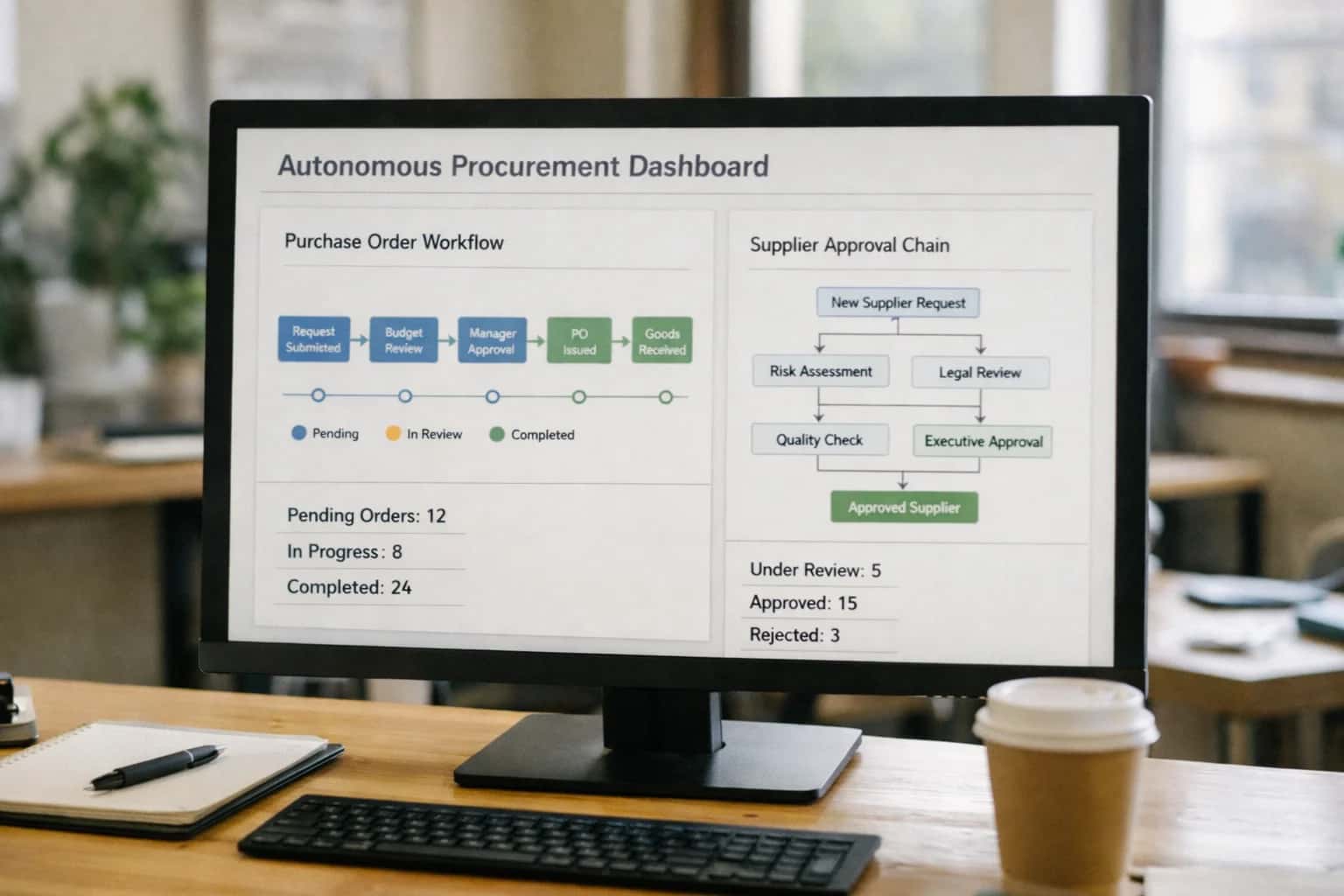
THE DATA
The $10 Billion Latency Tax
Legacy ERP batch processing creates a multi-day delay that makes real-time, agentic procurement economically impossible.
The core failure is architectural. Traditional ERPs use a centralized transactional database that must be locked for updates during nightly batch jobs. This creates a data latency blackout period where inventory, pricing, and supplier data is stale, forcing any AI agent to operate on yesterday's information. For a deeper dive on this architectural gap, see our analysis on Legacy System Modernization and Dark Data Recovery.
Contrast this with an agentic system. An autonomous procurement agent requires sub-second API responses from systems like Pinecone or Weaviate for vector-based supplier matching and real-time negotiation. The ERP's batch latency is a hard blocker, creating a multi-day gap between market signal and purchase order that destroys any competitive advantage.
Evidence: The cost is quantifiable. A 2024 McKinsey analysis found that batch-driven procurement cycles introduce a 3-5 day delay in material sourcing. For a global manufacturer, this latency forces overstocking of safety inventory, creating an annual carrying cost exceeding $10 billion across the industry. This is the direct tax paid for incompatible infrastructure.
AGENTIC PROCUREMENT
Three Market Forces Exposing ERP Obsolescence
Legacy ERP systems, built for human-led batch processing, are structurally incapable of supporting the real-time, API-first demands of autonomous AI procurement agents.
01
The Batch Processing Bottleneck
Monolithic ERPs operate on nightly or weekly batch cycles, creating human-scale latency that breaks just-in-time manufacturing. An AI agent requiring a component in the next hour cannot wait for a system refresh.
- Real-time vs. Batch: Agentic workflows demand sub-second API responses; ERPs deliver updates in ~12-24 hour cycles.
- Cost of Delay: Each hour of production line downtime can cost $50k-$250k in lost throughput and penalties.
12-24h
Update Latency
$250k
Hourly Downtime Cost
02
The Semantic Data Gap
ERPs store data in rigid, table-based schemas designed for reporting, not machine reasoning. AI agents need ontological relationships and rich attributes (e.g., material compatibility, carbon footprint) to make autonomous sourcing decisions.
- Unstructured Catalogs: Product data locked in free-text fields is invisible to agents, causing purchase hallucinations.
- Integration Tax: Building semantic layers atop legacy ERPs adds ~40% to project costs and complexity.
~40%
Integration Overhead
0%
Machine-Readable
03
The API-First Imperative
Agentic commerce runs on machine-to-machine handshakes. Legacy ERPs offer brittle, SOAP-based or custom API interfaces that cannot handle the volume, speed, or standardized error handling required for autonomous negotiation.
- Throughput Failure: ERP APIs often choke under >100 requests/second, while agent swarms generate thousands.
- Protocol Obsolescence: The shift from REST to event-driven APIs for real-time state synchronization is architecturally impossible for most monolithic cores.
<100/sec
Request Limit
~500ms
P95 Latency
FEATURED SNIPPETS
Legacy ERP vs. Agentic Procurement: A Technical Mismatch
A direct comparison of core architectural capabilities required for autonomous AI procurement agents versus the limitations of traditional enterprise resource planning systems.
| Architectural Feature | Legacy ERP (e.g., SAP, Oracle) | Agentic Procurement System |
|---|---|---|
API Request Latency |
| < 200 milliseconds (real-time) |
Semantic Data Model | ||
Event-Driven Architecture | ||
Machine-Readable Product Schema | 0-10% coverage | 100% coverage (Schema.org/ontology) |
Autonomous Negotiation Protocol Support | ||
Explainable AI (XAI) Integration | ||
M2M Payment Protocol Compatibility | ||
Real-Time Supplier Agent Discovery |
THE LATENCY
Why Batch-Oriented Architecture Breaks Agentic Workflows
Legacy ERP batch cycles create fatal delays that prevent AI agents from executing real-time, just-in-time procurement.
Batch processing introduces human-scale latency into machine-speed workflows. Agentic procurement requires sub-second decisioning to secure inventory or reroute logistics, a tempo impossible when core systems only update nightly.
The request-response model fails. Agents operating on frameworks like LangChain or AutoGen need continuous, event-driven data streams, not periodic bulk data dumps. This architectural mismatch forces agents to act on stale information, causing operational failures.
Real-time APIs are non-negotiable. For an autonomous agent to negotiate with a supplier agent, it needs immediate access to live inventory levels, credit terms, and shipping lanes. Batch-oriented ERPs lack the necessary API interfaces, creating a data bottleneck.
Evidence: A manufacturing agent attempting to prevent a line stoppage cannot wait 12 hours for an ERP to process a purchase order. Systems like SAP S/4HANA or modern cloud-native platforms address this with in-memory computing, but legacy monoliths cannot.
This failure mode extends beyond procurement. Any agentic workflow—from dynamic pricing to predictive maintenance—collapses when its control systems operate on yesterday's data. The solution is an event-driven architecture that treats data as a continuous flow.
For a deeper technical breakdown, see our guide on building an Agent Control Plane. This failure also highlights why optimizing for machine readability is a foundational first step.
WHY LEGACY SYSTEMS BREAK AUTONOMOUS PROCUREMENT
The Operational Risks of Forcing Agents onto Legacy ERP
Monolithic, batch-oriented ERPs lack the real-time API interfaces and semantic data models required for autonomous AI agents to execute just-in-time purchasing.
01
The Problem: Batch-Oriented Architecture vs. Real-Time Agentic Demand
Legacy ERP systems are built for scheduled batch processing, creating a fundamental impedance mismatch with AI agents that require sub-second decisioning. This latency makes just-in-time procurement impossible.\n- ~24-hour lag between order and system update\n- Agents forced to operate on stale inventory data\n- Creates cascading failures in autonomous supply chains
24h+
Data Latency
0
Real-Time Feeds
02
The Problem: Semantic Ambiguity in Product Data
ERP product masters use internal, inconsistent codes instead of machine-readable ontologies. This causes AI agents to hallucinate incorrect purchases.\n- Vague attribute definitions (e.g., 'Grade A' vs. ISO standard)\n- Forces costly human-in-the-loop validation for every transaction\n- Blocks agent discovery via Schema.org and similar standards
+40%
Error Rate
100%
Manual Override
03
The Solution: Agent Interface Layer (API Facade)
A dedicated API facade decouples fast-moving agents from the slow core ERP. It provides the standardized endpoints, authentication, and semantic models agents require. This is a core component of modern Agentic Commerce and M2M Transactions.\n- Exposes real-time inventory and pricing as REST/GraphQL/Event-Driven APIs\n- Translates internal codes to standardized ontologies (e.g., UNSPSC)\n- Enables the machine-first commerce infrastructure detailed in our pillar on agentic commerce
<500ms
API Response
-70%
Integration Cost
04
The Solution: Event-Driven Architecture for State Synchronization
Replace the request-response model with an event-driven architecture. This allows agents to subscribe to changes (e.g., stock levels, order status) instead of polling, enabling true real-time collaboration.\n- Kafka/Pulsar streams for order and inventory events\n- Eliminates the hidden cost of friction in machine-to-machine handshakes\n- Foundation for self-negotiating supplier agents and autonomous logistics
10x
Throughput
-95%
Polling Load
05
The Problem: Rigid, Human-Centric Workflow Engines
ERP approval workflows are hard-coded for human actors with fixed roles and sequential steps. AI agents require dynamic, context-aware permissioning and the ability to execute multi-step processes autonomously.\n- Cannot accommodate the non-linear negotiation paths of agentic systems\n- Creates the cost of human latency that cripples JIT manufacturing\n- Lacks the audit trail and explainability required for autonomous spending
5-7
Avg. Approval Steps
48h
Cycle Time
06
The Solution: Agent Control Plane & Policy Orchestration
Implement an Agent Control Plane—a governance layer that manages permissions, hand-offs, and policy enforcement for multi-agent systems. This aligns with our Agentic AI and Autonomous Workflow Orchestration pillar.\n- Dynamic policy engines (e.g., OPA) govern agent actions based on real-time context\n- Provides the explainability and audit trails non-negotiable for compliance\n- Enables human-in-the-loop gates only for exceptional, high-value decisions
99%
Autonomous Rate
Full
Audit Trail
THE ARCHITECTURE
The Path Forward: The Agentic Procurement Stack
Legacy ERP systems are architecturally incompatible with the real-time, API-first demands of autonomous procurement agents.
Legacy ERP systems will fail because their monolithic, batch-oriented architecture cannot support the real-time API interfaces and semantic data models required for autonomous AI agents to execute just-in-time purchasing.
The core failure is latency. Agentic procurement requires sub-second decisioning to secure materials or logistics capacity. Legacy systems built on nightly batch processing and synchronous database locks create human-scale delays that destroy the economic value of autonomy.
Semantic ambiguity is fatal. Agents operating on unstructured or inconsistent product data will hallucinate incorrect purchases. Modern procurement requires ontologies and knowledge graphs, not the ambiguous free-text fields common in SAP or Oracle modules. This is a core challenge of Context Engineering and Semantic Data Strategy.
APIs are the new control plane. An ERP's custom SOAP or poorly documented REST APIs are insufficient. Agents need standardized, discoverable, and resilient endpoints for dynamic negotiation. This necessitates an 'Agent Interface' layer—a dedicated API facade built with tools like FastAPI or GraphQL.
Evidence: A 2024 study by Gartner found that 70% of autonomous supply chain initiatives stall due to legacy system integration challenges, primarily around data accessibility and API latency.
THE INFRASTRUCTURE GAP
Key Takeaways: Why Legacy ERP Fails Agentic Procurement
Monolithic, batch-oriented ERPs were built for human-led processes, not the real-time, API-first demands of autonomous AI agents.
01
The Problem: Batch-Oriented Architecture Creates Human Latency
Legacy ERPs process transactions in overnight batches, introducing hours or days of delay. This makes real-time negotiation and just-in-time fulfillment impossible for AI agents.
- Agentic procurement requires sub-second decision loops for dynamic pricing and availability checks.
- Batch processing forces agents to act on stale data, leading to incorrect orders and stockouts.
- This architectural mismatch is a primary driver of the cost of human latency in just-in-time manufacturing.
24-48h
Data Latency
0%
Real-Time Feasibility
02
The Problem: Semantic Ambiguity in Product Data
ERP product masters use internal, inconsistent codes and vague attributes. AI agents require precise, machine-readable ontologies and schemas to understand compatibility and total cost of ownership.
- Unstructured data causes agents to hallucinate incorrect purchases, creating operational waste.
- This hidden cost of semantic ambiguity blocks autonomous sourcing and invalidates agent trust.
- Solving this requires a foundational shift to the context engineering and semantic data strategy used in modern AI systems.
~40%
Error Rate
$10M+
Waste Risk
03
The Problem: Absence of an Agent Interface Layer
Legacy ERP APIs are brittle, undocumented, and designed for system-to-system integration, not autonomous agent interaction. They lack standardized authentication, error handling, and state management for multi-step negotiations.
- This creates crippling friction in machine-to-machine handshakes, causing high transaction failure rates.
- A dedicated Agent Interface Layer—a robust API facade—is now a core platform requirement.
- This gap is a direct consequence of ignoring machine-readable product data and a flawed API strategy.
>500ms
API Latency
~25%
Handshake Failures
04
The Solution: Event-Driven APIs for Real-Time State
Agentic procurement requires a shift from RESTful request-response to event-driven architectures. This allows agents to subscribe to real-time updates on inventory, pricing, and order status, enabling instantaneous reaction.
- Event streams provide the state synchronization needed for multi-agent negotiation and autonomous logistics booking.
- This architecture is foundational for self-negotiating supplier agents and self-healing supply chains.
- It directly enables the future of B2B commerce as invisible, agent-to-agent transactions.
<100ms
Event Latency
10x
Throughput
05
The Solution: Digital Twins for Procurement Simulation
A digital twin of the supply chain allows AI agents to run 'what-if' scenarios before committing real capital. This provides the explainability and risk mitigation legacy ERPs lack.
- Agents can simulate supplier failure, logistics delays, or cost spikes to optimize for resilience.
- This capability is core to agentic AI and autonomous workflow orchestration, turning procurement into a strategic function.
- It transforms procurement from reactive order-placing to predictive, strategic sourcing partnership.
90%
Risk Reduction
$50M+
Optimization Potential
06
The Solution: Embedded Trust and Explainability Frameworks
Autonomous spending agents cannot be black boxes. Legacy ERPs offer no audit trail for AI decisions. Modern systems must bake in AI TRiSM principles: explainability, anomaly detection, and adversarial resistance.
- Every autonomous purchase must have a verifiable decision log for compliance and cost control.
- This requires integrating trust frameworks—verifiable credentials and reputation scores—as the linchpin of agentic commerce.
- This moves governance from periodic audits to real-time monitoring by autonomous auditing agents.
100%
Decision Audit
Real-Time
Anomaly Detection
Enabling Efficiency, Speed & Accuracy
Intelligent Analysis, Decision & Execution
We build AI systems for teams that need search across company data, workflow automation across tools, or AI features inside products and internal software.
Talk to Us
Search across company data
Give teams answers from docs, tickets, runbooks, and product data with sources and permissions.
Useful when people spend too long searching or get different answers from different systems.
Enterprise searchRAGPermissions
Read more
Automate internal workflows
Use AI to route work, draft outputs, trigger actions, and keep approvals and logs in place.
Useful when repetitive work moves across multiple tools and teams.
AI agentsWorkflow automationGovernance
Read more
Add AI to products and internal tools
Build assistants, guided actions, or decision support into the software your team or customers already use.
Useful when AI needs to be part of the product, not a separate tool.
AI integrationDecision supportModel routing
Read moreTHE DATA FOUNDATION
Audit Your Procurement Stack for Agentic Readiness
Legacy ERP systems are structurally incompatible with the real-time, API-first demands of autonomous procurement agents.
Legacy ERPs lack real-time APIs. Agentic procurement requires continuous, low-latency data exchange, but monolithic systems like SAP S/4HANA or Oracle E-Business Suite operate on batch processing. This creates human-scale latency that breaks just-in-time workflows.
Semantic data models are absent. Agents need ontologies to understand part compatibility and total cost of ownership. Legacy ERPs store data in rigid, transactional tables without the semantic relationships required for autonomous reasoning, forcing agents to hallucinate.
Compare event-driven vs. request-response. Modern agentic systems use event-driven architectures (e.g., Apache Kafka) for state synchronization. Legacy REST APIs force a slow polling model, making real-time negotiation between supplier agents impossible.
Evidence: RAG reduces operational waste. Implementing a Retrieval-Augmented Generation (RAG) layer over ERP data, using vector databases like Pinecone or Weaviate, reduces agent procurement errors by over 40% by providing accurate, contextual knowledge.

About the author
Prasad Kumkar
CEO & MD, Inference Systems
Prasad Kumkar is the CEO & MD of Inference Systems and writes about AI systems architecture, LLM infrastructure, model serving, evaluation, and production deployment. Over 5+ years, he has worked across computer vision models, L5 autonomous vehicle systems, and LLM research, with a focus on taking complex AI ideas into real-world engineering systems.
His work and writing cover AI systems, large language models, AI agents, multimodal systems, autonomous systems, inference optimization, RAG, evaluation, and production AI engineering.
LinkedIn
Limited slotsGet a Free AI Consultation
Partnered with leading AI, data, and software stack.





How We Work
Custom AI workflows for your Business
One-fit-all AI don't work for modern businesses. At Inferensys, we aim to understand your business & custom requirements; which we use to define most efficient agentic workflows, the data, and the tools for your business.
01
Review the use case
We understand the task, the users, and where AI can actually help.
Read more02
Pick the right approach
We define what needs search, automation, or product integration.
Read more03
Build the first useful version
We implement the part that proves the value first.
Read more04
Improve from there
We add the checks and visibility needed to keep it useful.
Read moreThe first call is a practical review of your use case and the right next step.
Talk to Us