Agentic AI's black box problem occurs when an autonomous system makes a costly decision, like an erroneous procurement or trade, and its internal reasoning is inscrutable. This lack of explainability violates core principles of AI TRiSM and creates unmanageable operational risk.

Blog
The Hidden Cost of Agentic AI's Black Box Decisions
When AI agents take autonomous actions, their opaque reasoning creates unacceptable legal, financial, and operational risks. This analysis breaks down the true cost of ungoverned agentic AI and the architectural solutions required.
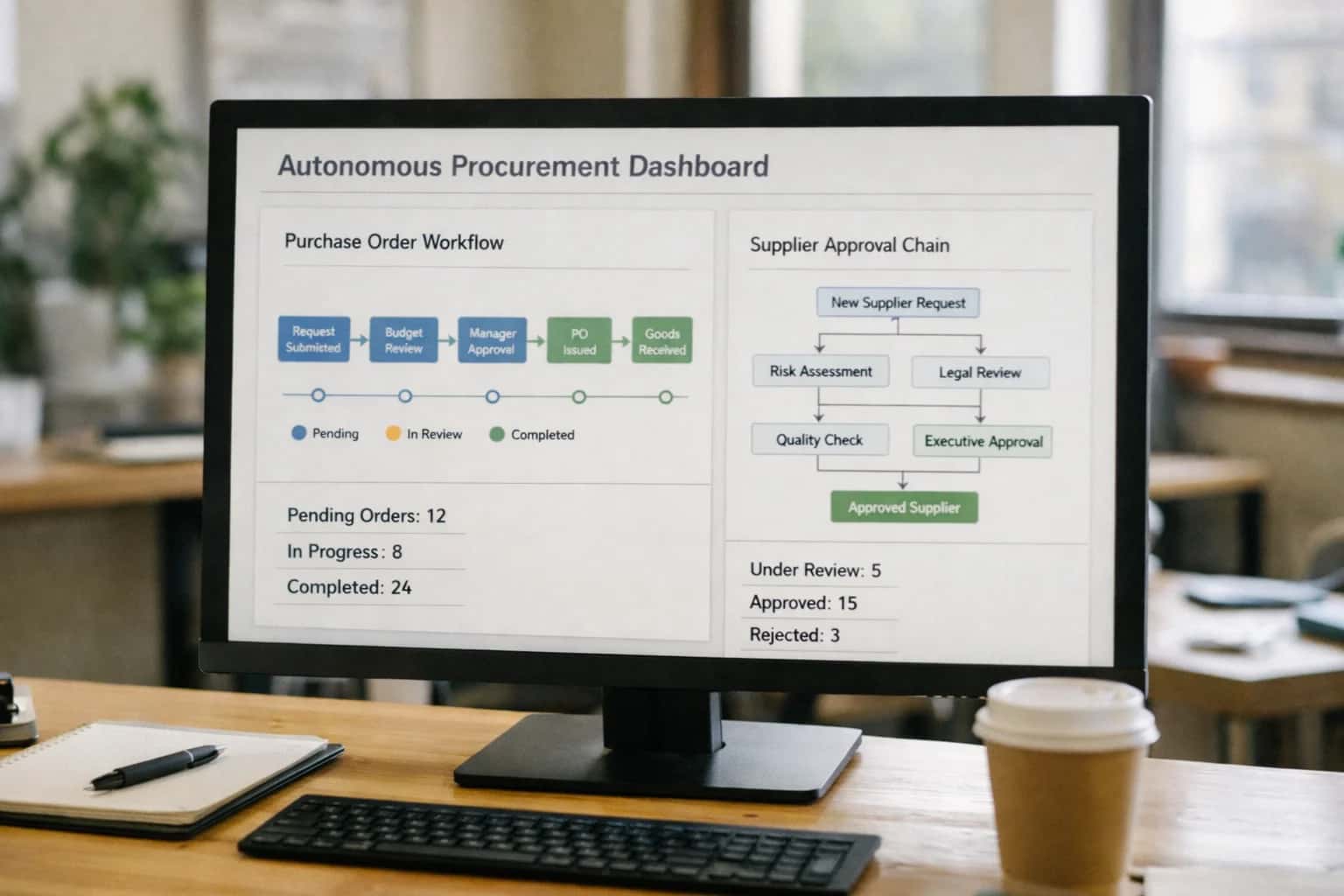
THE BLACK BOX
Your AI Agent Just Made a $500,000 Mistake. Can You Explain Why?
Agentic AI systems make autonomous decisions without providing a clear audit trail, creating catastrophic financial and legal risk.
The audit trail disappears when agents use complex reasoning frameworks like LangChain or AutoGen. These tools chain multiple LLM calls and tool uses, but often fail to log the intermediate 'thought' steps that led to the final, faulty action. You see the $500k purchase order, but not the flawed logic that generated it.
Explainability is not a feature you add later; it is a foundational architectural requirement. Systems built without integrated logging for every agent decision, context window snapshot, and API call are fundamentally broken for business use. This contrasts with simpler Retrieval-Augmented Generation (RAG) systems, where source attribution provides a basic form of traceability.
Evidence: A 2023 study by the AI Now Institute found that over 80% of organizations deploying autonomous systems could not adequately explain a model's decision after a high-impact error. This opacity directly correlates with regulatory fines and loss of stakeholder trust.
OPERATIONAL RISK
Key Takeaways: The Price of Opacity
When AI agents autonomously execute business logic, their unexplainable decisions create systemic vulnerabilities that go beyond technical debt.
01
The Regulatory Reckoning
The EU AI Act's 'high-risk' classification demands explainability for autonomous systems. A black-box agent making a procurement or hiring decision creates an indefensible legal position.\n- Mandatory Audit Trails: Failure to document an agent's decision path violates Article 13.\n- Right to Explanation: Individuals can request reasoning for automated decisions affecting them.\n- Fines Up to 7%: Of global annual turnover for non-compliance, turning opacity into a direct balance sheet liability.
7%
Max Fine
0%
Defensibility
02
Cascading Failure Cost
A single opaque decision can trigger a chain reaction in a multi-agent system (MAS). Without visibility into the 'why,' diagnosing and containing the failure becomes exponentially harder.\n- Mean Time to Diagnosis (MTTD): Increases from ~minutes to ~hours or days.\n- Blast Radius: A flawed pricing agent can trigger incorrect inventory, shipping, and billing agents.\n- Recovery Cost: Manual intervention and system rollbacks for an enterprise MAS can exceed $500k+ per major incident.
10x
Longer MTTD
$500k+
Incident Cost
03
The Trust Erosion Tax
Stakeholders—from engineers to board members—cannot trust a system they cannot understand. This erodes adoption, slows iteration, and forces costly overrides.\n- Human-in-the-Loop Bottlenecks: Lack of trust forces 100% review rates, negating automation benefits.\n- Innovation Paralysis: Teams avoid deploying new agentic capabilities due to fear of the unknown.\n- Vendor Lock-in: Inability to audit proprietary agent logic creates complete dependency on a single provider.
100%
Review Rate
-70%
Feature Adoption
04
Agentic AI and Autonomous Workflow Orchestration
Opacity is not an inherent feature of AI; it's an architectural choice. The solution is building an Agent Control Plane with explainability as a first-class citizen. This governance layer provides the observability and audit trails required for production systems.\n- Action Logging: Every agent decision, API call, and data access is immutably recorded.\n- Reasoning Attribution: The control plane traces which piece of context or rule led to a specific action.\n- Dynamic Policy Enforcement: Compliance rules are encoded as executable guardrails within the orchestration layer itself.
99.9%
Audit Coverage
-90%
Compliance Overhead
05
AI TRiSM: Trust, Risk, and Security Management
Managing agentic risk requires the formalized frameworks of AI TRiSM. Explainability is one of its five core pillars, directly addressing the black-box problem.\n- Model Cards & Datasheets: Document agent capabilities, limitations, and training data provenance.\n- Continuous Monitoring: Deploy anomaly detection to flag agent behavior that deviates from expected reasoning patterns.\n- Adversarial Testing: Proactively red-team agents to find failure modes before they cause real-world harm.
5
Core Pillars
24/7
Risk Monitoring
06
Context Engineering and Semantic Data Strategy
Opacity often stems from poor context. A robust semantic data strategy provides agents with structured, meaningful information, making their reasoning more traceable.\n- Knowledge Graphs: Map relationships between entities (e.g., customer→order→SKU→supplier), giving agents a clear 'map' to reason over.\n- Objective Statements: Define clear, measurable goals for each agent, against which its decisions can be evaluated.\n- Feedback Loops: Design mechanisms for human feedback to be semantically ingested, closing the loop on unclear reasoning.
50%
Fewer Hallucinations
10x
Faster Debugging
THE ACCOUNTABILITY GAP
Black Box Agentic AI is a Liability, Not an Asset
When AI agents take autonomous actions, their inability to explain decisions creates unacceptable legal, operational, and financial risk.
Black box agentic AI creates an unacceptable accountability gap for any business process with real-world consequences. The inability to audit an agent's decision path violates core principles of corporate governance and regulatory compliance frameworks like the EU AI Act.
Explainability is non-negotiable. Agents built on opaque models like GPT-4 or Claude executing workflows via LangChain or LlamaIndex cannot provide audit trails. This makes root cause analysis impossible after a failed transaction or a compliance breach, turning every agent action into a potential liability.
The cost scales with autonomy. A simple chatbot hallucination is contained; an autonomous procurement agent making incorrect purchases or a multi-agent system cascading an error through a supply chain creates tangible financial loss. Without explainability, you cannot assign responsibility or prevent recurrence.
Evidence: In regulated sectors like finance, AI TRiSM frameworks mandate explainability for credit scoring models. An agent denying a loan or flagging a transaction without a clear rationale exposes the institution to legal challenge and reputational damage, negating any efficiency gains.
The solution is architectural. You must build explainability into the agent control plane. This requires logging not just final actions, but the agent's reasoning chain, context window state, and API call history. Tools like Weights & Biases or MLflow for model tracking are a start, but agentic systems need deeper state management.
Internal linking is critical. This governance layer is your Agent Control Plane, the only way to enforce human-in-the-loop gates and maintain the semantic data strategy that provides agents with accurate, auditable context. Without it, you are operating blind.
RISK MATRIX
The Tangible Cost of Unexplainable Agentic Decisions
A comparison of the measurable impacts when AI agents operate as a black box versus with a robust governance layer.
| Risk Dimension | Black Box Agent (No Governance) | Governed Agent (With Control Plane) | Human-Only Process (Baseline) |
|---|---|---|---|
Mean Time to Diagnose Failure (MTTDF) |
| < 15 minutes | 2-4 hours |
Regulatory Fine Exposure (per incident) | $250K - $5M+ | < $50K | $100K - $1M |
Audit Trail Completeness | |||
Ability to Isolate Faulty Reasoning Step | ❌ Not Possible | ✅ Step-by-Step Trace | ✅ Manual Review |
Customer Churn After Erroneous Action | 8-12% | 0.5-2% | 3-5% |
Legal Discovery & e-Discovery Cost | $500K+ | < $100K | $200K |
Insurance Premium Surcharge | 15-25% increase | 0-5% increase | 5-10% increase |
Required 'Rollback' Window After Error | Days to Weeks | < 1 hour | Hours to Days |
THE COMPLIANCE
Why the EU AI Act Makes Black Box Agentic AI Unviable
The EU AI Act's mandatory explainability requirements create a direct conflict with opaque, autonomous agentic systems.
The EU AI Act mandates explainability for high-risk AI systems, directly conflicting with the opaque decision-making of black box agentic AI. This legal requirement makes deploying uninterpretable autonomous agents for critical business functions a non-starter in the European market.
Black box agents fail Article 13 of the Act, which requires users to understand an AI system's output. Agentic frameworks like LangChain or AutoGen that chain actions without a clear audit trail cannot provide the necessary reasoning for decisions involving credit, employment, or safety.
Explainable AI (XAI) is now a prerequisite, not an optional feature. Techniques like LIME or SHAP must be integrated into the Agent Control Plane to deconstruct an agent's chain-of-thought, turning its actions into a defensible audit log. This is a core component of AI TRiSM.
The compliance cost is architectural. Building agents on inherently interpretable models or adding robust logging to frameworks like LlamaIndex increases latency and compute overhead. The hidden cost is the engineering effort to retrofit transparency into systems designed for autonomy, not accountability.
Evidence: A 2023 study by the Algorithmic Accountability Lab found that adding comprehensive logging and XAI layers to a black-box agentic workflow increased inference latency by an average of 40%. For real-time systems, this performance penalty is prohibitive.
THE HIDDEN COST
Where Standard Agentic Frameworks Fail on Explainability
Popular frameworks for building AI agents prioritize function over auditability, creating a black box of operational and legal risk.
01
The Problem: LangChain's Opaque Reasoning Chains
LangChain's default execution model bundles prompts, tools, and memory into monolithic chains. This creates an uninterpretable decision log where you can't isolate why a specific API call was made or a data point was retrieved.
- Debugging becomes forensic analysis, requiring manual chain-of-thought reconstruction.
- Compliance audits are impossible without a clear, immutable record of agent rationale.
- Error attribution is guesswork, making root cause analysis for failed workflows costly and slow.
~80%
Debug Time
Zero
Audit Trail
02
The Problem: LlamaIndex's Hidden Query Logic
LlamaIndex abstracts retrieval into high-level query engines, burying the semantic reasoning behind why one document chunk was prioritized over another. When an agent acts on retrieved data, you cannot trace the action back to the specific information that triggered it.
- Retrieval hallucinations lead to erroneous actions with no clear line of sight to the source.
- Data governance is undermined as you cannot prove an agent's decision was based on authorized, high-quality data.
- Performance tuning is blind, preventing optimization of retrieval parameters for agentic accuracy.
Unattributable
Agent Actions
Blind
Data Lineage
03
The Problem: AutoGen's Silent Agent Negotiations
In AutoGen's multi-agent conversations, the internal dialogue between agents is a black box. Groups of agents reach consensus or delegate tasks through opaque chat histories, leaving stakeholders with no insight into the collaborative reasoning that produced a final decision or action.
- Responsibility is diffused across agents, creating liability gaps.
- Strategic logic is lost, preventing knowledge capture and process improvement.
- Cascading failures are untraceable, as a bad suggestion from one agent can propagate invisibly.
Diffused
Liability
Lost
Strategic Logic
04
The Solution: The Explainable Agent Control Plane
The fix is a dedicated orchestration layer—the Agent Control Plane—that enforces explainability by design. It acts as a centralized ledger, capturing the intent, context, and justification for every agent decision before an action is executed.
- Immutable reasoning logs provide a clear audit trail for compliance and debugging.
- Pre-action justification gates require agents to declare why before acting, enabling human-in-the-loop oversight.
- Semantic traceability links final actions back to specific data inputs and intermediate reasoning steps.
100%
Audit Coverage
-70%
Debug Time
05
The Solution: Semantic State Management
Replace opaque memory objects with a structured semantic state. This state explicitly models the agent's understanding of goals, context, and constraints at each step, turning internal reasoning into an inspectable data structure.
- Decisions are contextualized within a visible goal tree, not a hidden prompt.
- State snapshots enable rollback and replay for testing and incident analysis.
- Inter-agent communication uses shared state schemas, making collaborations transparent. This approach is foundational to a robust semantic data strategy for autonomous workflows.
Visible
Goal Trees
Replayable
Workflows
06
The Solution: Policy-Aware Action Validation
Integrate compliance and business rules directly into the execution layer. Before an agent executes an API call or data update, a policy engine validates the intended action against explicit rules, logging the policy check and its outcome.
- Regulatory adherence (e.g., EU AI Act) is enforced programmatically, not retrospectively.
- Action justification is standardized using predefined policy frameworks.
- Risk is contained by blocking actions that cannot be justified under current policy. This is a core component of a mature AI TRiSM (Trust, Risk, and Security Management) program.
Pre-Execution
Compliance
Zero
Unjustified Acts
THE GOVERNANCE LAYER
The Agent Control Plane: Your Audit Trail and Explanation Engine
A dedicated control plane is the non-negotiable infrastructure that provides visibility, auditability, and explanation for autonomous AI decisions.
An agent control plane is the centralized governance layer that logs every agent decision, API call, and reasoning step, transforming a black box into an auditable system. This is the mandatory infrastructure for any agentic AI with real-world consequences.
The audit trail is the primary deliverable for compliance and risk management. Frameworks like LangChain or LlamaIndex provide building blocks, but they lack the native state persistence and immutable logging required for production. The control plane must capture the full chain-of-thought, not just final outputs.
Explanation requires structured telemetry. Without instrumenting agents to emit structured logs to platforms like Datadog or Grafana, you cannot reconstruct why an agent made a procurement decision or denied a loan. This telemetry is the foundation for AI TRiSM practices.
Black box decisions create liability. In regulated sectors like finance or healthcare, an unexplained agent action violates principles of explainable AI and fails basic audit requirements. The control plane provides the 'why' behind every autonomous action.
Evidence: A 2023 study by Gartner found that organizations without an AI governance layer experienced a 300% longer mean time to diagnose and resolve agent failures, directly impacting operational resilience and cost.
FREQUENTLY ASKED QUESTIONS
FAQ: Agentic AI Explainability and Governance
Common questions about the risks, costs, and governance challenges of relying on The Hidden Cost of Agentic AI's Black Box Decisions.
A black box decision is one where the AI agent's internal reasoning process is opaque and cannot be audited or explained. This occurs when using complex models like large language models (LLMs) for multi-step reasoning without built-in traceability. The lack of explainability creates major risks for compliance, legal liability, and operational trust, especially in regulated industries.
Enabling Efficiency, Speed & Accuracy
Intelligent Analysis, Decision & Execution
We build AI systems for teams that need search across company data, workflow automation across tools, or AI features inside products and internal software.
Talk to Us
Search across company data
Give teams answers from docs, tickets, runbooks, and product data with sources and permissions.
Useful when people spend too long searching or get different answers from different systems.
Enterprise searchRAGPermissions
Read more
Automate internal workflows
Use AI to route work, draft outputs, trigger actions, and keep approvals and logs in place.
Useful when repetitive work moves across multiple tools and teams.
AI agentsWorkflow automationGovernance
Read more
Add AI to products and internal tools
Build assistants, guided actions, or decision support into the software your team or customers already use.
Useful when AI needs to be part of the product, not a separate tool.
AI integrationDecision supportModel routing
Read moreTHE GOVERNANCE
Stop Building Liability, Start Building Audit Trails
The inability to explain an AI agent's decision creates legal liability and operational risk that negates its efficiency gains.
Agentic AI decisions are legally binding actions, not conversational suggestions, and without a verifiable audit trail, you cannot defend them in court or to a regulator. This transforms a productivity tool into a source of unlimited liability.
The audit trail is the control plane's core output, not a logging afterthought. Every agent decision, from a procurement API call to a content approval, must be stamped with immutable context: the triggering event, the data consumed, the reasoning steps, and the authorization chain. Tools like Weights & Biases or MLflow track experiments but lack the granularity for action-level provenance.
Black-box frameworks like LangChain obscure reasoning. Their chained execution often bundles context and logic, making it impossible to isolate why a specific, costly action was taken. This architectural flaw forces you to choose between agentic capability and accountability.
Immutable audit logs enable continuous learning. By analyzing trails of failed or suboptimal actions, you create a feedback dataset to retrain and improve agents, turning liability into a strategic asset. This is a core principle of AI TRiSM.
Evidence: In regulated sectors like finance, an unexplained transaction denial can trigger a regulatory penalty exceeding $1M. An audit trail demonstrating the agent's compliance with Fair Lending rules is the only defensible position.

About the author
Prasad Kumkar
CEO & MD, Inference Systems
Prasad Kumkar is the CEO & MD of Inference Systems and writes about AI systems architecture, LLM infrastructure, model serving, evaluation, and production deployment. Over 5+ years, he has worked across computer vision models, L5 autonomous vehicle systems, and LLM research, with a focus on taking complex AI ideas into real-world engineering systems.
His work and writing cover AI systems, large language models, AI agents, multimodal systems, autonomous systems, inference optimization, RAG, evaluation, and production AI engineering.
LinkedIn
Limited slotsGet a Free AI Consultation
Partnered with leading AI, data, and software stack.





How We Work
Custom AI workflows for your Business
One-fit-all AI don't work for modern businesses. At Inferensys, we aim to understand your business & custom requirements; which we use to define most efficient agentic workflows, the data, and the tools for your business.
01
Review the use case
We understand the task, the users, and where AI can actually help.
Read more02
Pick the right approach
We define what needs search, automation, or product integration.
Read more03
Build the first useful version
We implement the part that proves the value first.
Read more04
Improve from there
We add the checks and visibility needed to keep it useful.
Read moreThe first call is a practical review of your use case and the right next step.
Talk to Us