
Automations
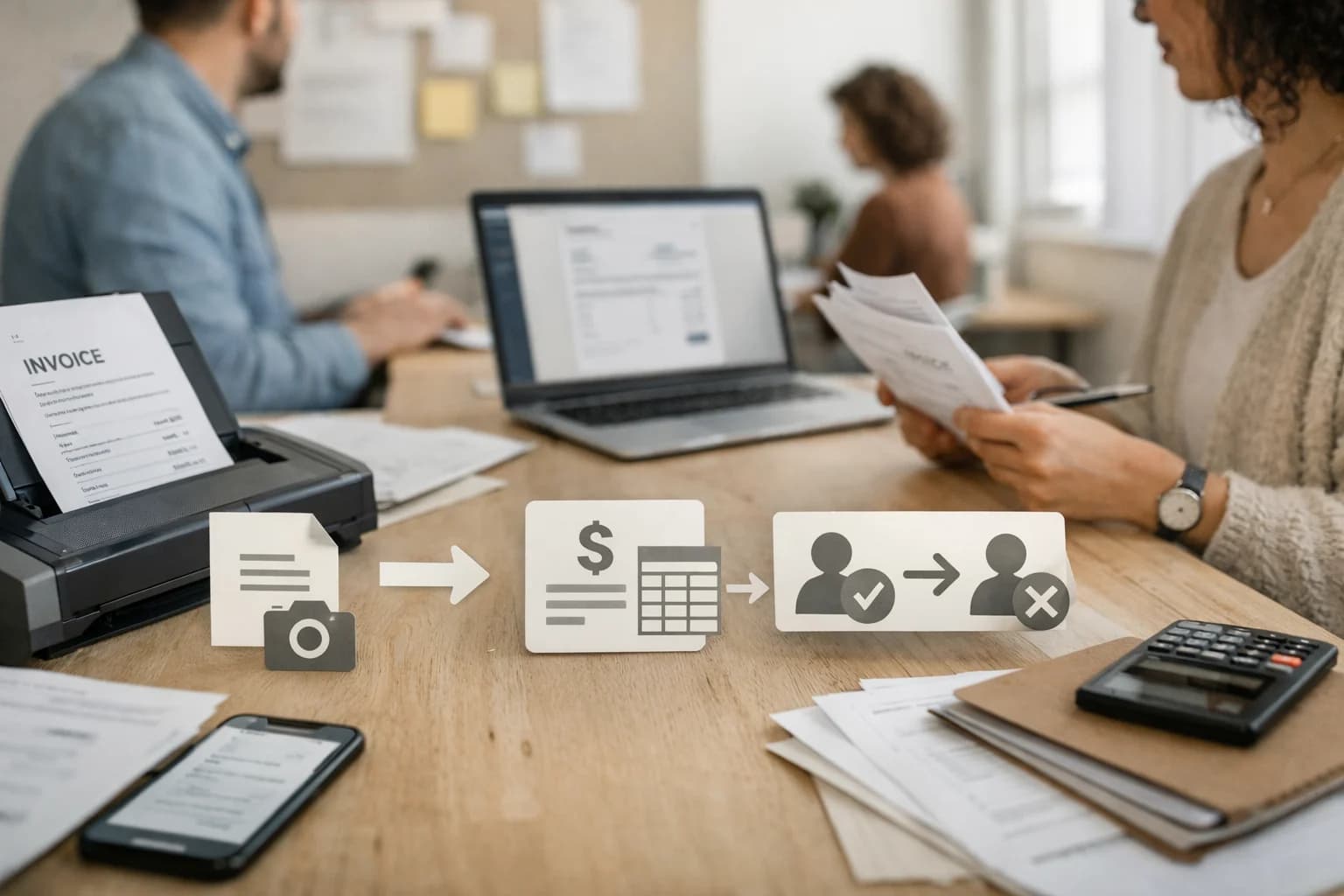
This pillar focuses on accounts payable and procurement workflows that capture invoices, match them against purchase orders, validate vendor data, and route exceptions through approval chains automatically. Content groups should cover OCR plus LLM extraction, ERP integration, supplier compliance checks, exception queues, and payment-release controls for finance teams seeking lower processing cost and faster close cycles.
This foundational page details a custom, end-to-end agentic workflow that automates the entire procure-to-pay cycle, from intelligent invoice capture to payment execution. It explains how orchestrated AI agents, integrated with OCR, ERP, and approval systems, can reduce processing costs by over 70% and cut cycle times from weeks to hours. The architecture focuses on multi-agent collaboration, exception routing logic, and audit-ready controls for finance leaders building a scalable, touchless operation.
This page outlines a custom workflow where specialized agents autonomously retrieve, validate, and reconcile purchase orders, goods receipts, and invoices. It demonstrates how this automation eliminates manual matching labor, reduces payment errors, and ensures contract compliance, directly improving working capital and supplier relationships. The implementation covers agent orchestration (e.g., LangGraph), ERP/SAP integration patterns, and human-in-the-loop escalation for complex mismatches.
This page details a custom document processing pipeline that goes beyond basic OCR, using LLM agents to extract, validate, and structure line-item data from complex, multi-format invoices. It shows how this workflow reduces data entry costs by 90% and improves accuracy for downstream matching and coding. The architecture combines vision models, retrieval-augmented validation against vendor masters, and confidence-based routing to human reviewers.
This page explains the architecture for a fully automated invoice approval workflow, where AI agents handle validation, coding, and routing based on dynamic business rules without human intervention. It quantifies the labor savings and cycle-time reduction achievable by eliminating manual review queues. Implementation details include policy engines, spend-limit hierarchies, integration with systems like Coupa or Workday, and fail-safe escalation protocols.
This page covers a custom, real-time detection system where AI agents analyze incoming invoices against historical payments and pending files to flag potential duplicates before payment. It demonstrates how this workflow prevents financial loss, improves audit posture, and reduces investigative overhead. The solution architecture involves vector similarity search, fuzzy matching logic, and automated supplier communication for resolution.
This page details a workflow where AI agents continuously monitor the invoice pipeline, identifying exceptions like price variances, missing POs, or tax discrepancies and intelligently routing them to the correct resolver. It shows how this reduces exception handling time by 80% and improves process visibility. The build covers exception classification models, role-based routing logic, and integration with collaboration tools like ServiceNow or Teams.
This page outlines a custom, secure workflow where AI agents consolidate validated invoices, optimize payment timing for cash discounts, and execute payment runs across banking platforms. It highlights working capital optimization and reduction in manual payment processing risk. The architecture details treasury system integration, fraud detection checks, approval gateways, and automated reconciliation initiation.
This page explains a custom workflow that automates the collection, verification, and enrichment of new supplier data, including tax IDs, banking details, and compliance certificates. It demonstrates how this accelerates onboarding from weeks to days while reducing compliance risk. The implementation involves orchestrated agents that screen sanctions lists, validate documents, and update ERP vendor masters with human oversight for exceptions.
This page details a workflow where AI agents analyze invoice line items and contextual data to automatically assign accurate general ledger codes, cost centers, and projects. It shows how this eliminates manual accounting effort and improves financial reporting accuracy. The architecture combines NLP for description understanding, historical pattern learning, and rule-based validation integrated with financial systems like NetSuite or SAP.
This page covers a custom workflow where AI agents evaluate invoice terms, corporate cash position, and supplier profiles to identify and execute early payment discounts autonomously. It quantifies the direct ROI through captured discount income and improved supplier terms. The build involves cash flow forecasting integration, supplier portal communication, and automated negotiation logic within defined policy guardrails.
This page outlines a workflow where conversational AI and document-processing agents handle employee purchase requests, validate them against budgets and policies, and auto-create POs. It demonstrates reduced procurement cycle times and increased policy compliance. Implementation covers chatbot interfaces, integration with HR systems for approver routing, and seamless handoff to procurement platforms.
This page details a custom sourcing workflow where AI agents scour catalogs, RFx responses, and market data to identify and pre-qualify suppliers based on specific criteria like cost, location, and ESG scores. It shows how this accelerates strategic sourcing and reduces supply chain risk. The architecture involves web scraping agents, data normalization pipelines, and scoring models integrated into sourcing software.
This page explains a workflow where AI agents automate the creation, distribution, and analysis of RFPs, RFQs, and RFIs, including response evaluation and supplier scoring. It highlights significant time savings in the sourcing cycle and more data-driven award decisions. The build covers document generation, secure bid collection platforms, and multi-criteria analysis agents with explainable scoring for stakeholder review.
This page outlines a proactive workflow where AI agents monitor contract repositories, flag upcoming renewals or expiries, and initiate renegotiation or termination processes. It demonstrates how this prevents auto-renewal traps and unlocks savings opportunities. Implementation involves CLM integration, obligation extraction, and automated stakeholder notification and task assignment.
This page details a workflow where AI agents continuously ingest and categorize procurement spend data, identify savings opportunities, and generate actionable insights for category managers. It shows how this moves spend management from periodic reporting to continuous optimization. The architecture covers ERP data connectors, NLP-based spend cleansing, and dashboard automation with anomaly alerts.
This industry-specific page covers a workflow that automates the procurement of MRO supplies by linking IoT sensor data from equipment to inventory systems and triggering AI-driven purchase requests. It reduces unplanned downtime and optimizes MRO inventory spend. The build integrates CMMS/EAM systems like SAP PM, uses agents to validate part numbers, and routes orders through approved suppliers.
This page explains a custom workflow for manufacturing where AI agents monitor production schedules and raw material inventory, automatically generating and adjusting POs to maintain optimal stock levels. It demonstrates reduced stockouts and lower carrying costs. Implementation details include integration with MRP/ERP systems (e.g., SAP PP), demand sensing logic, and supplier communication for lead time updates.
This construction-focused page details a workflow where AI agents validate subcontractor invoices against contract terms, work completion evidence (e.g., site photos), and previous payments. It prevents overbilling and accelerates payment to trusted partners. The architecture integrates project management software, uses computer vision for progress verification, and applies lien waiver compliance checks.
This healthcare page outlines a workflow that automates the procurement of regulated medical supplies, ensuring compliance with GPO contracts, regulatory codes (e.g., HCPCS), and sterile lot tracking. It reduces compliance risk and administrative cost. The build integrates with hospital ERP/Materials Management systems, uses agents to enforce formulary rules, and automates recall notifications.
This e-commerce page explains a workflow where AI agents reconcile marketplace sales data, calculate fees and commissions, and generate automated payouts and tax documents for thousands of sellers. It scales operations and improves seller satisfaction. Implementation involves platform API integration, dispute detection logic, and multi-currency payment execution.
This technology page details a workflow where AI agents discover, track, and optimize cloud and SaaS spend by analyzing usage data, identifying redundant subscriptions, and triggering renewal or cancellation actions. It directly reduces OpEx waste. The architecture integrates with cloud providers' APIs, uses agents to map spend to departments, and enforces approval workflows for new subscriptions.
This page covers a global trade workflow where AI agents classify goods, calculate duties and taxes, and prepare required customs documentation (e.g., commercial invoices, certificates of origin). It reduces delays and compliance penalties. The build integrates with global trade management software, uses LLMs for HS code suggestion, and automates document submission to authorities.
This ERP-specific page details a custom workflow built natively for SAP S/4HANA, using AI agents to automate FI/MM transactions, enhance SAP's native workflows, and provide intelligent exception handling. It maximizes ROI on SAP investments and reduces custom ABAP development. Implementation covers BTP integration, AI core services, and agentic extensions to SAP Fiori apps.
This page explains a custom agentic workflow designed to extend Oracle Fusion Cloud Procurement, automating complex sourcing events, invoice matching, and supplier collaboration beyond out-of-the-box features. It delivers deeper process automation for Oracle customers. The architecture uses OCI services, integrates with Oracle Integration Cloud, and builds agents that interact via Oracle's REST APIs.
This page outlines a workflow for enterprises with multiple ERPs, where AI agents act as a consolidation layer, extracting, normalizing, and processing invoice data from disparate systems (e.g., SAP, Oracle, legacy) into a unified payable operation. It eliminates silos and provides global spend visibility. The build involves a middleware orchestration layer, canonical data models, and centralized exception management.
This compliance page details a workflow where AI agents continuously monitor supplier databases against global sanctions, PEP, and adverse media lists, flagging risks in real-time. It strengthens compliance posture and reduces manual screening labor. Implementation involves API integration to screening providers, graph analysis for ownership structures, and automated case creation for investigations.
This page explains a workflow where AI agents automatically execute and document key SOX controls for procure-to-pay, such as three-way match verification, approver segregation of duties, and payment authorization. It reduces audit preparation time and control failures. The architecture embeds control logic into the automation layer, generates immutable audit trails, and integrates with GRC platforms.
This page details a workflow where AI agents collect and analyze supplier data from various sources to calculate and monitor ESG scores, identifying sustainability risks and opportunities. It supports reporting mandates and responsible sourcing goals. The build involves data aggregation from questionnaires, public databases, and LLM analysis of supplier reports, integrated into supplier lifecycle management.
This cash flow page outlines a workflow where AI agents analyze the invoice pipeline, payment terms, and historical patterns to generate accurate short-term cash outflow forecasts. It improves treasury management and borrowing decisions. Implementation integrates with AP automation and treasury management systems, using time-series forecasting and scenario modeling agents.
This page covers a workflow where AI agents analyze supplier spend, financial health, and market benchmarks to recommend optimal payment term negotiation strategies and even conduct automated negotiations via supplier portals. It directly improves working capital. The build involves supplier risk scoring, chatbot negotiation interfaces, and integration of agreed terms into contract and PO systems.
This page explains a workflow where AI agents identify invoices eligible for supply chain finance, orchestrate offers to suppliers via platforms, and manage the funding and settlement process with financial institutions. It optimizes working capital for both buyer and supplier. The architecture integrates with banking APIs, uses agents to calculate dynamic discount rates, and automates program administration.
This page details a workflow where an AI-powered supplier portal automates communication for invoice status, payment updates, and document requests, handling supplier queries 24/7. It reduces AP support tickets and improves supplier satisfaction. Implementation involves conversational AI, integration with AP systems for real-time data, and automated issue triage and escalation.
This page outlines a workflow where AI agents draft contract clauses based on playbooks, redline proposed supplier terms against standards, and suggest negotiation counterpoints. It accelerates contracting cycles and improves terms compliance. The build integrates with CLM systems, uses LLMs for semantic comparison, and provides guided negotiation support for procurement teams.
This page explains a workflow where AI agents automatically collect data on supplier delivery, quality, and responsiveness from ERP and other systems, calculate performance scores, and trigger review or improvement actions. It enables data-driven supplier management. The architecture defines KPIs, automates scorecard generation, and initiates corrective action workflows for underperformers.
This page details a proactive workflow where AI agents monitor external signals (financial news, geopolitical events, weather) to predict and alert on potential supplier disruptions before they impact the supply chain. It enhances resilience. Implementation involves data stream ingestion, risk scoring models, and integration with procurement and planning systems for alternative sourcing triggers.
This page covers a workflow where AI agents continuously cleanse and enrich raw spend data, categorizing it accurately, identifying maverick spend, and providing actionable intelligence for savings. It turns chaotic data into a strategic asset. The build involves automated data extraction from ERPs, NLP-based supplier normalization, and interactive dashboards built on the cleansed data lake.
This page outlines a workflow where AI agents analyze sales forecasts, production plans, and external market data to predict future procurement needs more accurately than historical models. It reduces both excess inventory and stockouts. Implementation integrates with demand planning and S&OP systems, using advanced forecasting agents to generate purchase recommendations.
This page details a workflow that implements a RAG (Retrieval-Augmented Generation) system, allowing users to query millions of invoices and contracts using natural language to find specific terms, clauses, or spend patterns. It drastically reduces legal and audit discovery time. The architecture involves vector embedding of documents, a semantic search engine, and LLM agents for summarization and Q&A.
This page explains a workflow where AI agents monitor dedicated AP email inboxes, extract invoices and data from attachments and body text, classify them, and inject them into the processing pipeline. It eliminates manual email handling. Implementation involves email gateway integration, multi-format document processing agents, and validation against known supplier lists before system entry.
This page outlines an end-to-end workflow for achieving fully digital, paperless P2P, focusing on e-invoicing compliance (e.g., PEPPOL), automated validation, and digital archiving. It reduces paper costs and ensures regulatory compliance. The build covers e-invoicing network integration, automated tax compliance checks, and digital signature and archiving workflows.
How We Work
One-fit-all AI don't work for modern businesses. At Inferensys, we aim to understand your business & custom requirements; which we use to define most efficient agentic workflows, the data, and the tools for your business.
01
We understand the task, the users, and where AI can actually help.
Read more02
We define what needs search, automation, or product integration.
Read more03
We implement the part that proves the value first.
Read more04
We add the checks and visibility needed to keep it useful.
Read moreThe first call is a practical review of your use case and the right next step.
Talk to Us





