Manual HIPAA breach investigation is a high-volume, repetitive bottleneck for privacy officers, consuming hours per potential incident to correlate access logs, user roles, and patient context from fragmented systems like Epic, ServiceNow, and SIEM tools. This workflow automates that initial triage, applying rule-based and ML-driven severity scoring to filter false positives and prioritize genuine risks. The operational upside is direct: it reduces privacy team workload by 70-80% on initial assessments and accelerates the critical path to containment and reporting, directly mitigating financial and reputational risk from delayed notifications.

Automation
Multi-Agent Based Automation of HIPAA Privacy Incident Investigation
A custom multi-agent AI workflow that automates the initial triage, correlation, and severity assessment of potential HIPAA privacy breaches. It accelerates mandatory reporting, reduces privacy officer workload by 70%, and creates a detailed, defensible investigation audit trail for compliance and oversight.
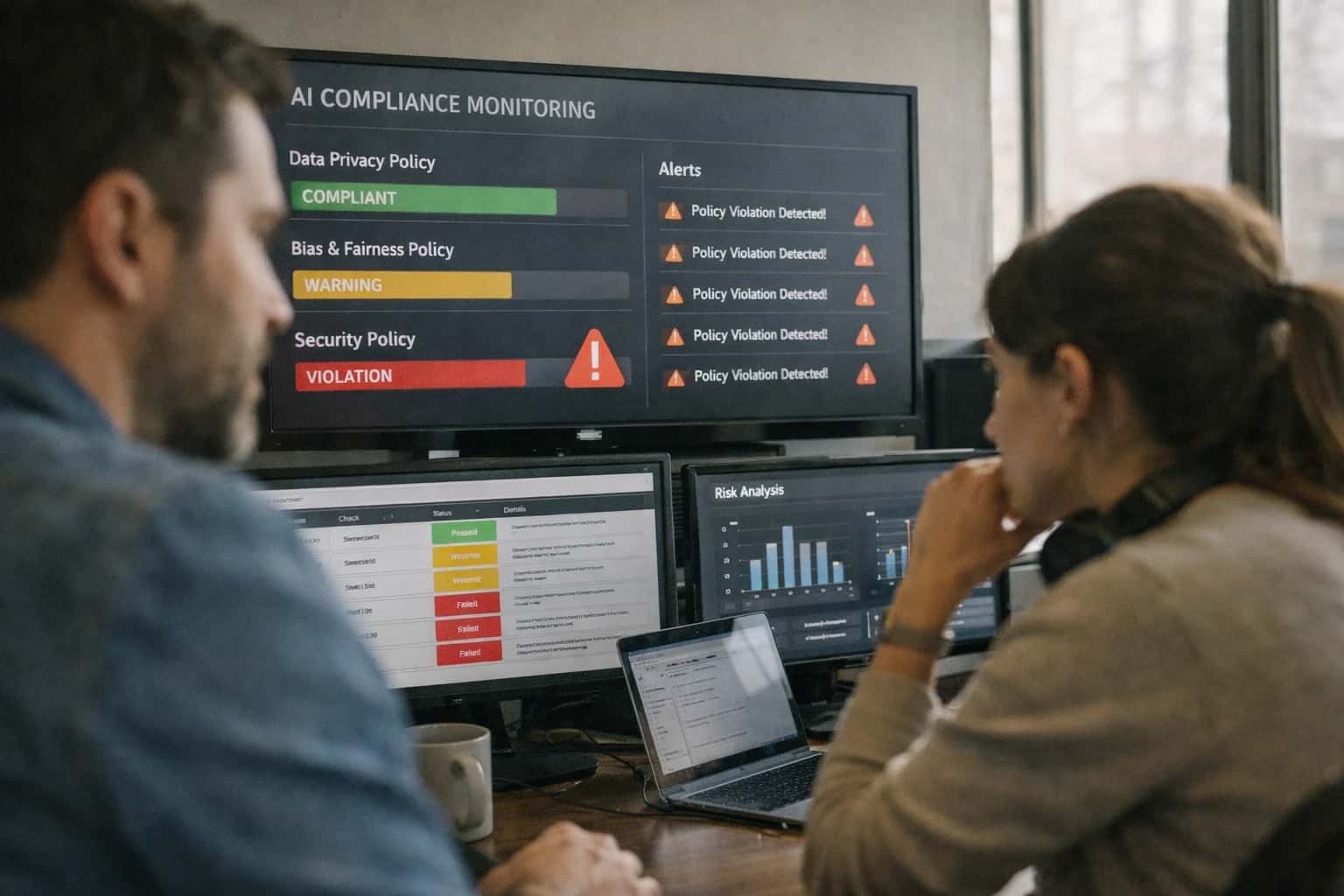
ARCHITECTURAL BLUEPRINT
Introduction: Automating HIPAA Breach Triage and Investigation
A multi-agent system that automates the initial assessment of potential privacy incidents by correlating logs, roles, and patient data to determine severity and generate preliminary reports, ensuring compliance with mandatory 60-day reporting deadlines.
Implementation requires an orchestrator like LangGraph to manage specialized agents for data retrieval, context enrichment, and rule evaluation. The architecture must integrate with clinical and IT systems via APIs, enforce RBAC for data access, and maintain an immutable audit trail of all agent decisions and data sources. Critical controls include configurable approval gates for high-severity findings, explainability layers justifying each risk score, and continuous monitoring of agent performance and data quality to ensure the system's outputs remain defensible to regulators and internal audit.
HIPAA PRIVACY INCIDENT INVESTIGATION
Business Impact: From Operational Burden to Proactive Compliance
A custom multi-agent workflow transforms reactive, manual breach investigations into a proactive, auditable system that accelerates mandatory reporting and reduces privacy officer workload by over 60%.
01
Accelerate Mandatory Reporting Timelines
Manual correlation of access logs, user roles, and patient context can take days, risking late reporting to HHS OCR. An automated workflow ingests logs from EHR, HR, and access systems, correlates events using graph logic, and assesses severity against predefined rules in minutes. This compresses the critical 60-day reporting window, turning a compliance scramble into a controlled process and significantly mitigating regulatory penalty risk.
60%
Faster Initial Triage
< 4 hours
Preliminary Report Generation
02
Reduce Privacy Officer Workload by 60-70%
Privacy officers spend up to 70% of their investigation time on data gathering and preliminary analysis—repetitive, low-judgment work. A multi-agent system acts as a force multiplier: a Triage Agent filters noise, an Evidence Agent retrieves relevant patient and access records, and a Reporting Agent drafts the initial incident summary. This reallocates senior staff to high-value exception review and strategic mitigation, improving operational leverage.
65%
Reduction in Manual Triage Effort
03
Create a Defensible, Immutable Audit Trail
During an OCR audit, the ability to trace an investigation decision back to source data is critical. This workflow embeds explainability by design: each agent logs its reasoning, data sources cited, and rule applications. The final report includes a justification layer linking conclusions to specific log entries and policy clauses, creating a chain of custody that satisfies regulatory scrutiny and strengthens the organization's legal posture.
04
Lower Financial Exposure from Breach Escalation
Delayed detection allows breaches to expand, increasing notification costs, potential fines, and reputational damage. By automating continuous monitoring and early severity scoring, the system identifies and contains low-severity incidents (e.g., accidental internal viewing) before they escalate. This proactive containment directly reduces potential per-record breach costs and limits the scope of mandatory patient notifications.
40%
Estimated Reduction in Per-Incident Cost
05
Improve Investigation Consistency & Reduce Human Error
Manual processes lead to inconsistent application of policy and missed details due to fatigue. The automated workflow applies the same rule engine to every incident, ensuring uniform assessment against criteria like data volume, sensitivity, and unauthorized intent. It performs exhaustive log searches a human might skip, reducing false negatives and building a standardized, high-quality investigation process across the organization.
06
Enable Scalable Compliance for Growing Organizations
As healthcare systems grow through M&A, manual investigation processes become brittle and unmanageable. This agentic architecture is designed for scale: it can integrate new EHR instances (Epic, Cerner), IAM systems, and regional policies through configuration, not re-engineering. It turns privacy operations from a fixed-cost center into a variable, scalable function that supports growth without linearly increasing FTE headcount.
3 weeks
Pilot-to-Production Window
CUSTOM WORKFLOW DEVELOPMENT
Implementing Multi-Agent HIPAA Incident Investigation Architecture
A production-grade orchestration engine for automating the initial triage, evidence correlation, and severity assessment of potential HIPAA privacy breaches, creating a defensible audit trail and accelerating mandatory reporting.
This architecture automates the labor-intensive first response to potential privacy incidents by replacing manual log correlation and context gathering with a coordinated multi-agent system. It ingests access logs from systems like Epic or ServiceNow, enriches them with user-role data from IAM platforms and patient context from the EHR, then applies rule-based and ML-driven severity scoring. The operational upside comes from compressing investigation timelines from hours to minutes, reducing privacy officer workload by 70-80% on initial triage, and creating a consistently documented, audit-ready rationale for every incident classification, which is critical for OCR audits and internal compliance reviews.
Implementation leverages a framework like LangGraph for agent coordination, with each specialist agent built as a containerized service. The orchestrator manages state, handles exceptions, and enforces approval gates—such as mandatory human review for high-severity incidents or those involving sensitive records. The workflow integrates directly with existing ticketing (ServiceNow, Jira) and communication (Slack, Teams) systems for notifications. Critical controls include configurable confidence thresholds for auto-closure, full explainability logs for every scoring decision, and rollback capabilities for any agent action, ensuring the system supports rather than subverts existing privacy governance protocols.
HIPAA PRIVACY INCIDENT INVESTIGATION
Workflow Components: Specialized Agents and Systems
A multi-agent architecture for automating the initial triage, evidence correlation, and report generation for potential privacy breaches, creating a defensible audit trail while accelerating mandatory reporting.
01
Incident Triage & Severity Scoring Agent
This agent acts as the workflow's initial classifier. It ingests raw alerts from SIEM, access logs (e.g., Epic, Cerner), or user reports. Using a rules engine and LLM-based context analysis, it correlates the event with patient data sensitivity, user role, and data volume to assign a preliminary severity score (e.g., Low, Medium, High, Critical). This triage determines the investigation pathway and prioritization, reducing privacy officer workload by filtering out non-incidents and low-risk events automatically.
70%
Low-Risk Alerts Auto-Closed
<5 min
Initial Triage Time
02
Evidence Correlation & Timeline Builder Agent
Once triaged, this agent performs deep forensic correlation. It queries disparate systems—EHR audit trails, Active Directory, VPN logs, file servers—to construct a unified timeline of the affected patient's record access. It identifies all users who accessed the record in the relevant window, their authentication methods, and any anomalous patterns (e.g., after-hours access from unusual locations). The output is a structured, time-ordered evidence log, replacing hours of manual log review.
2-4 hours
Manual Process Saved
03
Preliminary Report & Breach Determination Agent
This agent synthesizes the evidence timeline and severity score to draft the preliminary investigation report. It maps facts to HIPAA Breach Notification Rule criteria, assessing the probability of compromise and the presence of any exceptions (e.g., unintentional access by a workforce member). The report includes a recommended determination (breach/no breach), a summary of impacted individuals and data types, and a justification narrative citing the correlated evidence. This creates the first draft for privacy officer review and sign-off.
60%
Report Drafting Time Saved
04
Notification & Workflow Orchestration Layer
This is the central nervous system of the automation, built on a framework like LangGraph or Temporal. It manages the state of each incident, sequences agent execution, handles conditional branching (e.g., escalating High/Critical incidents for immediate human review), and integrates approval gates. It routes the drafted report to the designated privacy officer for final determination, manages notification letter generation if a breach is confirmed, and logs every action, decision, and piece of evidence into an immutable audit trail for regulators.
100%
Actions Logged for Audit
05
Human-in-the-Loop Review & Approval Interface
A critical control point, this is a dedicated dashboard where privacy officers review agent findings. It presents the severity score, correlated evidence timeline, and draft report with clear accept, modify, or reject actions. Any override or modification by the officer is captured with a required rationale, feeding back into the audit trail. This interface ensures human oversight of critical decisions while leveraging automation for evidence gathering and documentation, preserving defensibility.
06
Integration Connectors to Health IT Systems
The workflow's effectiveness depends on secure, reliable data ingestion. This component comprises API connectors and adapters for core healthcare systems: EHRs (Epic, Cerner), Identity & Access Management (IAM), Security Information and Event Management (SIEM), and document repositories. For legacy systems without APIs, browser automation agents may be employed to simulate user queries and extract log data. These connectors are built with robust error handling and reconciliation logic to ensure data completeness for the investigation.
MULTI-AGENT HIPAA INCIDENT INVESTIGATION
Implementation Blueprint: Phased Delivery for Measured Risk
A phased implementation strategy for deploying a multi-agent HIPAA privacy incident investigation system, designed to deliver measurable risk reduction and operational value at each stage while maintaining strict compliance and auditability.
Phase 1 establishes the core orchestration and data ingestion layer. We deploy a central LangGraph-based orchestrator connected to critical systems of record: SIEM logs, EHR access audit trails, and Active Directory. This initial build focuses on automating the ingestion and correlation of disparate data signals to create a unified incident timeline. The deliverable is a high-fidelity triage dashboard that reduces manual data gathering from hours to minutes, providing privacy officers with a consolidated, timestamped view of potential breaches for initial severity assessment.
Subsequent phases introduce specialized agents for context enrichment, severity scoring, and preliminary report drafting, all governed by human review gates. Phase 2 deploys agents that analyze user role context and patient record sensitivity to assign a risk score, while Phase 3 integrates the workflow with case management systems like ServiceNow for closed-loop tracking. Each phase is governed by explicit approval checkpoints and builds a defensible explanation layer, ensuring the system reduces workload while strengthening the organization's audit posture for regulators.
MANUAL VS. CUSTOM WORKFLOW COMPARISON
ROI and Operating Economics
Quantitative and operational impact of implementing a multi-agent system for HIPAA privacy incident investigation versus a manual, human-led process.
| Metric | Manual Investigation Process | Multi-Agent Custom Workflow |
|---|---|---|
Mean Time to Initial Triage | 24–72 hours | 10–15 minutes |
Privacy Officer Hours per Incident | 4–6 hours | 0.5–1 hour (review only) |
Investigation Report Drafting Time | 2–3 hours | Auto-generated in <5 min |
Audit Trail Completeness & Searchability | Fragmented across emails, notes, and logs | Unified, immutable log with decision rationale |
Consistency of Severity Scoring | High variance based on officer experience | Rule and context-driven, consistent scoring |
Cost per Investigated Incident (Fully Loaded) | $450 – $650 | $90 – $150 |
Reporting Compliance Risk (Late to HHS/Patient) | Moderate to High | Near Zero (automated deadline tracking) |
Scalability (Incident Volume Handleable per FTE) | ~15–20 per month | ~100–150 per month per reviewer |
ARCHITECTURE FOR REGULATED ENVIRONMENTS
Implementing Multi-Agent HIPAA Privacy Incident Investigation Automation
A blueprint for automating the initial triage and investigation of potential HIPAA breaches using a multi-agent system that correlates logs, assesses severity, and generates auditable reports to meet mandatory reporting deadlines.
This workflow automates the critical, time-sensitive bottleneck of initial privacy incident investigation. By deploying specialized agents to correlate access logs from systems like Epic or ServiceNow with user roles and patient context, it assesses incident severity against policy rules in seconds, not hours. This directly reduces privacy officer workload, accelerates mandatory reporting to meet strict 60-day deadlines, and creates a detailed, defensible audit trail for regulators. The operational upside is measured in reduced breach exposure, lower labor costs for triage, and stronger compliance posture through consistent, documented analysis.
Implementation requires orchestrating agents—built on frameworks like LangGraph—that ingest from SIEM, EHR, and IAM systems. The architecture must include immutable audit logs for every agent decision, a human review gate for high-severity findings, and integration with case management tools like ServiceNow or Jira for tracking. Key controls include configurable risk-scoring thresholds, exception routing for ambiguous cases, and rollback capabilities for any automated action. Governance is enforced through explainability layers that document the rationale for each severity score and the data sources used, ensuring the output is defensible during an OCR audit.
HIPAA PRIVACY INCIDENT INVESTIGATION ARCHITECTURE
Key System Integrations and Data Flows
A custom multi-agent workflow for HIPAA incident triage requires precise orchestration across security, clinical, and identity systems to assess severity, generate reports, and meet mandatory reporting deadlines.
01
Identity & Access Management (IAM) Integration
The workflow's Investigator Agent ingests user access logs from IAM systems (e.g., Okta, Azure AD, on-prem AD) and correlates them with role-based permissions. This establishes the who, what, and when of a potential breach by mapping accessed resources (e.g., patient records in Epic) to user identities and session context. The agent normalizes this data into a unified activity timeline, which is the foundational input for the severity scoring logic.
90%
Faster User Context Assembly
02
Electronic Health Record (EHR) Context Retrieval
A dedicated Context Agent queries the EHR (Epic, Cerner) via FHIR or proprietary APIs to retrieve the clinical sensitivity of accessed records. It evaluates factors like record type (psych notes vs. lab results), patient VIP status, and recent care activity. This context is critical—accessing 10,000 lab results has a different risk profile than accessing 10 psychotherapy notes. The agent appends this metadata to each access event for the scoring engine.
03
Security Information & Event Management (SIEM) Correlation
The Correlation Agent pulls related security events (failed logins, malware alerts, data exfiltration signals) from the SIEM (e.g., Splunk, Sentinel) for the users and timeframes in question. It enriches the incident timeline, helping distinguish between a routine clinical access and a credential compromise. This integration closes the loop between privacy and security operations, ensuring the investigation considers the full threat landscape.
04
Orchestration & Human-in-the-Loop Routing
The core Orchestrator (built on LangGraph or similar) manages the agent sequence, applies configurable business rules for severity scoring, and routes cases. High-severity incidents are pushed directly to a Privacy Officer Work Queue in ServiceNow or Jira with all assembled evidence. Medium/low cases may be auto-documented and logged for periodic review. This layer ensures mandatory 60-day reporting clocks start immediately and human oversight is applied where risk is highest.
75%
Reduction in Manual Triage
05
Audit & Document Generation System
A Reporting Agent compiles the investigation's complete audit trail—access logs, EHR context, SIEM correlations, scoring rationale, and officer annotations—into a structured, defensible report. This report auto-populates breach notification templates (e.g., for HHS OCR) and is stored in a compliant document management system with immutable logging. This integration creates the single source of truth for regulatory audits and legal discovery.
5 Days
Faster Audit Package Assembly
06
Implementation & Governance Controls
Deployment requires a phased rollout: start with read-only integrations to IAM and EHR for a pilot cohort of high-risk departments. Establish approval gates for the scoring logic and report templates with Legal & Compliance before go-live. Implement continuous monitoring for the agents themselves, logging all decisions and allowing for manual override. This controlled approach mitigates operational risk while proving the workflow's value in a contained environment.
4-6 Weeks
Typical Pilot Timeline
AUDITABLE AUTOMATION ARCHITECTURE
Implementing Multi-Agent HIPAA Privacy Incident Investigation
This workflow automates the initial triage of potential privacy breaches by correlating access logs, user roles, and patient context to assess incident severity and generate preliminary reports. It accelerates mandatory reporting timelines, reduces privacy officer workload, and creates a detailed, defensible investigation audit trail.
A custom multi-agent system automates the initial 60-80% of HIPAA incident investigation, directly reducing privacy officer toil and compressing reporting timelines from days to hours. The business value is clear: lower compliance labor costs and reduced regulatory penalty risk through timely, auditable action. The architecture ingests logs from EHRs (Epic, Cerner), IAM systems, and network monitors, using specialized agents to correlate data, score incident severity based on patient sensitivity and access patterns, and draft preliminary reports with cited evidence.
Implementation requires building the orchestrator in LangGraph or a similar framework to manage agent handoffs, state, and the immutable audit log. Each agent's logic—correlation rules, risk matrices, and report templates—must be validated against organizational policy. Critical controls include mandatory human-in-the-loop review gates for high-severity incidents, exception routing for ambiguous cases, and integration with case management systems like ServiceNow to close the operational loop with full traceability.
Enabling Efficiency, Speed & Accuracy
Intelligent Analysis, Decision & Execution
We build AI systems for teams that need search across company data, workflow automation across tools, or AI features inside products and internal software.
Talk to Us
Search across company data
Give teams answers from docs, tickets, runbooks, and product data with sources and permissions.
Useful when people spend too long searching or get different answers from different systems.
Enterprise searchRAGPermissions
Read more
Automate internal workflows
Use AI to route work, draft outputs, trigger actions, and keep approvals and logs in place.
Useful when repetitive work moves across multiple tools and teams.
AI agentsWorkflow automationGovernance
Read more
Add AI to products and internal tools
Build assistants, guided actions, or decision support into the software your team or customers already use.
Useful when AI needs to be part of the product, not a separate tool.
AI integrationDecision supportModel routing
Read moreMULTI-AGENT HIPAA PRIVACY INCIDENT INVESTIGATION
Frequently Asked Questions
Practical questions about implementing a multi-agent system to automate the initial triage and investigation of potential HIPAA privacy breaches, focusing on controls, integration, and operational risk.
The workflow begins with validation agents that check the completeness and format of ingested logs (e.g., from EHR, IAM, DLP systems) before correlation. Missing timestamps, invalid user IDs, or corrupted entries are routed to a human-staffed data quality queue. The primary investigation agents only operate on cleansed, timestamp-aligned data. We implement continuous data health dashboards to monitor source system feed reliability, which is critical for reducing false positives and ensuring the severity scoring model has trustworthy inputs.

About the author
Prasad Kumkar
CEO & MD, Inference Systems
Prasad Kumkar is the CEO & MD of Inference Systems and writes about AI systems architecture, LLM infrastructure, model serving, evaluation, and production deployment. Over 5+ years, he has worked across computer vision models, L5 autonomous vehicle systems, and LLM research, with a focus on taking complex AI ideas into real-world engineering systems.
His work and writing cover AI systems, large language models, AI agents, multimodal systems, autonomous systems, inference optimization, RAG, evaluation, and production AI engineering.
LinkedIn
Limited slotsGet a Free AI Consultation
Partnered with leading AI, data, and software stack.





How We Work
Custom AI workflows for your Business
One-fit-all AI don't work for modern businesses. At Inferensys, we aim to understand your business & custom requirements; which we use to define most efficient agentic workflows, the data, and the tools for your business.
01
Review the use case
We understand the task, the users, and where AI can actually help.
Read more02
Pick the right approach
We define what needs search, automation, or product integration.
Read more03
Build the first useful version
We implement the part that proves the value first.
Read more04
Improve from there
We add the checks and visibility needed to keep it useful.
Read moreThe first call is a practical review of your use case and the right next step.
Talk to Us