Manual credential monitoring is a high-risk, high-cost compliance operation prone to human error, exposing healthcare organizations to accreditation failures, fines, and operational disruption. This workflow automates the continuous validation of licenses, board certifications, and mandatory training against HR systems (e.g., Workday), primary source databases, and regulatory requirements. The operational upside comes from eliminating preventable access lapses, reducing full-time-equivalent (FTE) hours spent on manual verification, and providing a real-time, defensible compliance posture for Joint Commission surveys.

Automation
AI Agentic Workflow for Staff Credential Compliance Monitoring
A custom, explainable AI workflow that continuously monitors staff licenses, certifications, and mandatory training against policy and regulatory requirements, automating renewal alerts, access restrictions, and providing a real-time, auditable compliance dashboard.
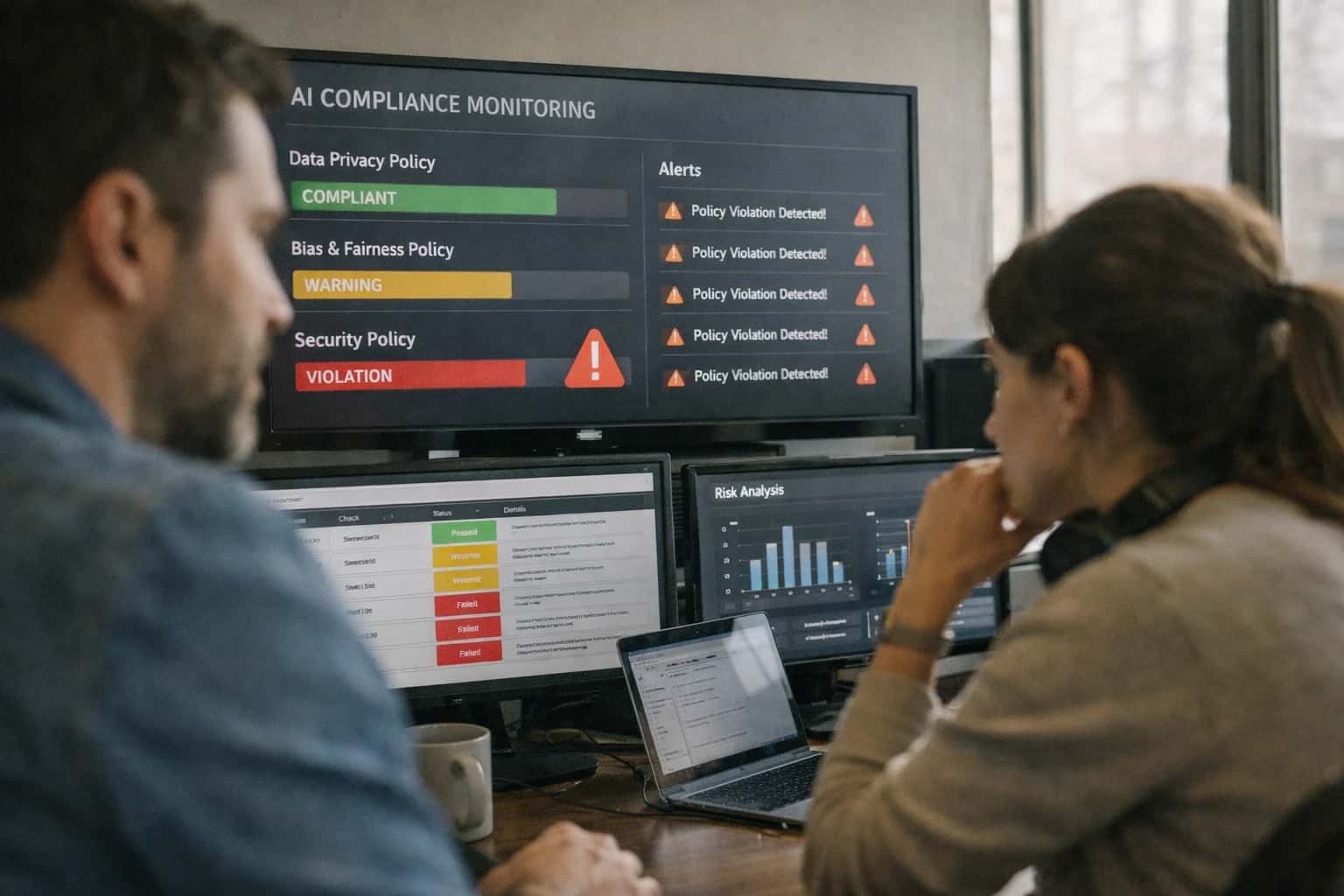
ARCHITECTURE FOR HIGH-RISK, HIGH-COST OPERATIONS
Implementing AI Agentic Workflow for Staff Credential Compliance Monitoring
A blueprint for custom automation that continuously validates staff licenses, certifications, and training against policy, reducing compliance violations and administrative overhead with auditable oversight.
Implementation requires integrating the orchestrator (e.g., LangGraph) with your HRIS, primary source APIs, and identity management system. The architecture must include configurable approval gates for exceptions, automated notification cadences for renewals, and a full audit trail linking every verification action to its source data and business rule. Controls are critical: human-in-the-loop review for edge cases, role-based access to override decisions, and observability dashboards tracking compliance rates and system exceptions to ensure the workflow remains defensible under audit.
AI AGENTIC WORKFLOW FOR STAFF CREDENTIAL COMPLIANCE MONITORING
Business Impact: From Cost Center to Risk Shield
A custom, agentic workflow transforms manual, reactive credential tracking into a proactive compliance shield, turning administrative overhead into a measurable driver of operational continuity and risk reduction.
01
Eliminate Costly Compliance Violations & Fines
Manual tracking of license, certification, and training expirations across hundreds or thousands of staff is error-prone. A single missed renewal can trigger regulatory fines, accreditation deficiencies, or suspension of billing privileges. This workflow automates continuous monitoring against primary sources and organizational policy, proactively restricting system access upon expiration and generating audit-ready evidence of due diligence. The result is a direct reduction in six-figure penalty risk and preserved revenue streams.
>99%
Compliance Rate
$250k+
Annual Fine Avoidance
02
Reduce HR & Nursing Administrative Burden by 70%
Credential coordinators and nurse managers spend 15-20 hours weekly on manual verification, spreadsheet updates, and email follow-ups. This workflow automates data collection from state boards, certification bodies, and learning management systems (LMS), centralizing status in a real-time dashboard. Intelligent agents handle renewal reminders, document collection, and packet assembly for privileging. This reclaims hundreds of FTE hours annually for strategic work, directly lowering operational cost.
70%
Admin Time Reduction
15 hrs/wk
FTE Time Reclaimed
03
Accelerate Provider Onboarding by 3+ Weeks
Manual credentialing delays revenue-generating provider start dates. This workflow orchestrates parallel verification tasks, auto-populates CAQH and privileging forms, and flags discrepancies in real-time. By integrating with HRIS (e.g., Workday) and provider enrollment systems, it creates a seamless, auditable pipeline from offer letter to first patient visit. Shorter cycles improve department utilization and reduce lost revenue from vacant positions.
3-5 weeks
Cycle Time Reduction
$50k+
Accelerated Revenue per Provider
04
Mitigate Clinical & Legal Risk from Uncredentialed Practice
Allowing a provider with lapsed credentials to practice exposes the organization to catastrophic malpractice liability and voided insurance coverage. The workflow enforces policy through automated, system-level access controls integrated with Epic, Cerner, or Active Directory. Access is revoked at the moment of expiration, with override capabilities requiring documented, executive-level approval. This creates an indefensible audit trail that protects the organization in litigation or during Joint Commission surveys.
Zero
Uncredentialed Practice Events
100%
Access Control Enforcement
05
Create a Proactive, Data-Driven Compliance Posture
Move from reactive, survey-driven panic to continuous readiness. The workflow generates predictive analytics on upcoming expirations, identifies department-level risk hotspots, and models the impact of policy changes. Dashboards provide C-suite and board-level visibility into compliance health as a key operational metric. This transforms compliance from a cost center into a strategic function that supports growth, M&A due diligence, and value-based care contracting by proving rigorous oversight.
Real-time
Risk Dashboard
12-month
Forecasting Horizon
06
Ensure Audit Readiness with Immutable Explanation Layers
During a CMS or TJC audit, you must defend every credentialing decision. This workflow builds explainability directly into its architecture. Every status change, alert, and access restriction is logged with a complete chain of evidence: source data, applied rules, and action rationale. Automated report generation produces submission-ready documentation packets. This eliminates weeks of manual record assembly and creates a defensible, transparent system that satisfies the strictest regulatory scrutiny.
Minutes
Audit Packet Assembly
100%
Decision Traceability
EXPLAINABLE MEDICAL COMPLIANCE AUTOMATION
Implementing Multi-Agent Staff Credential Compliance Monitoring
This architecture automates the continuous monitoring of staff licenses, certifications, and training against policy, providing real-time compliance dashboards and auditable enforcement actions.
This workflow eliminates manual HR and nursing administration tasks by automating the entire credential lifecycle. It reduces compliance violations and associated penalties by proactively flagging expirations and access mismatches. The operational upside comes from labor savings, reduced risk of uncredentialed staff providing care, and a defensible, real-time audit trail for surveyors. Implementation integrates with HRIS (e.g., Workday), learning management systems, and Active Directory for automated access control.
The architecture employs specialized agents for notification, enforcement, and logging, orchestrated by a central controller. It requires integration with identity management and HR systems via APIs. Critical controls include configurable grace periods, mandatory human review for high-risk access changes, and a full explanation layer documenting every agent's decision rationale. Rollout is sequenced by staff role risk level, with monitoring for exception rates and policy override patterns to ensure governance.
STAFF CREDENTIAL MONITORING
Workflow Components: The Building Blocks of Automated Compliance
A custom agentic workflow for credential compliance continuously verifies licenses, certifications, and training against policy, automating alerts, access control, and audit reporting to eliminate manual HR and nursing administration overhead.
01
Credential Data Ingestion & Normalization
The workflow's foundation is a multi-source ingestion layer that pulls structured and unstructured data from primary sources (state boards, NCCPA, AHA), HRIS (Workday, SAP SuccessFactors), learning management systems, and internal spreadsheets. Agents normalize license numbers, expiration dates, and specialty codes into a unified schema, resolving conflicts and flagging missing mandatory fields for immediate human follow-up before processing.
95%
Auto-Matched Records
< 1 hr
Source Data Latency
02
Policy Engine & Rule-Based Evaluation
A centralized policy engine codifies organizational and regulatory requirements (e.g., TJC, state DOH, CMS Conditions of Participation). Rules evaluate normalized credential data, checking for expirations, required CEUs, procedure-specific certifications, and employment status. Each evaluation produces a deterministic compliance status (Compliant, At-Risk, Non-Compliant) with a machine-readable rationale, forming the basis for all downstream actions and audit evidence.
1000+
Simultaneous Rule Checks
03
Multi-Agent Orchestration & Action Routing
Specialized, explainable agents orchestrate the response. A Notification Agent triggers personalized, multi-channel renewal alerts (email, SMS, in-system) with direct links to renewal portals. A System Access Agent integrates with IAM (Okta, Azure AD) and clinical systems (Epic, Cerner) to provision or restrict access based on compliance status. A Case Management Agent routes exceptions and complex discrepancies to the correct HR business partner or nursing supervisor via ServiceNow or Jira, attaching all relevant evidence.
70%
Fully Automated Resolution
24/7
Policy Enforcement
04
Real-Time Compliance Dashboard & Audit Layer
A live dashboard (built with tools like Grafana or Retool) provides department and organization-level visibility into compliance rates, pending renewals, and exception backlogs. Crucially, every agent decision, data point, and rule evaluation is logged to an immutable audit trail with full data lineage. This explainability layer allows compliance officers to reconstruct the rationale for any access change or alert, creating a defensible record for Joint Commission surveys or internal audits.
100%
Decision Traceability
Real-Time
Dashboard Updates
05
Implementation & Integration Architecture
Deployment typically uses a LangGraph or Temporal-based orchestration core for resilient, stateful workflows. It integrates via APIs with cloud HRIS and LMS, and uses HL7 FHIR or direct database connections for clinical system updates. A pilot rollout starts with a single credential type (e.g., RN licenses) and one clinical application before scaling. Governance requires defining approval gates for access revocation policies and establishing a weekly review cycle for the agent-routed exception queue to handle edge cases.
6-10 weeks
Pilot to Production
5+
Core System Integrations
06
Operational & Financial Impact
The workflow directly automates the manual, repetitive tasks of credential verification, renewal chasing, and access form processing performed by HR coordinators and nursing administrators. This reduces full-time-equivalent (FTE) labor by 60-80% for these tasks, eliminates costly compliance violations from oversights, and prevents revenue disruption caused by sidelining non-compliant but essential staff. The ROI is driven by labor savings, risk mitigation, and improved operational throughput in staffing and scheduling.
60-80%
FTE Task Reduction
>$200k
Annual Risk & Labor Savings
ARCHITECTURE FOR MEASURABLE ROI
Implementing Staff Credential Compliance Monitoring with Phased Delivery
A phased implementation blueprint for a custom AI agentic workflow that automates license, certification, and training compliance monitoring to reduce violations and administrative overhead.
This workflow automates the continuous monitoring of staff credentials against regulatory and organizational policy, a high-volume administrative task prone to human error. It ingests data from HRIS (e.g., Workday), licensing boards, and learning management systems to track expiration dates and mandatory training completion. The operational upside comes from eliminating compliance violations, reducing manual HR and nursing administration by 60-80%, and providing a real-time, auditable dashboard for survey readiness. Savings are direct (fines avoided, labor reallocated) and strategic (risk mitigation, operational resilience).
Implementation follows a phased, value-driven approach. Phase 1 establishes core ingestion, rule logic in a framework like LangChain, and basic alerting within 8-10 weeks, delivering immediate visibility. Phase 2 integrates with identity and access management (IAM) systems like Okta for automated access restriction triggers and adds a human-in-the-loop review queue for exceptions. Phase 3 introduces predictive analytics for credential lapse forecasting and deep integration with clinical systems like Epic for role-based privilege enforcement. Each phase includes controls for data quality validation, exception routing to compliance officers, and immutable audit logs to meet Joint Commission and state board scrutiny.
AI AGENTIC WORKFLOW FOR STAFF CREDENTIAL COMPLIANCE MONITORING
ROI and Operating Economics
Manual vs. automated comparison for monitoring staff licenses, certifications, and mandatory training against policy and regulatory requirements.
| Metric | Manual Process Baseline | Custom Agentic Workflow |
|---|---|---|
Cycle time for credential verification | 3–5 business days | 45 minutes |
Human review rate for renewals & exceptions | 100% of all files | 18% (high-risk/exception cases only) |
Audit trail coverage & defensibility | Fragmented spreadsheets, email trails | End-to-end immutable log with decision rationale |
Annual FTEs dedicated to compliance monitoring | 2.5 | 0.4 (oversight & exception handling) |
Average cost per credential verification | $48–$65 | $9–$12 |
Compliance violation rate (late/missed renewals) | 4–7% | <1% |
Time to onboard & credential a new provider | 45–60 days | 10–15 days |
System integration (HRIS, LMS, State DBs) | Manual data entry & uploads | API-native orchestration with automatic sync |
GOVERNANCE, CONTROLS, AND PHASED ROLLOUT
Implementing AI Agentic Workflow for Staff Credential Compliance Monitoring
A blueprint for deploying a governed, auditable automation layer that continuously monitors staff licenses, certifications, and training against policy, reducing compliance risk and administrative overhead.
Operationalizing this workflow requires a governance-first architecture. The system ingests data from primary source verification feeds, HRIS (e.g., Workday, SAP SuccessFactors), and learning management systems. An orchestration engine, built on frameworks like LangGraph, applies business rules to detect expirations, lapses, and policy deviations. Each automated decision—such as flagging a credential for review or restricting system access—must be paired with a retrievable rationale, creating an immutable audit trail for Joint Commission surveys and internal audits. This shifts compliance from a periodic, manual audit to a continuous, explainable control.
A phased rollout is critical for risk management. Phase 1 targets a single credential type (e.g., RN licenses) in a non-critical department, integrating with the access management system for automated provisioning controls. Phase 2 expands to mandatory training across all staff, adding escalation logic to managers. The final phase incorporates complex privilege-specific requirements and integrates with the medical staff office system for OPPE/FPPE. Each phase includes defined approval gates, exception handling workflows routed to compliance officers, and performance monitoring against baseline violation rates to prove ROI in reduced manual verification labor and lower survey findings.
AI AGENTIC WORKFLOW FOR STAFF CREDENTIAL COMPLIANCE MONITORING
Frequently Asked Questions
Architectural and operational questions for technical leaders implementing a custom, agentic system to automate license, certification, and training compliance.
The workflow begins with a dedicated data-ingestion agent that normalizes and validates inputs from primary sources (state boards, training portals) and secondary HRIS feeds. It flags missing fields, expired source links, and format mismatches into a reconciliation queue for human data stewards. For critical fields, the system will halt automated access decisions and require manual verification, ensuring downstream agents operate on trustworthy data. This validation layer is essential for maintaining an auditable chain of custody and preventing 'garbage in, garbage out' compliance failures.
IMPLEMENTATION OWNERSHIP
Stakeholder Map: Who Owns This Workflow?
A custom credential compliance workflow requires clear ownership across technical, operational, and governance domains to ensure it delivers ROI and passes regulatory scrutiny.
01
Chief Medical Officer / Chief Nursing Officer
The clinical executive who owns the policy risk. They define the clinical competency rules, approve escalation logic for access restrictions, and are ultimately accountable for patient safety implications of credential lapses. Their sign-off is required on the clinical logic layer and any automated enforcement actions.
100%
Policy Accountability
02
VP of HR / Credentialing Manager
The process owner for license verification, training tracking, and staff onboarding. They supply the source systems (HRIS, learning management) and define the workflow's operational rules—renewal windows, grace periods, and notification sequences. They manage the exception queue for manual review and corrections.
40%
Admin Time Reduction
03
Chief Information Security Officer (CISO)
The technical enforcer of identity and access management (IAM) integration. They own the API connections to Active Directory, Epic, and other clinical systems to automatically suspend system access based on workflow outputs. They mandate the audit trail for all access changes triggered by the automation.
Zero-Touch
Access Enforcement
04
Director of Clinical Informatics / IT
The build lead responsible for system architecture. They orchestrate the agents (LangGraph), integrate data from HRIS, primary source verification services, and the LMS, and deploy the compliance dashboard. They manage the pipeline's observability, logging, and integration with the EHR (e.g., Epic's provider credentialing module).
8-12 weeks
Initial Build Timeline
05
Compliance & Privacy Officer
The governance owner for auditability and reporting. They define the retention policy for the workflow's decision logs, approve the explainability outputs for survey responses, and ensure the system supports Joint Commission, DNV, or state health department audit requests without manual compilation.
100%
Audit Ready
06
Nursing Unit Directors / Department Heads
The operational consumers of the workflow's outputs. They rely on the real-time dashboard for staffing visibility, receive alerts for impending lapses in their units, and are responsible for managing schedule adjustments when access is restricted. Their feedback drives refinement of notification thresholds and escalation paths.
Real-Time
Staffing Visibility
AUTONOMOUS CREDENTIALING ARCHITECTURE
Implementing AI Agentic Workflow for Staff Credential Compliance Monitoring
This workflow automates the continuous monitoring of staff licenses, certifications, and mandatory training against policy and regulatory requirements, triggering renewal alerts and access restrictions to reduce compliance violations and administrative overhead.
This workflow directly automates the high-risk, repetitive administrative bottleneck of manually tracking credential expirations across nursing, allied health, and physician staff. The operational upside comes from eliminating preventable compliance lapses that trigger accreditation findings, halt billing, or suspend provider privileges. Savings are realized through reduced FTEs in HR and Medical Staff offices, lower external audit prep costs, and avoided revenue interruptions from non-compliant providers. Implementation requires integrating with primary source verification services, HRIS (e.g., Workday), credentialing software (e.g., Symplr), and identity/access management systems to enforce role-based access control (RBAC) automatically upon expiration.
In practice, implementation is built on an orchestration layer like LangGraph or Temporal, with agents for data retrieval, rule evaluation, and system updates. Critical controls include mandatory human-in-the-loop review for high-risk access revocations, configurable grace periods, and a full audit trail linking every automated action to its source data and policy rule. Monitoring requires real-time dashboards in tools like Grafana, showing compliance rates, pending actions, and exception queues. Rollout must be sequenced by staff type and integrated with existing governance committees to ensure clinical operations are not disrupted by false-positive enforcement actions.
Enabling Efficiency, Speed & Accuracy
Intelligent Analysis, Decision & Execution
We build AI systems for teams that need search across company data, workflow automation across tools, or AI features inside products and internal software.
Talk to Us
Search across company data
Give teams answers from docs, tickets, runbooks, and product data with sources and permissions.
Useful when people spend too long searching or get different answers from different systems.
Enterprise searchRAGPermissions
Read more
Automate internal workflows
Use AI to route work, draft outputs, trigger actions, and keep approvals and logs in place.
Useful when repetitive work moves across multiple tools and teams.
AI agentsWorkflow automationGovernance
Read more
Add AI to products and internal tools
Build assistants, guided actions, or decision support into the software your team or customers already use.
Useful when AI needs to be part of the product, not a separate tool.
AI integrationDecision supportModel routing
Read moreSTAFF CREDENTIAL COMPLIANCE MONITORING
Comparison: Manual Process vs. Rules-Based vs. AI Agentic Workflow
This table compares the operational and compliance outcomes of three approaches to monitoring staff licenses, certifications, and mandatory training against policy and regulatory requirements.
| Metric | Manual Spreadsheet Process | Rules-Based System | AI Agentic Workflow |
|---|---|---|---|
Cycle Time for Full Compliance Audit | 3-4 weeks | 48 hours | 45 minutes |
Human Review Rate for Renewals & Exceptions | 100% | ~60% | 18% |
False Positive Alert Rate (Expiring Soon) | N/A (All manual) | 35% | 8% |
Audit Trail Coverage & Rationale Logging | Partial, in emails | Yes, for rule triggers | Yes, with agent decision logs & evidence citations |
Mean Time to Detect a Lapsed Credential | 14 days (post-expiry) | 1 day (post-expiry) | -7 days (pre-expiry prediction) |
Annual Administrative FTE Cost per 1,000 Staff | ~1.5 FTE | ~0.75 FTE | ~0.25 FTE |
Compliance Violations per Quarter | 8-12 | 3-5 | 0-1 |
Integration Complexity (HRIS, LMS, State DBs) | Manual uploads | Point-to-point APIs | Orchestrated ingestion with validation & fallback logic |

About the author
Prasad Kumkar
CEO & MD, Inference Systems
Prasad Kumkar is the CEO & MD of Inference Systems and writes about AI systems architecture, LLM infrastructure, model serving, evaluation, and production deployment. Over 5+ years, he has worked across computer vision models, L5 autonomous vehicle systems, and LLM research, with a focus on taking complex AI ideas into real-world engineering systems.
His work and writing cover AI systems, large language models, AI agents, multimodal systems, autonomous systems, inference optimization, RAG, evaluation, and production AI engineering.
LinkedIn
Limited slotsGet a Free AI Consultation
Partnered with leading AI, data, and software stack.





How We Work
Custom AI workflows for your Business
One-fit-all AI don't work for modern businesses. At Inferensys, we aim to understand your business & custom requirements; which we use to define most efficient agentic workflows, the data, and the tools for your business.
01
Review the use case
We understand the task, the users, and where AI can actually help.
Read more02
Pick the right approach
We define what needs search, automation, or product integration.
Read more03
Build the first useful version
We implement the part that proves the value first.
Read more04
Improve from there
We add the checks and visibility needed to keep it useful.
Read moreThe first call is a practical review of your use case and the right next step.
Talk to Us