This workflow automates the labor-intensive, reactive monitoring of chronic disease patients by continuously analyzing remote monitoring data, EHR trends, and clinical guidelines. It identifies non-adherence or physiological deterioration, triggering personalized patient outreach with a clear clinical rationale. The operational upside comes from preventing avoidable hospitalizations, optimizing care team effort by focusing on high-risk cases, and creating a defensible audit trail of every automated decision for regulatory and quality review.

Automation
AI Agentic Workflow for Chronic Disease Management Monitoring
A custom, explainable AI workflow that continuously analyzes remote patient data and EHR trends to identify deterioration or non-adherence, triggering personalized interventions with auditable clinical rationale. This reduces preventable events, optimizes care team effort, and maintains compliance-ready records.
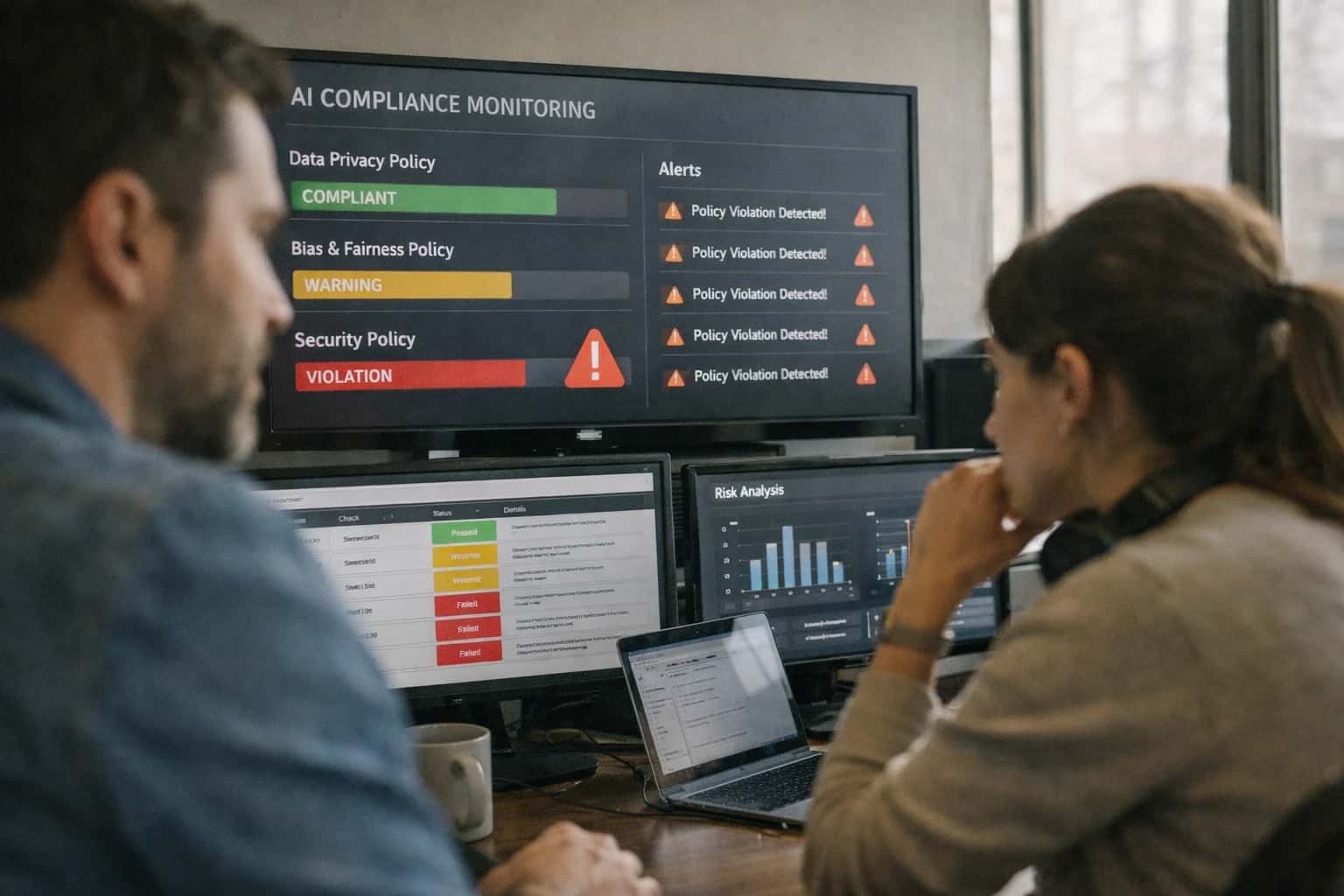
EXPLAINABLE MEDICAL COMPLIANCE AUTOMATION
Implementing AI Agentic Workflow for Chronic Disease Management Monitoring
A blueprint for building a custom, auditable workflow that continuously analyzes patient data to trigger proactive, guideline-based interventions, improving outcomes while maintaining a compliance-ready record.
Implementation requires integrating with Epic or Cerner EHRs via FHIR APIs, a rules engine for NCCN or ADA protocols, and a communication platform like Twilio. The orchestrator, built with LangGraph, manages state, handles exceptions, and routes cases for human review. Critical controls include confidence scoring on all alerts, mandatory review gates for high-severity actions, and immutable logging to an audit database like Datadog or Splunk for compliance reporting and model performance tracking.
CHRONIC DISEASE MANAGEMENT MONITORING
Business Impact: Quantifying the Operational and Clinical Upside
A custom AI agentic workflow for chronic disease management monitoring automates the continuous synthesis of patient data into actionable, guideline-based insights, creating measurable improvements in clinical outcomes and operational efficiency.
01
Reduce Preventable Readmissions by 15-25%
By continuously analyzing remote monitoring data and EHR trends against deterioration patterns, the workflow triggers personalized, protocol-driven outreach before a patient's condition escalates to an acute event. This proactive intervention directly reduces costly, avoidable hospital readmissions, improving CMS Star Ratings and protecting hospital margins under value-based care contracts.
15-25%
Readmission Reduction
>90%
Early Deterioration Detection
02
Optimize Care Team Effort by 30-40%
The workflow automates the manual, repetitive tasks of data aggregation, guideline cross-referencing, and initial patient communication. It surfaces only the patients requiring clinical judgment, allowing RNs and care managers to focus on high-complexity cases. This reallocation of effort expands effective panel sizes by 30-40% without adding staff, directly lowering per-patient management costs.
30-40%
Staff Efficiency Gain
5-10 min
Time Saved Per Patient Review
03
Improve Guideline Adherence & Quality Scores
The system enforces consistent application of the latest clinical guidelines (e.g., ADA, ACC/AHA) by mapping patient data to protocol logic in real-time. This standardizes care, closes documented gaps, and generates the structured, evidence-based documentation needed to maximize performance on HEDIS, MIPS, and other value-based quality measures, directly impacting reimbursement.
95%+
Protocol Adherence Rate
10-20 pts
HEDIS Measure Improvement
04
Create a Defensible, Audit-Ready Compliance Record
Every automated intervention—from an alert to a patient message—is paired with a machine-readable rationale citing the source data and clinical rule that triggered it. This creates an immutable, queryable audit trail that satisfies Joint Commission, CMS, and payer audit requirements for care management programs, reducing manual chart abstraction and compliance overhead by over 50%.
50%
Audit Prep Time Reduction
100%
Intervention Rationale Logged
05
Accelerate Patient Engagement & Satisfaction
Automated, context-aware check-ins and educational nudges keep patients engaged between visits. By providing timely, personalized feedback, the system improves medication adherence and self-management behaviors. This leads to better-controlled biometrics (e.g., HbA1c, BP) and higher patient satisfaction scores (CAHPS), which are increasingly tied to provider reimbursement and network inclusion.
25%
Medication Adherence Lift
+10 pts
CAHPS Score Improvement
06
Lower Total Cost of Care by 8-12%
The combined impact of fewer ED visits, reduced hospitalizations, optimized staffing, and improved medication adherence directly lowers the total cost of care for a chronic disease population. For a health plan or ACO managing 10,000 diabetic patients, this can translate to millions in annual medical cost savings, with a clear ROI from the workflow implementation within 12-18 months.
8-12%
Medical Cost Reduction
12-18 mo
ROI Payback Period
CHRONIC DISEASE MANAGEMENT MONITORING
Solution Architecture: A Multi-Agent, API-First Orchestration Layer
This blueprint details a custom, API-first architecture for orchestrating specialized AI agents to automate chronic disease monitoring, patient outreach, and compliance-ready intervention logging.
This workflow automates the continuous analysis of remote patient monitoring (RPM) data, EHR trends, and clinical guidelines to identify non-adherence or deterioration. It replaces manual chart reviews and delayed nurse callbacks, directly reducing care team effort and preventing costly acute episodes. The operational upside comes from proactive, personalized patient engagement triggered by explainable clinical logic, improving population health outcomes while maintaining a defensible audit trail for quality reporting and regulatory scrutiny.
Implementation integrates via FHIR/HL7 APIs with Epic or Cerner EHRs and RPM platforms like Cadence or Vivify Health. The orchestrator, built on LangGraph, manages state and routes tasks between analysis and communication agents. Controls include confidence thresholds for auto-action, mandatory review gates for high-risk deviations, and immutable logging of all agent decisions with supporting data citations. Rollout is sequenced by disease cohort, with continuous performance monitoring against reduced hospitalizations and improved medication adherence rates.
CHRONIC DISEASE MANAGEMENT MONITORING
Workflow Components: The Specialized Agents and Systems
A custom agentic workflow for chronic disease management replaces manual chart reviews and reactive care with a continuous, auditable loop of data synthesis, risk detection, and personalized intervention.
01
Data Fusion & Patient Context Agent
This foundational agent orchestrates the secure ingestion and normalization of data from EHRs, remote patient monitoring (RPM) devices, wearables, and patient-reported outcomes. It creates a unified, longitudinal patient profile, resolving conflicts and identifying data gaps. Without this layer, downstream agents operate on fragmented, low-quality signals, leading to missed deteriorations or false alerts.
90%
Data Unification Autonomy
02
Guideline-Based Protocol Engine
A rules-based system that codifies clinical guidelines (e.g., ADA for diabetes, ACC/AHA for heart failure) into executable logic. It maps the fused patient data to specific protocol steps (e.g., if HbA1c > 9.0 and no medication change in 90 days, then flag for therapy review). This engine provides the explainable, audit-ready clinical rationale for all automated decisions, which is critical for medical compliance and clinician trust.
100+
Codified Clinical Rules
03
Deterioration & Non-Adherence Detector
A specialized ML agent that analyzes trends in the unified patient profile against the protocol engine's logic. It identifies subtle patterns of physiological decline (e.g., gradual weight gain in CHF) and behavioral non-adherence (e.g., missed glucose readings). It outputs a risk score with supporting evidence, triggering the outreach orchestrator only when a clinically meaningful threshold is crossed, reducing alert fatigue.
40%
Earlier Intervention Lead Time
04
Personalized Outreach Orchestrator
This agent designs and executes the intervention. Based on the detected risk, patient preferences, and care plan, it determines the optimal channel (SMS, IVR, patient portal), crafts a personalized message with clear clinical rationale, and schedules follow-up. It integrates with CRM and communication platforms (e.g., Twilio, Salesforce Health Cloud) to execute touches and log all interactions for the audit trail.
70%
Automated Outreach Volume
05
Escalation & Human-in-the-Loop Router
The workflow's control plane. It manages exceptions and escalations based on configurable business rules. For example: if patient does not respond to two automated touches, create a task in the nurse triage queue in the EHR. It ensures no high-risk patient falls through the cracks by providing clear handoffs to care coordinators, nurses, or physicians, with full context passed from the detecting agents.
<2 hrs
High-Risk Escalation SLA
06
Compliance Audit & Explanation Layer
A non-negotiable component for regulated healthcare. This system automatically generates a timestamped, immutable log for every patient journey through the workflow. It records the triggering data, the protocol rule applied, the risk score, the outreach content, and any escalation actions. This creates a defensible record for quality reporting, payer audits, and accreditation reviews (e.g., Joint Commission, NCQA).
100%
Decision Traceability
CHRONIC DISEASE MANAGEMENT MONITORING
Implementation Blueprint: Phased Delivery for Risk-Managed Rollout
A phased implementation strategy for deploying an AI agentic workflow that automates chronic disease monitoring, ensuring clinical safety, regulatory compliance, and operational stability at each stage.
Phase 1 establishes the core data ingestion and risk-scoring engine, integrating with EHR and remote monitoring APIs to analyze patient vitals and lab trends against clinical protocols. This initial layer runs in 'monitor-only' mode, generating alerts and rationales for clinician review within a secure dashboard but taking no autonomous action. The focus is on validating data pipelines, model accuracy, and the explainability of risk scores without impacting patient care, building trust in the system's outputs before enabling any automation.
Phase 2 activates conditional automation, where high-confidence, guideline-alert outreach actions—like medication adherence reminders—are triggered automatically but remain gated by a daily batch approval from a care coordinator. This controlled release introduces operational leverage while maintaining a human-in-the-loop for safety and compliance auditing. The final phase expands the protocol library, integrates continuous performance and bias monitoring, and delegates approval authority based on proven reliability, achieving full autonomous operation with embedded governance.
ROI AND OPERATING ECONOMICS: FROM COST CENTER TO VALUE DRIVER
Implementing AI Agentic Workflow for Chronic Disease Management Monitoring
Comparison of manual, reactive chronic care management versus a custom AI agentic workflow for continuous monitoring, intervention, and compliance.
| Metric | Current State (Reactive, Manual) | Custom Agentic Workflow |
|---|---|---|
Monthly Patient Monitoring Capacity per FTE | 150-200 patients | 1,200-1,500 patients |
Average Time to Identify Deterioration / Non-Adherence | 7-14 days (next scheduled visit) | < 24 hours (continuous signal analysis) |
Care Team Effort per Proactive Outreach | 45 minutes (chart review, call documentation) | 8 minutes (review & sign-off on AI-generated rationale & plan) |
Documentation for Compliance & Audit (per patient annually) | Fragmented notes; manual audit prep takes 4+ hours | Structured, timestamped intervention log with cited evidence; audit package auto-generated |
Preventable ED Visit / Readmission Capture Rate | < 15% (identified post-event) |
|
Annual Administrative Cost per Managed Patient | $850 - $1,200 | $280 - $400 |
Guideline Adherence Measurement & Reporting | Quarterly manual chart audits; 60-70% data completeness | Real-time dashboard; >95% data completeness for quality programs |
AUTOMATION ARCHITECTURE
Implementing Data Flow and Explainable Rationale Generation for Chronic Disease Management
This workflow automates the continuous monitoring of remote patient data and EHR trends to identify non-adherence or clinical deterioration, triggering personalized outreach with a transparent, auditable clinical rationale.
This workflow directly addresses the operational bottleneck of manual patient monitoring, where care teams struggle to synthesize high-volume RPM data, lab trends, and guideline updates. The automation enables proactive, protocol-driven intervention, saving clinician time and preventing costly hospitalizations. Savings come from reduced readmission penalties, optimized care team effort, and improved patient outcomes through timely, data-driven engagement. Implementation requires integrating with EHRs like Epic or Cerner, RPM platforms, and communication channels via API orchestration.
Implementation is built on a workflow engine like LangGraph or Temporal, with specialized agents for guideline retrieval, risk scoring, and communication drafting. Controls include confidence thresholds for automated actions, mandatory human review gates for high-severity escalations, and integration with clinical decision support systems. Monitoring requires real-time dashboards for intervention volume, outcome tracking, and a full audit trail linking every patient action to its source data and clinical rationale for compliance and quality review.
AI AGENTIC WORKFLOW FOR CHRONIC DISEASE MANAGEMENT MONITORING
Frequently Asked Questions
Practical questions about implementing a custom, compliance-ready automation system for continuous patient monitoring, outreach, and care team orchestration.
A production workflow implements a validation and normalization layer before any agentic reasoning. Ingest pipelines apply schema checks, range validation, and outlier detection on device vitals. For EHR data, we use entity recognition and reconciliation to handle inconsistent coding (e.g., LOINC vs. local codes). A data quality dashboard flags missing or implausible trends, routing them to a human-in-the-loop queue for correction before they influence patient risk scoring. This prevents garbage-in, garbage-out scenarios that could trigger inappropriate alerts.
CHRONIC DISEASE MANAGEMENT MONITORING
Key Governance Controls and Safety Mechanisms
For a regulated clinical workflow, governance is not an afterthought—it's the core architecture that makes automation defensible. These controls ensure patient safety, clinical oversight, and audit readiness.
01
Explainable Alerting with Clinical Rationale Layer
Every automated alert for patient deterioration or non-adherence must be paired with a machine-readable justification citing the specific data points (e.g., 'BP trend >140/90 over 7 days', 'missed 3 consecutive glucose readings') and the clinical guideline or protocol rule that was triggered. This creates an immutable, queryable audit trail for care team review and external audits, turning black-box predictions into defensible clinical support.
02
Multi-Stage Escalation with Mandatory Human-in-the-Loop Gates
The workflow architecture implements tiered escalation paths. Low-risk nudges (e.g., reminder messages) can be automated, but any intervention suggesting a medication change or urgent clinical review must route through a mandatory approval gate in the care team's workflow dashboard. The system logs all actions—initiation, escalation, clinician override, and final disposition—with timestamps and user IDs, ensuring a clear chain of accountability.
100%
High-Risk Action Review
03
Continuous Bias & Drift Monitoring on Risk Scores
A parallel monitoring agent continuously evaluates the fairness and performance of the underlying risk-scoring models. It tracks prediction outcomes across demographic subgroups to detect bias drift and monitors model accuracy against actual patient outcomes (e.g., did high-risk alerts correlate with actual ED visits?). Alerts are sent to data science and clinical governance committees, triggering scheduled model retraining or protocol adjustments.
<2%
Allowed Prediction Drift
04
Immutable Audit Log with Data Provenance
All data ingested (RPM device feeds, EHR snippets), all inferences made, and all outputs generated are written to an immutable, timestamped audit log. This log maintains full data provenance, linking final patient outreach messages back to the raw source data and the specific version of the clinical rule that was applied. This log is essential for internal quality reviews, external accreditation (e.g., Joint Commission), and potential liability defense.
05
Dynamic Consent & Communication Preference Enforcement
The workflow integrates with the patient's latest communication preferences and consent directives. Before any automated outreach (text, call, portal message), the system checks a centralized consent registry to ensure the modality and frequency are permitted. If preferences change, the workflow adapts in real time, preventing compliance violations and respecting patient autonomy—a critical control for HIPAA and consumer expectation.
06
Rollback & Manual Override Protocols
The architecture includes designed break-glass procedures. Any care team member can immediately suspend automated monitoring for a patient, flag a workflow error, or revert an automated action. These overrides are themselves logged and trigger a mandatory retrospective review by a supervisory agent or committee. This ensures human clinical judgment always has the final authority, embedding safety into the operational design.
<60 sec
System Override Activation
Enabling Efficiency, Speed & Accuracy
Intelligent Analysis, Decision & Execution
We build AI systems for teams that need search across company data, workflow automation across tools, or AI features inside products and internal software.
Talk to Us
Search across company data
Give teams answers from docs, tickets, runbooks, and product data with sources and permissions.
Useful when people spend too long searching or get different answers from different systems.
Enterprise searchRAGPermissions
Read more
Automate internal workflows
Use AI to route work, draft outputs, trigger actions, and keep approvals and logs in place.
Useful when repetitive work moves across multiple tools and teams.
AI agentsWorkflow automationGovernance
Read more
Add AI to products and internal tools
Build assistants, guided actions, or decision support into the software your team or customers already use.
Useful when AI needs to be part of the product, not a separate tool.
AI integrationDecision supportModel routing
Read moreARCHITECTURE FOR MANAGED RISK AND ADOPTION
Implementing Governance and Rollout for a Chronic Disease Management Monitoring Workflow
Deploying an AI agentic workflow for chronic disease management requires a controlled rollout and governance architecture that ensures clinical safety, maintains auditability, and drives user adoption without disrupting care.
The operational upside comes from automating the continuous analysis of remote patient monitoring data and EHR trends to identify non-adherence or deterioration, triggering personalized patient outreach. This reduces preventable hospitalizations and optimizes care team effort. Savings are realized through lower acute care costs and improved population health outcomes, but only if the system's interventions are clinically sound and its logic is defensible to oversight bodies. Implementation must integrate with Epic or Cerner EHRs, remote monitoring platforms, and patient communication systems via HL7/FHIR APIs, with initial deployment to a low-risk patient cohort.
Controls are mandatory. Every agent-generated alert must include a clinical rationale citing the source data and guideline protocol. High-risk escalations route to a human-in-the-loop review queue within the EHR workflow. A centralized audit log records all inputs, agent decisions, overrides, and outcomes, supporting compliance reviews and model retraining. Observability dashboards track key metrics: alert volume, override rates, clinician response time, and downstream clinical outcomes (e.g., ED visits avoided). Governance requires a cross-functional committee—clinical, IT, compliance—to review performance and approve logic updates, ensuring the system evolves safely with medical evidence and organizational policy.

About the author
Prasad Kumkar
CEO & MD, Inference Systems
Prasad Kumkar is the CEO & MD of Inference Systems and writes about AI systems architecture, LLM infrastructure, model serving, evaluation, and production deployment. Over 5+ years, he has worked across computer vision models, L5 autonomous vehicle systems, and LLM research, with a focus on taking complex AI ideas into real-world engineering systems.
His work and writing cover AI systems, large language models, AI agents, multimodal systems, autonomous systems, inference optimization, RAG, evaluation, and production AI engineering.
LinkedIn
Limited slotsGet a Free AI Consultation
Partnered with leading AI, data, and software stack.





How We Work
Custom AI workflows for your Business
One-fit-all AI don't work for modern businesses. At Inferensys, we aim to understand your business & custom requirements; which we use to define most efficient agentic workflows, the data, and the tools for your business.
01
Review the use case
We understand the task, the users, and where AI can actually help.
Read more02
Pick the right approach
We define what needs search, automation, or product integration.
Read more03
Build the first useful version
We implement the part that proves the value first.
Read more04
Improve from there
We add the checks and visibility needed to keep it useful.
Read moreThe first call is a practical review of your use case and the right next step.
Talk to Us