Architecting an audio reasoning system transforms raw sound into actionable intelligence for devices. This requires designing a pipeline that captures audio via microphone arrays, processes it with low-latency DSP, and runs efficient on-device models using frameworks like TensorFlow Lite. The core challenge is balancing real-time performance with power constraints, which dictates critical trade-offs between cloud and edge processing. A well-designed system enables applications like wake-word detection, spatial awareness, and real-time sound classification.

Guide
How to Architect an Audio Reasoning System for Consumer Electronics
A developer's blueprint for building audio reasoning into consumer devices. This guide covers hardware selection, low-latency pipeline design, on-device model optimization, and scalable event-driven architecture.
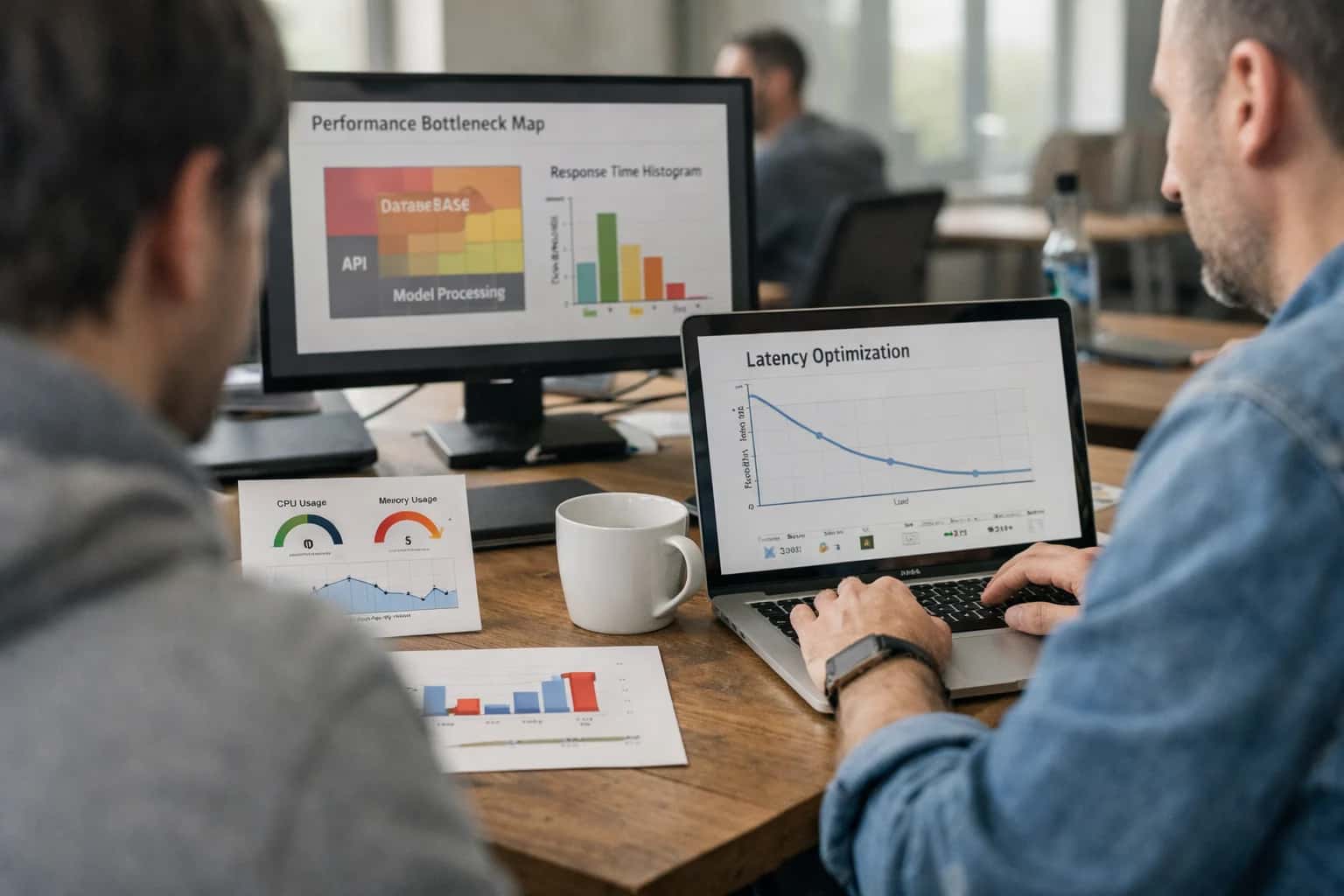
This guide provides a system design blueprint for integrating audio reasoning into consumer devices like smart speakers, wearables, and TVs.
Your architecture must be event-driven and scalable. Start by selecting hardware with an appropriate digital signal processor (DSP) and defining clear audio event triggers. Deploy quantized models for efficient inference and implement a hybrid cloud-edge deployment to offload complex tasks. Key steps include designing a resilient data ingestion layer and integrating with device management systems for over-the-air (OTA) updates. This guide will walk you through each component, from sensor selection to final deployment.
SYSTEM DESIGN BLUEPRINT
Key Architectural Concepts
Architecting an audio reasoning system requires balancing latency, power, and accuracy. These core concepts define the hardware and software stack for consumer devices.
03
Low-Latency Audio Pipeline
Real-time interaction requires a pipeline engineered for speed from capture to inference.
- Buffer & Windowing: Use overlapping audio frames (e.g., 30ms) to minimize processing delay.
- Optimized Preprocessing: Compute features like Mel-Frequency Cepstral Coefficients (MFCCs) or spectrograms on a DSP or GPU.
- High-Performance Inference: Serve quantized models with engines like NVIDIA Triton or Apache TVM for sub-50ms round-trip latency. A common mistake is processing large, non-overlapping buffers, which introduces unacceptable lag.
05
Event-Driven Architecture
Audio systems are inherently event-based. Design a scalable backend to handle asynchronous sound events.
- Message Broker: Use Apache Kafka or AWS IoT Core to ingest events from thousands of devices.
- Event Processing: Apply business logic and trigger actions (e.g., send alert, log data) using serverless functions.
- State Management: Maintain context (e.g., 'room is occupied') across multiple audio events for richer reasoning. This pattern decouples ingestion from processing, allowing the system to scale elastically.
06
Model Lifecycle & MLOps
Deployed audio models must be managed and improved continuously.
- Data Flywheel: Securely collect anonymized edge data (with user consent) to retrain models.
- A/B Testing & Canary Releases: Safely roll out new model versions to a subset of devices.
- Monitoring: Track model drift in acoustic environments and performance metrics like false positive rates. Implementing MLOps pipelines for agentic systems ensures your audio AI adapts and remains accurate over time.
HARDWARE SELECTION
Microphone and Processor Comparison
Key specifications and capabilities for core components in an audio reasoning pipeline, directly impacting system latency, power consumption, and model accuracy.
| Feature / Metric | MEMS Microphone Array | Digital Signal Processor (DSP) | Edge AI Processor (e.g., NPU) |
|---|---|---|---|
Primary Function | Multi-channel audio capture | Real-time audio preprocessing | On-device neural network inference |
Typical Latency | < 1 ms (acoustic) | 1-10 ms | 10-100 ms |
Power Consumption | Very Low (< 10 mW) | Low (10-100 mW) | Moderate to High (100 mW - 1 W) |
Key Processing Capability | Beamforming, AEC | FFT, Filtering, Noise Suppression | INT8/FP16 Matrix Operations |
Model Support | |||
Example Use Case | Direction-of-arrival estimation | Low-latency audio pipeline for wake-word detection | Running a TensorFlow Lite model for sound classification |
Integration Complexity | Medium (I2S/PDM interfaces) | High (requires firmware) | Medium (model conversion & deployment) |
Cost Range (Unit) | $1-5 | $5-20 | $10-50 |
FOUNDATION
Step 1: Design the Audio Processing Pipeline
The audio processing pipeline is the foundational data highway that captures, conditions, and prepares raw sound for AI reasoning. A well-architected pipeline determines the system's latency, accuracy, and power efficiency.
Begin by defining your signal chain. A typical pipeline includes acoustic capture via microphones, pre-processing (gain control, filtering), analog-to-digital conversion (ADC), and digital signal processing (DSP) for noise reduction. The choice of microphone array—such as a linear or circular configuration—directly impacts capabilities like beamforming and direction-of-arrival estimation, which are critical for spatial sound intelligence. This stage must be optimized for the target device's power and compute constraints.
Next, implement the feature extraction layer. Convert the raw audio stream into a model-ready format using techniques like computing Mel-Frequency Cepstral Coefficients (MFCCs) or spectrograms. For real-time systems, design a sliding window mechanism to process audio frames with minimal latency. This processed data is then fed to your on-device inference engine, such as TensorFlow Lite or ONNX Runtime. A robust pipeline also includes monitoring for data drift and a feedback loop for continuous model improvement, connecting to your broader audio data lake.
Enabling Efficiency, Speed & Accuracy
Intelligent Analysis, Decision & Execution
We build AI systems for teams that need search across company data, workflow automation across tools, or AI features inside products and internal software.
Talk to Us
Search across company data
Give teams answers from docs, tickets, runbooks, and product data with sources and permissions.
Useful when people spend too long searching or get different answers from different systems.
Enterprise searchRAGPermissions
Read more
Automate internal workflows
Use AI to route work, draft outputs, trigger actions, and keep approvals and logs in place.
Useful when repetitive work moves across multiple tools and teams.
AI agentsWorkflow automationGovernance
Read more
Add AI to products and internal tools
Build assistants, guided actions, or decision support into the software your team or customers already use.
Useful when AI needs to be part of the product, not a separate tool.
AI integrationDecision supportModel routing
Read moreARCHITECTURE PITFALLS
Common Mistakes
Architecting audio reasoning for consumer devices involves navigating unique constraints. These are the most frequent technical errors that derail performance, scalability, and user experience.
High latency often stems from architectural missteps, not just slow models. The most common causes are:
- Buffering Inefficiency: Using large, fixed-size audio buffers for real-time processing. For sub-100ms response, implement overlapping ring buffers or sample-by-sample processing where possible.
- Cloud Dependency: Sending full audio streams to the cloud for simple wake-word detection. Prioritize a hybrid cloud-edge deployment, keeping initial detection and classification on-device.
- Serial Processing: Running feature extraction, model inference, and post-processing in a strict serial chain. Pipeline these stages using parallel threads or a producer-consumer pattern.
- Inefficient Frameworks: Using heavyweight inference engines like full TensorFlow for tiny models. Switch to TensorFlow Lite Micro or ONNX Runtime for embedded targets.
Fix: Profile each stage. Use tools like perf or vendor-specific profilers (e.g., ARM Streamline) to identify the bottleneck, then optimize or parallelize.

About the author
Prasad Kumkar
CEO & MD, Inference Systems
Prasad Kumkar is the CEO & MD of Inference Systems and writes about AI systems architecture, LLM infrastructure, model serving, evaluation, and production deployment. Over 5+ years, he has worked across computer vision models, L5 autonomous vehicle systems, and LLM research, with a focus on taking complex AI ideas into real-world engineering systems.
His work and writing cover AI systems, large language models, AI agents, multimodal systems, autonomous systems, inference optimization, RAG, evaluation, and production AI engineering.
LinkedIn
Limited slotsGet a Free AI Consultation
Partnered with leading AI, data, and software stack.





How We Work
Custom AI workflows for your Business
One-fit-all AI don't work for modern businesses. At Inferensys, we aim to understand your business & custom requirements; which we use to define most efficient agentic workflows, the data, and the tools for your business.
01
Review the use case
We understand the task, the users, and where AI can actually help.
Read more02
Pick the right approach
We define what needs search, automation, or product integration.
Read more03
Build the first useful version
We implement the part that proves the value first.
Read more04
Improve from there
We add the checks and visibility needed to keep it useful.
Read moreThe first call is a practical review of your use case and the right next step.
Talk to Us