The AI supply chain is a geopolitical fault line. Your organization's AI capabilities—from the NVIDIA GPUs powering training to the foundation models you fine-tune—are vulnerable to export controls, sanctions, and regional instability. Navigating this risk is not optional; it's a core component of modern AI Sovereignty and National AI Strategy Alignment. This guide provides the first-principles framework to audit your dependencies and build resilience.

Guide
How to Navigate Geopolitical Risks in the AI Supply Chain
A practical, technical guide for developers and engineering leads to identify foreign dependencies, assess regulatory exposure, and architect resilient AI systems using multi-cloud and sovereign alternatives.
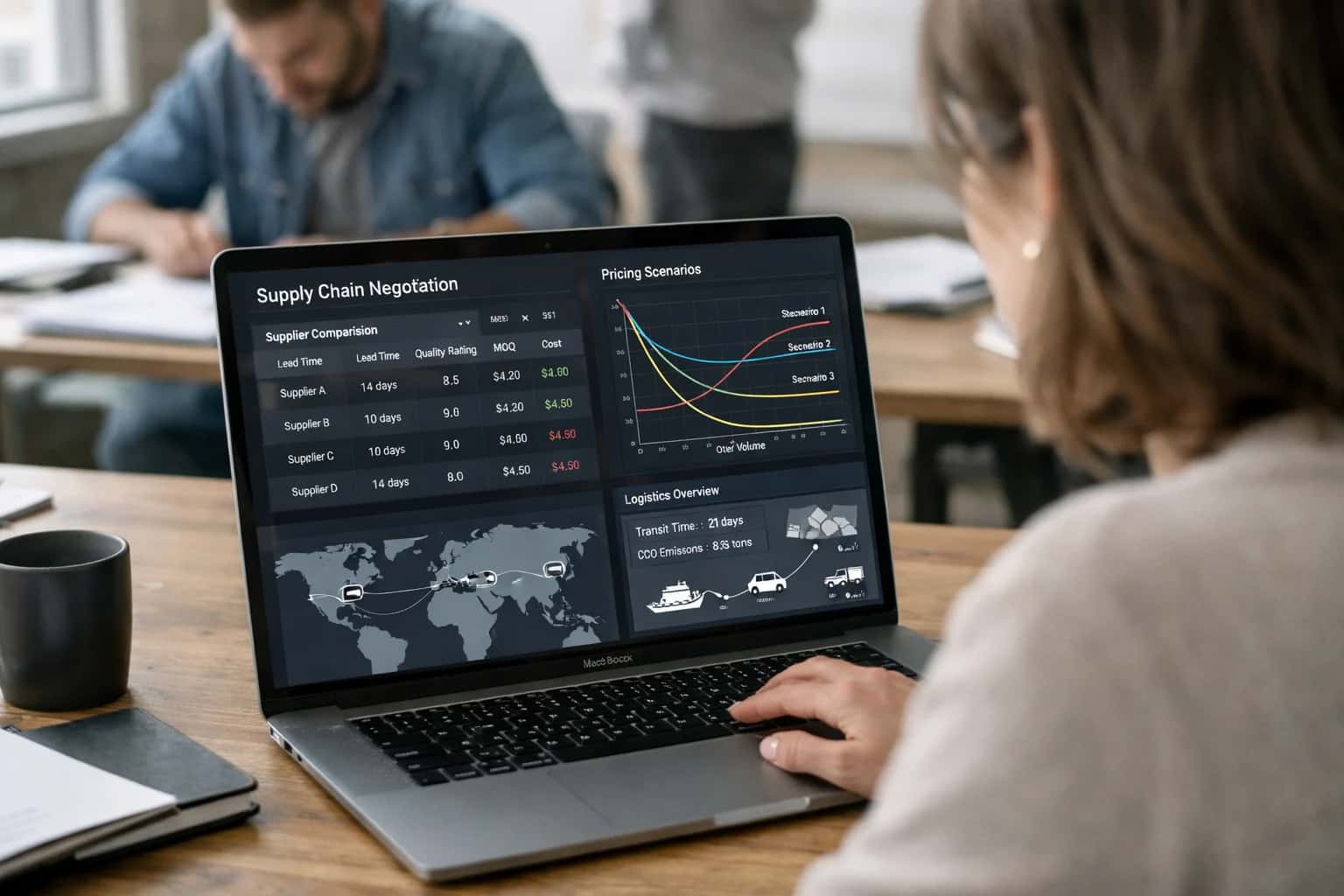
This guide details a practical process for identifying and mitigating dependencies on foreign AI hardware, software, and data to build strategic resilience.
You will learn to conduct a supply chain audit to map critical components to their country of origin, assess exposure to regulations like the U.S. Commerce Control List (CCL), and develop a diversification strategy. Practical steps include implementing multi-cloud architectures across sovereign providers, evaluating open-source model alternatives, and establishing failover procedures for critical workloads. The goal is actionable resilience, not theoretical analysis.
CRITICAL DEPENDENCY ANALYSIS
AI Supply Chain Risk Assessment Matrix
A framework for evaluating the geopolitical exposure of key components in your AI technology stack. Use this to prioritize mitigation efforts.
| Supply Chain Tier | High-Risk (Foreign Monopoly) | Medium-Risk (Competitive Foreign) | Low-Risk (Sovereign/Open-Source) |
|---|---|---|---|
Compute Hardware (e.g., GPUs) | Single-source vendor from a geopolitically adversarial region. | Multiple foreign vendors with diverse geographic footprints. | On-premise sovereign cluster or verified domestic supplier. |
Foundation Models | Proprietary API from a foreign Big Tech company (e.g., GPT-5, Gemini). | Mixture of foreign API and open-source models with commercial support. | Fully open-source model stack (e.g., Llama, BLOOM) fine-tuned in-house. |
Cloud Infrastructure | Primary workload hosted in a global public cloud with unclear data jurisdiction. | Multi-cloud strategy using providers with strong local presence and data centers. | Sovereign cloud provider or private cloud with guaranteed data residency. |
Specialized AI Software (e.g., MLOps) | Vendor-locked platform from a single foreign company. | Open-core software with international community support. | In-house developed or fully open-source stack (e.g., MLflow, Kubeflow). |
Training Data Provenance | Data sourced from unverified international repositories with unclear licensing. | Mixed dataset with some sovereign, curated data and external supplements. | 100% sovereign, licensed data with clear lineage and audit trails. |
Export Control Status | Contains technology listed on foreign control lists (e.g., U.S. CCL). | Some components may be subject to future regulatory scrutiny. | All components are fully open-source or domestically produced. |
Business Continuity Risk |
| 3-12 month lead time; alternative suppliers require re-engineering. | < 3-month lead time; multiple certified alternative suppliers exist. |
Mitigation Priority | Immediate action required. Develop contingency plan and begin diversification. | Schedule mitigation. Begin pilot projects with alternative vendors. | Monitor. Maintain current strategy but establish regular review cadence. |
GEOPOLITICAL RISK NAVIGATION
Essential Tools for Supply Chain Resilience
A practical toolkit for developers and architects to identify, assess, and mitigate dependencies on foreign AI hardware, software, and data.
01
Supply Chain Audit Framework
Conduct a systematic audit to map your AI stack's critical dependencies. Identify single points of failure across three layers:
- Hardware: GPU vendors, chip manufacturers, and server OEMs.
- Software: Foundational models, frameworks (e.g., PyTorch, TensorFlow), and cloud APIs.
- Data: Training datasets, data labeling services, and geographic sources. Use this audit to create a dependency matrix and assign a geopolitical risk score to each component based on vendor origin and export control exposure.
02
Export Control & Sanctions Tracker
Continuously monitor regulatory changes that impact your AI supply chain. Key lists to track include the U.S. Commerce Control List (CCL), Entity List, and international sanctions regimes. Automate alerts for changes affecting your vendors or technology categories (e.g., specific AI chips or model capabilities). Integrate this tracking into your procurement and vendor risk management workflows to ensure compliance and avoid sudden disruptions.
03
Sovereign Cloud & Multi-Cloud Architecture
Design for infrastructure resilience by distributing workloads across sovereign cloud providers (e.g., OVHcloud, Gaia-X) and global hyperscalers. Implement a multi-cloud strategy using Kubernetes for workload portability. Key architectural patterns include:
- Data Residency Controls: Enforce in-country processing nodes.
- Geopolitical Load Balancing: Route traffic based on regional stability.
- Failover Procedures: Automate failover for critical inference workloads. This reduces dependence on any single jurisdiction's legal and political climate.
04
Open-Source Model Evaluation Toolkit
Build a systematic process for evaluating and adopting sovereign open-source models to reduce reliance on proprietary foreign LLMs. The toolkit should include:
- Benchmarking Suites: Compare models like Llama, BLOOM, and regional variants on your specific domain tasks.
- Fine-Tuning Pipelines: Adapt general models using your proprietary data.
- Deployment Templates: Containerized setups for on-premise or sovereign cloud inference. This creates a viable, controlled alternative to external API dependencies.
05
Vendor Risk Scoring Dashboard
Develop a real-time dashboard to quantify and monitor vendor risk. Ingest data from:
- Financial health indicators.
- Geopolitical stability of headquarters and manufacturing sites.
- Historical performance on lead times and quality.
- Alternative vendor availability. Use a weighted scoring model to generate a composite risk score. Visualize this in tools like Grafana or Power BI and set automated alerts for vendors breaching risk thresholds, enabling proactive diversification.
06
Provenance & SBoM Generator
Implement Software Bill of Materials (SBoM) generation for your AI models to ensure traceability and compliance. This tool should automatically document:
- Model Lineage: Training data sources, base model, and fine-tuning steps.
- Component Dependencies: All software libraries and their versions.
- Hardware Provenance: Details of the training cluster. Use cryptographic signing and digital watermarking to create an immutable audit trail. This is critical for meeting national certification requirements and building trust in your AI supply chain. Learn more about AI Model Provenance.
AI SUPPLY CHAIN RISKS
Common Mistakes
Avoid these critical errors when assessing and mitigating geopolitical risks in your AI infrastructure. These mistakes can lead to sudden disruptions, compliance failures, and loss of strategic autonomy.
AI supply chain risk is the vulnerability of your AI systems to disruption from geopolitical tensions, export controls, or sanctions targeting the hardware, software, and data they depend on. It matters because modern AI is built on a globalized stack: NVIDIA GPUs from Taiwan, foundational models trained on U.S. cloud infrastructure, and specialized libraries maintained by international teams. A single choke point—like an export license denial or a regional conflict—can halt development and deployment. Unlike traditional IT, AI dependencies are deeper and more concentrated, making strategic resilience a first-order engineering concern, not just a procurement problem.
Enabling Efficiency, Speed & Accuracy
Intelligent Analysis, Decision & Execution
We build AI systems for teams that need search across company data, workflow automation across tools, or AI features inside products and internal software.
Talk to Us
Search across company data
Give teams answers from docs, tickets, runbooks, and product data with sources and permissions.
Useful when people spend too long searching or get different answers from different systems.
Enterprise searchRAGPermissions
Read more
Automate internal workflows
Use AI to route work, draft outputs, trigger actions, and keep approvals and logs in place.
Useful when repetitive work moves across multiple tools and teams.
AI agentsWorkflow automationGovernance
Read more
Add AI to products and internal tools
Build assistants, guided actions, or decision support into the software your team or customers already use.
Useful when AI needs to be part of the product, not a separate tool.
AI integrationDecision supportModel routing
Read moreGEOPOLITICAL RISK
Frequently Asked Questions
Practical answers for developers and technical leads on securing AI systems against supply chain disruptions, export controls, and vendor lock-in.
A geopolitical risk audit is a systematic review of your AI stack's dependencies on foreign-controlled hardware, software, and data. It maps your entire pipeline—from training chips and cloud regions to foundational model APIs and data sources—against factors like vendor nationality, export control lists, and regional stability.
Key steps include:
- Inventory Creation: Catalog all components (e.g., NVIDIA H100 GPUs, OpenAI's GPT-4 API, training datasets from foreign jurisdictions).
- Dependency Mapping: Identify single points of failure and critical foreign dependencies.
- Risk Scoring: Assess each component's exposure to sanctions, trade restrictions, or logistical disruption.
The output is a prioritized list of vulnerabilities, forming the basis for your diversification strategy. For a deeper dive, see our guide on How to Set Up a Geopolitically Resilient AI Infrastructure.

About the author
Prasad Kumkar
CEO & MD, Inference Systems
Prasad Kumkar is the CEO & MD of Inference Systems and writes about AI systems architecture, LLM infrastructure, model serving, evaluation, and production deployment. Over 5+ years, he has worked across computer vision models, L5 autonomous vehicle systems, and LLM research, with a focus on taking complex AI ideas into real-world engineering systems.
His work and writing cover AI systems, large language models, AI agents, multimodal systems, autonomous systems, inference optimization, RAG, evaluation, and production AI engineering.
LinkedIn
Limited slotsGet a Free AI Consultation
Partnered with leading AI, data, and software stack.





How We Work
Custom AI workflows for your Business
One-fit-all AI don't work for modern businesses. At Inferensys, we aim to understand your business & custom requirements; which we use to define most efficient agentic workflows, the data, and the tools for your business.
01
Review the use case
We understand the task, the users, and where AI can actually help.
Read more02
Pick the right approach
We define what needs search, automation, or product integration.
Read more03
Build the first useful version
We implement the part that proves the value first.
Read more04
Improve from there
We add the checks and visibility needed to keep it useful.
Read moreThe first call is a practical review of your use case and the right next step.
Talk to Us