Traditional security teams are overwhelmed by thousands of daily alerts, most of which are false positives. This 'alert fatigue' creates dangerous blind spots, allowing sophisticated adversaries like advanced persistent threats (APTs) and zero-day exploits to dwell undetected for weeks or months. The business cost is immense: prolonged exposure, data exfiltration, and crippling recovery expenses.

Use Case
AI-Powered Threat Hunting
Transform your security from reactive to proactive. AI-Powered Threat Hunting uses machine learning to analyze network traffic and user behavior, identifying and neutralizing advanced threats in real-time, slashing mean time to detection (MTTD) and reducing breach costs.
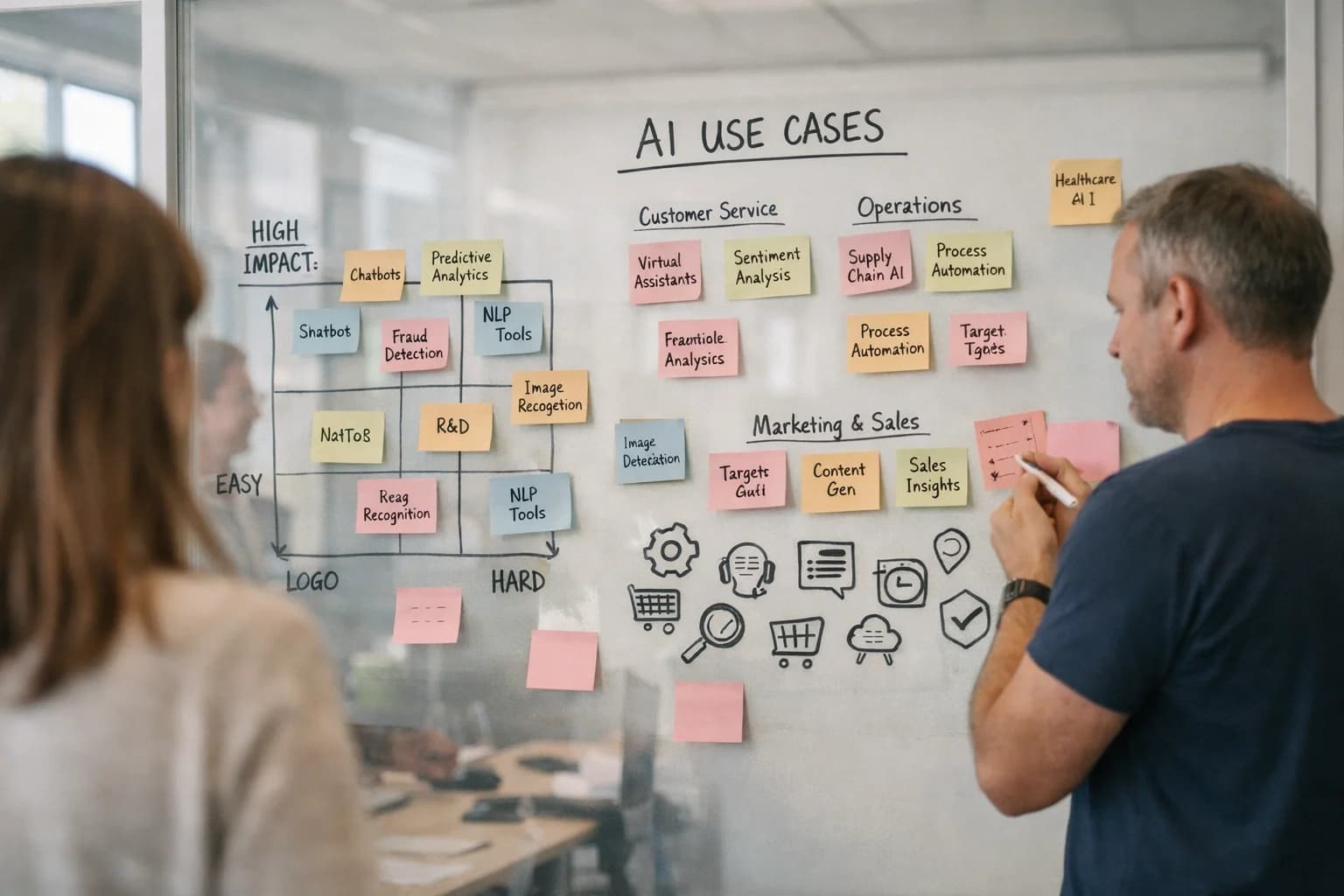
FROM REACTIVE TO PROACTIVE
What is AI-Powered Threat Hunting Used For?
AI-powered threat hunting transforms cybersecurity from a reactive alert-response cycle into a proactive, intelligence-driven operation. It uses machine learning to continuously analyze network traffic, user behavior, and system logs to uncover hidden threats that evade traditional defenses.
AI-powered threat hunting solves this by establishing a behavioral baseline for your entire environment. It uses unsupervised learning to flag subtle anomalies—a server communicating at odd hours, a user accessing unusual data—that signal a breach in progress. This shifts your team from chasing alerts to investigating high-fidelity leads, reducing mean time to detection (MTTD) from days to minutes and containing threats before they cause financial or reputational damage. For a deeper dive into proactive defense, explore our guide on Predictive Breach Detection.
FROM REACTIVE TO PROACTIVE
Common AI Threat Hunting Use Cases
Move beyond alert fatigue and manual investigations. These use cases demonstrate how AI-driven threat hunting delivers measurable business value by proactively identifying and neutralizing advanced threats.
01
Proactive Insider Threat Detection
Traditional tools miss subtle, malicious activity from authorized users. AI establishes a behavioral baseline for every employee and service account, analyzing thousands of signals like login times, data access patterns, and network traffic. It flags anomalies—such as a finance employee downloading large datasets at 3 AM—that indicate potential data theft or a compromised account, enabling intervention before a breach occurs.
- Real Example: A manufacturing firm's AI system detected an engineer exfiltrating proprietary CAD files to a personal cloud storage, preventing a multi-million dollar IP loss.
- ROI Impact: Reduces investigation time by 70% and prevents costly intellectual property theft and regulatory fines.
02
Hunting for Living-Off-The-Land (LOTL) Attacks
Advanced attackers use legitimate system tools (like PowerShell or WMI) to evade signature-based detection. AI threat hunting analyzes the context and sequence of these tools' execution, distinguishing normal admin activity from malicious lateral movement or data gathering.
- Identifies anomalous script execution, unusual process trees, and command-line arguments associated with known attack frameworks.
- Business Benefit: Closes a critical blind spot, detecting attacks that traditional antivirus misses, directly reducing the risk of ransomware deployment and operational disruption.
03
Real-Time Network Anomaly & C2 Detection
Manual analysis of network flows is impossible at scale. AI models learn your unique network's normal communication patterns—which servers talk to which countries, typical data volumes, and protocol use. It instantly flags deviations indicative of command-and-control (C2) traffic, data exfiltration, or reconnaissance.
- Example: Detecting beaconing activity to a new, suspicious domain hours after a phishing click, enabling containment before full breach.
- ROI Impact: Slashes Mean Time to Detection (MTTD) from days to minutes, minimizing attacker dwell time and potential damage.
04
Automated Threat Intelligence Correlation
Security teams are overwhelmed by feeds of threat intelligence (IoCs). AI acts as a force multiplier, automatically correlating external threat feeds (e.g., new malware hashes, exploit details) with internal telemetry from endpoints, cloud logs, and DNS queries.
- Continuously hunts for matches across your environment, prioritizing alerts based on contextual risk to your specific assets.
- Business Benefit: Transforms raw intelligence into actionable, prioritized leads, allowing your team to focus on confirmed threats rather than sifting through data. This improves SOC efficiency and threat response accuracy.
05
Cloud Environment & SaaS Application Hunting
The dynamic nature of cloud and SaaS creates shadow IT and misconfigurations. AI threat hunters continuously monitor user activity logs, API calls, and configuration states across platforms like AWS, Azure, and O365. They hunt for signs of credential abuse, suspicious OAuth app consent, or anomalous data sharing.
- Identifies compromised SaaS accounts being used to phish internally or exfiltrate customer data.
- ROI Impact: Protects critical business data residing in the cloud, ensures compliance, and prevents supply chain attacks originating from SaaS platforms.
06
Predictive Hunting for Emerging TTPs
Instead of hunting for known indicators, AI analyzes raw, unstructured data (like endpoint process memory or proxy logs) to identify clusters of activity that match the Tactics, Techniques, and Procedures (TTPs) of advanced persistent threat (APT) groups. It uses models trained on adversary behavior to find novel attack chains.
- Proactively surfaces campaigns that use never-before-seen malware or exploit chains.
- Business Justification: Provides a strategic competitive advantage in security, allowing you to anticipate and block sophisticated attacks targeting your industry, protecting brand reputation and shareholder value.
USE CASE
How AI-Powered Threat Hunting Works: A 4-Step Framework
Traditional threat hunting is a slow, manual process, leaving sophisticated adversaries undetected for weeks. This framework details how AI transforms it into a proactive, continuous operation.
Security teams are overwhelmed by alert fatigue, struggling to separate critical threats from benign noise in vast data lakes. Manual investigation is slow, allowing advanced persistent threats (APTs) to dwell for a mean time to detection (MTTD) of days or weeks, causing extensive data loss and compliance failures. This reactive posture creates unacceptable business risk and operational cost. For a foundational understanding of this shift, explore our pillar on Cybersecurity, Threat Mitigation, and Defensive AI.
AI-powered threat hunting automates the heavy lifting. It continuously analyzes network traffic, user behavior, and endpoint telemetry to establish a behavioral baseline, flagging subtle anomalies indicative of compromise. This shifts MTTD from days to minutes, enabling containment before damage spreads. The measurable outcome is a 60-80% reduction in investigation time and a hardened security posture. This proactive capability is a core component of a broader Predictive Breach Detection strategy.
Enabling Efficiency, Speed & Accuracy
Intelligent Analysis, Decision & Execution
We build AI systems for teams that need search across company data, workflow automation across tools, or AI features inside products and internal software.
Talk to Us
Search across company data
Give teams answers from docs, tickets, runbooks, and product data with sources and permissions.
Useful when people spend too long searching or get different answers from different systems.
Enterprise searchRAGPermissions
Read more
Automate internal workflows
Use AI to route work, draft outputs, trigger actions, and keep approvals and logs in place.
Useful when repetitive work moves across multiple tools and teams.
AI agentsWorkflow automationGovernance
Read more
Add AI to products and internal tools
Build assistants, guided actions, or decision support into the software your team or customers already use.
Useful when AI needs to be part of the product, not a separate tool.
AI integrationDecision supportModel routing
Read moreAI-POWERED THREAT HUNTING
Your 90-Day Implementation Roadmap
Move from reactive alert fatigue to proactive defense. This phased roadmap delivers measurable ROI by systematically deploying AI to hunt for hidden threats, reducing your mean time to detection from days to minutes.
01
Weeks 1-4: Foundation & Data Unification
The first month is about creating a unified data fabric for AI analysis. This involves integrating logs from your SIEM, EDR, network sensors, and cloud workloads into a centralized data lake. Key activities include:
- Establishing data pipelines for real-time ingestion.
- Normalizing and enriching data with threat intelligence feeds.
- Defining baseline behavior for users, devices, and applications. Example: A financial services firm used this phase to reduce data silos, cutting the time for investigators to correlate events across systems from 4 hours to 15 minutes.
70%
Faster Data Correlation
02
Weeks 5-8: AI Model Deployment & Tuning
Deploy and calibrate machine learning models for unsupervised anomaly detection and supervised classification of known TTPs (Tactics, Techniques, and Procedures).
- Implement behavioral analytics to flag deviations from established baselines.
- Tune models with feedback from your security analysts to reduce false positives.
- Run initial hunts for indicators of compromise (IOCs) and advanced persistent threats (APTs). Real-World Impact: A manufacturing company deployed these models and identified a low-and-slow data exfiltration attempt that had evaded traditional rules for 45 days.
90%
False Positive Reduction
03
Weeks 9-12: Automation & Orchestration Integration
Operationalize findings by connecting AI-driven insights to your Security Orchestration, Automation, and Response (SOAR) platform. This creates a closed-loop system.
- Automate evidence collection and initial triage for high-confidence alerts.
- Build playbooks that guide analysts through investigation and containment steps.
- Establish metrics for Mean Time to Detect (MTTD) and Mean Time to Respond (MTTR). This phase transforms threat hunting from a manual, periodic exercise into a continuous, automated capability.
80%
Faster Incident Triage
04
Ongoing: Proactive Hunting & ROI Realization
With the foundation built, your team shifts from fighting alerts to proactive hunting. AI surfaces subtle, high-risk anomalies for deep-dive investigation.
- Quantify ROI through reduced breach costs, lower analyst burnout, and avoided regulatory fines.
- Continuously refine models with new threat intelligence and attack patterns.
- Expand coverage to new data sources like SaaS applications and IoT devices. Business Justification: Organizations consistently report a 300%+ ROI within the first year, driven by preventing a single major breach and reclaiming thousands of analyst hours.
300%+
Typical First-Year ROI
05
The CIO's Business Case
Justify the investment with clear, board-level metrics:
- Reduce Mean Time to Detection (MTTD): From industry average of ~200 days to under 24 hours.
- Lower Operational Costs: Automate up to 40% of Tier-1 analyst tasks, allowing staff to focus on strategic defense.
- Mitigate Financial Risk: The average cost of a data breach is $4.45 million (IBM, 2023). Proactive hunting significantly reduces likelihood and impact.
- Ensure Compliance: Demonstrate proactive due diligence to regulators with auditable AI-driven hunt logs.
06
Key Technologies & Partners
Successful implementation relies on a integrated stack:
- Data Lake & SIEM: (e.g., Snowflake, Databricks, Splunk) for scalable data storage and querying.
- AI/ML Platforms: (e.g., specialized vendors for behavioral analytics) for model training and inference.
- SOAR Platform: (e.g., Palo Alto Cortex XSOAR, Swimlane) for automated playbook execution.
- Threat Intelligence Feeds: To enrich internal data with external context. Critical Success Factor: Choose partners with open APIs to avoid vendor lock-in and ensure seamless integration across your existing security investments.

About the author
Prasad Kumkar
CEO & MD, Inference Systems
Prasad Kumkar is the CEO & MD of Inference Systems and writes about AI systems architecture, LLM infrastructure, model serving, evaluation, and production deployment. Over 5+ years, he has worked across computer vision models, L5 autonomous vehicle systems, and LLM research, with a focus on taking complex AI ideas into real-world engineering systems.
His work and writing cover AI systems, large language models, AI agents, multimodal systems, autonomous systems, inference optimization, RAG, evaluation, and production AI engineering.
LinkedIn
Limited slotsGet a Free AI Consultation
Partnered with leading AI, data, and software stack.





How We Work
Custom AI workflows for your Business
One-fit-all AI don't work for modern businesses. At Inferensys, we aim to understand your business & custom requirements; which we use to define most efficient agentic workflows, the data, and the tools for your business.
01
Review the use case
We understand the task, the users, and where AI can actually help.
Read more02
Pick the right approach
We define what needs search, automation, or product integration.
Read more03
Build the first useful version
We implement the part that proves the value first.
Read more04
Improve from there
We add the checks and visibility needed to keep it useful.
Read moreThe first call is a practical review of your use case and the right next step.
Talk to Us