Fiddler AI Governance excels at providing enterprise-scale explainability and compliance reporting, which is critical for public sector agencies subject to strict transparency mandates like the EU AI Act. Its platform offers robust root-cause analysis with model-agnostic monitoring, supporting a unified view across diverse AI systems. For example, its Fairness and Bias module provides granular metrics like disparate impact ratios and subgroup performance analysis, enabling detailed audit trails for regulatory scrutiny. This makes it a strong fit for organizations needing to document decision pathways for public trust.

Comparison
Fiddler AI Governance vs Arize Phoenix Governance
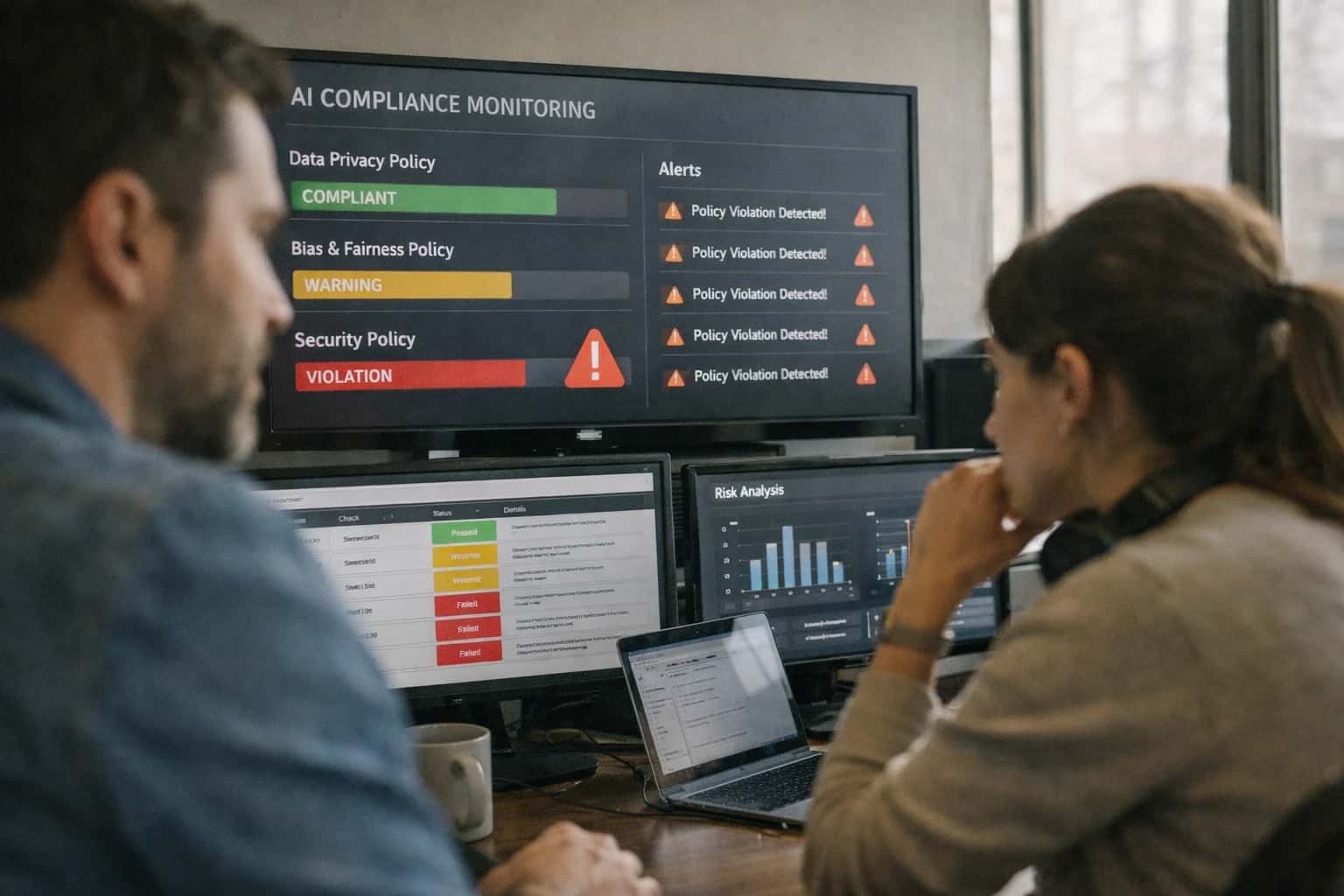
A technical comparison of Fiddler AI Governance and Arize Phoenix for monitoring high-stakes public sector AI deployments, focusing on observability, drift detection, and compliance with sovereign mandates.
THE ANALYSIS
Introduction
A head-to-head comparison of two leading AI observability platforms, focusing on their governance capabilities for high-stakes public sector deployments.
Arize Phoenix Governance takes a different, developer-centric approach by offering open-source observability libraries that prioritize deep, code-level integration and rapid troubleshooting. This strategy results in exceptional flexibility for custom AI stacks and faster iteration, but may require more engineering effort to scale into a centralized governance framework. Its strength lies in trace-level logging of LLM chains and agentic workflows, providing unparalleled visibility into the reasoning steps of complex systems, which is vital for debugging high-consequence AI applications.
The key trade-off: If your priority is centralized compliance, audit-ready reporting, and enterprise-scale policy enforcement, choose Fiddler. It is built for governance teams needing to demonstrate ethical compliance to regulators. If you prioritize developer agility, deep observability into custom agentic workflows, and open-source flexibility, choose Arize Phoenix. It empowers engineering teams to build, debug, and govern sophisticated AI systems from the ground up. For more on the broader landscape, see our analysis of AI Governance and Compliance Platforms and LLMOps and Observability Tools.
HEAD-TO-HEAD COMPARISON
Fiddler AI Governance vs Arize Phoenix Governance
Direct comparison of key metrics and features for AI observability and monitoring in high-stakes public sector deployments.
| Metric / Feature | Fiddler AI Governance | Arize Phoenix Governance |
|---|---|---|
Public Sector Compliance Frameworks | NIST AI RMF, EU AI Act (High-Risk) | ISO/IEC 42001, NIST AI RMF |
Drift Detection Latency (P95) | < 5 minutes | < 1 minute |
Root-Cause Analysis Automation | ||
Native Support for Agentic Workflows | ||
Audit Trail Granularity | Decision-level logging | Trace-level reasoning steps |
Synthetic Data Monitoring | ||
On-Prem / Air-Gapped Deployment | ||
Cost per 1M Inference Events | $850-$1,200 | $400-$700 |
FIDDLER AI VS ARIZE PHOENIX
TL;DR Summary
Key strengths and trade-offs at a glance for public sector AI observability.
01
Choose Fiddler for Enterprise-Scale Compliance
Strength in regulated environments: Built-in workflows for generating audit trails aligned with NIST AI RMF and EU AI Act. This matters for agencies that must demonstrate 'explainability of automated decisions' to oversight bodies and the public.
NIST RMF
Framework Alignment
02
Choose Fiddler for Integrated Risk Scoring
Strength in holistic risk management: Provides a unified 'AI Trust Score' that aggregates model performance, data drift, and fairness metrics into a single dashboard. This matters for CTOs who need to report on overall AI system health and risk posture to non-technical stakeholders.
03
Choose Arize Phoenix for Developer-First Observability
Strength in developer velocity: Open-source Python SDK (arize-phoenix) enables trace-level logging and visualization of LLM chains, agents, and RAG pipelines with minimal code changes. This matters for engineering teams building complex, agentic workflows that require deep debugging of reasoning steps.
Open Source
Core Library
04
Choose Arize Phoenix for Real-Time Root-Cause Analysis
Strength in operational troubleshooting: Automatically clusters failing LLM traces (e.g., hallucinations, tool errors) and pinpoints the failing component. This matters for maintaining high availability and accuracy in live public-facing chatbots or decision-support systems where downtime is critical.
CHOOSE YOUR PRIORITY
When to Choose: User Scenarios
Fiddler AI Governance for Auditors
Verdict: The definitive choice for generating audit-ready documentation and demonstrating compliance with sovereign mandates. Strengths: Fiddler excels in creating defensible audit trails and detailed transparency reports. Its platform is built to map directly to regulatory frameworks like the EU AI Act and NIST AI RMF, providing structured evidence for high-stakes public sector deployments. Features like automated policy enforcement and role-based access controls (RBAC) are tailored for government procurement and oversight bodies. Considerations: The platform's comprehensive nature can require more initial configuration to align with specific agency policies.
Arize Phoenix Governance for Auditors
Verdict: A strong observability foundation, but less specialized for the formal compliance reporting required by public auditors. Strengths: Arize Phoenix offers excellent root-cause analysis and model performance tracking, which is crucial for internal technical audits. Its open-source core and detailed tracing of RAG pipelines or agentic workflows provide deep visibility into how a model arrived at a decision. Considerations: While it provides the raw data, the burden of synthesizing this into formal compliance narratives and evidence packages falls more on the user compared to Fiddler's purpose-built reporting.
Enabling Efficiency, Speed & Accuracy
Intelligent Analysis, Decision & Execution
We build AI systems for teams that need search across company data, workflow automation across tools, or AI features inside products and internal software.
Talk to Us
Search across company data
Give teams answers from docs, tickets, runbooks, and product data with sources and permissions.
Useful when people spend too long searching or get different answers from different systems.
Enterprise searchRAGPermissions
Read more
Automate internal workflows
Use AI to route work, draft outputs, trigger actions, and keep approvals and logs in place.
Useful when repetitive work moves across multiple tools and teams.
AI agentsWorkflow automationGovernance
Read more
Add AI to products and internal tools
Build assistants, guided actions, or decision support into the software your team or customers already use.
Useful when AI needs to be part of the product, not a separate tool.
AI integrationDecision supportModel routing
Read moreTHE ANALYSIS
Verdict and Final Recommendation
Choosing between Fiddler and Phoenix hinges on your primary governance mandate: enterprise-scale compliance or developer-centric observability.
Fiddler AI Governance excels at providing a unified, enterprise-grade platform for model monitoring, explainability, and compliance reporting. Its strength lies in integrating governance into the entire ML lifecycle, from development to production, with features like customizable fairness metrics and automated audit trails designed for large, regulated organizations. For example, its ability to generate compliance documentation aligned with frameworks like NIST AI RMF and ISO/IEC 42001 is a critical data point for public sector deployments where auditability is non-negotiable.
Arize Phoenix Governance takes a different, more agile approach by offering open-source, Python-first observability libraries focused on LLM and embedding evaluation. This strategy results in a trade-off: superior flexibility and faster integration for engineering teams building RAG pipelines and agentic workflows, but less out-of-the-box policy enforcement and reporting tailored for broad enterprise GRC (Governance, Risk, and Compliance) stacks. Its trace-level logging of reasoning steps is a key differentiator for debugging complex AI systems.
The key trade-off: If your priority is demonstrating sovereign compliance, maintaining detailed audit trails for regulators, and governing a diverse portfolio of classical ML and generative AI models, choose Fiddler. Its platform is built for this scale. If you prioritize deep, code-level observability for LLM applications, rapid prototyping with open-source tools, and empowering your data science team with granular performance diagnostics, choose Arize Phoenix. For a broader context on the AI governance landscape, explore our comparisons of Microsoft Purview vs. Google Vertex AI Governance and OneTrust vs. IBM watsonx.governance.

About the author
Prasad Kumkar
CEO & MD, Inference Systems
Prasad Kumkar is the CEO & MD of Inference Systems and writes about AI systems architecture, LLM infrastructure, model serving, evaluation, and production deployment. Over 5+ years, he has worked across computer vision models, L5 autonomous vehicle systems, and LLM research, with a focus on taking complex AI ideas into real-world engineering systems.
His work and writing cover AI systems, large language models, AI agents, multimodal systems, autonomous systems, inference optimization, RAG, evaluation, and production AI engineering.
LinkedIn
Limited slotsGet a Free AI Consultation
Partnered with leading AI, data, and software stack.





How We Work
Custom AI workflows for your Business
One-fit-all AI don't work for modern businesses. At Inferensys, we aim to understand your business & custom requirements; which we use to define most efficient agentic workflows, the data, and the tools for your business.
01
Review the use case
We understand the task, the users, and where AI can actually help.
Read more02
Pick the right approach
We define what needs search, automation, or product integration.
Read more03
Build the first useful version
We implement the part that proves the value first.
Read more04
Improve from there
We add the checks and visibility needed to keep it useful.
Read moreThe first call is a practical review of your use case and the right next step.
Talk to Us