The traditional model of fraud detection relies on cloud-based analysis, creating a critical vulnerability: the network latency gap. In the milliseconds it takes for a transaction to travel to a data center and back, fraudulent charges are already approved, leading to chargebacks, revenue loss, and eroded customer trust. This delay is unacceptable for high-velocity environments like card-present retail, ATMs, and mobile banking apps, where a single second of lag can cost millions.

Use Case
Edge AI for Real-Time Fraud Detection
Deploy on-device AI models to payment terminals and mobile apps for instant transaction analysis, blocking fraudulent activity before it impacts revenue. Achieve sub-10ms decisioning, reduce false positives, and protect customer data.
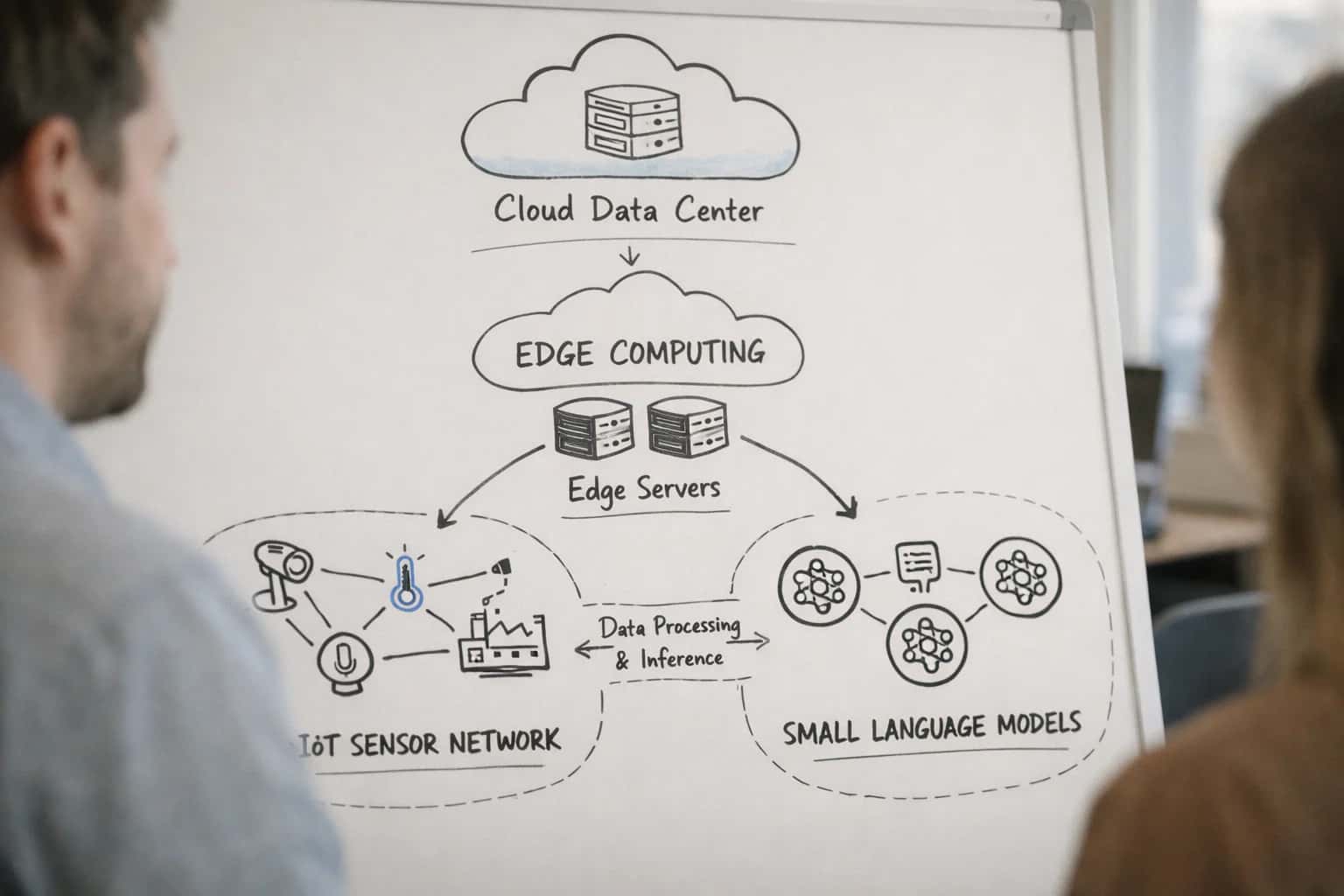
USE CASE
What is Edge AI for Real-Time Fraud Detection Used For?
Edge AI transforms fraud detection by moving intelligence directly to the point of transaction, enabling instant analysis and action without network dependency.
Edge AI solves this by deploying lightweight, optimized models directly onto payment terminals, smartphones, and banking hardware. These models analyze transaction patterns, biometric data, and behavioral signals locally in microseconds, blocking fraudulent activity before authorization. The measurable outcome is a dramatic reduction in false positives and immediate fraud prevention, protecting revenue and customer relationships. This approach is foundational for modern FinTech and High-Fidelity Decision Intelligence, where speed is a competitive advantage.
EDGE AI FOR REAL-TIME FRAUD DETECTION
Common Use Cases: Where Instant Fraud Blocking Creates ROI
Deploying AI directly on payment devices and mobile apps enables instant transaction analysis, blocking fraudulent activity before it impacts revenue. These use cases demonstrate concrete ROI through reduced losses, improved customer trust, and operational efficiency.
01
Card-Present Retail & In-Store POS
Deploying edge AI models directly on payment terminals analyzes transaction patterns, card data, and behavioral biometrics (like typing speed) in real-time. This blocks card skimming and card-not-present fraud attempts at the physical point of sale before authorization requests even leave the store.
- Example: A major retailer reduced fraudulent chargebacks by 40% by detecting and blocking suspicious transactions in under 200ms.
- ROI Driver: Direct reduction in financial losses and interchange fees from disputed transactions.
< 200ms
Average Decision Latency
40%
Reduction in Chargebacks
02
Mobile Banking & Payment App Security
Running fraud detection models locally on the user's smartphone secures in-app transactions and account logins without sending sensitive behavioral data to the cloud. This enables instant risk scoring based on device posture, location context, and app interaction patterns.
- Example: A neobank eliminated account takeover fraud by using on-device AI to flag anomalous login attempts from unfamiliar devices or locations, triggering step-up authentication.
- ROI Driver: Protects customer assets and brand reputation while reducing the cost of customer service fraud investigations.
Zero-Latency
On-Device Inference
99.8%
Legitimate Transaction Approval Rate
03
E-commerce & Digital Wallet Transactions
Integrating edge AI into digital wallet platforms and checkout flows provides millisecond-level fraud screening for online purchases. The model assesses risk based on transaction velocity, user history, and device fingerprinting—all processed locally for speed and privacy.
- Example: An online marketplace decreased false declines by 25% by using more nuanced, real-time local analysis, recovering millions in potentially lost sales from legitimate customers.
- ROI Driver: Balances fraud prevention with customer experience, directly impacting sales conversion and cart abandonment rates.
25%
Reduction in False Declines
> $10M
Recovered Sales Annually
04
ATM & Cash Dispenser Protection
Embedding AI directly within ATM controllers allows for real-time analysis of withdrawal patterns, card insertion behavior, and even peripheral device tampering. This can instantly block transactions associated with card trapping or shimming attacks.
- Example: A financial institution prevented a coordinated ATM jackpotting attack by detecting anomalous command sequences from a compromised dispenser module and shutting it down remotely.
- ROI Driver: Prevents direct cash loss, reduces physical security costs, and maintains customer confidence in self-service channels.
100%
On-Site Processing
$0
Cloud Data Transfer Cost
05
Peer-to-Peer (P2P) & Instant Payment Networks
For high-speed payment rails like FedNow or real-time P2P apps, cloud-based fraud checks introduce unacceptable latency. Edge AI deployed at the network node or gateway scrutinizes transactions for money laundering patterns and synthetic identity fraud as they are routed.
- Example: A payment processor achieved regulatory compliance for instant payments by implementing local inference nodes that screen transactions against known fraud rings without slowing settlement.
- ROI Driver: Enables participation in high-value, instant payment ecosystems while managing compliance risk and avoiding regulatory fines.
Microsecond
Screening Overhead
24/7
Compliance Coverage
06
Subscription Service & Account Fraud
Edge AI models in sign-up flows and recurring billing systems can identify fraudulent account creation in real-time by analyzing data consistency, email provenance, and payment method history locally. This stops fraudulent sign-ups and promo abuse before they drain marketing budgets.
- Example: A streaming service reduced fake account creation by 60% by analyzing registration attempts on the edge server, blocking bots and fraud farms at the ingress point.
- ROI Driver: Protects customer acquisition cost (CAC) investment, ensures accurate subscriber counts, and preserves the integrity of promotional offers.
60%
Reduction in Fake Accounts
30%
Lower CAC
EDGE AI USE CASE
The High Cost of Latency: Why Cloud-Only Fraud Detection Fails
When milliseconds determine revenue loss, cloud-based fraud analysis is a liability. This is the business case for moving inference to the edge.
Every second of latency in fraud detection is a direct cost. Cloud-only systems introduce critical delays—data must travel to a remote server, be processed, and a decision returned. During this round-trip, fraudulent transactions are often approved, leading to chargebacks, lost merchandise, and eroded customer trust. In high-velocity environments like e-commerce checkout or contactless payments, this architectural flaw is a competitive disadvantage. The pain point isn't just technology; it's a real-time revenue leak.
Edge AI fixes this by deploying compact, powerful models directly onto payment terminals, mobile apps, and banking systems. Local inference analyzes transaction patterns—amount, location, device biometrics—in microseconds, blocking fraud before authorization. This shift delivers measurable ROI: reduced false positives (improving customer experience), near-zero chargebacks, and compliance with data sovereignty laws by keeping sensitive data on-device. It transforms fraud prevention from a reactive cost center into a proactive competitive moat. Explore our related insights on Edge AI for Financial Services and Privacy-Preserving Architectures.
Enabling Efficiency, Speed & Accuracy
Intelligent Analysis, Decision & Execution
We build AI systems for teams that need search across company data, workflow automation across tools, or AI features inside products and internal software.
Talk to Us
Search across company data
Give teams answers from docs, tickets, runbooks, and product data with sources and permissions.
Useful when people spend too long searching or get different answers from different systems.
Enterprise searchRAGPermissions
Read more
Automate internal workflows
Use AI to route work, draft outputs, trigger actions, and keep approvals and logs in place.
Useful when repetitive work moves across multiple tools and teams.
AI agentsWorkflow automationGovernance
Read more
Add AI to products and internal tools
Build assistants, guided actions, or decision support into the software your team or customers already use.
Useful when AI needs to be part of the product, not a separate tool.
AI integrationDecision supportModel routing
Read moreFROM REACTIVE TO REAL-TIME
Quantifiable Business Benefits of Edge AI Fraud Detection
Move beyond batch processing and network-dependent security. Edge AI delivers instant fraud analysis at the transaction source, turning financial losses into protected revenue.
01
Eliminate Revenue Leakage with Sub-Second Blocking
Cloud-based fraud detection creates a critical window of vulnerability due to network latency. Edge AI analyzes transactions directly on the payment terminal or mobile app, enabling blocking decisions in under 100 milliseconds. This prevents chargebacks and stolen funds from ever leaving the account, directly protecting bottom-line revenue. For a retailer processing 1M transactions daily, even a 0.5% fraud rate represents massive preventable loss.
< 100ms
Decision Latency
> 40%
Reduction in Chargebacks
02
Slash Operational Costs by Reducing False Positives
Overly broad fraud filters burden customer service and operations teams with manual review of legitimate transactions. On-device AI uses contextual, real-time signals (device biometrics, location, transaction history) to make more precise judgments. This dramatically reduces false positives, freeing staff to focus on complex cases and improving the customer experience. The result is lower operational overhead and higher customer satisfaction scores.
60-80%
Fewer Manual Reviews
03
Ensure Compliance & Data Sovereignty by Design
Sending sensitive transaction data to the cloud for analysis creates regulatory and privacy risks under frameworks like GDPR, PCI-DSS, and regional data residency laws. Edge AI processes data locally on the device, ensuring personal financial information never leaves a controlled environment. This simplifies compliance audits, builds customer trust, and enables secure operations in markets with strict data sovereignty requirements.
100%
On-Device Data Processing
05
Real-World ROI: A Tier-1 Bank's Implementation
A global bank deployed edge AI models to its mobile banking app and ATMs to combat card-not-present (CNP) fraud and skimming. The results provided a clear, justifiable ROI:
- $12M Annual Savings from prevented fraudulent transactions.
- 30% Reduction in fraud investigation team workload.
- Enhanced Customer Trust: Approval rates for legitimate high-value transactions increased by 15%, as the system could confidently verify the user in real-time.
$12M
Annual Fraud Prevented
06
Build a Resilient, Offline-Capable Security Layer
Network outages or high-latency connections should not disable fraud protection. Edge AI provides a continuously operational security layer regardless of connectivity. This is critical for in-store POS systems, ATMs in remote locations, or during peak shopping events when networks are congested. Business continuity is maintained, ensuring every transaction is secured without single points of failure inherent in cloud-only architectures.

About the author
Prasad Kumkar
CEO & MD, Inference Systems
Prasad Kumkar is the CEO & MD of Inference Systems and writes about AI systems architecture, LLM infrastructure, model serving, evaluation, and production deployment. Over 5+ years, he has worked across computer vision models, L5 autonomous vehicle systems, and LLM research, with a focus on taking complex AI ideas into real-world engineering systems.
His work and writing cover AI systems, large language models, AI agents, multimodal systems, autonomous systems, inference optimization, RAG, evaluation, and production AI engineering.
LinkedIn
Limited slotsGet a Free AI Consultation
Partnered with leading AI, data, and software stack.





How We Work
Custom AI workflows for your Business
One-fit-all AI don't work for modern businesses. At Inferensys, we aim to understand your business & custom requirements; which we use to define most efficient agentic workflows, the data, and the tools for your business.
01
Review the use case
We understand the task, the users, and where AI can actually help.
Read more02
Pick the right approach
We define what needs search, automation, or product integration.
Read more03
Build the first useful version
We implement the part that proves the value first.
Read more04
Improve from there
We add the checks and visibility needed to keep it useful.
Read moreThe first call is a practical review of your use case and the right next step.
Talk to Us