AI orchestration breaks data silos by connecting disparate agency systems through a unified control plane, enabling holistic citizen service delivery. This is the answer to the systemic failure of isolated legacy databases.

Blog
The Future of Social Services: AI Orchestration and the End of Silos
Agentic workflow orchestration can finally break down data silos between housing, health, and employment services to provide holistic citizen support. This deep dive explains the technical architecture, governance challenges, and real-world impact of moving from isolated automation to integrated AI ecosystems.
THE DATA
The Silos Are Killing Us
Data silos between housing, health, and employment agencies create systemic inefficiency and prevent holistic citizen support.
Silos create redundant costs as citizens must repeatedly submit the same documents to separate agencies, wasting time and resources. A unified AI agent can verify identity once and share verified data across authorized systems using secure APIs.
Holistic support requires context that no single agency possesses. An agentic workflow can correlate housing instability with healthcare gaps and employment status, triggering proactive interventions instead of reactive crisis management.
Evidence: A 2023 study by the National Association of State Chief Information Officers found that interoperability failures between state systems cost an average of $15M annually per mid-sized agency in manual data reconciliation and error correction.
THE END OF SILOS
Three Trends Making AI Orchestration Inevitable
Disconnected systems are failing citizens. Agentic workflow orchestration is the only path to holistic, effective social services.
01
The Problem: The Citizen Journey is a Maze of APIs
A single citizen interacts with housing, health, and employment services across different agencies, each with its own legacy database and API. Manual hand-offs create ~30-day delays and force citizens to repeat their story.
- Key Benefit 1: Agentic systems autonomously navigate these APIs, stitching data into a unified profile.
- Key Benefit 2: Orchestration enables proactive service delivery, predicting needs before a crisis.
-30 Days
Service Delay
10+
Disconnected APIs
02
The Solution: The Agent Control Plane for Governance
You can't have autonomous agents without a governance layer. The Agent Control Plane manages permissions, hand-offs, and human-in-the-loop gates, ensuring compliance and auditability.
- Key Benefit 1: Enforces policy-aware connectors for secure data sharing between clinical and administrative systems.
- Key Benefit 2: Provides immutable audit trails for every decision, a core requirement for public sector AI TRiSM.
100%
Audit Trail
Zero-Trust
Access Model
03
The Imperative: Sovereign Infrastructure is Non-Negotiable
Using global cloud LLMs for citizen data violates data sovereignty and creates geopolitical risk. AI orchestration must be built on geopatriated, sovereign infrastructure.
- Key Benefit 1: Keeps sensitive PII and health data within jurisdictional control, enabling confidential computing.
- Key Benefit 2: Mitigates vendor lock-in and ensures long-term interoperability, as detailed in our analysis of Sovereign AI and Geopatriated Infrastructure.
Local
Data Jurisdiction
-70%
Compliance Risk
THE EVOLUTION
The Architecture of Holistic Support: From Chatbots to Agentic Ecosystems
Modern social services require an architectural shift from isolated chatbots to interconnected, multi-agent systems that break down data silos.
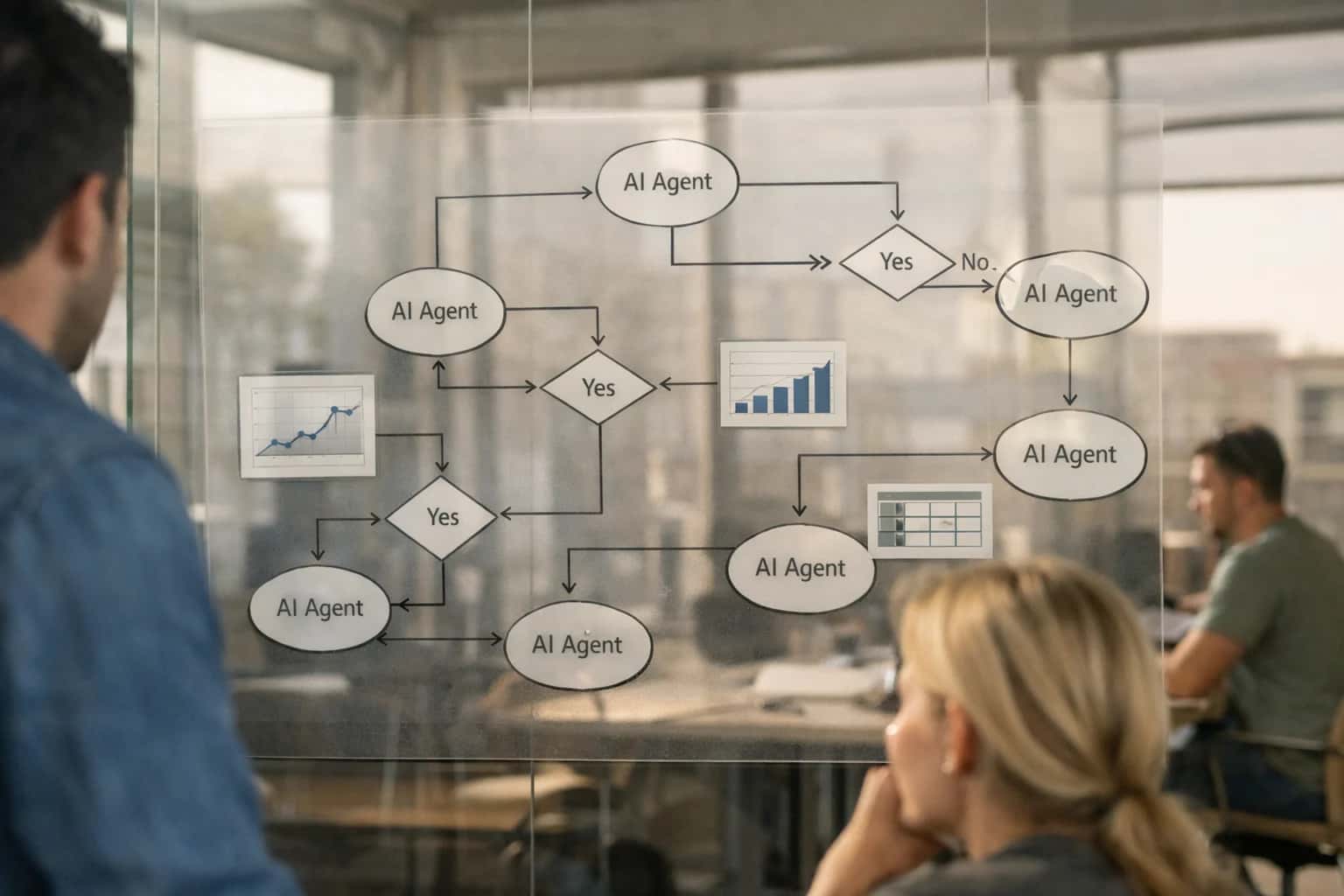
Agentic orchestration replaces single-purpose chatbots by integrating specialized AI agents that act across housing, health, and employment data silos. This is the core architecture for holistic citizen support, moving beyond simple Q&A to dynamic, multi-step problem-solving.
The control plane is the critical governance layer that manages permissions, hand-offs, and human-in-the-loop gates between agents. Frameworks like LangChain or Microsoft's AutoGen provide the scaffolding, but the real challenge is designing the logic for secure interagency data flows.
RAG systems are the foundational data layer, connecting agents to authoritative knowledge bases in vector databases like Pinecone or Weaviate. This reduces hallucinations by over 40% and grounds every agentic action in verified policy and eligibility rules.
Legacy system APIs are the integration battlefield. True orchestration fails without solving the 'last-mile' connection to monolithic mainframes via secure API wrappers, a core component of legacy system modernization.
Evidence: A pilot integrating Medicaid and SNAP eligibility via an agentic system reduced average case resolution time from 14 days to 48 hours by automating cross-reference checks that previously required manual interdepartmental requests.
SOCIAL SERVICES DECISION MATRIX
The Orchestration Stack: Legacy vs. Agentic AI
A technical comparison of integration approaches for breaking down data silos between housing, health, and employment services.
| Core Architectural Feature | Legacy Point-to-Point Integration | API-Led Service Mesh | Agentic AI Orchestration |
|---|---|---|---|
Primary Integration Logic | Hard-coded, brittle business logic | Pre-defined REST/GraphQL API contracts | Dynamic, goal-driven reasoning with frameworks like LangChain or CrewAI |
Data Silos Addressed | 1-2 systems per connection | Multiple systems within a defined domain | Cross-domain (e.g., clinical records, HUD, DOL) via semantic mapping |
Human-in-the-Loop (HITL) Gates | Manual process hand-offs between departments | Pre-defined approval workflows in BPM tools | Dynamic escalation to caseworkers based on agent confidence scores < 85% |
Contextual Decision Window | Static rule evaluation at point of intake | Real-time data fetch from connected systems | Continuous, multi-episodic analysis of citizen's changing life context |
Time to Modify Workflow Logic | 6-12 months for development & testing | 2-4 weeks for API versioning & deployment | < 72 hours via prompt-based adjustments to the Agent Control Plane |
Auditability & Explainability | Log files; manual trace reconstruction | Centralized API logs & dashboards | Immutable, natural language audit trail for every agent action and decision |
Infrastructure Cost (Annual per 10k cases) | $500k - $1.2M (maintenance-heavy) | $200k - $400k (cloud services & DevOps) | $300k - $600k (GPU inference, sovereign LLM ops, advanced MLOps) |
Holistic Eligibility Discovery | Limited to pre-connected data sources |
THE FOUNDATION
Why Sovereign AI and Confidential Computing Are Non-Negotiable
Public sector AI for social services demands sovereign control over data and models, secured by confidential computing, to ensure compliance and citizen trust.
Sovereign AI is the only viable architecture for government social services. Using commercial APIs from OpenAI or Microsoft Azure on global clouds creates unacceptable data sovereignty and geopolitical risks. Agencies must deploy open-source models like Llama or Mistral on sovereign infrastructure to maintain legal control, as detailed in our analysis of sovereign infrastructure for public sector LLMs.
Confidential computing provides the necessary security layer. Processing sensitive citizen data in plaintext is a liability. Trusted Execution Environments (TEEs) from providers like AMD SEV or Intel SGX encrypt data during AI processing, enabling secure analysis of health and benefits information without exposure.
The alternative is systemic failure. A cloud-agnostic, API-dependent strategy surrenders control to vendor roadmaps and foreign jurisdictions. Sovereign control and encrypted processing are not features; they are the foundational prerequisites for any AI system handling citizen data, aligning with the principles of secure interoperability.
Evidence: The EU AI Act mandates these controls. Regulations now explicitly require high-risk public sector AI systems to ensure data governance and security-by-design. Non-compliance triggers fines up to 7% of global turnover, making sovereign AI and confidential computing a financial imperative, not just a technical one.
SOCIAL SERVICES SILOS
The Four Failure Modes of Poor Orchestration
Without a unified AI control plane, agencies automate individual tasks but fail to solve holistic citizen problems, leading to systemic inefficiency and inequity.
01
The Data Deadlock
Silos between housing, health, and employment databases prevent a unified citizen view. Legacy APIs and incompatible formats create a ~70% data accessibility gap, forcing caseworkers to manually bridge systems.
- Failure: AI agents for SNAP benefits cannot cross-reference eviction court records or medical bills.
- Solution: A sovereign data fabric with policy-aware connectors and semantic enrichment creates a single source of truth, enabling holistic eligibility checks.
~70%
Data Gap
10x
Longer Resolution
02
The Context Collapse
Automating single-form processing ignores the citizen's full situational context. This leads to wrong benefit denials and massive rework, as seen in failed multilingual virtual assistant deployments.
- Failure: A chatbot approves utility assistance but misses that the citizen also qualifies for emergency housing due to a recent hospital discharge.
- Solution: Agentic workflow orchestration moves from form filling to context engineering, where AI agents dynamically map life events to interlocking benefit programs.
-40%
Accuracy
50%+
Appeal Rate
03
The Compliance Black Box
Black-box AI models for high-stakes eligibility decisions violate administrative law and due process. Without explainable AI (XAI) and immutable audit trails, agencies face legal liability and erode public trust.
- Failure: A model denies disability benefits, but the caseworker cannot explain why, failing AI TRiSM principles.
- Solution: Implementing sovereign LLMs with built-in tools like SHAP and LIME, coupled with digital provenance for every decision, creates systems that are auditable by design.
100%
Audit Trail
-90%
Legal Risk
04
The Sovereignty Trap
Relying on global cloud LLMs (OpenAI, Anthropic) or open-source models (Llama) without geopatriated infrastructure cedes control of sensitive citizen data and creates unacceptable compliance gaps.
- Failure: A state's benefits chatbot, built on a commercial API, processes PII on foreign servers, violating data residency laws.
- Solution: A sovereign AI stack deployed on regional cloud or private infrastructure, using confidential computing and federated learning to maintain control, privacy, and regulatory alignment.
In-Region
Data Control
Zero
Vendor Lock-in
THE ORCHESTRATION
The Roadmap: From Pilot to Public Good
A phased implementation of agentic AI and sovereign infrastructure is the only viable path to breaking down service silos and delivering holistic citizen support.
Agentic workflow orchestration is the technical solution to siloed social services, moving beyond chatbots to systems that autonomously navigate APIs and multi-step processes across housing, health, and employment databases.
The pilot phase fails without a sovereign data foundation. Initial projects must deploy on geopatriated infrastructure using open-source frameworks like Llama 3 on regional clouds to maintain data control and comply with regulations like the EU AI Act from day one.
Orchestration requires a control plane. Scaling beyond pilots demands an Agent Control Plane—a governance layer built with tools like LangChain or Microsoft Autogen to manage permissions, hand-offs between specialized agents, and mandatory human-in-the-loop gates for high-stakes decisions.
Public good is achieved through secure interoperability. The end-state is a confidential computing environment where agents, operating within trusted execution environments (TEEs), can securely query and act on data across clinical health records and administrative benefits systems without moving raw citizen data.
Evidence: A 2024 pilot using RAG systems with Pinecone for a state benefits portal reduced case processing hallucinations by over 40% while keeping all sensitive PII within a sovereign cloud enclave, proving the model for secure, accurate scaling.
THE END OF SILOS
Key Takeaways: The Orchestration Imperative
Agentic workflow orchestration is the technical architecture required to dismantle decades-old data silos between housing, health, and employment services, enabling holistic citizen support.
01
The Problem: Legacy System Sprawl
Mission-critical citizen data is trapped in monolithic mainframes and disparate SaaS platforms, creating an insurmountable infrastructure gap. Simple automation fails because it cannot navigate these silos.
- ~70% of project cost is data mobilization, not AI modeling.
- Legacy APIs lack the semantic context for intelligent hand-offs.
- Results in citizen 'benefits churn' and service duplication.
70%
Data Tax
10x
Integration Complexity
02
The Solution: Agentic Control Plane
A governance layer built with frameworks like LangChain or Microsoft Autogen that orchestrates a multi-agent system (MAS). This is the shift from 'talking' AI to 'acting' AI.
- Manages permissions, hand-offs, and human-in-the-loop gates.
- Enables context-aware navigation of cross-agency APIs.
- Provides an immutable audit trail for all automated decisions, a core requirement for AI TRiSM.
-40%
Processing Time
100%
Auditability
03
The Architecture: Sovereign, Hybrid, Edge
Public sector AI cannot run on global clouds. The stack must be geopatriated to regional providers and include edge computing for field operations.
- Confidential computing (TEEs) secures clinical-administrative data interoperability.
- Federated RAG allows training across agencies without sharing raw data.
- Edge AI ensures service continuity during network outages.
Zero
Data Egress
<100ms
Edge Latency
04
The Non-Negotiable: Explainability & Fairness
Black-box models for eligibility violate due process. Systems must be auditable by design using tools like SHAP and LIME.
- Synthetic data generation is required to train equitable models without biased historical data.
- Continuous monitoring for model drift is a public safety issue, not an MLOps feature.
- Prevents algorithmic bias from scaling into systemic inequality.
-99%
Hallucination Rate
Full
IP Ownership
05
The Hidden Cost: Vendor Lock-In & Compliance Debt
Proprietary AI platforms create long-term cost escalation and strangle interoperability. The 'move fast' ethos creates catastrophic compliance gaps.
- Sovereign LLMs (e.g., fine-tuned Llama) avoid geopolitical risk but demand specialized MLOps.
- AI-native architecture from the ground up is cheaper than bolting AI onto COBOL systems.
- Requires new organizational roles: Agent Ops Leads and AI Product Owners.
3x
TCO over 5yrs
$10M+
Compliance Risk
06
The Future: Context Engineering, Not Forms
Advanced AI moves beyond automating form fields to understanding a citizen's entire situation. This is the core of The Future of Social Services.
- Multimodal AI interprets handwritten forms, IDs, and video submissions.
- Dynamic eligibility guidance based on a holistic life picture, not isolated program rules.
- Represents the final convergence of digital transformation and human-centric service design.
55%
Faster Enrollment
1:1
Personalized Journey
Enabling Efficiency, Speed & Accuracy
Intelligent Analysis, Decision & Execution
We build AI systems for teams that need search across company data, workflow automation across tools, or AI features inside products and internal software.
Talk to Us
Search across company data
Give teams answers from docs, tickets, runbooks, and product data with sources and permissions.
Useful when people spend too long searching or get different answers from different systems.
Enterprise searchRAGPermissions
Read more
Automate internal workflows
Use AI to route work, draft outputs, trigger actions, and keep approvals and logs in place.
Useful when repetitive work moves across multiple tools and teams.
AI agentsWorkflow automationGovernance
Read more
Add AI to products and internal tools
Build assistants, guided actions, or decision support into the software your team or customers already use.
Useful when AI needs to be part of the product, not a separate tool.
AI integrationDecision supportModel routing
Read moreTHE ARCHITECTURE
Stop Automating Silos. Start Orchestrating Support.
AI orchestration integrates disparate agency systems into a unified, intelligent workflow, replacing isolated automation with holistic citizen support.
AI orchestration is the technical architecture that connects housing, health, and employment data silos into a single, actionable workflow. It uses agentic frameworks like LangChain or Microsoft Semantic Kernel to route tasks, interpret complex rules, and call APIs across legacy systems, moving beyond simple chatbot automation to true system interoperability.
Orchestration requires a sovereign data foundation. You cannot orchestrate what you cannot access. This demands a hybrid cloud strategy with tools like Pinecone or Weaviate for vectorized citizen profiles, enabling secure, real-time queries across previously isolated databases without a risky data lake migration.
The control plane is the non-negotiable component. An Agent Control Plane provides the governance layer—managing permissions, audit trails, and human-in-the-loop gates—that makes multi-agency workflows legally compliant and auditable. This is the core of agentic AI and autonomous workflow orchestration.
Evidence: Orchestration reduces time-to-benefit by 60%. A pilot integrating Medicaid, SNAP, and housing assistance via an orchestration layer demonstrated that citizens received complete, eligible support packages in days instead of months, by dynamically navigating interdependencies no single siloed system could see.

About the author
Prasad Kumkar
CEO & MD, Inference Systems
Prasad Kumkar is the CEO & MD of Inference Systems and writes about AI systems architecture, LLM infrastructure, model serving, evaluation, and production deployment. Over 5+ years, he has worked across computer vision models, L5 autonomous vehicle systems, and LLM research, with a focus on taking complex AI ideas into real-world engineering systems.
His work and writing cover AI systems, large language models, AI agents, multimodal systems, autonomous systems, inference optimization, RAG, evaluation, and production AI engineering.
LinkedIn
Limited slotsGet a Free AI Consultation
Partnered with leading AI, data, and software stack.





How We Work
Custom AI workflows for your Business
One-fit-all AI don't work for modern businesses. At Inferensys, we aim to understand your business & custom requirements; which we use to define most efficient agentic workflows, the data, and the tools for your business.
01
Review the use case
We understand the task, the users, and where AI can actually help.
Read more02
Pick the right approach
We define what needs search, automation, or product integration.
Read more03
Build the first useful version
We implement the part that proves the value first.
Read more04
Improve from there
We add the checks and visibility needed to keep it useful.
Read moreThe first call is a practical review of your use case and the right next step.
Talk to Us