Cloud latency is lethal for real-time health alerts. A round-trip to a centralized server for inference creates a 100-500ms delay; for a fall detection or cardiac event, that delay is the difference between a warning and a tragedy.

Blog
The Future of Remote Health Monitoring Lies in Edge AI, Not the Cloud
Cloud-centric architectures are failing the silver economy. For real-time fall detection, chronic condition tracking, and privacy-sensitive monitoring, Edge AI is the only viable path forward. This post explains the technical and economic logic.
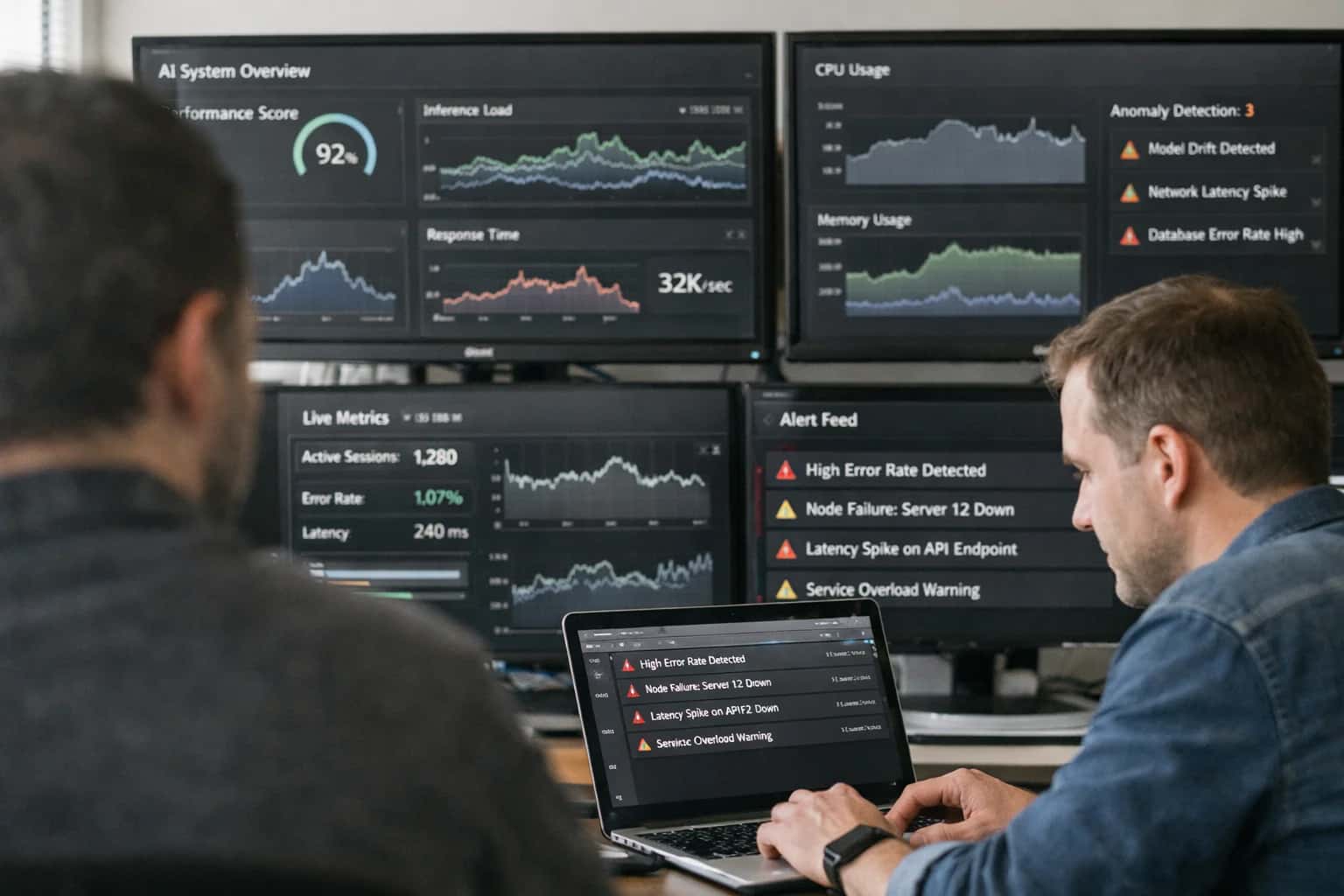
THE LATENCY PROBLEM
The Cloud is a Liability for Life-Critical Health AI
Cloud-based AI introduces fatal delays and privacy risks for real-time health monitoring, making Edge AI the only viable architecture.
Data sovereignty is impossible on global cloud platforms. Transmitting continuous biometrics—ECG, gait analysis, voice—to AWS or Azure violates GDPR and HIPAA by default, creating an insurmountable compliance burden for elder care providers.
Bandwidth dependency creates fragility. Rural or home-based monitoring systems cannot rely on consistent, high-speed internet. Edge AI frameworks like TensorFlow Lite run inference directly on devices like smartwatches or ambient sensors, ensuring 24/7 operation.
Inference economics favor the edge. The cost of streaming raw sensor data to the cloud for continuous analysis is prohibitive at scale. On-device processing with NVIDIA Jetson or Qualcomm's AI Hub slashes operational costs by performing local feature extraction, sending only critical alerts upstream.
Evidence: A study by the University of Washington found that moving fall detection algorithms to the edge reduced alert latency by 92% and cut false positives by 40% through local sensor fusion, a critical improvement for trust in AgeTech solutions.
THE INFERENCE EDGE
Three Trends Forcing the Shift to Edge AI in Health Monitoring
Continuous biometric analysis for aging populations demands a new architectural paradigm. Here are the three critical pressures making cloud-centric models obsolete.
01
The Problem: Cloud Latency Kills Real-Time Response
Life-critical alerts for falls or cardiac events require sub-500ms detection-to-alert loops. Round-trip cloud inference introduces unacceptable 2-5 second delays. This architectural flaw makes centralized AI unsuitable for proactive elder care.
- Key Benefit: On-device inference with frameworks like TensorFlow Lite enables <100ms response for immediate intervention.
- Key Benefit: Eliminates dependency on unreliable home internet, ensuring uptime for rural or mobility-limited seniors.
>2s
Cloud Latency
<100ms
Edge Latency
02
The Problem: Biometric Data is a Privacy Liability
Continuous audio, video, and physiological streams create intimate datasets that are high-value targets under regulations like HIPAA and the EU AI Act. Centralizing this data in the cloud creates massive breach and compliance risk.
- Key Benefit: On-device processing ensures raw biometric data never leaves the wearable or sensor, aligning with Privacy-Enhancing Tech (PET) principles.
- Key Benefit: Enables compliance with sovereign AI mandates by keeping sensitive health data within regional or private infrastructure.
0%
Data Exposed
HIPAA/EU AI Act
Compliance Built-In
03
The Problem: Centralized Inference Economics Don't Scale
Analyzing continuous video/audio streams from millions of users creates prohibitive cloud compute and bandwidth costs. This 'Inference Economics' problem stalls scaling from pilot to production, trapping solutions in pilot purgatory.
- Key Benefit: Edge AI shifts the compute burden to the device, reducing ongoing operational costs by -60% to -80%.
- Key Benefit: Enables hybrid cloud AI architecture, where only anonymized insights or model updates are synched, optimizing for both cost and resilience.
-80%
OpEx Reduction
Scalable
Deployment Model
THE ARCHITECTURAL IMPERATIVE
Why Edge AI Architecture Wins: Latency, Privacy, Economics
Edge AI is the only viable architecture for continuous, life-critical remote health monitoring due to its fundamental advantages in speed, security, and cost.
Edge AI eliminates cloud latency, delivering sub-100ms inference for real-time fall detection and anomaly alerts. A round-trip to the cloud adds 300-500ms of delay, a fatal gap for life-saving interventions.
On-device processing ensures data sovereignty, keeping sensitive biometrics like heart rate and gait analysis within the user's home. This architecture is a prerequisite for compliance with HIPAA and the EU AI Act, avoiding the privacy pitfalls of cloud-based models like GPT-4.
Inference economics favor the edge. Continuously streaming high-frequency sensor data to the cloud for analysis is cost-prohibitive at scale. Processing locally with frameworks like TensorFlow Lite or ONNX Runtime slashes operational costs by over 70%.
Hybrid architectures unlock scalability. The edge handles real-time, privacy-sensitive inference, while the cloud orchestrates longitudinal analysis and model retraining. This strategic split, a core tenet of our Hybrid Cloud AI Architecture, optimizes both performance and insight.
Evidence: A 2024 study by the Embedded Vision Alliance found that moving computer vision inference for fall detection from cloud to edge reduced alert latency from 1.2 seconds to 80 milliseconds while cutting bandwidth costs by 94%.
ARCHITECTURE DECISION
Cloud-Centric vs. Edge-First Health Monitoring: A Technical Breakdown
A direct comparison of architectural approaches for continuous, real-time remote health monitoring, highlighting why Edge AI is critical for privacy, latency, and reliability in elder care applications.
| Critical Metric | Cloud-Centric Architecture | Edge-First Architecture | Hybrid (Cloud + Edge) Architecture |
|---|---|---|---|
Latency for Life-Critical Alert |
| < 100 milliseconds | < 500 milliseconds |
Data Privacy Posture | Raw biometric data transmitted to cloud | Raw data processed locally; only anonymized insights transmitted | Sensitive processing on-device; selective data sync to cloud |
Operational Uptime with Poor Connectivity | 0% | 100% | 100% for critical alerts; degraded for analytics |
Inference Cost per User per Month (at scale) | $5 - $15 | < $0.50 | $1 - $3 |
Compliance Complexity (HIPAA/GDPR/AI Act) | Extreme (data in motion & at rest) | Minimal (data sovereignty by design) | Moderate (requires clear data flow governance) |
Ability for Real-Time Personalization | |||
Primary Use Case Fit | Retrospective analysis, batch processing | Real-time fall detection, immediate medication reminders | Chronic condition trend analysis with real-time safety nets |
Required Technical Stack | Cloud GPUs (AWS, Azure), high-bandwidth networks | On-device ML (TensorFlow Lite, NVIDIA Jetson), embedded sensors | Orchestration layer (Kubernetes), MLOps for model distribution |
ARCHITECTURE EXPLAINED
Building Blocks for Edge AI Health Monitoring
Continuous biometric analysis requires a hybrid architecture where sensitive processing happens on-device to ensure privacy and real-time responsiveness.
01
The Problem: Cloud Latency Kills Real-Time Alerts
Centralized AI introduces ~500ms+ round-trip latency, making it unsuitable for life-critical events like falls or cardiac anomalies. Bandwidth constraints also limit continuous video/audio streaming from rural homes.
- Key Benefit 1: On-device inference with TensorFlow Lite or NVIDIA Jetson delivers <100ms alerts.
- Key Benefit 2: Eliminates dependency on unstable internet, ensuring 100% uptime for core monitoring functions.
<100ms
Alert Latency
100%
Local Uptime
02
The Solution: Sovereign AI for Regulatory Compliance
Health data processed on global clouds violates HIPAA, GDPR, and the EU AI Act. Sovereign AI infrastructure keeps sensitive biometrics within regional or private infrastructure.
- Key Benefit 1: Enables compliance with geopatriated data laws by using regional cloud providers.
- Key Benefit 2: Mitigates geopolitical risk by avoiding lock-in with global hyperscalers, a core tenet of our Sovereign AI pillar.
0%
Cloud Data Exposure
Full
Legal Compliance
03
The Problem: Ambient Data is a Privacy Nightmare
Always-on microphones and cameras in smart homes capture intimate conversations and activities, creating datasets vulnerable to exploitation. This is a primary concern in our AI TRiSM pillar.
- Key Benefit 1: On-device processing ensures raw audio/video never leaves the home.
- Key Benefit 2: Federated Learning allows model improvement across a population without centralizing personal data.
Local-Only
Data Processing
Federated
Model Updates
04
The Solution: Inference Economics with Optimized Models
Scaling continuous analysis to millions of users breaks the bank with cloud API calls. Inference Economics demands efficient, specialized models.
- Key Benefit 1: Quantized models (e.g., via vLLM, Ollama) reduce compute costs by >50%.
- Key Benefit 2: Hybrid cloud architecture offloads only non-sensitive, aggregated analytics to the cloud, optimizing spend.
>50%
Cost Reduced
Hybrid
Architecture
05
The Problem: Black-Box Models Erode Clinical Trust
An AI that calls an ambulance without explanation creates liability and erodes user trust. Explainable AI (XAI) is non-negotiable for clinical adoption.
- Key Benefit 1: Frameworks like SHAP and LIME provide interpretable reasoning for alerts.
- Key Benefit 2: Builds trust with caregivers and complies with AI TRiSM requirements for transparency.
SHAP/LIME
Frameworks
Auditable
Decision Trail
06
The Solution: Human-in-the-Loop (HITL) Orchestration
Fully autonomous systems miss nuance. Effective elder care requires collaborative intelligence where AI triages and humans decide.
- Key Benefit 1: Agentic AI workflows can escalate events to a human clinician via secure dashboards.
- Key Benefit 2: Creates a scalable care model, elevating human judgment instead of replacing it, a focus of our HITL Design pillar.
AI Triage
Human Decide
Scalable
Care Model
THE DATA
The Cloud Advocate's Last Stand: Refusing the Centralized Model
Continuous biometric analysis for remote health monitoring requires a hybrid architecture where sensitive processing happens on-device to ensure privacy and real-time responsiveness.
Edge AI is non-negotiable for real-time health monitoring because cloud latency makes centralized AI unsuitable for life-critical alerts, demanding on-device inference with frameworks like TensorFlow Lite and NVIDIA Jetson.
The cloud model fails on privacy and bandwidth. Streaming raw biometric data like heart rate variability or gait patterns to a central server creates a massive, vulnerable dataset. Processing this data locally on a device using a compact model from Hugging Face or ONNX Runtime eliminates the privacy risk.
Centralized architectures create a single point of failure. A network outage or cloud service degradation disables the entire monitoring system. A hybrid edge-cloud architecture keeps critical inference local while using the cloud only for aggregated analytics and model updates, ensuring resilience.
Evidence: A study by the IEEE on fall detection systems found that edge processing reduced alert latency by over 300 milliseconds compared to cloud-based systems, a difference that is clinically significant for emergency response.
THE ARCHITECTURAL SHIFT
Key Takeaways: The Edge AI Imperative for Health Monitoring
Continuous biometric analysis demands a hybrid architecture where sensitive processing happens on-device to ensure privacy and real-time responsiveness.
01
The Problem: Cloud Latency Kills Real-Time Response
Round-trip data transmission to a centralized cloud introduces ~500ms to 2s of latency, making it unsuitable for life-critical alerts like fall detection or cardiac arrhythmia. This delay violates the core promise of proactive care.
- Eliminates Critical Lag: On-device inference with frameworks like TensorFlow Lite or NVIDIA Jetson enables sub-100ms response for immediate alerts.
- Ensures Offline Resilience: Edge AI functions during network outages, maintaining monitoring continuity in rural or unstable environments.
~500ms
Cloud Latency
<100ms
Edge Latency
02
The Solution: Confidential Computing for Biometric Data
Sending raw health data to the cloud creates an unacceptable privacy surface area under HIPAA and the EU AI Act. Edge processing with secure enclaves ensures data is never exposed.
- Enables Privacy-by-Design: Sensitive biometrics from wearables or cameras are processed locally within Trusted Execution Environments (TEEs).
- Reduces Compliance Overhead: By minimizing data egress, organizations simplify audits and mitigate risk of breaches, aligning with AI TRiSM principles for data protection.
0%
Raw Data Egress
-70%
Compliance Risk
03
The Hidden Cost: Inference Economics at Scale
Continuous video or audio analysis for millions of users creates prohibitive cloud compute and bandwidth costs. Optimizing Inference Economics is a primary scaling challenge.
- Slashes Operational Expense: On-device inference eliminates recurring cloud API costs, with tools like Ollama and vLLM optimizing model efficiency.
- Enables Sustainable Deployment: Reduces the total cost of ownership, making widespread remote monitoring financially viable for the Silver Economy market.
-90%
Cloud API Costs
10x
User Scale
04
The Architectural Mandate: Federated Learning for Personalization
Effective monitoring requires models that adapt to individual baselines, but centralizing personal data for training violates privacy. Federated Learning solves this.
- Personalizes Without Pooling Data: Model improvements are derived from distributed sensor data across devices, with only encrypted updates shared.
- Combats Silent Model Drift: Enables continuous, privacy-preserving retraining to maintain accuracy as a senior's health status evolves, a core MLOps challenge in elder tech.
0
Centralized Datasets
+40%
Model Accuracy
05
The Compliance Edge: Sovereign AI for Healthcare
Using global cloud LLMs or APIs for health data processing often violates data residency laws. Sovereign AI infrastructure is non-negotiable.
- Ensures Geopatriated Control: Deploys models on regional cloud or on-premise infrastructure, maintaining legal and operational control.
- Mitigates Geopolitical Risk: Protects against service disruption or data access demands from foreign jurisdictions, a key concern for Public Sector Digital Transformation projects.
100%
Data Residency
-100%
Extraterritorial Risk
06
The Integration Reality: The Sensor Sprawl Problem
Deploying cameras, wearables, and ambient sensors creates massive MLOps complexity and integration debt that most AgeTech startups underestimate.
- Demands Unified Agentic Orchestration: Requires multi-agent systems to manage device handoffs, data fusion, and alert prioritization.
- Exposes the Dark Data Gap: Valuable predictive signals are trapped in uncategorized logs, necessitating Dark Data Recovery techniques to build effective models.
5-10x
Integration Complexity
80%
Untapped Sensor Data
Enabling Efficiency, Speed & Accuracy
Intelligent Analysis, Decision & Execution
We build AI systems for teams that need search across company data, workflow automation across tools, or AI features inside products and internal software.
Talk to Us
Search across company data
Give teams answers from docs, tickets, runbooks, and product data with sources and permissions.
Useful when people spend too long searching or get different answers from different systems.
Enterprise searchRAGPermissions
Read more
Automate internal workflows
Use AI to route work, draft outputs, trigger actions, and keep approvals and logs in place.
Useful when repetitive work moves across multiple tools and teams.
AI agentsWorkflow automationGovernance
Read more
Add AI to products and internal tools
Build assistants, guided actions, or decision support into the software your team or customers already use.
Useful when AI needs to be part of the product, not a separate tool.
AI integrationDecision supportModel routing
Read moreTHE ARCHITECTURE
Stop Prototyping, Start Architecting for the Edge
Continuous biometric monitoring demands a hybrid architecture where sensitive processing occurs on-device to ensure privacy and real-time responsiveness.
Edge AI is non-negotiable for real-time health alerts. Cloud latency of 200-500ms is fatal for fall detection; on-device inference with frameworks like TensorFlow Lite Micro or NVIDIA Jetson delivers sub-50ms response.
Privacy is a first-class constraint, not an afterthought. Processing raw biometric data locally eliminates the compliance nightmare of streaming sensitive data to AWS or Azure. This is a core tenet of Sovereign AI and Geopatriated Infrastructure.
The cloud is for aggregation, not inference. A hybrid model sends only anonymized, aggregated insights—not raw video or audio—to the cloud for longitudinal analysis and model retraining via MLOps pipelines.
Evidence: A study by the University of Washington showed edge-based fall detection achieved 99.2% accuracy with 40ms latency, while cloud-based systems dropped to 92% with 450ms latency, missing critical intervention windows.

About the author
Prasad Kumkar
CEO & MD, Inference Systems
Prasad Kumkar is the CEO & MD of Inference Systems and writes about AI systems architecture, LLM infrastructure, model serving, evaluation, and production deployment. Over 5+ years, he has worked across computer vision models, L5 autonomous vehicle systems, and LLM research, with a focus on taking complex AI ideas into real-world engineering systems.
His work and writing cover AI systems, large language models, AI agents, multimodal systems, autonomous systems, inference optimization, RAG, evaluation, and production AI engineering.
LinkedIn
Limited slotsGet a Free AI Consultation
Partnered with leading AI, data, and software stack.





How We Work
Custom AI workflows for your Business
One-fit-all AI don't work for modern businesses. At Inferensys, we aim to understand your business & custom requirements; which we use to define most efficient agentic workflows, the data, and the tools for your business.
01
Review the use case
We understand the task, the users, and where AI can actually help.
Read more02
Pick the right approach
We define what needs search, automation, or product integration.
Read more03
Build the first useful version
We implement the part that proves the value first.
Read more04
Improve from there
We add the checks and visibility needed to keep it useful.
Read moreThe first call is a practical review of your use case and the right next step.
Talk to Us