Move beyond rigid demographic buckets. Our predictive engines analyze real-time behavioral signals, transactional patterns, and latent intent data to surface micro-segments with the highest propensity to convert or churn.

Service
Predictive Audience Segmentation Engines
Engineering of machine learning models that dynamically identify and predict high-value customer segments and micro-segments based on behavioral, transactional, and intent data for targeted marketing.
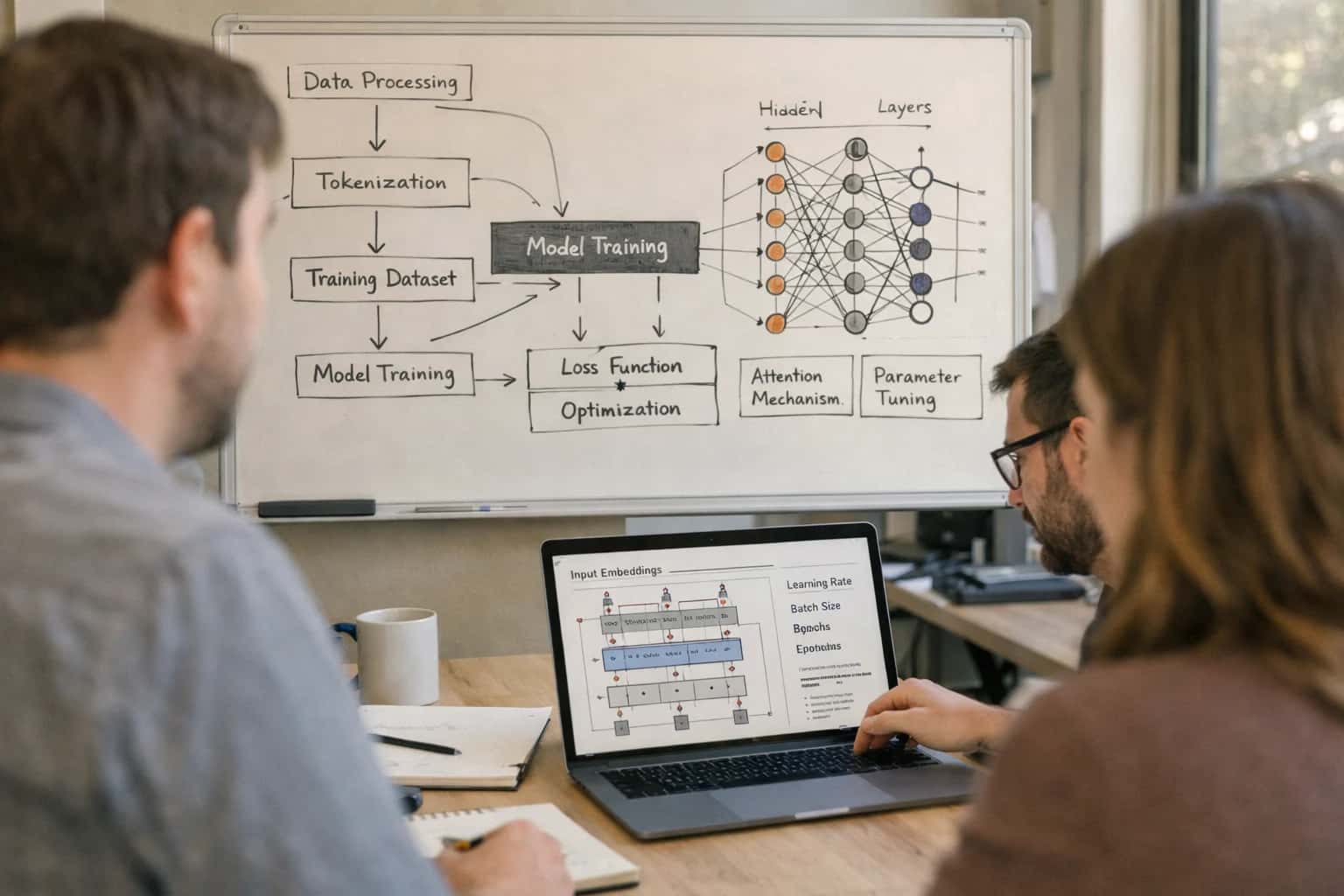
PREDICTIVE SEGMENTATION
Static Segments Waste Budget. Predictive Models Find Revenue.
Deploy ML models that dynamically identify high-value customer micro-segments from behavioral and transactional data.
- Dynamic Targeting: Models update segments continuously, not quarterly.
- Predictive Scoring: Assign lifetime value (LTV) scores and churn risk probabilities to individual users.
- Integration Ready: Outputs feed directly into your CRM, CDP, or programmatic ad platforms like
TheTradeDesk.
Replace guesswork with probabilistic logic. Allocate budget to audiences proven to drive ROI, not just demographics.
This service is part of our broader Marketing and Creative Acceleration AI pillar, which also includes Hyper-Personalized Ad Campaign AI and Personalized Marketing Engine Architecture.
DATA-DRIVEN ROI
Measurable Outcomes of a Predictive Segmentation Engine
Our engineered segmentation engines deliver quantifiable business impact by moving beyond static demographics to dynamic, predictive micro-segments. Here are the concrete outcomes you can expect.
01
Increased Customer Lifetime Value (LTV)
Identify and nurture high-propensity segments with personalized journeys, directly boosting retention and average order value. Our models predict LTV with >90% accuracy using behavioral and transactional data.
>90%
Prediction Accuracy
15-25%
Avg. LTV Increase
02
Higher Marketing Conversion Rates
Target micro-segments with hyper-relevant messaging based on predicted intent, not past behavior. This reduces wasted ad spend and increases engagement across channels.
2-4x
Campaign ROI
30-50%
Higher CTR
03
Reduced Customer Acquisition Cost (CAC)
Focus acquisition efforts on lookalike audiences of your most valuable predicted segments. Our engines optimize for quality leads, lowering cost per acquisition.
20-40%
CAC Reduction
>80%
Lead Quality Score
04
Faster Time-to-Insight
Move from monthly batch segmentation to real-time, dynamic updates. Our pipelines process live data streams, enabling immediate campaign adjustments based on shifting segment behaviors.
Real-time
Segment Updates
< 2 weeks
Deployment Time
05
Enhanced Product & Feature Adoption
Predict which user segments are most likely to adopt new features or products. Drive targeted onboarding and communication to accelerate adoption curves and reduce churn risk.
40-60%
Faster Adoption
25%
Lower Early Churn
06
Auditable & Explainable Segments
Gain full visibility into why a user belongs to a segment with model explainability (XAI) features. This builds trust with marketing teams and ensures compliance with algorithmic fairness principles. Learn more about our approach to AI Governance and Compliance.
Full Audit Trail
Data Lineage
Bias Mitigated
Fairness Guardrails
EXPLORE
From Discovery to Production
Typical 8-Week Development and Deployment Timeline
A detailed breakdown of the phased delivery for a custom Predictive Audience Segmentation Engine, showing key deliverables and client involvement at each stage.
| Phase & Duration | Key Deliverables | Client Involvement |
|---|---|---|
Week 1-2: Discovery & Data Audit | Technical requirements document, Data source inventory, Initial model architecture proposal | Provide data access, Stakeholder interviews, Approve project scope |
Week 3-4: Data Pipeline & Feature Engineering | Cleaned, labeled training dataset, Validated feature set, Initial model performance baseline | Review data quality reports, Validate feature definitions, Provide domain feedback |
Week 5-6: Model Development & Training | Trained segmentation model (e.g., XGBoost, LightGBM), Model performance report (AUC, precision/recall), Explainability dashboard (SHAP/LIME) | Review model performance, Validate segment definitions, Approve model for integration |
Week 7: System Integration & API Development | Production-ready inference API, Integration documentation, Initial load test results | Provide staging environment access, Conduct integration testing, Approve API schema |
Week 8: Deployment & Handoff | Deployed model in production, Final technical documentation, Monitoring dashboard (e.g., Grafana), Knowledge transfer session | Final acceptance testing, Receive operational runbook, Schedule ongoing support |
DRIVE TARGETED GROWTH
Industry Applications and Use Cases
Our predictive segmentation engines deliver measurable ROI by identifying high-value customer micro-segments across key industries. Deploy custom models in 4-6 weeks to optimize marketing spend and accelerate revenue.
02
Financial Services & FinTech
Build regulatory-compliant models for next-best-product prediction, churn risk scoring, and micro-segmentation for hyper-personalized banking offers. Engineered with privacy-preserving techniques like differential privacy for sensitive transaction data.
Key Outcomes: Improve cross-sell conversion rates by 30%, proactively retain at-risk customers identified 60 days before churn.
30%
Cross-Sell Lift
60 days
Churn Lead Time
04
Healthcare & HealthTech
Develop HIPAA-compliant models for patient cohort prediction, personalized engagement scoring, and micro-segmentation for targeted wellness programs. Built on federated learning architectures to preserve patient privacy across institutions.
Key Outcomes: Increase patient program adherence by 35%, optimize marketing outreach for preventive care services. Learn more about our approach to Federated Learning Systems Engineering.
35%
Adherence Increase
HIPAA
Compliant
05
Media & Entertainment
Create dynamic audience segments for content recommendation, ad targeting, and subscription tier optimization. Models process multimodal data—viewing history, social sentiment, and engagement metrics—to predict content affinity.
Key Outcomes: Boost content engagement metrics by 50%, reduce subscriber churn by accurately predicting and addressing dissatisfaction. For related content generation, see our Generative AI Content Strategy Consulting.
50%
Engagement Lift
Real-time
Segment Updates
06
Travel & Hospitality
Build predictive models for customer journey segmentation, personalized offer optimization, and dynamic pricing based on intent signals and booking patterns. Integrates with CRM and reservation systems like Salesforce and Amadeus.
Key Outcomes: Increase direct booking revenue by 20%, maximize customer lifetime value through personalized loyalty programs. Explore our capabilities in Hyper-Personalized Ad Campaign AI for complementary execution.
20%
Direct Bookings Lift
<100ms
Inference Latency
EXPLORE
Enabling Efficiency, Speed & Accuracy
Intelligent Analysis, Decision & Execution
We build AI systems for teams that need search across company data, workflow automation across tools, or AI features inside products and internal software.
Talk to Us
Search across company data
Give teams answers from docs, tickets, runbooks, and product data with sources and permissions.
Useful when people spend too long searching or get different answers from different systems.
Enterprise searchRAGPermissions
Read more
Automate internal workflows
Use AI to route work, draft outputs, trigger actions, and keep approvals and logs in place.
Useful when repetitive work moves across multiple tools and teams.
AI agentsWorkflow automationGovernance
Read more
Add AI to products and internal tools
Build assistants, guided actions, or decision support into the software your team or customers already use.
Useful when AI needs to be part of the product, not a separate tool.
AI integrationDecision supportModel routing
Read morePredictive Audience Segmentation
Frequently Asked Questions
Get clear answers on how we engineer machine learning models to identify and predict high-value customer segments for targeted marketing.
A standard Predictive Audience Segmentation Engine deployment takes 2-4 weeks from kickoff to initial model validation. This includes data pipeline integration, model training on your historical data, and the creation of a real-time inference API. Complex integrations with legacy CRM or CDP systems may extend this timeline, which we scope and price transparently during discovery.

About the author
Prasad Kumkar
CEO & MD, Inference Systems
Prasad Kumkar is the CEO & MD of Inference Systems and writes about AI systems architecture, LLM infrastructure, model serving, evaluation, and production deployment. Over 5+ years, he has worked across computer vision models, L5 autonomous vehicle systems, and LLM research, with a focus on taking complex AI ideas into real-world engineering systems.
His work and writing cover AI systems, large language models, AI agents, multimodal systems, autonomous systems, inference optimization, RAG, evaluation, and production AI engineering.
LinkedIn
Limited slotsGet a Free AI Consultation
Partnered with leading AI, data, and software stack.





How We Work
Custom AI workflows for your Business
One-fit-all AI don't work for modern businesses. At Inferensys, we aim to understand your business & custom requirements; which we use to define most efficient agentic workflows, the data, and the tools for your business.
01
Review the use case
We understand the task, the users, and where AI can actually help.
Read more02
Pick the right approach
We define what needs search, automation, or product integration.
Read more03
Build the first useful version
We implement the part that proves the value first.
Read more04
Improve from there
We add the checks and visibility needed to keep it useful.
Read moreThe first call is a practical review of your use case and the right next step.
Talk to Us