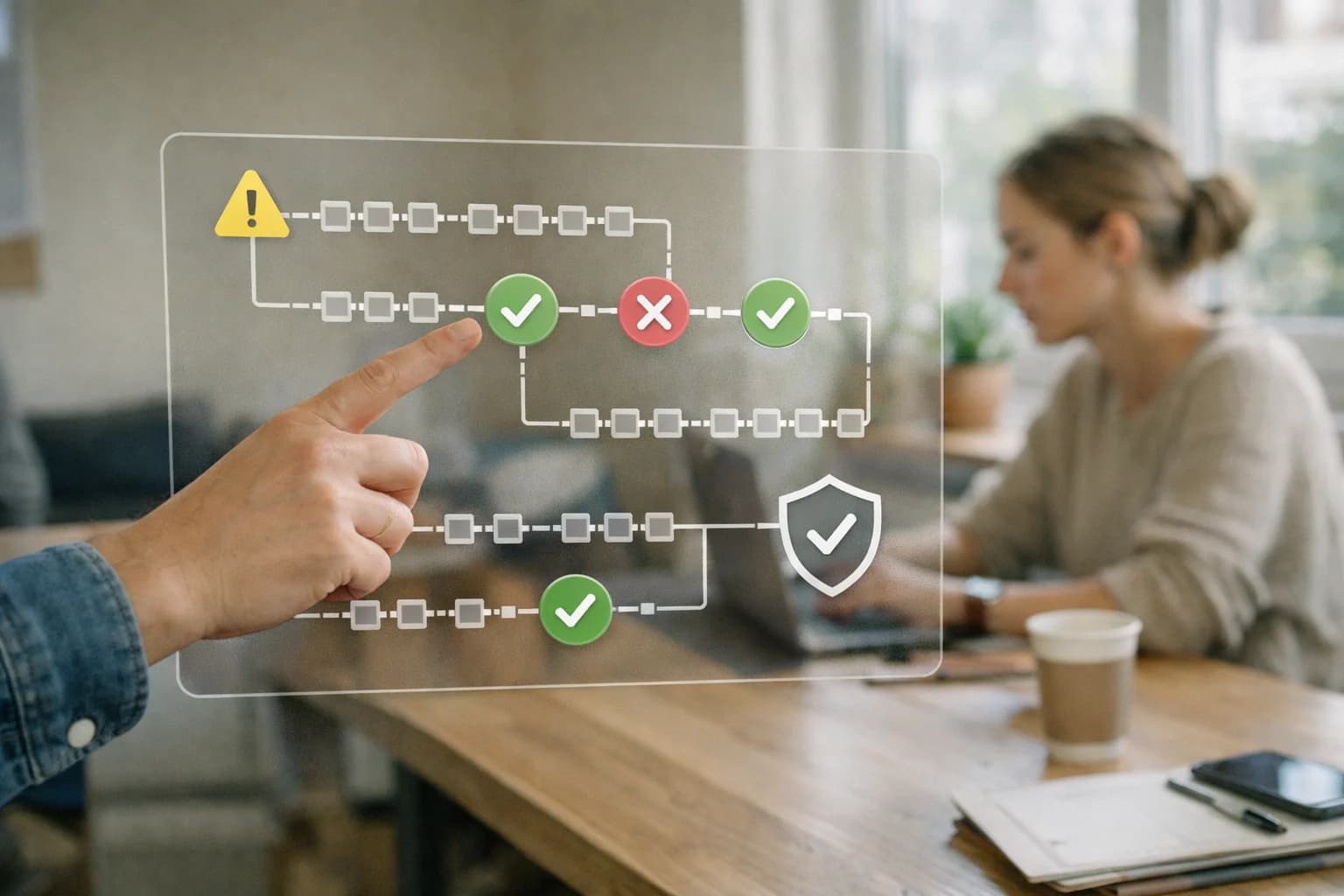
A HIPAA-aware technical blueprint for integrating AI into healthcare CRMs to automate patient follow-up, analyze provider referral patterns, and generate compliant communications, with built-in PHI security and audit trails.
A practical guide to embedding AI into healthcare CRMs like Salesforce Health Cloud, focusing on PHI security, compliant workflows, and operational impact.
In a healthcare CRM, AI integrations must be designed around Protected Health Information (PHI), specific patient journey objects, and provider workflows. Key integration surfaces include the Patient/Contact record for automated follow-up scheduling, the Case/Episode object for analyzing support interactions, and the Provider/Account object for tracking referral patterns and network performance. AI can act on data within these modules to trigger compliant communications, populate clinical or administrative notes, and surface insights without ever leaving the secure CRM environment, using its native audit trails and field-level security.
Implementation typically involves a secure middleware layer or a HIPAA-compliant AI gateway that sits between the CRM (e.g., Salesforce Health Cloud) and LLM APIs like Azure OpenAI or Anthropic. For example, an AI agent can be triggered by a Status change on a Patient Appointment record to draft a post-visit summary or a follow-up reminder, using a pre-approved, compliant prompt template. The generated content is then routed through a human-in-the-loop approval queue within the CRM before being sent via a secure channel like Twilio for Healthcare or the CRM's own messaging tools. This ensures all AI-touched PHI is logged, and any automation is governable by clinical or administrative staff.
Rollout should prioritize low-risk, high-volume workflows first, such as automating routine patient scheduling confirmations or generating first drafts of referral letters for provider review. Governance is critical: define clear data minimization policies for prompts (e.g., only sending de-identified data where possible), implement RBAC-gated access to AI features, and establish a regular review cycle for AI-generated outputs. The goal isn't to replace clinical judgment but to reduce the administrative burden on care coordinators and staff, turning manual data entry and communication tasks from hours into minutes while maintaining a strict chain of custody for all PHI.
HIPAA-AWARE INTEGRATION PATTERNS
Key CRM Surfaces for AI Integration in Healthcare
The Core Entity for AI Context
Patient and Contact objects are the primary surfaces for AI-driven insights and automation. AI models can analyze historical interaction data, appointment history, and attached documents (e.g., referrals, test results) to surface relevant information.
Key Integration Points:
Field Enrichment: Use AI to parse incoming faxes, scanned documents, or patient portal messages to auto-populate fields like Primary Diagnosis, Last Visit Date, or Preferred Pharmacy.
Risk Stratification: Implement background models that consume appointment no-show rates, billing history, and lab results to calculate a Patient Engagement Score or Clinical Risk Flag, stored in a custom field for care teams.
Compliance Layer: All AI interactions with these records must be logged via a dedicated AI_Audit_Trail__c object or similar, capturing the prompt, model used, PHI accessed (hashed), and the generated output for compliance reviews.
CRM-INTEGRATED AI WORKFLOWS
High-Value, HIPAA-Aware Use Cases
Integrating AI into healthcare CRMs requires a security-first approach. These patterns show where generative AI and automation can connect to patient and provider workflows within platforms like Salesforce Health Cloud or Zoho CRM, using PHI-aware tooling, audit trails, and compliant data handling.
01
Automated Patient Follow-Up Scheduling
AI analyzes discharge notes or visit summaries from the EHR, identifies required follow-up actions (e.g., specialist referral, lab work), and creates tasks or calendar events in the CRM. It can draft compliant SMS or email reminders via integrated communication channels, reducing no-shows and manual coordination.
Batch -> Real-time
Coordination speed
02
Provider Referral Pattern Analysis
An AI agent consumes referral data, appointment history, and outcomes from the CRM to identify high-performing referral networks. It surfaces insights to provider relations teams—suggesting which specialists or facilities yield the best patient outcomes for specific conditions—enabling data-driven network management.
1 sprint
Insight cycle
03
Compliant Communication Drafting
Using a HIPAA-compliant LLM endpoint, agents generate first drafts of patient letters, pre-visit instructions, or post-procedure summaries. The workflow pulls structured data from CRM Contact and Account records, ensures PHI is handled in-bound, and routes drafts for human review and approval before sending.
Hours -> Minutes
Draft generation
04
Intelligent Patient Intake Triage
When a new patient record is created or an intake form is submitted via web portal, AI reviews the unstructured data. It classifies urgency, suggests initial appointment type (e.g., new patient visit vs. consultation), and can auto-populate CRM fields to streamline scheduler and clinical team workflows.
Same day
Triage latency
05
PHI-Aware Data Enrichment & Cleansing
An automated, audit-logged process uses secure APIs to validate and standardize patient addresses, phone numbers, and insurance details against trusted sources. It flags potential duplicates across CRM records while maintaining a full lineage of changes for compliance reporting, ensuring clean master data for outreach and billing.
06
Care Gap Identification & Outreach
AI cross-references CRM patient panels with clinical quality measures (e.g., annual screenings, vaccinations) from connected EHR data. It identifies patients due for preventive care, segments them by preferred communication channel, and triggers personalized, compliant outreach campaigns through the CRM's marketing automation module.
Batch -> Real-time
Identification
HIPAA-COMPLIANT AUTOMATION PATTERNS
Example AI-Agent Workflows for Healthcare CRM
These workflows illustrate how AI agents can be integrated into healthcare CRMs (e.g., Salesforce Health Cloud, athenahealth, or custom platforms) to automate high-touch, compliance-sensitive processes. Each pattern assumes a secure architecture with PHI handling, audit trails, and optional human-in-the-loop review gates.
Trigger: A patient completes a telehealth visit or a provider marks an encounter as 'closed' in the EHR, which syncs to the CRM.
Agent Action:
The agent retrieves the patient's record, recent visit notes (via a de-identified summary from the EHR integration), and preferred communication channel from the CRM.
Using a HIPAA-compliant LLM, it drafts a personalized follow-up message. This includes:
A summary of next steps from the visit (e.g., "Dr. Smith recommended starting the new medication.")
Answers to common post-visit FAQs based on diagnosis codes.
A request to schedule any recommended follow-up appointments or lab work.
The message is queued for human review by a care coordinator if confidence scores are low or if the patient is flagged as high-risk.
Once approved, the agent sends the message via the patient's preferred channel (secure message, SMS) and logs the activity as a 'Completed Task' in the CRM.
If the message includes a scheduling link, the agent monitors for a click and can update the CRM with a new 'Appointment Scheduled' status.
Key Integration Points: CRM Task/Activity object, EHR webhook for visit closure, secure messaging API, appointment scheduling system.
SECURE, AUDITABLE, AND CONTROLLED
HIPAA-Aware Implementation Architecture
A blueprint for integrating AI into healthcare CRMs that enforces data privacy, maintains audit trails, and embeds governance into every workflow.
A production-ready architecture for AI in a healthcare CRM like Salesforce Health Cloud or athenahealth centers on a secure proxy layer. This layer sits between the CRM's APIs and the AI model (e.g., OpenAI, Anthropic), performing critical HIPAA-aware functions: stripping Protected Health Information (PHI) from prompts via pattern-matching and redaction, appending user and patient context as non-PHI metadata (e.g., user_role: "care_coordinator", workflow_type: "follow_up_scheduling"), enforcing strict data retention policies, and logging all requests with a unique correlation ID for end-to-end auditability. This ensures raw PHI never leaves your controlled environment, while the AI receives the contextual signal needed to generate useful, compliant outputs.
Within the CRM, AI actions are scoped to specific, high-value surfaces. For patient follow-up scheduling, an AI agent analyzes unstructured notes in a Case or Encounter object to suggest optimal timing and modality (e.g., "schedule telehealth in 3 days"), then creates a draft Task for staff review. For provider referral pattern analysis, the system processes Account and Opportunity data to identify high-performing referral networks, generating insights that populate a secure dashboard. For compliant communications, AI drafts patient-facing messages based on templates pre-approved by compliance, which are then queued in a Communication__c custom object for human review and approval before being sent via the CRM's email or SMS channels.
Rollout follows a phased, governance-first approach. Start with a pilot in a non-critical workflow, such as automating the summarization of provider referral letters into structured data for a Referral__c object. Implement a mandatory human-in-the-loop approval step for all AI-generated content touching patients. Access is controlled via the CRM's native Role-Based Access Control (RBAC), ensuring only authorized roles (e.g., Care Manager) can trigger AI actions. All AI interactions are logged to a dedicated AI_Audit_Log__c object, linking back to the source patient record and user for compliance reporting. This architecture allows healthcare organizations to capture AI's efficiency gains while maintaining the rigorous data stewardship required for PHI.
HIPAA-AWARE INTEGRATION PATTERNS
Code & Payload Examples
Automating Post-Visit Coordination
This pattern uses AI to analyze appointment notes in the CRM to generate and schedule compliant follow-ups. The agent parses the clinical summary, identifies required next steps (e.g., lab review in 2 weeks, medication check in 1 month), and interacts with the scheduling module via API.
Key integration points are the Appointment and Case/Service Ticket objects. The AI call should be triggered via a platform workflow after an appointment status is marked 'Completed'. The response must be logged as a timeline activity with a strict audit trail.
python
# Example: AI Agent generating follow-up tasks from appointment notes
import requests
# Pseudocode for a HIPAA-compliant API call to an inference service
def create_follow_up_from_note(appointment_id, clinical_note):
# Securely send de-identified note for processing
payload = {
"appointment_id": appointment_id,
"note_snippet": clinical_note, # Note: Real implementation requires BAA and proper PHI handling
"instruction": "Extract follow-up actions and suggested timeline."
}
headers = {
"Authorization": f"Bearer {os.getenv('AI_SERVICE_TOKEN')}",
"Content-Type": "application/json"
}
response = requests.post(
"https://api.your-ai-service.com/healthcare/followup",
json=payload,
headers=headers
)
ai_result = response.json()
# ai_result example: {"actions": [{"type": "lab_review", "due_in_days": 14}, ...]}
# Transform AI output into CRM tasks
for action in ai_result.get('actions', []):
create_crm_task(
subject=f"Follow-up: {action['type']}",
related_to=appointment_id,
due_date=calculate_date(action['due_in_days']),
priority="Medium",
description=f"AI-generated from appointment notes."
)
HEALTHCARE CRM AI INTEGRATION
Realistic Time Savings & Operational Impact
How HIPAA-aware AI integration transforms manual, time-intensive workflows in healthcare CRMs like Salesforce Health Cloud, reducing administrative burden and improving patient engagement.
Workflow / Metric
Before AI (Manual Process)
After AI (Assisted Automation)
Implementation & Governance Notes
Patient Follow-Up Scheduling
Manual calls/emails; 15-30 min per patient
AI-drafted, compliant outreach; 2-5 min review
AI generates messages from EHR visit data; staff review & send. Full audit trail.
Provider Referral Pattern Analysis
Monthly spreadsheet review; 4-8 hours
Automated dashboard with insights; 1 hour review
AI analyzes referral sources & trends from CRM data; surfaces growth opportunities.
Prior Authorization Status Updates
Staff checks portal/phones; 30+ min daily per case
AI monitors & summarizes status; 5 min review
AI integrates with payer portals (where allowed); flags delays. Human handles calls.
New Patient Intake & Data Entry
Manual form transcription; 20-45 min per patient
AI extracts & populates CRM fields; 5-10 min verification
AI parses uploaded forms/ID; staff verifies PHI. Reduces data errors.
AI cross-references CRM with appointment data; scores outreach priority.
Patient Communication Sentiment Triage
Reactive, manual flagging of concerned messages
Proactive sentiment scoring on inbound messages
AI analyzes patient portal/email tone; routes high-concern messages for immediate review.
HIPAA-COMPLIANT AI OPERATIONS
Governance, Security & Phased Rollout
A practical guide to deploying AI in healthcare CRMs with a focus on PHI security, auditability, and controlled adoption.
Integrating AI into a healthcare CRM like Salesforce Health Cloud or a specialized platform requires a zero-trust data architecture. PHI must never be sent directly to a third-party LLM API. Instead, implement a secure proxy layer that strips, tokenizes, or redacts protected fields (e.g., patient names, MRNs, specific dates) from payloads before external calls. All AI-generated outputs—such as draft follow-up messages or referral pattern summaries—should be written to a sandboxed staging object within the CRM, not directly to live patient records, requiring a clinician or staff review and approval before finalization. This creates a mandatory human-in-the-loop for all patient-facing communications.
A phased rollout mitigates risk and builds organizational trust. Start with internal efficiency use cases that have lower regulatory exposure: Phase 1 could focus on AI-powered provider data enrichment, automatically updating Account and Contact records for referring physicians from public sources. Phase 2 introduces administrative automation, such as AI-drafting templated, non-clinical follow-up letters for patient scheduling, which staff edit and approve. Phase 3, after establishing governance comfort, can tackle clinical-adjacent workflows, like analyzing de-identified Encounter data to surface referral pattern insights for network development teams.
Governance is enforced through the CRM's native tooling. Use field-level security (FLS) and profile/permission sets to control which roles can trigger AI actions or view AI-generated content. Implement platform events or a custom AI_Audit_Log__c object to record every AI interaction: which user/process initiated it, the de-identified prompt sent, the model used, the generated output, and the final human action (approved, edited, rejected). This creates a complete audit trail for compliance reviews. Finally, establish a regular model evaluation cadence to check for drift in output quality or unintended bias in suggestions, especially for workflows affecting patient access or care coordination.
Enabling Efficiency, Speed & Accuracy
Intelligent Analysis, Decision & Execution
We build AI systems for teams that need search across company data, workflow automation across tools, or AI features inside products and internal software.
HIPAA-AWARE IMPLEMENTATION
Healthcare CRM AI Integration: FAQ
Practical answers to common technical and operational questions about integrating AI into healthcare CRMs like Salesforce Health Cloud, athenahealth, and other patient-centric platforms while ensuring PHI security, auditability, and compliant workflows.
A production architecture for healthcare CRM AI must treat PHI with zero-trust principles.
Key Implementation Patterns:
De-identification at the Edge: Before any external API call, implement a de-identification service that strips or tokenizes 18 HIPAA identifiers (e.g., names, dates, MRNs) from the data payload. The AI model processes the anonymized context.
HIPAA-Compliant AI Vendors: Use model providers (OpenAI, Anthropic, Azure OpenAI) that offer a signed Business Associate Agreement (BAA). Route all API calls through their BAA-covered endpoints.
Private Networking & Data Residency: Ensure API traffic flows through private endpoints (AWS PrivateLink, Azure Private Link) and that the model inference and any vector data reside in a compliant cloud region (e.g., US-East for US PHI).
Audit Trail Integration: Log all AI interactions—including the de-identified prompt, model used, timestamp, and user—to a secure audit log within the CRM or a SIEM. This is critical for breach notification procedures.
Prompt & Output Guardrails: Implement pre-and-post-processing layers to detect and redact any accidentally returned PHI in the model's response before it's written back to the CRM record.
Example payload sent to the model API:
json
{
"deidentified_context": "Patient with chronic condition X had a follow-up call. Expressed concern about medication Y side effects. Requested earlier appointment.",
"task": "generate a templated follow-up message for scheduling",
"metadata": {
"crm_object_id": "a0x1R00000ABCDEF",
"user_role": "care_coordinator",
"audit_id": "audit_123456"
}
}
About the author
Prasad Kumkar
CEO & MD, Inference Systems
Prasad Kumkar is the CEO & MD of Inference Systems and writes about AI systems architecture, LLM infrastructure, model serving, evaluation, and production deployment. Over 5+ years, he has worked across computer vision models, L5 autonomous vehicle systems, and LLM research, with a focus on taking complex AI ideas into real-world engineering systems.
His work and writing cover AI systems, large language models, AI agents, multimodal systems, autonomous systems, inference optimization, RAG, evaluation, and production AI engineering.
Partnered with leading AI, data, and software stack.
How We Work
Custom AI workflows for your Business
One-fit-all AI don't work for modern businesses. At Inferensys, we aim to understand your business & custom requirements; which we use to define most efficient agentic workflows, the data, and the tools for your business.
The first call is a practical review of your use case and the right next step.