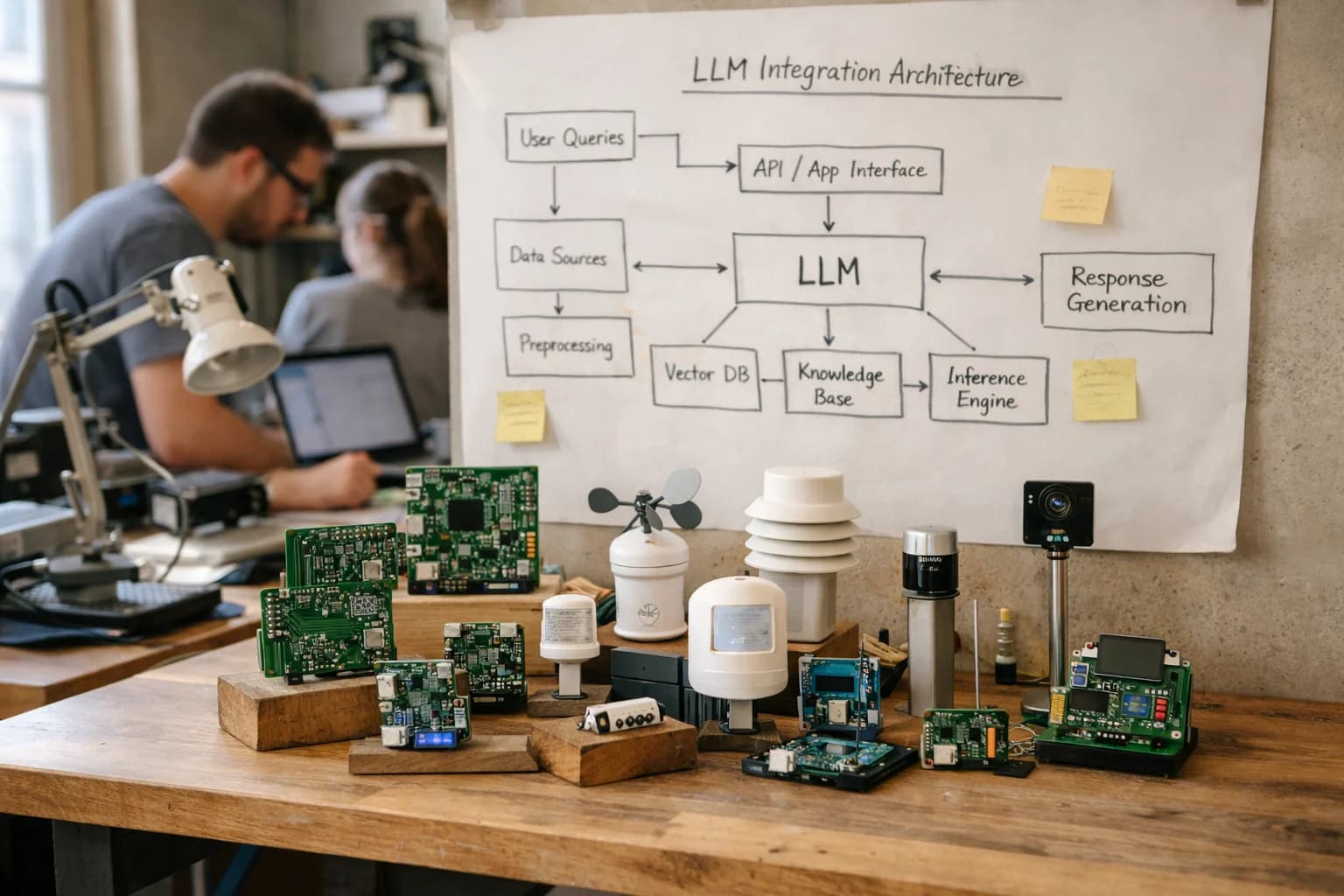
AI Integration for Clinical Trial Vendor Management
Automate CRO and vendor oversight by integrating AI with Veeva Vault CTMS, Oracle Clinical One, and financial systems for invoice validation, performance scoring, and deliverable tracking.
Where AI Fits into Clinical Trial Vendor Oversight
Integrating AI into clinical trial vendor management transforms oversight from reactive audits to proactive, data-driven partnership orchestration.
AI integration connects directly to the financial modules of your CTMS (like Veeva Vault CTMS or Oracle Clinical One) and procurement systems (like Coupa or SAP Ariba) to create a unified oversight layer. The AI ingests vendor performance KPIs (e.g., query resolution time, data entry accuracy, patient recruitment rates), invoice line items, deliverable timelines, and contract terms. It uses this data to automatically score vendor performance, flag invoice discrepancies against contracted rates, and predict potential delays in key milestones like database lock or monitoring report delivery.
Implementation focuses on API-driven workflows that trigger AI agents for specific review tasks. For example, when a new invoice is logged in the CTMS financial module, an AI agent is invoked via webhook to cross-reference it against the master service agreement, check for budget variances, and route it for approval—or automatically approve it if within tolerance. Similarly, an AI agent can be scheduled to analyze weekly data transfer files from a CRO's EDC system, detecting anomalies in data entry patterns or protocol deviation rates that warrant a performance discussion. This moves oversight from monthly manual spreadsheet reviews to continuous, automated surveillance.
Rollout requires a phased, governance-first approach. Start with a single vendor or study to instrument the data pipelines and define the performance scoring logic with stakeholder input. Critical to success is establishing clear review workflows: AI-generated alerts and scores should feed into existing operational rhythms, like the Clinical Operations Review Committee or Vendor Governance meetings, via automated dashboards or summary briefings. This ensures AI augments human decision-making without creating shadow processes. A key technical consideration is ensuring the AI system has audit trails for all its analyses and recommendations to maintain compliance and explainability for both internal audit and vendor relationships.
WHERE AI CONNECTS TO VENDOR DATA AND WORKFLOWS
Key Integration Surfaces in Your Clinical Tech Stack
Veeva Vault CTMS & Oracle Clinical One Vendor Objects
AI integration surfaces begin with the vendor master, site contract, and payment modules within your Clinical Trial Management System (CTMS). These modules hold the structured data needed for oversight.
Key integration points include:
Vendor Master Records: For analyzing performance history and compliance status.
Site Contract & Budget Objects: To monitor payment terms, deliverable schedules, and budget versus actuals.
Invoice and Payment Workflows: For automating accuracy checks against contracted activities and milestones.
By connecting AI agents to these CTMS APIs, you can trigger automated reviews of vendor performance scores, flag invoice discrepancies before payment, and forecast future spend based on enrollment and site activation timelines. This turns static vendor data into a dynamic management layer.
CLINICAL TRIAL VENDOR OVERSIGHT
High-Value AI Use Cases for Vendor Management
AI integration with CTMS and financial systems transforms vendor oversight from reactive review to proactive partnership management, automating performance analysis, compliance tracking, and financial reconciliation.
01
Automated Invoice & Contract Reconciliation
AI agents ingest vendor invoices from AP systems and cross-reference them against executed contracts and work orders in the CTMS (e.g., Veeva Vault CTMS). They flag mismatches in rates, hours, or deliverables, route discrepancies for review, and trigger approval workflows. This ensures payment accuracy and reduces manual finance team effort.
Hours -> Minutes
Review cycle
02
Vendor Performance Scoring & Alerting
Continuously analyze CTMS data—query resolution times, monitoring report quality, deliverable deadlines—to generate real-time performance scores for each CRO or vendor. AI models detect negative trends and automatically alert vendor relationship managers via Slack or email, enabling proactive conversations before issues impact the study timeline.
Batch -> Real-time
Performance visibility
03
Deliverable Timeline Forecasting
Predict potential delays in key vendor deliverables (e.g., data transfers, monitoring reports, CSR drafts) by analyzing historical performance, current workload from integrated systems, and study complexity. AI provides early-warning forecasts to study leadership, allowing for resource reallocation or timeline adjustments.
Weeks -> Days
Lead time on delays
04
Compliance & Audit Trail Synthesis
Automatically consolidate vendor-related audit trails from the CTMS, eTMF, and quality systems. AI summarizes training compliance, protocol deviation reports, and corrective actions for each vendor, generating a unified compliance dossier. This streamlines preparation for sponsor audits and regulatory inspections.
1 sprint
Audit prep time
05
Budget Burn-Rate & Forecasting
Integrate AI with the CTMS financial module and general ledger to monitor actual spend against the study budget per vendor. AI models forecast the quarterly burn rate and predict potential overruns based on enrollment pace and site activation delays, providing finance teams with actionable insights for budget revisions.
06
RFP & Scope of Work Analysis
Assist vendor procurement teams by using AI to analyze historical RFP responses, scope of work documents, and performance data. The system can highlight risk clauses, suggest negotiation points based on past outcomes, and draft sections of new work orders by referencing approved protocol elements from the CTMS.
CLINICAL TRIAL VENDOR MANAGEMENT
Example AI Agent Workflows for Vendor Operations
These workflows illustrate how AI agents, integrated with your CTMS (Veeva Vault, Oracle Clinical One) and financial systems, can automate oversight, reduce manual review, and optimize CRO and vendor partnerships.
Trigger: A vendor invoice is submitted via an accounts payable system (e.g., Coupa, SAP Ariba) or uploaded to the CTMS financial module.
Agent Action:
The agent extracts key terms: vendor name, PO number, service period, amount, and line-item descriptions.
It queries the CTMS (via API) for related study milestones, site activation dates, monitoring visit reports, and patient enrollment data for the same period and vendor.
Using a configured rules engine and LLM for semantic matching, the agent cross-references invoice line items against contracted deliverables and actual progress.
System Update:
Match Found: The agent logs the reconciliation, updates the payment tracker in the CTMS, and triggers an approval workflow in the financial system.
Discrepancy Detected: The agent flags the invoice for human review, attaching a summary of the mismatch (e.g., "Invoice claims 10 monitoring visits, but CTMS shows 8 completed") and routes it to the clinical operations finance lead.
Human Review Point: All flagged invoices and any invoice over a pre-defined threshold require manual sign-off before payment proceeds.
CONNECTING AI TO CTMS, FINANCIAL SYSTEMS, AND VENDOR PORTALS
Typical Implementation Architecture
A production-ready AI integration for vendor management connects your clinical trial management system (CTMS) to a secure orchestration layer that analyzes performance, invoices, and deliverables.
The integration is anchored on your CTMS (e.g., Veeva Vault CTMS, Oracle Clinical One) as the system of record for vendor contracts, site performance metrics, and deliverable timelines. An event-driven architecture uses webhooks or scheduled API calls from the CTMS to push key data—such as new invoice submissions, updated site monitoring reports, or missed milestone dates—to a secure AI orchestration platform. This platform, often deployed in your VPC or a compliant cloud, hosts the core logic: it retrieves relevant vendor performance history, cross-references contract terms from a connected CLM or document repository, and calls configured LLMs (like OpenAI or Anthropic) via secure, governed APIs to perform analysis.
A typical workflow for invoice accuracy review illustrates the pattern: 1) A new vendor invoice is logged in the CTMS financial module, triggering a webhook. 2) The AI orchestration service retrieves the associated contract, past payment history, and the site's actual activity data (e.g., patient visits completed). 3) An LLM agent, guided by a structured prompt, compares the invoice line items against the contract rate card and verified activities, flagging discrepancies like overbilling for uninitiated sites or incorrect pass-through costs. 4) The analysis, along with a confidence score and cited evidence, is posted back to the CTMS as a note on the invoice record and can automatically route the task to a clinical operations finance manager for approval or query.
Governance and rollout are critical. Implementations start with a single high-volume vendor or workflow (e.g., CRO performance scoring). Role-based access controls (RBAC) ensure only authorized study managers or finance users see AI-generated insights within the CTMS interface. All LLM calls are logged with full traceability—input context, prompt version, and output—for audit purposes. A human-in-the-loop approval step is mandated for any automated action, such as sending a query to a vendor portal. This phased approach de-risks the integration, allowing teams to validate AI accuracy on historical data before enabling real-time operations, and aligns with the incremental automation goals detailed in our guide on [/integrations/clinical-trial-management-platforms/ai-integration-for-clinical-trial-financial-management](AI Integration for Clinical Trial Financial Management).
AI INTEGRATION PATTERNS
Code and Payload Examples
Automated Scorecard Generation
An AI agent can be triggered by a nightly batch job to analyze vendor data from your CTMS (e.g., Veeva Vault CTMS) and financial systems. It aggregates metrics like query resolution time, invoice accuracy, and deliverable adherence, then generates a performance score and summary report.
python
# Example: Trigger AI analysis for a specific vendor
import requests
# 1. Fetch vendor operational data from CTMS API
ctms_response = requests.get(
f"{CTMS_BASE_URL}/api/vendors/{vendor_id}/metrics",
headers={"Authorization": f"Bearer {CTMS_API_KEY}"}
)
metrics = ctms_response.json()
# 2. Prepare payload for AI scoring service
ai_payload = {
"vendor_id": vendor_id,
"metrics": metrics,
"timeframe": "last_quarter",
"scoring_model": "vendor_performance_v1"
}
# 3. Call Inference Systems AI endpoint for scoring
ai_response = requests.post(
f"{INFERENCE_AI_URL}/score/vendor",
json=ai_payload,
headers={"X-API-Key": INFERENCE_API_KEY}
)
score_result = ai_response.json()
# 4. Write score and rationale back to CTMS vendor record
requests.patch(
f"{CTMS_BASE_URL}/api/vendors/{vendor_id}",
json={"ai_performance_score": score_result["score"],
"ai_score_rationale": score_result["rationale"]}
)
This pattern automates a manual monthly review, providing consistent, data-driven vendor oversight.
AI-Powered Vendor Oversight
Realistic Time Savings and Operational Impact
How AI integration transforms manual vendor management tasks within clinical trial operations, measured by time savings and operational improvements.
Vendor Management Task
Before AI (Manual Process)
After AI (Assisted Process)
Implementation Notes
Invoice Accuracy Review
2-4 hours per batch
30-45 minutes per batch
AI flags discrepancies for human review; integrates with CTMS financial modules and AP systems.
Performance Scorecard Generation
Next-day reporting after data consolidation
Same-day, automated dashboards
AI aggregates CTMS deliverable data, site feedback, and quality metrics into live scores.
Contract Deliverable Tracking
Weekly manual reconciliation
Real-time exception alerts
AI monitors CTMS milestones against contract terms; alerts on deviations.
CRO & Vendor Risk Assessment
Quarterly deep-dive analysis
Continuous monitoring with monthly summaries
AI analyzes trends in query rates, protocol deviations, and enrollment data for early risk signals.
Budget vs. Actual Spend Analysis
Monthly close process, 1-2 days
Weekly forecast updates, <4 hours
AI correlates CTMS site activity data with invoices to predict burn rates and flag overruns.
Vendor Onboarding Document Review
Manual checklist review, 3-5 hours per vendor
Assisted classification & gap analysis, 1 hour
AI parses regulatory documents, certificates, and MSAs against study requirements in the eTMF.
Change Order & Amendment Impact Analysis
Ad-hoc, manual financial modeling
Scenario modeling in <1 hour
AI uses historical contract and performance data to model cost and timeline impacts of scope changes.
CONTROLLED IMPLEMENTATION FOR REGULATED VENDOR PARTNERSHIPS
Governance, Security, and Phased Rollout
A structured approach to deploying AI for vendor oversight that prioritizes compliance, data integrity, and measurable impact.
Integrating AI into clinical trial vendor management requires a data-first architecture that connects securely to your CTMS (e.g., Veeva Vault CTMS, Oracle Clinical One) and financial systems. The core pattern involves extracting vendor performance data—such as invoice line items, deliverable dates, and quality metrics—via secure APIs or scheduled batch feeds into a governed data layer. Here, AI models analyze for anomalies, predict timelines, and generate vendor scorecards. All outputs are written back to the CTMS as structured notes or tasks, ensuring a single source of truth and a full audit trail within the existing system of record. This closed-loop design prevents data silos and maintains the CTMS as the authoritative workflow engine.
A phased rollout is critical for adoption and risk management. Phase 1 typically focuses on a single, high-volume workflow, such as automated invoice accuracy review, where AI cross-references CTMS site payment terms against submitted invoices to flag discrepancies for finance review. Phase 2 expands to predictive analytics, using historical deliverable data to forecast vendor performance and trigger proactive check-ins from the vendor management team. Phase 3 introduces an AI copilot for vendor managers, integrated directly into the CTMS interface, that summarizes vendor health, suggests negotiation points, and drafts communications. Each phase includes defined success metrics (e.g., reduction in invoice reconciliation time, improvement in on-time deliverable rate) and a human-in-the-loop approval step before any automated action is taken.
Governance is built around role-based access control (RBAC) native to your CTMS, ensuring only authorized users (e.g., Vendor Relationship Managers, Clinical Operations Finance) can view AI-generated insights or initiate AI-triggered workflows. All AI interactions are logged, linking prompts, source data, and outputs to specific users and vendor records for complete traceability. For sensitive financial or performance predictions, a confidence scoring mechanism is applied; low-confidence recommendations are automatically routed for human review. This controlled, incremental approach de-risks the integration, aligns with GCP and financial compliance requirements, and delivers tangible ROI at each step without disrupting core vendor operations.
Enabling Efficiency, Speed & Accuracy
Intelligent Analysis, Decision & Execution
We build AI systems for teams that need search across company data, workflow automation across tools, or AI features inside products and internal software.
IMPLEMENTATION AND WORKFLOW DETAILS
Frequently Asked Questions
Common questions about integrating AI agents and workflows with clinical trial vendor management systems, focusing on practical architecture, data flows, and operational governance.
AI integration typically uses a middleware layer or agent orchestration platform that connects via APIs to your core systems.
Typical Data Flow:
Trigger: Scheduled job or webhook from your CTMS (e.g., Veeva Vault CTMS, Oracle Clinical One) signals a new vendor deliverable is due, an invoice is submitted, or a performance milestone is reached.
Context Pull: The AI agent retrieves relevant context via API:
Vendor contract terms and SOW from the CTMS or CLM system.
Historical performance data (past deliverables, query rates, monitoring findings).
Current invoice line items and payment history from the financial module or ERP.
Agent Action: A specialized agent analyzes the data:
Performance Agent: Compares deliverable timelines against contract, flags risks.
Invoice Agent: Matches invoice charges to approved activities, checks for rate compliance.
System Update: Results are written back via API or presented in a dashboard:
Risk score appended to vendor record in CTMS.
Annotated invoice routed for approval or flagged for dispute in the AP system.
Automated alert or task created for the Vendor Manager.
Key APIs: CTMS vendor/contract modules, financial system GL/invoice endpoints, and sometimes document repositories for contract PDFs.
About the author
Prasad Kumkar
CEO & MD, Inference Systems
Prasad Kumkar is the CEO & MD of Inference Systems and writes about AI systems architecture, LLM infrastructure, model serving, evaluation, and production deployment. Over 5+ years, he has worked across computer vision models, L5 autonomous vehicle systems, and LLM research, with a focus on taking complex AI ideas into real-world engineering systems.
His work and writing cover AI systems, large language models, AI agents, multimodal systems, autonomous systems, inference optimization, RAG, evaluation, and production AI engineering.
Partnered with leading AI, data, and software stack.
How We Work
Custom AI workflows for your Business
One-fit-all AI don't work for modern businesses. At Inferensys, we aim to understand your business & custom requirements; which we use to define most efficient agentic workflows, the data, and the tools for your business.
The first call is a practical review of your use case and the right next step.