Cloud resilience is a marketing illusion for AI workloads. A single-region dependency in providers like AWS, Azure, or Google Cloud creates a catastrophic single point of failure for model inference and data pipelines.
Blog
The Cost of Centralized AI: A Single Point of Failure
Relying on a single cloud region for critical AI services creates unacceptable business continuity and resilience risks. This analysis deconstructs the operational, financial, and strategic costs of centralized AI and argues for a hybrid cloud architecture as the only viable path to resilience.
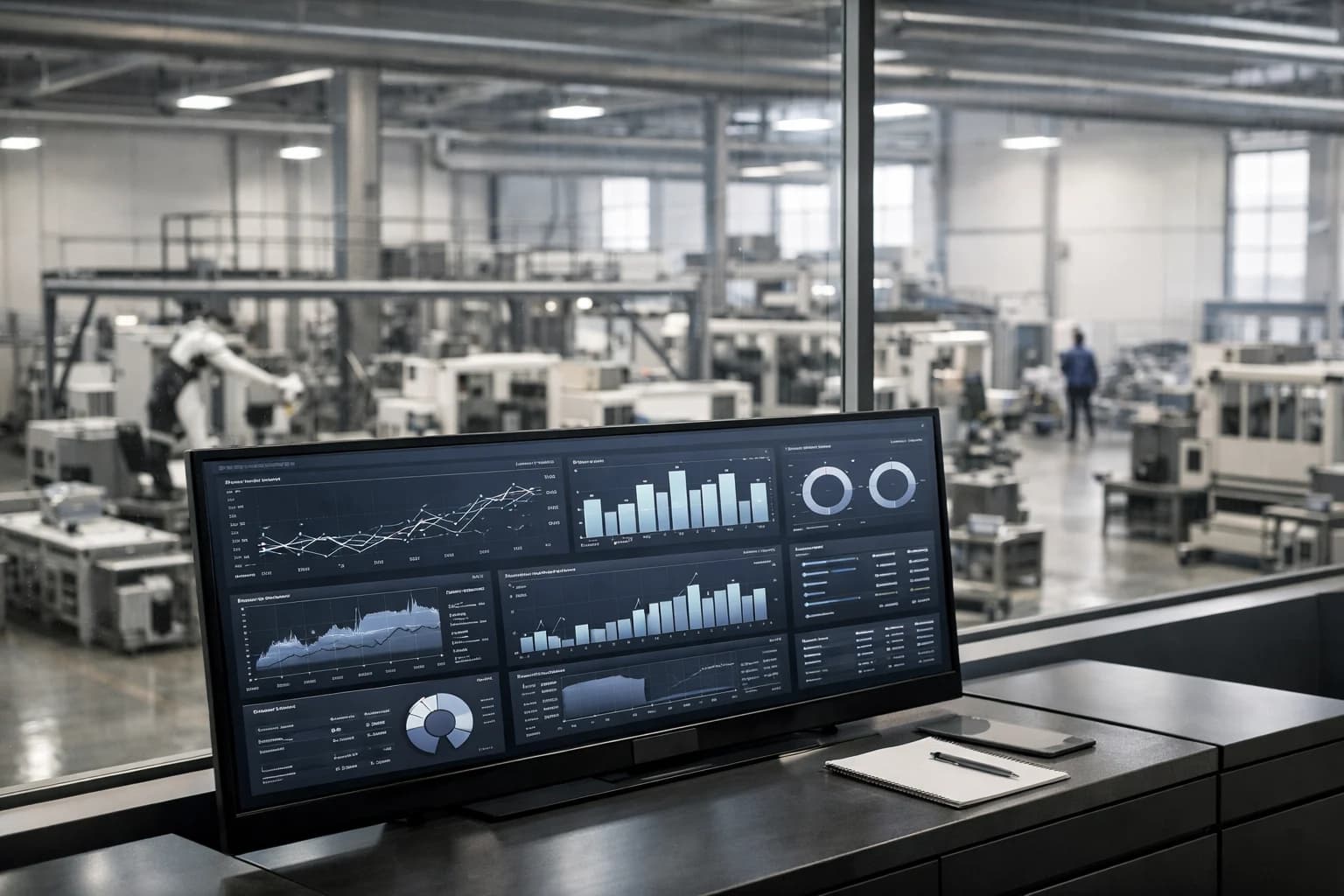
THE SINGLE POINT OF FAILURE
The Illusion of Cloud Resilience
Relying on a single cloud region for AI services creates unacceptable business continuity risks that pure-cloud marketing obscures.
Regional outages are inevitable and systemic. When a cloud region fails, every AI service dependent on it—from vector databases like Pinecone or Weaviate to fine-tuned LLM endpoints—becomes unavailable. This contrasts with a hybrid cloud architecture that provides genuine failover.
Disaster recovery plans fail under AI scale. Cloud-native replication across zones within a region does not protect against correlated failures or the data transfer latency that breaks real-time applications. A hybrid strategy with on-premises inference anchors business continuity.
Evidence: A 2023 multi-hour outage in a major US cloud region took down AI-powered customer service and fraud detection for hundreds of enterprises, demonstrating that centralized AI is fragile by design.
THE COST OF A SINGLE POINT OF FAILURE
The Centralization Trap: Three Unavoidable Trends
Relying on a single cloud region for critical AI services creates unacceptable business continuity and resilience risks.
01
The Problem: Catastrophic Cost Spikes from Unplanned Egress
A monolithic cloud architecture for AI creates a financial trap. Egress fees for moving data or models become a variable, uncontrollable cost center. Retraining a model or responding to a data sovereignty request can trigger a multi-million dollar bill overnight, with no architectural recourse.
- Representative Cost: Unplanned data migration can incur $0.05 - $0.20 per GB in egress fees.
- Strategic Impact: Cripples model iteration and makes cloud exit strategies financially prohibitive.
- Architectural Debt: Creates a vendor lock-in scenario where your AI roadmap is held hostage by a single provider's pricing.
$10M+
Potential Egress Cost
0%
Cost Control
CENTRALIZED VS. HYBRID AI ARCHITECTURE
The Real Cost of a Single Point of Failure
A quantitative comparison of the operational, financial, and strategic risks inherent in a single-cloud AI strategy versus a resilient hybrid architecture.
| Risk Dimension | Single-Cloud AI (Point of Failure) | Hybrid Cloud AI (Resilient Architecture) | Strategic Impact |
|---|---|---|---|
Regional Outage Downtime Cost | $500K+/hour | < $50K/hour |
THE SINGLE POINT OF FAILURE
Anatomy of a Catastrophic Cascade
A centralized AI architecture creates a domino effect where one failure can cripple your entire business.
A single cloud region failure will halt all AI-dependent business processes, from customer service chatbots to real-time fraud detection. This is not a hypothetical risk; it is the inevitable consequence of a monolithic architecture that centralizes model serving, vector databases like Pinecone or Weaviate, and data pipelines in one location.
The cascade is non-linear. A regional outage in a provider like AWS us-east-1 doesn't just stop API calls. It triggers downstream failures in dependent systems, creating a governance and audit blackout where you cannot monitor model drift or explain decisions. Your AI TRiSM framework becomes instantly useless.
Contrast this with a hybrid cloud approach, where critical inference and sensitive data remain on-premises. This architecture creates natural circuit breakers, isolating failures and maintaining core operations. The business continuity risk of a centralized model is a direct, calculable cost of forgoing a hybrid cloud foundation.
Evidence: Major cloud providers experience significant regional outages annually. During these events, companies relying solely on services like Azure OpenAI or Google Vertex AI for inference face total service disruption, while those with hybrid architectures maintain core functionality using on-premises GPU clusters and local vector searches.
THE COST OF A SINGLE POINT OF FAILURE
When Centralized AI Broke: Real-World Failures
Relying on a monolithic cloud architecture for critical AI services creates unacceptable business continuity and resilience risks. These are not hypotheticals.
01
The Problem: Region-Wide Cloud Outage
A single availability zone failure in a major public cloud can take down an entire continent's AI services for hours. This isn't downtime; it's a complete operational halt.
- Cascading Failure: API calls to foundational models like GPT-4 or Claude fail, breaking all dependent applications.
- No Fallback: A cloud-only architecture has no built-in redundancy, leaving zero recourse during an outage.
- Business Impact: Real-time services in finance, customer support, and logistics freeze, incurring direct revenue loss and contractual penalties.
4-12 hrs
Typical Outage
$500K+/hr
Potential Loss
THE SINGLE-POINT FAILURE
The Cloud Provider Rebuttal (And Why It's Wrong)
Cloud providers argue for consolidation, but this creates an unacceptable resilience risk for mission-critical AI.
Cloud providers argue consolidation simplifies operations, but this creates a single point of failure for AI-dependent business processes. A regional outage in a centralized cloud can halt all model inference, RAG systems, and agentic workflows.
The rebuttal hinges on managed service resilience, but proprietary services like AWS Bedrock or Azure OpenAI are architectural black boxes. You cannot implement true active-active failover or granular disaster recovery when the control plane is outside your perimeter.
Compare this to a hybrid control plane. Orchestrating models across on-premises Kubernetes and multiple clouds using MLflow or Kubeflow provides deterministic failover. Your AI agents and vector databases like Pinecone or Weaviate maintain uptime.
Evidence: A 2023 cloud region outage took a major retailer's dynamic pricing engine offline for hours, costing millions. A hybrid architecture with on-premises inference for core logic would have maintained operations. For a deeper architectural analysis, see our guide on hybrid cloud AI architecture.
The financial argument for consolidation ignores risk. While cloud SLAs promise high availability, they credit service fees, not business losses. Hybrid infrastructure is an insurance policy against total operational collapse, a core principle of AI TRiSM: Trust, Risk, and Security Management.
A SINGLE POINT OF FAILURE
Key Takeaways: The Cost of Centralized AI
Relying on a single cloud region for critical AI services creates unacceptable business continuity and resilience risks. The monolithic cloud model is a strategic liability.
01
The Problem: Vendor Lock-In as a Strategic Liability
Comitting to a single cloud's proprietary AI stack (e.g., AWS Bedrock, Google Vertex AI) surrenders negotiating power and makes your AI roadmap a hostage to a third party's priorities and pricing.
- Financial Trap: Egress fees for model migration or data repatriation can reach millions annually, making exit cost-prohibitive.
- Innovation Lag: You are locked out of best-in-class tools and accelerators from other providers, slowing competitive advantage.
- Roadmap Risk: Your critical path depends on a vendor's release schedule and service longevity.
30-50%
Cost Premium
Zero
Portability
THE SINGLE POINT OF FAILURE
Architect for Resilience, Not Convenience
Relying on a single cloud region for AI services creates unacceptable business continuity risks that a hybrid cloud architecture solves.
A centralized AI architecture is a single point of failure. When your model inference, training data, and vector databases like Pinecone or Weaviate reside in one cloud region, an outage halts all AI-dependent operations.
Cloud provider outages are inevitable, not hypothetical. AWS us-east-1, Azure East US, and Google Cloud's us-central1 have all experienced major disruptions. A monolithic cloud strategy bets your AI's availability on a third party's uptime SLA.
Resilience requires geographic and infrastructural distribution. A hybrid architecture keeps mission-critical inference on-premises or in a second region, ensuring continuity. This is the core principle behind designing for Inference Economics.
Evidence: Major cloud outages cost over $100,000 per hour. For AI-driven trading, customer service, or manufacturing, this cost is catastrophic. A hybrid approach with a unified control plane provides active-active failover that pure-cloud deployments cannot match.

About the author
Prasad Kumkar
CEO & MD, Inference Systems
Prasad Kumkar is the CEO & MD of Inference Systems and writes about AI systems architecture, LLM infrastructure, model serving, evaluation, and production deployment. Over 5+ years, he has worked across computer vision models, L5 autonomous vehicle systems, and LLM research, with a focus on taking complex AI ideas into real-world engineering systems.
His work and writing cover AI systems, large language models, AI agents, multimodal systems, autonomous systems, inference optimization, RAG, evaluation, and production AI engineering.
LinkedIn profile
Limited slots