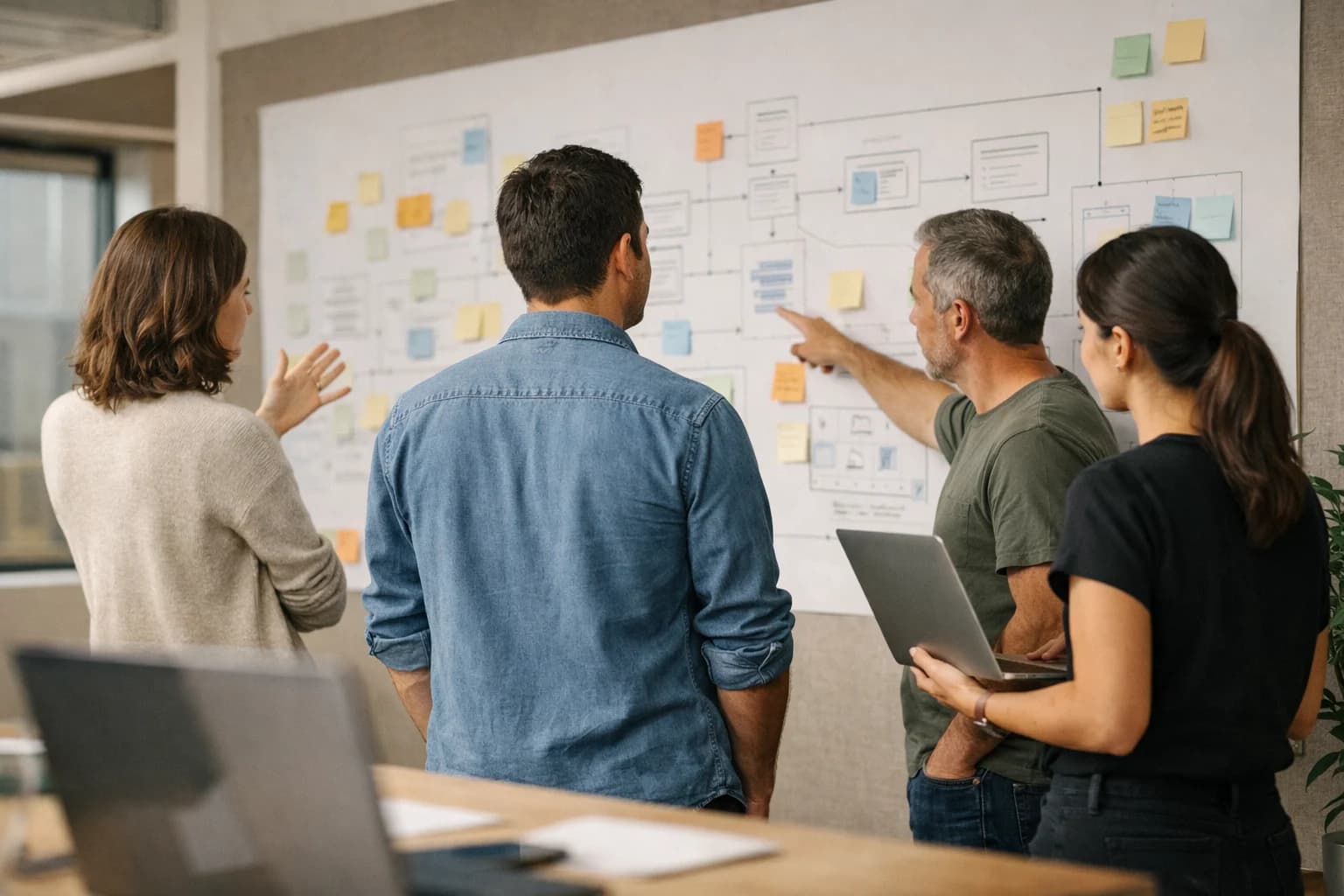
Architect large-scale urban digital twins to simulate infrastructure changes, optimize resources, and improve citizen services.
Services

Architect large-scale urban digital twins to simulate infrastructure changes, optimize resources, and improve citizen services.
Modern cities face immense pressure: aging infrastructure, traffic congestion, and inefficient resource allocation. Traditional planning is reactive and slow. Our Smart City Digital Twin Architecture provides a dynamic, real-time virtual replica of your urban environment, enabling proactive governance and data-driven decision-making.
We architect systems that integrate disparate data sources into a unified operational view:
BIM/GIS data integration for accurate physical representation.Move from static maps to a living, breathing simulation of your city. Test infrastructure projects, zoning changes, and disaster responses in a risk-free digital environment before committing capital.
Deliverables include:
API-first design.IoT deployments.Our Smart City Digital Twin Architecture delivers concrete, data-driven results that empower city leadership to make confident, future-proof decisions. We focus on quantifiable improvements in efficiency, cost savings, and citizen services.
Simulate the long-term impact of capital projects—like new transit lines or utility upgrades—before breaking ground. Our digital twins model 20-year lifecycle costs and benefits, reducing budget overruns by identifying the highest-ROI initiatives.
Deploy real-time traffic simulation that integrates live signals, public transit, and event data. Optimize signal timing and routing dynamically, reducing average commute times and lowering city-wide emissions.
Model water, power, and waste networks under stress from population growth or climate events. Our predictive maintenance AI forecasts equipment failures weeks in advance, enabling proactive repairs that prevent service disruptions.
Run high-fidelity simulations of natural disasters or major public events. Stress-test evacuation routes, resource allocation, and inter-agency coordination to improve preparedness and reduce public safety risks.
Visualize the impact of new parks, libraries, or housing developments on community well-being. Use the twin to communicate complex plans transparently, increasing public trust and participation in the planning process.
Continuously optimize municipal building HVAC, street lighting, and fleet operations based on real-time occupancy, weather, and usage patterns. Achieve significant reductions in energy consumption and operational overhead.
A transparent breakdown of our phased engagement model for building a scalable, AI-powered urban digital twin. Each phase delivers concrete, testable outcomes to ensure alignment and continuous value delivery.
| Phase & Key Deliverables | Timeline | Outcome |
|---|---|---|
Phase 1: Foundational Architecture & Data Strategy | 2-3 weeks | Technical blueprint, data ingestion pipeline MVP, and prioritized use case roadmap |
Phase 2: Core Platform Development & IoT Integration | 4-6 weeks | Operational digital twin core with live sensor feeds (traffic, utilities) and basic simulation engine |
Phase 3: AI Model Integration & Advanced Simulation | 3-4 weeks | Deployment of predictive models for traffic flow, utility demand, and interactive "what-if" scenario testing |
Phase 4: Pilot Deployment & Stakeholder Dashboard | 2-3 weeks | Live pilot in a defined city district with operational dashboards for planners and civil engineers |
Phase 5: Scaling, Security & Handoff | 2-3 weeks | Scaled architecture documentation, full security audit, and knowledge transfer for your operations team |
Total Project Timeline | 13-19 weeks | Fully operational, AI-integrated smart city digital twin platform |
Ongoing Support & Evolution | Post-launch | Optional SLA for model retraining, feature expansion, and integration with new data sources |
We architect the foundational data, simulation, and intelligence layers that transform disparate city systems into a unified, predictive digital twin. Our focus is on delivering measurable operational outcomes for planners and engineers.
Unify live data streams from traffic cameras, utility sensors, and public service APIs into a single, coherent data fabric. We implement semantic data models and context-aware ingestion pipelines that power accurate, real-time simulations.
Deploy physics-based simulation engines capable of modeling traffic flow, utility demand, and pedestrian movement. This enables city planners to run 'what-if' scenarios for infrastructure changes with quantifiable impact predictions.
Integrate machine learning models that analyze historical and real-time data to forecast system failures, optimize resource allocation (e.g., energy, water), and automatically flag anomalies in public service operations.
Architect collaborative networks of specialized AI agents that autonomously manage subsystems—like dynamic traffic light coordination or emergency service routing—creating a self-optimizing urban nervous system.
Engineer data pipelines and storage with built-in geopolitical compliance, ensuring citizen data remains within jurisdictional boundaries. We implement confidential computing enclaves for sensitive AI processing.
Deliver a robust, documented API layer and SDKs that enable internal city IT teams and approved third-party developers to build applications, dashboards, and services on top of the digital twin platform.
Get clear answers on timelines, security, costs, and technical integration for deploying a city-scale digital twin.
Contact
Share what you are building, where you need help, and what needs to ship next. We will reply with the right next step.
01
NDA available
We can start under NDA when the work requires it.
02
Direct team access
You speak directly with the team doing the technical work.
03
Clear next step
We reply with a practical recommendation on scope, implementation, or rollout.
30m
working session
Direct
team access