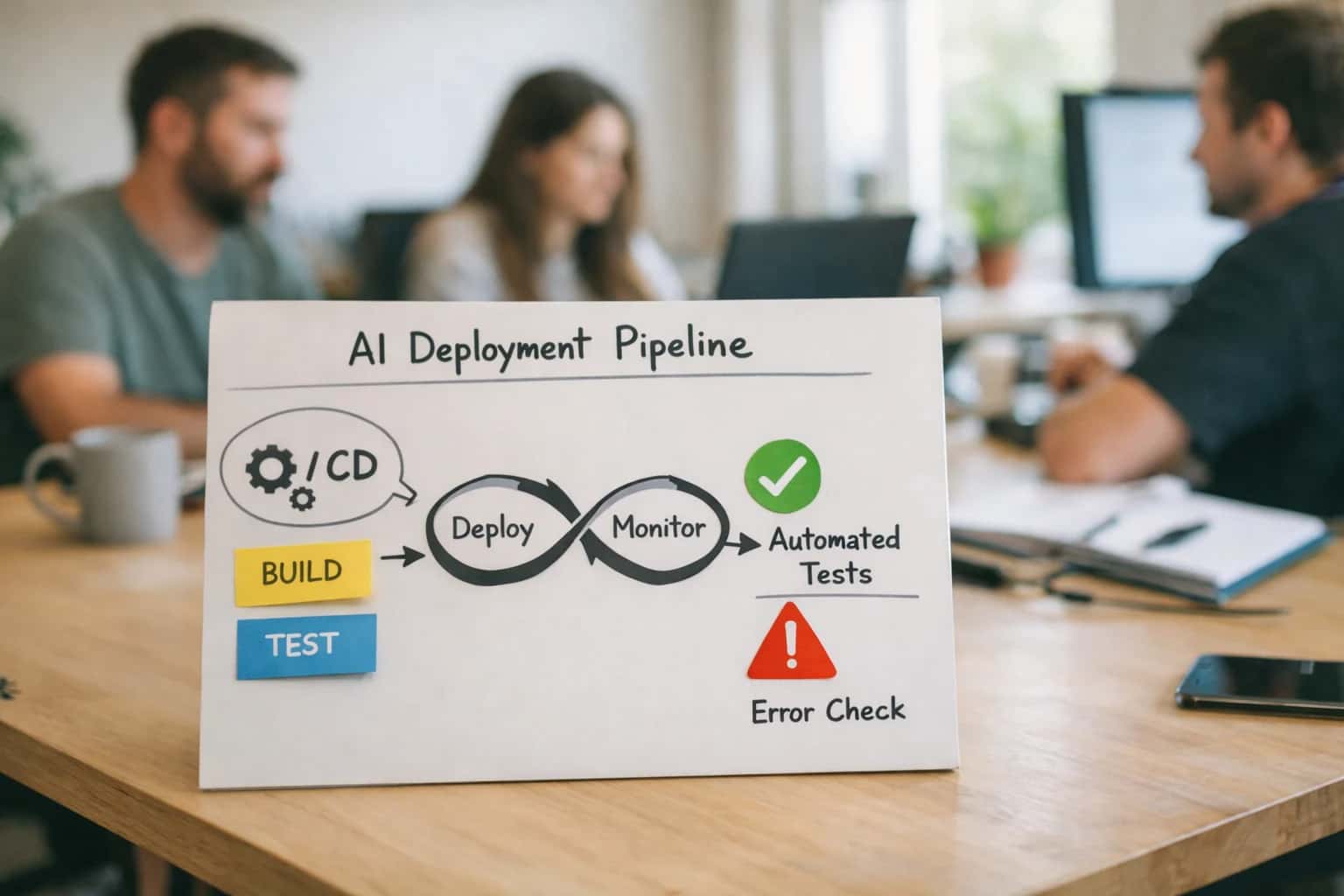
Harness Cloud Cost Management (CCM) excels at providing cost visibility and optimization directly within the CI/CD pipeline because it is built as a core module of the Harness Software Delivery Platform. This native integration enables GitOps-driven cost governance, where cost policies can be defined as code and enforced automatically during deployment. For example, teams can set automated spend limits per service or environment, triggering pipeline gates or rollbacks when thresholds are breached, directly linking financial accountability to engineering workflows.

Comparison
Harness Cloud Cost Management vs Kubecost
A technical comparison of two leading DevOps-integrated cloud cost management platforms, focusing on CI/CD pipeline cost visibility, GitOps-driven optimization, and automated governance for cloud-native and AI application deployments.
THE ANALYSIS
Introduction
A strategic comparison of two leading platforms for managing cloud and Kubernetes costs in DevOps-native environments.
Kubecost takes a different approach by focusing on deep, real-time Kubernetes cost allocation and optimization. This results in superior granularity for containerized environments, offering detailed cost breakdowns by namespace, deployment, and even individual pod. Its strength lies in providing immediate, actionable insights for platform engineering and FinOps teams, such as identifying underutilized resources with recommendations for rightsizing or leveraging spot instances, which can lead to immediate cost reductions of 40-60% on idle cluster capacity.
The key trade-off: If your priority is enforcing cost governance as an integral part of the software delivery lifecycle and developer workflow, choose Harness CCM. Its deep CI/CD integration makes cost a first-class citizen in the deployment process. If you prioritize maximizing Kubernetes cost efficiency and providing detailed, real-time cost allocation for platform teams managing complex, multi-cluster environments, choose Kubecost. For a broader view of the ITFM landscape, see our comparison of IBM Apptio vs Upland ComSci and for a deeper dive on Kubernetes optimization, explore CAST AI vs Kubecost.
HEAD-TO-HEAD COMPARISON
Harness CCM vs Kubecost: Feature Comparison
Direct comparison of two DevOps-integrated cloud cost tools for Kubernetes and AI workloads.
| Metric / Feature | Harness Cloud Cost Management (CCM) | Kubecost |
|---|---|---|
Kubernetes Cost Allocation | ||
CI/CD Pipeline Cost Visibility | ||
GitOps-Driven Optimization | ||
Automated Rightsizing Recommendations | ||
Real-Time Anomaly Detection | ||
AWS Savings Plans & RI Management | ||
Multi-Cloud Support (AWS, GCP, Azure) | ||
On-Prem / Air-Gapped Deployment | ||
Integration with ServiceNow, Jira | ||
Open Source Core Offering |
HARNESS CLOUD COST MANAGEMENT VS KUBECOST
TL;DR Summary
Key strengths and trade-offs at a glance for DevOps-integrated cloud cost tools.
01
Choose Harness for CI/CD & GitOps Cost Governance
Deep CI/CD Pipeline Integration: Native cost visibility and policy gates directly within Harness CD stages. This matters for enforcing cost controls (e.g., blocking deployments that exceed budget thresholds) as part of GitOps workflows. Offers automated governance for cloud-native and AI application deployments.
02
Choose Kubecost for Kubernetes-First Granularity
Unmatched K8s Cost Allocation: Provides granular, real-time cost breakdowns by namespace, deployment, service, and pod. This matters for engineering teams needing to attribute containerized AI workload spend (e.g., GPU-powered inference pods) to specific teams, projects, or business units for accurate showback.
03
Choose Harness for Unified Platform Experience
Single-Pane-of-Glass for DevOps: Integrates cost management with deployment, security, and feature flags. This matters for organizations using Harness as their primary DevOps platform, seeking to reduce tool sprawly and correlate cost data with deployment frequency and stability metrics.
04
Choose Kubecost for Real-Time Optimization & Savings
Proactive Cost Recommendations: Continuously analyzes cluster resource requests vs. usage to provide actionable rightsizing advice and spot instance recommendations. This matters for FinOps teams focused on immediate, automated cost reduction for dynamic AI training and batch inference workloads. For a deeper dive on automated rightsizing, see our comparison of CAST AI vs Kubecost.
CHOOSE YOUR PRIORITY
Harness vs Kubecost
Harness for DevOps Teams
Verdict: The superior choice for teams deeply embedded in GitOps and CI/CD pipelines. Strengths: Harness excels at Git-triggered cost governance. You can define cost policies (e.g., budget alerts, resource caps) as code in your Git repository, and the CI/CD pipeline enforces them automatically. This provides shift-left FinOps, preventing costly deployments before they reach production. Its strength is automated, pipeline-native optimization. Considerations: Its cloud cost management is part of a broader platform; teams solely focused on Kubernetes cost dashboards may find it more integrated than desired.
Kubecost for DevOps Teams
Verdict: The go-to for real-time Kubernetes cost visibility and granular cluster optimization. Strengths: Kubecost provides unmatched granularity for containerized environments. It shows cost per namespace, deployment, and even pod, with detailed metrics on resource efficiency (wasted CPU/RAM). Its real-time data and automated recommendations (rightsizing, spot instance usage) are directly actionable for platform engineers. It's the specialist tool for K8s cost ops. Considerations: While it integrates with CI/CD, its governance is more observational and alert-based rather than pipeline-enforced.
Enabling Efficiency, Speed & Accuracy
Intelligent Analysis, Decision & Execution
We build AI systems for teams that need search across company data, workflow automation across tools, or AI features inside products and internal software.
Talk to Us
Search across company data
Give teams answers from docs, tickets, runbooks, and product data with sources and permissions.
Useful when people spend too long searching or get different answers from different systems.
Enterprise searchRAGPermissions
Read more
Automate internal workflows
Use AI to route work, draft outputs, trigger actions, and keep approvals and logs in place.
Useful when repetitive work moves across multiple tools and teams.
AI agentsWorkflow automationGovernance
Read more
Add AI to products and internal tools
Build assistants, guided actions, or decision support into the software your team or customers already use.
Useful when AI needs to be part of the product, not a separate tool.
AI integrationDecision supportModel routing
Read moreTHE ANALYSIS
Final Verdict
Choosing between Harness Cloud Cost Management and Kubecost hinges on whether your primary goal is integrated DevOps optimization or comprehensive Kubernetes cost governance.
Harness Cloud Cost Management excels at providing cost visibility and automated optimization directly within CI/CD pipelines because it is built into a unified Software Delivery Platform. For example, its GitOps-driven policies can automatically scale down non-production environments or block deployments that exceed cost thresholds, directly linking cloud spend to developer workflows. This deep integration makes it ideal for organizations practicing DevSecOps who want to shift-left FinOps.
Kubecost takes a different approach by providing deep, real-time cost allocation and optimization specifically for Kubernetes clusters, regardless of the CI/CD toolchain. This results in superior granularity for containerized workloads—showing cost per namespace, deployment, or even pod—but requires more manual integration into broader financial processes. Its strength is providing a single pane of glass for Kubernetes cost governance across multiple clusters and clouds.
The key trade-off: If your priority is seamless integration of cost controls into developer workflows and automated pipelines, choose Harness. Its strength is proactive, pipeline-embedded governance. If you prioritize deep, specialized cost intelligence and showback for complex, multi-cluster Kubernetes environments, choose Kubecost. For a broader view on managing the financial lifecycle of AI systems, explore our pillar on Token-Aware FinOps and AI Cost Management.

About the author
Prasad Kumkar
CEO & MD, Inference Systems
Prasad Kumkar is the CEO & MD of Inference Systems and writes about AI systems architecture, LLM infrastructure, model serving, evaluation, and production deployment. Over 5+ years, he has worked across computer vision models, L5 autonomous vehicle systems, and LLM research, with a focus on taking complex AI ideas into real-world engineering systems.
His work and writing cover AI systems, large language models, AI agents, multimodal systems, autonomous systems, inference optimization, RAG, evaluation, and production AI engineering.
LinkedIn
Limited slotsGet a Free AI Consultation
Partnered with leading AI, data, and software stack.





How We Work
Custom AI workflows for your Business
One-fit-all AI don't work for modern businesses. At Inferensys, we aim to understand your business & custom requirements; which we use to define most efficient agentic workflows, the data, and the tools for your business.
01
Review the use case
We understand the task, the users, and where AI can actually help.
Read more02
Pick the right approach
We define what needs search, automation, or product integration.
Read more03
Build the first useful version
We implement the part that proves the value first.
Read more04
Improve from there
We add the checks and visibility needed to keep it useful.
Read moreThe first call is a practical review of your use case and the right next step.
Talk to Us