AWS IoT Greengrass excels at deep integration within the AWS ecosystem, offering a unified experience for managing edge devices, cloud resources, and AI models. Its strength lies in leveraging native AWS services like SageMaker for model training, Lambda for serverless edge functions, and IoT Core for device management. For example, Greengrass seamlessly deploys models trained in SageMaker Neo, which are automatically optimized for specific edge hardware, reducing inference latency by up to 25% compared to generic containers. This makes it a powerful choice for enterprises already heavily invested in the AWS cloud who need a cohesive, managed edge-to-cloud pipeline.

Comparison
AWS IoT Greengrass vs Azure IoT Edge
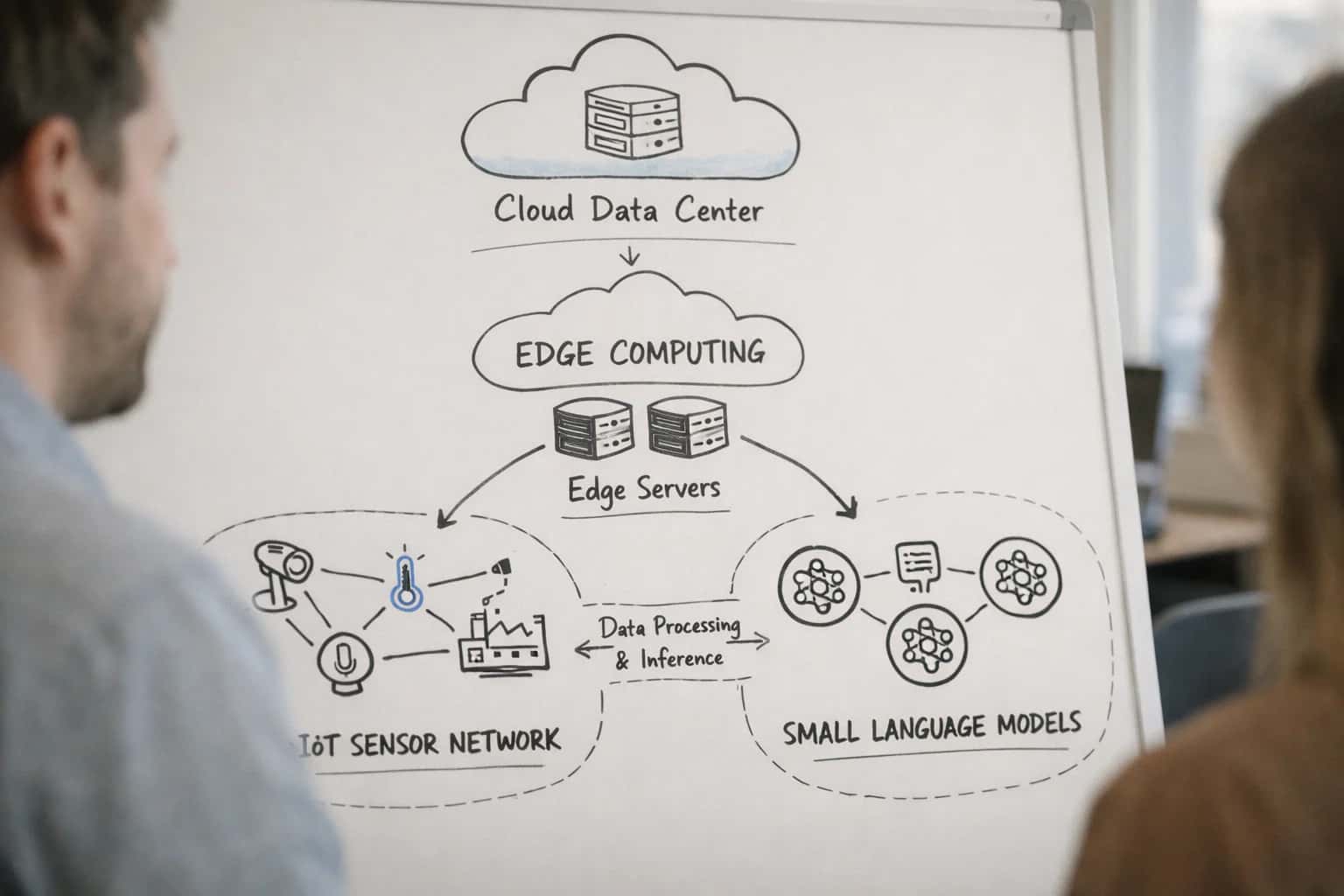
A technical comparison of AWS IoT Greengrass and Azure IoT Edge for deploying, managing, and orchestrating containerized AI workloads on distributed industrial and commercial edge devices. This analysis focuses on architecture, AI/ML integration, security, and operational trade-offs for CTOs and engineering leads.
THE ANALYSIS
Introduction
A data-driven comparison of AWS IoT Greengrass and Azure IoT Edge for deploying containerized AI workloads at the edge.
Azure IoT Edge takes a different approach by prioritizing hybrid cloud scenarios and Microsoft's enterprise software stack. Its strategy is deeply integrated with Azure Arc, allowing you to manage edge devices as if they were part of your Azure data center, and with Azure Machine Learning for MLOps. This results in a trade-off: while it offers superior governance and policy management for Windows-centric or hybrid environments, its optimization for non-Azure hardware can be less extensive than AWS's targeted offerings. Its modular runtime supports containers from any registry, providing flexibility but potentially requiring more manual optimization for peak AI performance.
The key trade-off centers on ecosystem alignment versus hybrid flexibility. If your priority is a tightly integrated, cloud-native AI pipeline and you are standardizing on AWS services like SageMaker and Lambda, choose AWS IoT Greengrass. It reduces operational overhead for pure-AWS deployments. If you prioritize governance in hybrid or multi-cloud environments, have a significant investment in Microsoft Azure and Windows IoT, or need to manage a fleet with Azure Arc, choose Azure IoT Edge. For further exploration of edge AI deployment frameworks, see our comparisons of TensorFlow Lite vs PyTorch Mobile and ONNX Runtime vs TensorRT.
HEAD-TO-HEAD COMPARISON
AWS IoT Greengrass vs Azure IoT Edge
Direct comparison of cloud vendors' edge computing platforms for deploying and managing containerized AI workloads on distributed industrial and commercial devices.
| Metric / Feature | AWS IoT Greengrass | Azure IoT Edge |
|---|---|---|
Core Orchestration Model | Greengrass Nucleus (Java) | IoT Edge Agent (Rust) |
Default AI/ML Runtime | AWS SageMaker Neo | Azure ML |
Local AI Inference Latency (Typical) | < 100 ms | < 150 ms |
Model Format Support | Neo-compiled, ONNX, TensorFlow Lite | ONNX, TensorFlow Lite, PyTorch Mobile |
4-bit/8-bit Quantization Support | ||
Native Integration with Cloud AI Services | SageMaker, Rekognition | Azure ML, Cognitive Services |
Offline Operation & Local Shadow | ||
Deployment & Management Plane | AWS IoT Console, CloudFormation | Azure Portal, Bicep/ARM |
AWS IoT Greengrass vs Azure IoT Edge
TL;DR Summary
Key strengths and trade-offs at a glance for deploying containerized AI workloads at the edge.
01
Choose AWS IoT Greengrass for Deep AWS Integration
Native AWS service mesh: Seamlessly integrates with Amazon SageMaker for model deployment, AWS Lambda for serverless functions, and Amazon Kinesis for data streaming. This matters for teams already heavily invested in the AWS ecosystem who need a unified management plane from cloud to edge. Its component system allows for modular deployment of ML models, business logic, and dependencies as a single unit.
02
Choose Azure IoT Edge for Microsoft Enterprise Stack
Tight Azure IoT Hub and Arc integration: Provides first-class connectivity to Azure Machine Learning, Azure Stream Analytics, and Azure Digital Twins. This matters for enterprises standardized on Microsoft 365, Dynamics 365, or Azure Synapse who require deep operational technology (OT) integration. Native support for Azure Functions and Logic Apps at the edge simplifies event-driven automation.
03
Choose AWS for Heterogeneous Device Fleets
Broad OS and architecture support: Officially supports Linux, Windows, and macOS on x86_64 and ARM (AArch64). AWS-provided Greengrass Nucleus runs on devices from Raspberry Pi to industrial gateways. This matters for managing a diverse fleet of legacy and modern devices, a common challenge in industrial IoT and commercial deployments.
04
Choose Azure for Streamlined Container Management
Built on IoT Edge Runtime and container orchestration: Uses a managed Moby container engine, simplifying deployment of Docker containers. Integrated module twin feature in IoT Hub provides granular state synchronization for each containerized workload. This matters for DevOps teams familiar with Kubernetes or AKS who want consistent containerized application lifecycle management at the edge.
05
Choose AWS for Advanced Local AI Inference
Optimized for ML inference pipelines: Greengrass components can leverage local hardware accelerators (like NVIDIA GPUs or Intel VPUs) and include pre-built components for TensorFlow Lite, Apache MXNet, and PyTorch. Local inference results can be processed by Lambda functions before syncing to cloud. This matters for real-time on-device processing where low latency and offline capability are critical, such as in autonomous vehicles or predictive maintenance.
06
Choose Azure for Hybrid Cloud-Edge AI Orchestration
Strong hybrid deployment patterns: Azure Machine Learning's unified model registry and deployment targets simplify pushing trained models from cloud to edge devices. Supports 4-bit/8-bit quantization via ONNX Runtime for efficient edge deployment. This matters for scenarios requiring centralized AI model training in the cloud with distributed inference at thousands of edge nodes, like in retail or energy grids.
CHOOSE YOUR PRIORITY
When to Choose: User Scenarios
AWS IoT Greengrass for Industrial IoT
Verdict: The preferred choice for complex, multi-step industrial automation. Strengths: Greengrass excels in environments requiring tight integration with AWS cloud services like Amazon SageMaker Edge Manager for model management and AWS IoT SiteWise for industrial data contextualization. Its stream manager is superior for handling high-volume, time-series telemetry from PLCs and sensors, enabling local analytics before cloud upload. The component system allows for sophisticated, stateful workflows that are critical for predictive maintenance and quality control on factory floors.
Azure IoT Edge for Industrial IoT
Verdict: Strong contender for Microsoft-centric manufacturing ecosystems. Strengths: Azure IoT Edge integrates seamlessly with Azure Digital Twins for creating comprehensive digital models of physical environments and Azure Machine Learning for deploying and monitoring models. Its support for Azure Functions and Logic Apps at the edge simplifies building event-driven automation. For shops already using Microsoft Dynamics 365 or Azure Synapse, IoT Edge provides a unified data and AI pipeline from the sensor to the ERP. Learn more about edge AI hardware in our comparison of NVIDIA Jetson vs Google Coral.
Enabling Efficiency, Speed & Accuracy
Intelligent Analysis, Decision & Execution
We build AI systems for teams that need search across company data, workflow automation across tools, or AI features inside products and internal software.
Talk to Us
Search across company data
Give teams answers from docs, tickets, runbooks, and product data with sources and permissions.
Useful when people spend too long searching or get different answers from different systems.
Enterprise searchRAGPermissions
Read more
Automate internal workflows
Use AI to route work, draft outputs, trigger actions, and keep approvals and logs in place.
Useful when repetitive work moves across multiple tools and teams.
AI agentsWorkflow automationGovernance
Read more
Add AI to products and internal tools
Build assistants, guided actions, or decision support into the software your team or customers already use.
Useful when AI needs to be part of the product, not a separate tool.
AI integrationDecision supportModel routing
Read moreTHE ANALYSIS
Final Verdict and Recommendation
A data-driven conclusion for choosing between AWS IoT Greengrass and Azure IoT Edge based on your primary architectural and operational priorities.
AWS IoT Greengrass excels at deep integration within the AWS ecosystem, offering a seamless, serverless experience for managing fleets of heterogeneous devices. Its strength lies in leveraging native AWS services like Lambda for serverless compute, IoT Core for device management, and SageMaker for edge ML model deployment. For example, Greengrass seamlessly integrates with AWS IoT SiteWise for industrial data modeling, creating a powerful end-to-end solution for predictive maintenance. This makes it ideal for organizations heavily invested in AWS, where minimizing operational overhead and leveraging existing cloud investments is paramount.
Azure IoT Edge takes a different approach by prioritizing enterprise containerization and hybrid cloud scenarios. It is built on the industry-standard IoT Hub and fully embraces containerized workloads via Docker and Kubernetes (K8s), allowing for greater portability and reuse of existing application logic. This results in a trade-off: while it offers superior flexibility for mixed-cloud environments and integrates deeply with Azure Machine Learning and Azure Digital Twins, its management plane can be more complex to configure than Greengrass's more opinionated, AWS-native tooling.
The key trade-off: If your priority is minimizing operational complexity within a pure AWS environment and you value serverless edge functions, choose AWS IoT Greengrass. Its tight coupling with AWS services reduces integration friction. If you prioritize container portability, hybrid cloud architectures, or deep integration with Microsoft's enterprise stack (like Dynamics 365 or Microsoft 365), choose Azure IoT Edge. Its use of standard containers future-proofs deployments and aligns with modern DevOps practices. For more on deploying AI at the edge, see our comparisons of NVIDIA Jetson vs Google Coral and TensorFlow Lite vs PyTorch Mobile.

About the author
Prasad Kumkar
CEO & MD, Inference Systems
Prasad Kumkar is the CEO & MD of Inference Systems and writes about AI systems architecture, LLM infrastructure, model serving, evaluation, and production deployment. Over 5+ years, he has worked across computer vision models, L5 autonomous vehicle systems, and LLM research, with a focus on taking complex AI ideas into real-world engineering systems.
His work and writing cover AI systems, large language models, AI agents, multimodal systems, autonomous systems, inference optimization, RAG, evaluation, and production AI engineering.
LinkedIn
Limited slotsGet a Free AI Consultation
Partnered with leading AI, data, and software stack.





How We Work
Custom AI workflows for your Business
One-fit-all AI don't work for modern businesses. At Inferensys, we aim to understand your business & custom requirements; which we use to define most efficient agentic workflows, the data, and the tools for your business.
01
Review the use case
We understand the task, the users, and where AI can actually help.
Read more02
Pick the right approach
We define what needs search, automation, or product integration.
Read more03
Build the first useful version
We implement the part that proves the value first.
Read more04
Improve from there
We add the checks and visibility needed to keep it useful.
Read moreThe first call is a practical review of your use case and the right next step.
Talk to Us